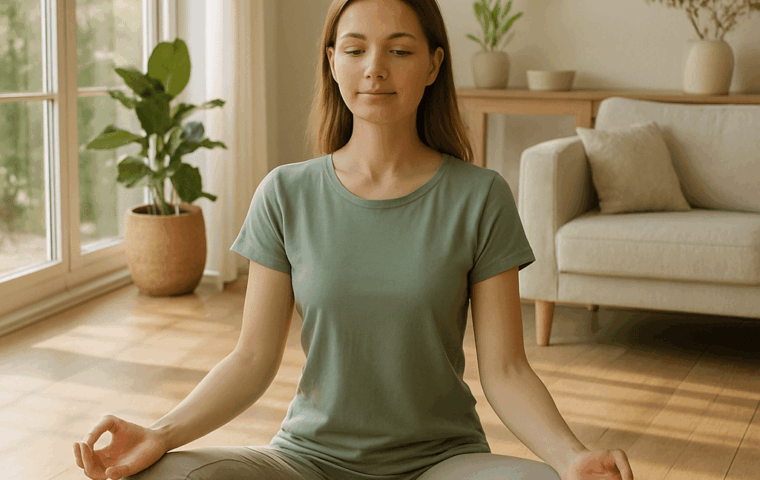
Why use breathing to soothe stress in the workplace?
The direct effect on the nervous system
When tension rises, the body switches to “alert mode”: elevated heart rate, contracted muscles, racing thoughts. Voluntarily changing inhalation and exhalation shifts the autonomic nervous system towards the parasympathetic, the one responsible for rest and recovery. A few well-measured cycles are enough to break this vicious circle and bring back calm.
Refreshed focus and productivity
Losing track of a document or a meeting is often a sign of cognitive overload. Intentional breathing invites the brain to refocus, to filter out distracting information. In practice, after a short session, one perceives greater clarity in reasoning, which reduces the risk of error and speeds up decision-making.
Five anti-stress breathing techniques to try at the office
1. Diaphragmatic breathing
Sitting on the edge of your chair, feet flat on the floor, place one hand on your belly and the other on your chest. Slowly inhale through the nose, inflating the lower chest, then gently exhale through the mouth, letting the chest fall naturally. Repeat ten times. This approach encourages the diaphragm to work fully and limits shoulder tension.
2. Box breathing
Inhale – hold – exhale – hold, each phase lasting four seconds, forms a mental square. Beyond the structured aspect, this rhythm imposes a pause felt almost like a mini-meditation. When used occasionally, the phase can be reduced to three seconds each, but the classic square acts as a powerful anchor in the present moment.
3. Cardiac coherence 5-5-5
Immutable and simple, this protocol alternates five seconds of inhalation, five seconds of exhalation, then five seconds of pause. Result: a harmonized oscillation is observed between blood pressure and heart rate, conducive to an immediate feeling of well-being. To master the timing, a mental countdown is enough, or a dedicated app running in the background.
Cardiac coherence 5-5-5 provides a proven structure, appreciated for its effectiveness from the first cycles.
4. Alternate breathing (nadi shodhana)
Less known outside yoga circles, this technique is practiced with the index finger and thumb to alternately block the nostrils. Inhale through the left nostril, exhale through the right, then reverse. Over ten cycles, it balances the two cerebral hemispheres, reduces mental agitation, and improves the perception of emotions.
5. Whistled breathing
Inhale deeply, then blow through a small slit formed by the lips so that the air escapes making a slight whistle. This resistance produces an immediate sensory feedback, like a signal sent to the cortex to moderate the heart rate and promote a sensation of softness in the exhalation.
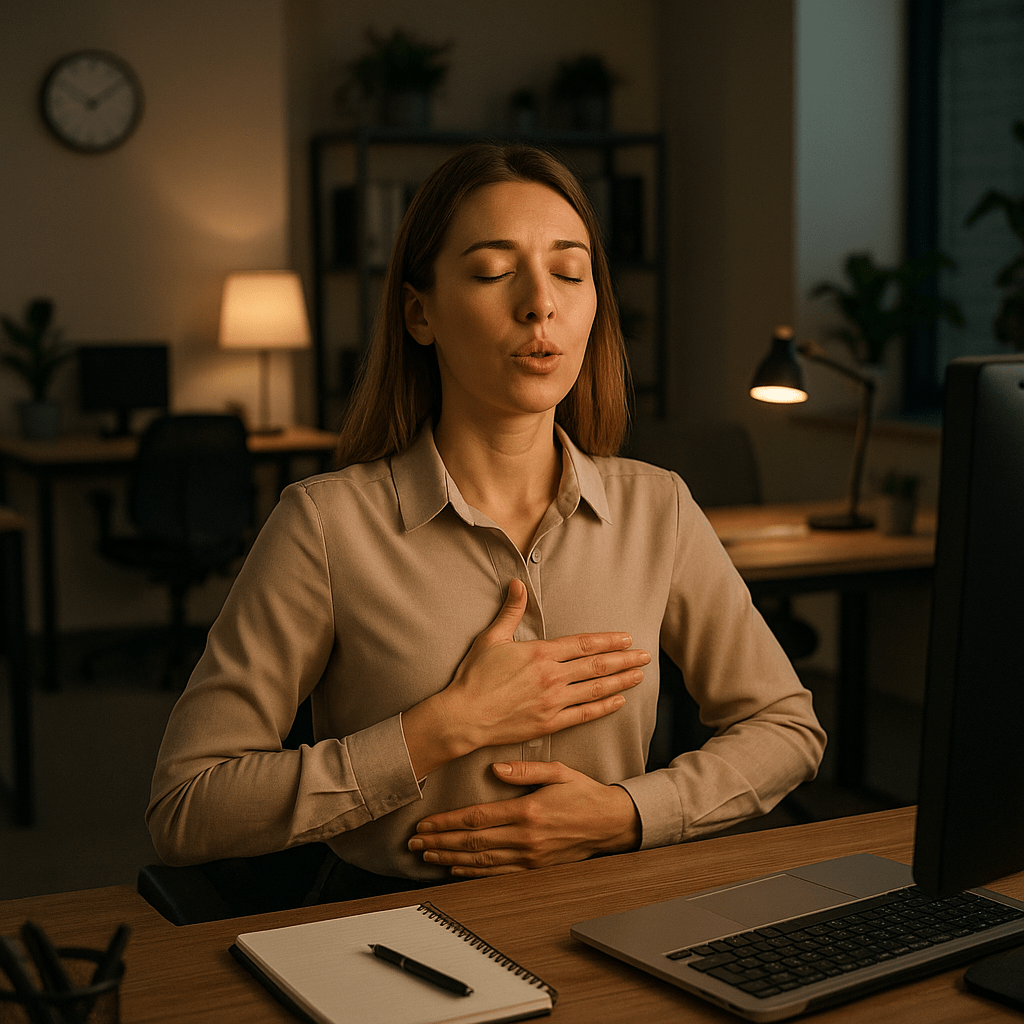
Integrate these exercises without disrupting your schedule
Identify key moments
Between two files, just before a meeting, during the coffee break: these micro-interruptions represent ideal windows. A simple glance at the clock or the cue of an untreated email threshold can serve as a signal to start the practice. By establishing this routine, you reduce tension buildup and avoid emotional overload at the end of the day.
Set up a “breathing” corner
A quiet space, even reduced to a chair near a window, greatly facilitates sensory isolation. Place a small cushion or a discreet footrest under your desk to maintain posture. If the office acoustics are too noisy, a light noise-canceling headset can create a sound bubble conducive to breath control.
Use a timer or an app
No need for a sophisticated app: a simple phone timer set to five minutes is enough to avoid postponing the exercise. Today, several small free tools offer calm visual animations and an audible countdown, perfect for being guided without having to look at the screen.
Tips to sustain the practice
- Start the day with a short series of breaths to establish a calm mindset.
- Combine a comfortable posture with slow breaths to avoid any muscle tension.
- Vary techniques according to stress intensity: box breathing during peaks, diaphragmatic during a gentler phase.
- Keep a quick logbook (two lines) to note the effect felt after each session.
- In case of chronic tension, consider support to deepen cardiac coherence.
Summary Table of Exercises
| Exercise | Description | Duration |
|---|---|---|
| Diaphragmatic | Ventral inhalation, relaxed exhalation | 10 cycles |
| Box breathing | 4s in, 4s hold, 4s out, 4s hold | 3 to 5 minutes |
| Cardiac coherence | 5s in, 5s out, 5s pause | 3 minutes |
| Alternate | Block one nostril at a time | 10 cycles |
| Whistled | Exhalation resisted by the lips | 2 minutes |
FAQ on Anti-Stress Breathing at the Office
Can these be practiced in a non-seated position?
Absolutely. Standing or even standing and leaning against a wall, these techniques remain effective as long as you keep your back straight and your shoulders relaxed.
Is it disruptive for colleagues?
Most exercises are silent or very discreet. Whistled breathing may produce a slight murmur, but simply lowering the intensity keeps it imperceptible.
What is the best daily frequency?
Three to five short sessions (2 to 5 minutes) spread throughout the day offer a good balance. The key is regularity, more than total duration.
Do these methods replace professional therapy?
They are excellent complements, but in cases of deep stress or burnout, it is advisable to consult a mental health professional.