
Why turn off screens before sleeping?
The constant proximity of smartphones, tablets, and computers conditions our brain to stay awake. Even when we believe we are “disconnecting,” exposure to artificial light and notifications activates alert centers. Over time, the body perceives this signal as a call to remain active, which delays falling asleep and weakens the quality of the night.
The impact of blue light
This light spectrum, widely present in LED diodes and LCD screens, inhibits melatonin secretion. Without this crucial hormone, the circadian rhythm is disrupted. Avoiding this bluish tint before bedtime naturally regulates the internal clock and helps to fall asleep faster.
Cognitive overstimulation
Reading an email, watching a short video, or even scrolling through a social feed triggers reward circuits and maintains a high level of alertness. The mind then no longer has time to shift to calming thoughts. Conversely, stepping away from screens offers a necessary pause to let the mind wander, settle, and calm down.
The 90-minute protocol: step-by-step
Establishing this routine is not an impossible challenge. It simply requires structuring your time into three phases, each incorporating simple and pleasant actions.
1. Plan your disconnection
- Set an alert 90 minutes before bedtime
- Put your phone in airplane mode or “do not disturb”
- Keep all screens away from the bedroom to avoid giving in to temptation
By preparing this little ritual, you neutralize temptation and create a buffer zone between the digital turmoil and the world of sleep.
2. Choose calming activities
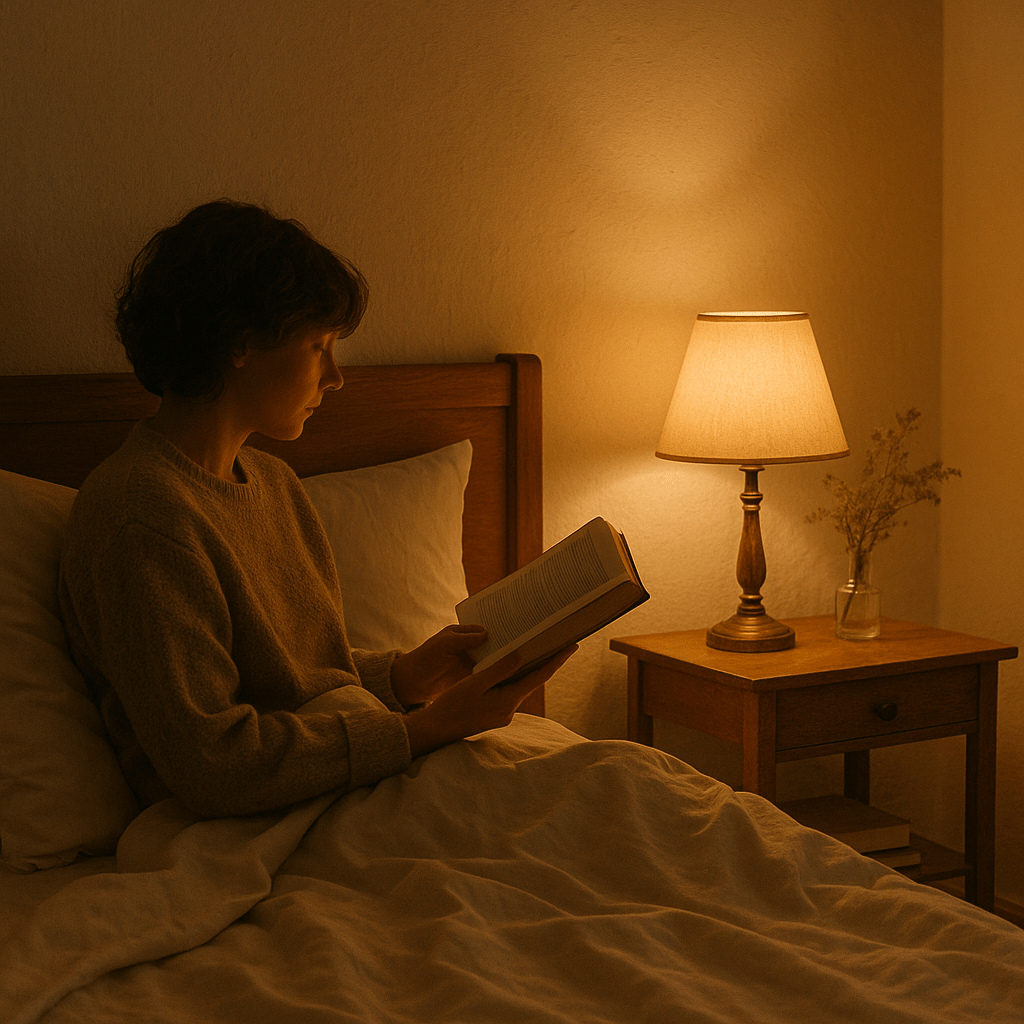
There is a wide range of screen-free options. For example, you can keep a gratitude journal, engage in a short 5-5-5 heart coherence technique exercise, or dive into a paper novel. The key is to let your attention wander over gentle stimuli.
3. Prepare your environment
- Gradually reduce light intensity (desk lamp, flameless candle)
- Ensure a temperature between 18 °C and 20 °C
- Choose a mattress and pillows suited to your preferred sleeping position
Creating a cozy atmosphere signals to the brain that rest time is approaching, enhancing the effectiveness of the transition.
Variations and adaptations
Everyone is free to adjust these 90 minutes according to their rhythm. Some people prefer a longer break, others reduce it to 60 minutes. The idea remains to reserve a screen-free slot, which can also be dedicated to:
- A short gentle yoga session
- A silent cuddle with a loved one
- A guided meditation (off smartphone, via an old audio player or a ready-to-use recording)
The important thing is to test and adjust to identify the most comfortable protocol.
Long-term benefits
“By offering a decompression buffer every evening, we embrace deeper and more restorative sleep”
Over the weeks, there is a decrease in nighttime awakenings, a feeling of freshness upon waking, and better control of daytime stress. Feedback also shows improved concentration, less daytime sleepiness, and greater emotional regulation.
FAQ
1. Why exactly 90 minutes?
It is the average time needed for melatonin to build up and for the nervous system to relax enough to initiate sleep.
2. Can I listen to a podcast or light music?
A soft audio track or a relaxing podcast is suitable if the device is in airplane mode and the screen is off. The key is to avoid any visual interaction.
3. What if I give in and turn on my phone?
No guilt: just note the time, turn it off again, and resume your ritual. The idea is to progress, not to achieve perfection from the first night.
4. Does the protocol work for teenagers?
Yes, with variations: soft lighting, books appropriate for their age, and possibly family discussions to replace nighttime scrolling.
5. How long before seeing results?
Generally, a significant change is observed after one to two weeks of regular practice.