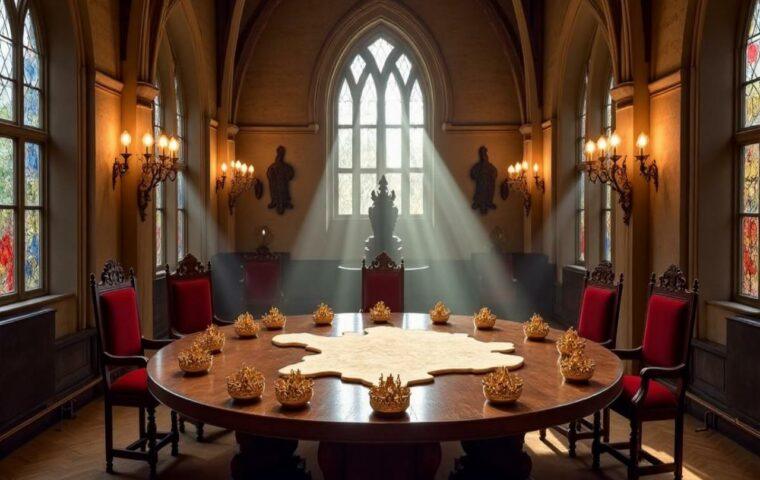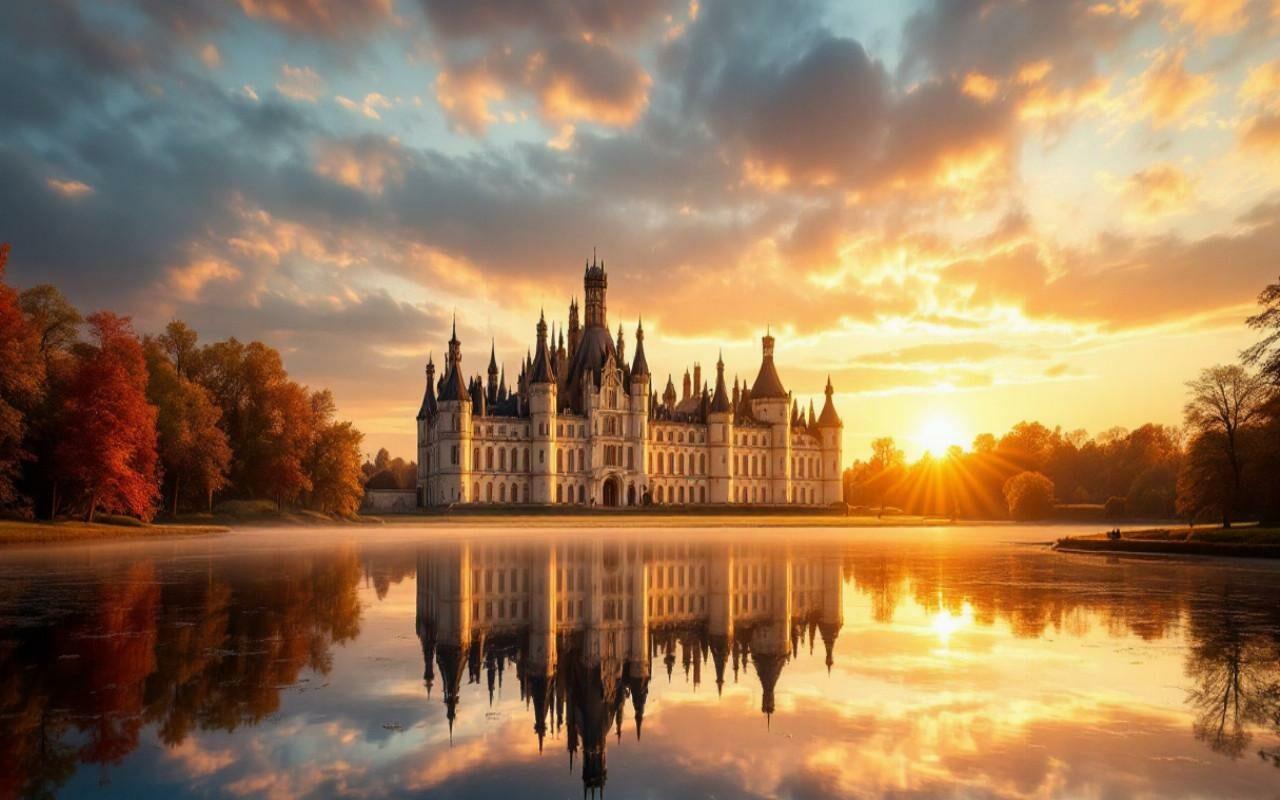
At the Origins: Fortresses and Lordly Powers
Before the splendor of French-style gardens, the Loire served as a natural defense line. Massive keeps were built there, with narrow arrow slits and walls sometimes several meters thick. These first constructions seem austere, but they respond to a vital need for surveillance and control of river passages.
According to historian Jean-Pierre Dupont, “a medieval castle is not only a seat of power, it is also a place of life and refuge for the surrounding population.” The moats, drawbridges, and machicolations testify to sophisticated military engineering, often forgotten behind the splendor of the Renaissance.
In truth, several of these fortresses have preserved vaulted rooms where supplies and weapons were stored, even prisons capable of holding prisoners for several years. One might think these cellars are monotonous; in reality, some reveal graffiti engraved by anonymous hands, offering a moving testimony of medieval daily life.
Renaissance Magnificence: Transformation and Innovations
At the turn of the 16th century, the Loire transformed into a place of artistic experimentation. Carried by the French court, young nobles and architects brought back design and perspective manuals from Italy. Thus, brick, marble, and sculpted plaster appeared on both the left and right banks.
Italian Influence and Geometric Symmetry
The facades are now arranged around horizontal lines, while the windows align with an almost mathematical rigor. Château de Chambord, for example, integrates a double-helix staircase that evokes Roman palaces. This structure still intrigues: built without direct knowledge of Leonardo da Vinci, its staircase nevertheless reflects a keen sense of interweaving and internal circulation.
French-style Gardens and Water Features
“It is no longer enough to impress with walls: one must captivate with perspectives,” says landscape architect Élise Martin. Thus, groves, geometric flowerbeds, and basins are designed where the finesse of water jets is measured. By confronting Italian rigor with the French love of lush vegetation, unexpected harmonies come to life.
Secrets and Hidden Treasures
Beyond the reception rooms and family chapels, these residences conceal secret passages and occult symbols. In Azay-le-Rideau, a postern hidden under the attic allowed escape in case of siege. It is accessed via a narrow corridor, whose entrance is located behind a revolving bookcase.
Hidden Passages and Emergency Exits
Several castles have “tricks” — covered walkways, hidden staircases, or unfinished galleries. Sometimes designed to counter an attacker, sometimes to facilitate the privacy of certain courtiers, these intra-wall architectures intrigue both restorers and visitors.
“These secret corridors are like Ariadne’s threads in the complexity of large buildings,” notes architect-restorer Sophie Lejeune.
Symbolism in Sculpture and Stained Glass
Grotesque mascarons sometimes adorn the dormer windows, accompanied by coded coats of arms and alchemical messages. Finally, some stained glass windows — long eclipsed by the brightness of the sun — still deliver biblical stories, animal allegories, or discreet tributes to the patrons of the places.
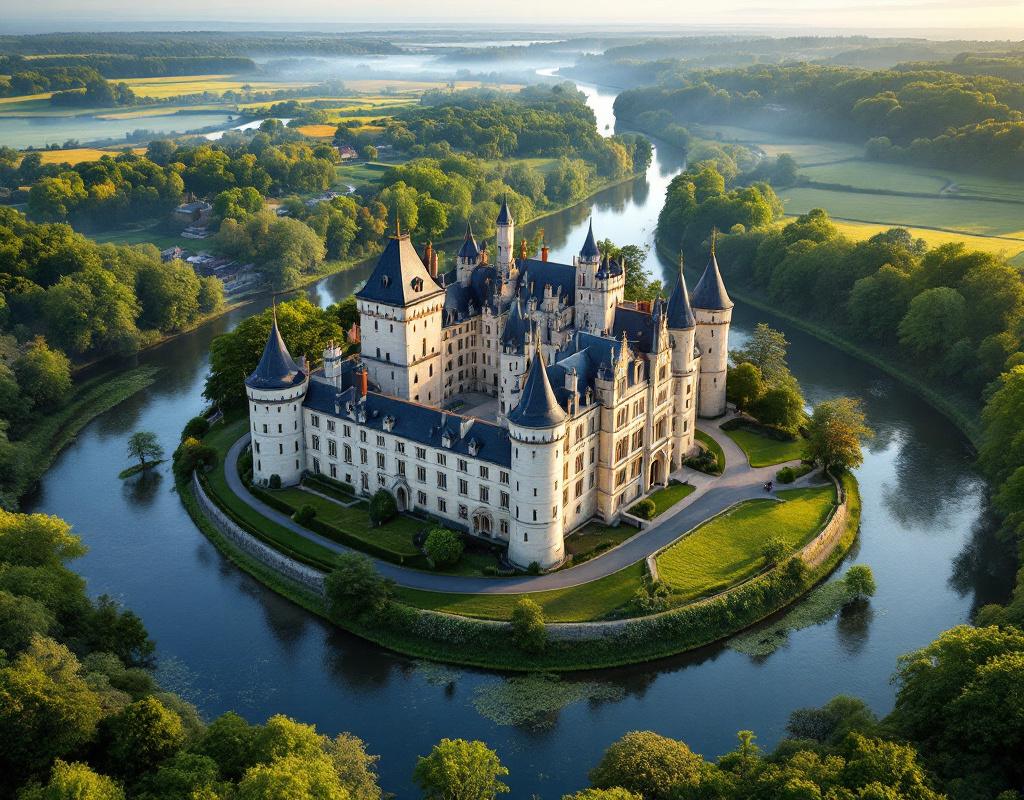
Prompt: “A realistic aerial view of a majestic Loire Valley castle surrounded by a winding river and lush greenery under a soft early-morning light.”
Heritage and Contemporary Rediscoveries
In 2000, UNESCO inscribed the Loire Valley as a World Heritage site. As proof, there has been a resurgence of restoration projects, funded both by the State and private foundations. These interventions aim as much to consolidate the structures as to restore the original decorations.
- Scientific inventories of beams and stones to identify medieval techniques.
- 3D surveys to model automatons and spiral staircases.
- Educational programs intended for schools, highlighting the architecture and botany of the gardens.
- Thematic routes along the Loire, linking major castles and forgotten hamlets.
Archaeological excavations beneath waterways sometimes reveal forgotten moats or dismantled bridges. On the right bank, a survey uncovered foundations of towers that served as prisons at the end of the Middle Ages. These discoveries rewrite our understanding of land occupation and construction techniques.
FAQ
1. What is the most emblematic castle of the Loire?
Chambord is often cited for its double-helix staircase and vast wooded park. However, Chenonceau charms with its gallery over the river and its feminine history embodied by Diane de Poitiers and Catherine de Médicis.
2. Can the secret passages be visited?
Several residences offer guided tours including these hidden corridors, notably Azay-le-Rideau and Loches. Reservations are recommended outside the tourist season.
3. How are these castles protected today?
Besides the UNESCO label, French law on historic monuments regulates every modification. Owners must obtain the opinion of the Architects of the Buildings of France before any work.
4. What is the best time to discover the gardens?
May-June and September often offer the most spectacular blooms while avoiding the summer crowds. Autumn, for its part, brings a warm palette to the hedges and alleys.
{
“@context”: “https://schema.org”,
“@type”: “WebPage”,
“about”: {
“@type”: “Thing”,
“name”: “history of the Loire castles”
},
“keywords”: [“castles”,”Loire”,”Renaissance”,”architecture”,”fortifications”]
}