1. Anticipation: a daily challenge
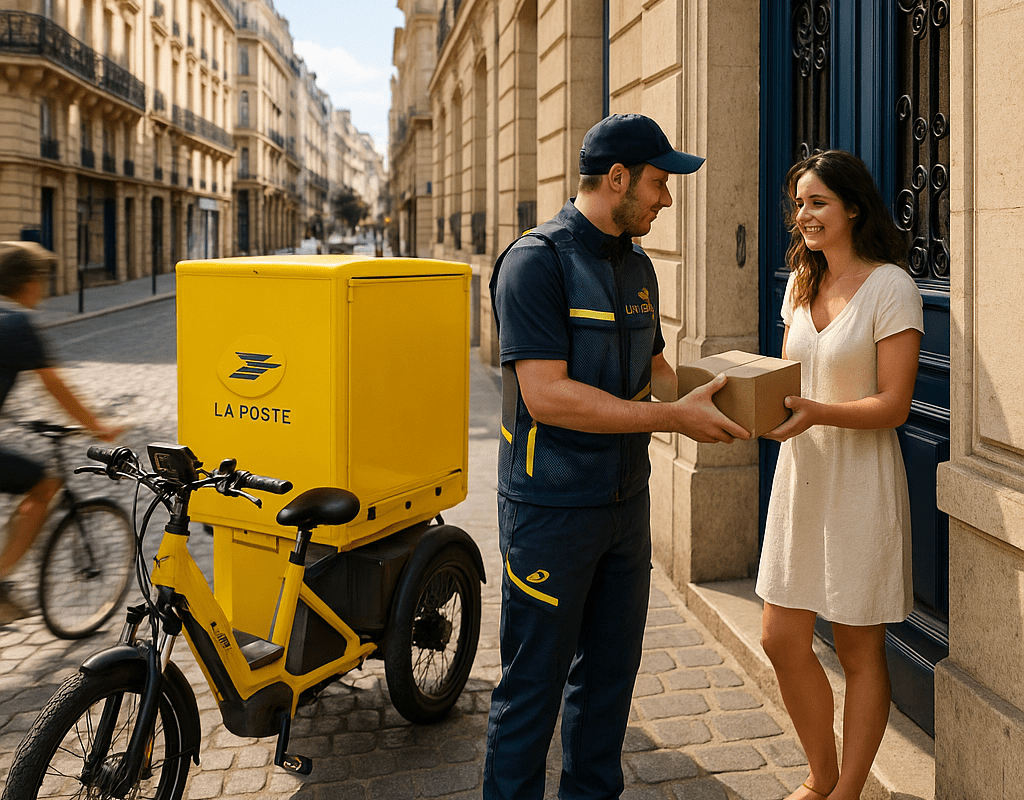
Receiving the postman on the first attempt is no longer just a convenience. According to Fevad, 63% of French people receive at least one package per week. For professionals working remotely, parents awaiting a passport, or students expecting administrative documents, every missed slot causes lost time and stress.
Three direct benefits stand out:
- Time optimization: a successful delivery avoids waiting in line at the post office (45 minutes average wait in large centers, source: La Poste Observatory 2025).
- Securing sensitive shipments: registered letters and legal documents are signed without delay.
- Family organization: school schedules and remote work are respected.
In other words, anticipating means managing your schedule and reducing the carbon footprint associated with redeliveries.
2. A brief history of the route
From royal mail delivered on horseback to today’s predictive routes, distribution has constantly evolved to adapt to societal needs. In the 19th century, two deliveries per day were the norm in large cities. Mechanization in the 1960s streamlined routes into a single daily delivery. The 1990s saw the computerization of sorting, while 2010-2020 experienced the parcel boom. In 2025, the route relies on three pillars: algorithms, micro-mobility (e-trikes, electric trucks), and predictive data.
3. 2025 logistical organization
La Poste has implemented a five-phase operational chain. Each phase is calibrated using internal algorithms and field feedback from the 70,000 French postmen.
These phases are:
- Automated sorting from 6 a.m.: letters and small parcels are sorted by OCR machines.
- Manual picking & control: the postman checks special shipments (Chronopost, registered mail).
- Digital planning: an internal tool (GéoTournée) optimizes each route based on density, traffic, and weather.
- Loading & briefing between 8 a.m. and 9 a.m.
- Delivery route (approx. 8:30 a.m. → 4 p.m.), scanned in real time with PDA NGEN.
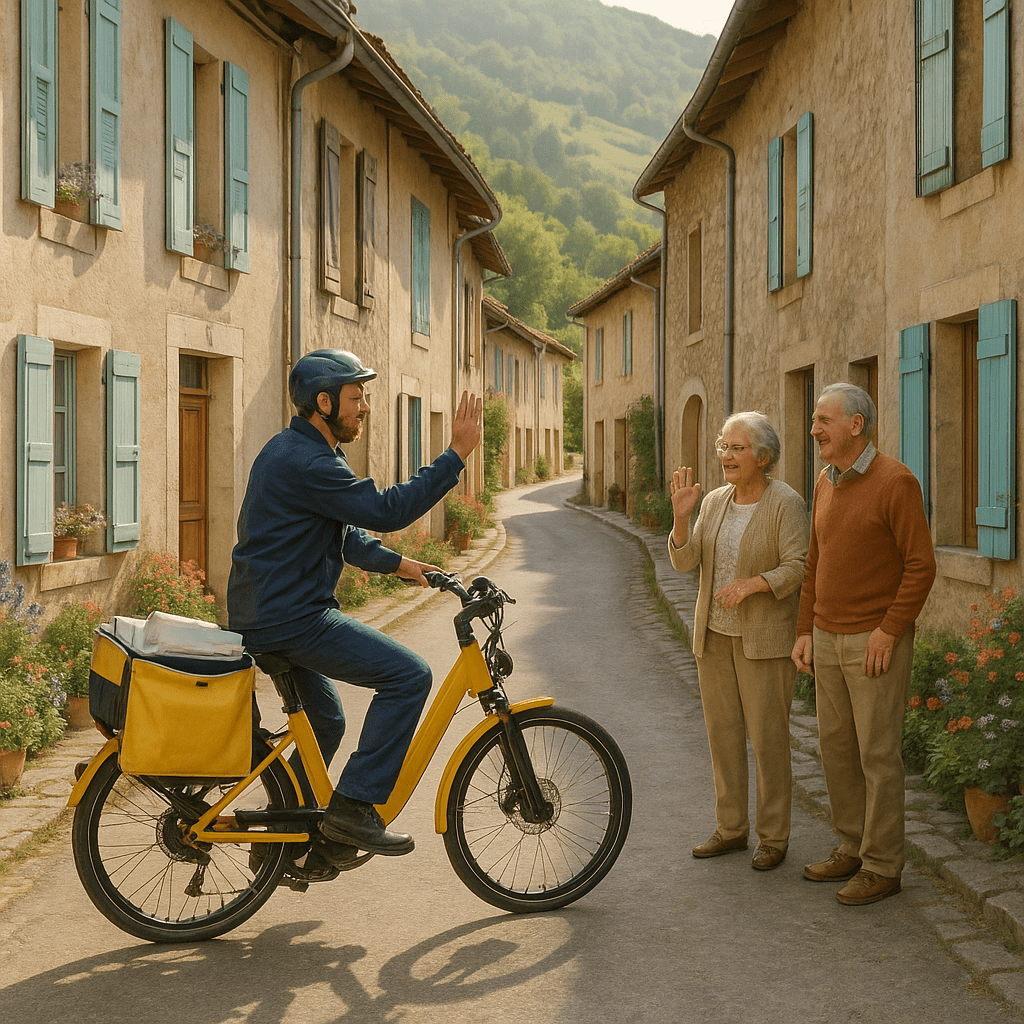
A word on the role of service postmen: in 23% of towns with fewer than 5,000 inhabitants, the postman also performs social visits (medicine delivery, senior checks). This additional service extends the route by an average of 12 minutes.
4. Schedules by zones, large and small towns
The tables below provide indicative time slots based on La Poste 2025 reports. They serve as a reference; occasional deviations are inevitable.
4.1 Summary by type of area
| Area | Start | End | Particularities |
|---|---|---|---|
| Villages & hamlets | 8:15 AM | 12:30 PM | Versatile postman, single route |
| Urban outskirts | 9:00 AM | 2:00 PM | High parcel volume (e-commerce) |
| Dense city center | 10:00 AM | 4:00 PM | Delivery on foot or e-trike |
| Pilot AI zones | 3:00 PM | 6:30 PM | Predictive route + immediate redelivery |
In all cases, sales periods and year-end holidays see the time spans extend by about one hour to absorb a +32% peak in parcels.
4.2 Timetable – 10 major French cities
| City | Start | End | Comment |
|---|---|---|---|
| Paris | 10:00 AM | 4:30 PM | Intra-muros neighborhoods delivered in the afternoon |
| Lyon | 9:30 AM | 3:30 PM | Recurring traffic peaks |
| Marseille | 9:00 AM | 3:00 PM | Hilly terrain: +20 min |
| Lille | 9:45 AM | 2:30 PM | Mixed bike + truck route |
| Toulouse | 10:00 AM | 4:00 PM | Heatwave: extended slot |
| Bordeaux | 9:30 AM | 3:30 PM | Pedestrian zones delivered late morning |
| Nantes | 9:15 AM | 3:00 PM | Postman geolocation pilot |
| Strasbourg | 9:40 AM | 2:45 PM | Dense cross-border flows |
| Nice | 10:30 AM | 5:00 PM | Seasonal influx |
| Montpellier | 9:50 AM | 3:30 PM | Recent neighborhoods |
4.3 And in small towns?
In rural areas, regularity is often better: the same postman serves the town five days out of seven. In a sample of 50 villages (internal La Poste study, March 2025), the average day-to-day difference does not exceed fifteen minutes. However, Monday and the day after a public holiday show longer routes: +18% mail volume.
5. The five factors of variation
Why does your postman arrive at 10 AM on a Tuesday, then at 11:15 AM on Wednesday? The answer lies in five main variables, often cumulative:
- Weather: rain, snow or heatwave force hydration breaks or detours.
- Traffic & construction: a temporary construction site can extend the route by 6 km in the city.
- Parcel volume: winter and summer sales each generate +30% shipments.
- Postman replacement: new agent = route familiarization.
- Social services: delivery of medicines, senior visits, meter readings.
Added to this are local hazards (markets, cycling races, urban marathons) that can close certain streets.
6. Reliable Methods to Know Your Time Slot
There are several ways today to know, or even control, the delivery time:
- Ask the mail carrier: simple, direct, and often reliable over the week.
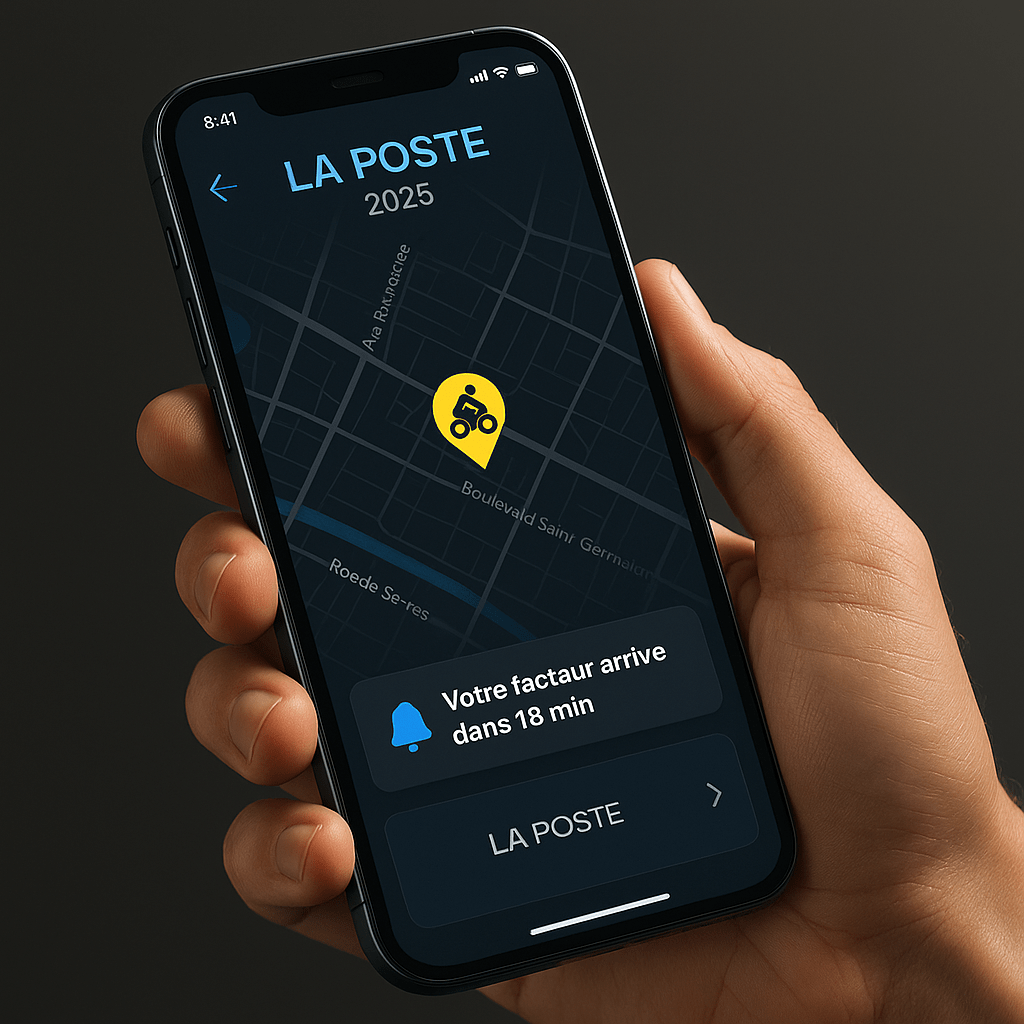
- Activate the La Poste app: push notifications as soon as the route starts in your area.
- Observe the delivery notice: the stamped time reveals the regular time slot.
- Install a connected parcel box: reception without signature.
- Use interactive redelivery: choose another day or a free pickup point.
- Register for the “imminent mail carrier” SMS (pilot service for < 5,000 inhabitants).
By combining the mobile app and human interactions, the risk of a second delivery attempt is reduced to less than 5%.
7. Digital Services and Innovations 2025
The digitalization of distribution brings new tools:
Real-time geolocation: tested in Paris 7th arrondissement, Nantes, and Rennes, it displays the mail carrier on a map (accuracy 150 m). AI predictive route: notifications ±20 minutes. Connected parcel boxes: 85,000 boxes installed, NFC or QR code opening, embedded electronic signature. Finally, mail holding can be activated remotely via the app, even from abroad.
8. How Do Our Neighbors Do It?
Three countries illustrate different models:
| Country | Frequency | Notable 2025 Transformation |
|---|---|---|
| Germany | Letter: two deliveries/week; separate parcels. | DHL Bike Couriers in city centers (10,000 km zero carbon). |
| Japan | Three daily time slots. | Public GPS tracking since 2018. |
| United States | Route 6 days/week. | Drone tests in Texas (USPS + Wing). |
France is positioned between these models: a daily route, intensified by e-commerce, and a strong trend toward electrification of the fleet (46% electric vehicles by the end of 2024).
9. FAQ
What time does La Poste deliver?
Is there delivery on Saturdays?
How can I know my exact time slot?
Can the mail carrier be tracked in real time?
10. Final Checklist
Before concluding, check these three points:
- Have you activated La Poste notifications?
- Do you know your mail carrier’s usual time slot?
- Is your parcel box compatible with electronic signature?
By applying these tips, you will drastically reduce missed deliveries and optimize your daily life.
{
“@context”:”https://schema.org”,
“@graph”:[
{
“@type”:”BreadcrumbList”,
“itemListElement”:[
{“@type”:”ListItem”,”position”:1,”name”:”Home”,”item”:”https://example.com/”},
{“@type”:”ListItem”,”position”:2,”name”:”Services”,”item”:”https://example.com/services”},
{“@type”:”ListItem”,”position”:3,”name”:”Postman’s delivery time”,”item”:”https://example.com/heure-passage-facteur”}
]
},
{
“@type”:”Article”,
“headline”:”Postman’s delivery time: complete 2025 guide”,
“description”:”Comprehensive guide (2,000 words) to anticipate the postman’s route: organization, schedules, innovations, FAQ.”,
“datePublished”:”2025-06-13″,
“author”:{“@type”:”Person”,”name”:”Gallica”},
“publisher”:{“@type”:”Organization”,”name”:”Gallica Media”},
“image”:”https://example.com/img/facteur-2025.jpg”,
“mainEntityOfPage”:{“@id”:”https://example.com/heure-passage-facteur”}
},
{
“@type”:”Dataset”,
“name”:”Postman’s delivery times in 10 major French cities (2025)”,
“description”:”Estimated start and end of routes for Paris, Lyon, Marseille, Lille, Toulouse, Bordeaux, Nantes, Strasbourg, Nice, Montpellier.”,
“license”:”https://creativecommons.org/licenses/by/4.0/”,
“creator”:{“@type”:”Organization”,”name”:”Gallica Media”},
“distribution”:{“@type”:”DataDownload”,”encodingFormat”:”text/csv”,”contentUrl”:”https://example.com/data/horaires-facteur-10-villes-2025.csv”}
},
{
“@type”:”FAQPage”,
“mainEntity”:[
{“@type”:”Question”,”name”:”What time does La Poste deliver?”,”acceptedAnswer”:{“@type”:”Answer”,”text”:”Most routes start between 8:30 AM and 10 AM…”}},
{“@type”:”Question”,”name”:”Is there delivery on Saturdays?”,”acceptedAnswer”:{“@type”:”Answer”,”text”:”Yes, 70% of municipalities…”}},
{“@type”:”Question”,”name”:”How can I know my exact time slot?”,”acceptedAnswer”:{“@type”:”Answer”,”text”:”Ask the postman…”}},
{“@type”:”Question”,”name”:”Can the postman be tracked in real time?”,”acceptedAnswer”:{“@type”:”Answer”,”text”:”In pilot areas, the La Poste app displays it.”}}
]
}
]
}