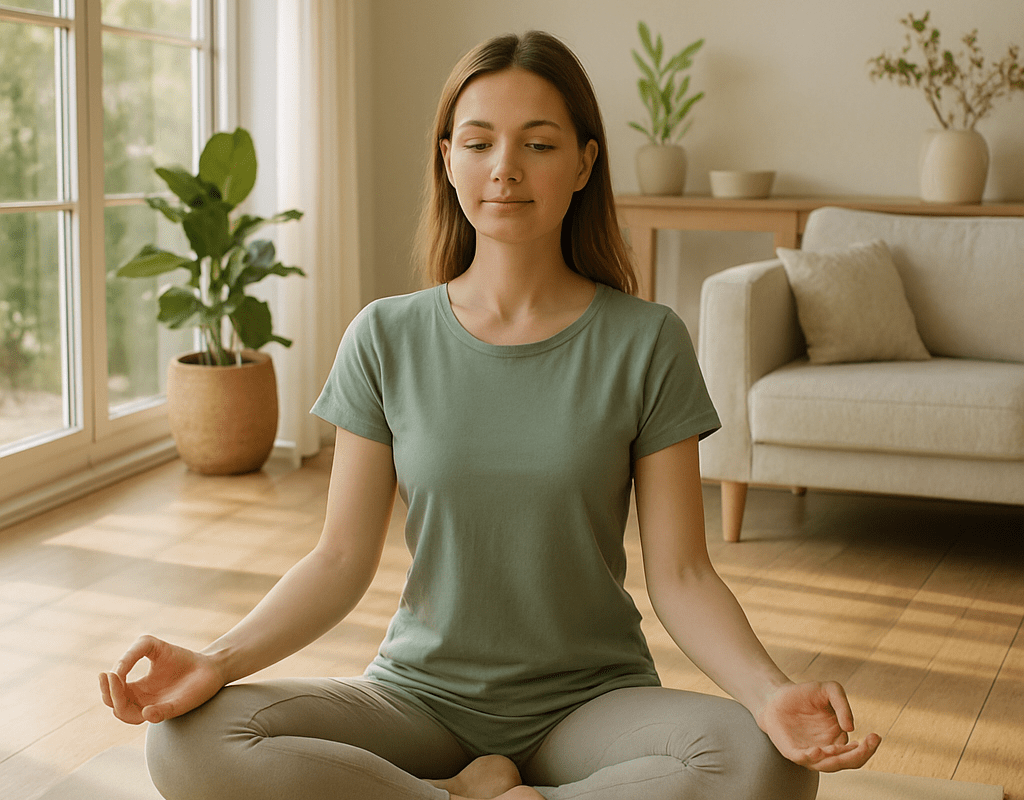
What is Heart Coherence 5-5-5?
Originating from psychophysiology research, heart coherence uses heart rate variability as a health indicator. The 5-5-5 pattern corresponds to five seconds inhaling, five seconds holding, and five seconds exhaling. The goal is not just to fill the lungs but to establish a rhythm where the heart finds a more regular alignment. This rhythmic breathing modulates the autonomic nervous system, naturally shifting the body toward a calmer state.
Daily Benefits
Over sessions, the body creates new neural and cardiovascular habits. Some experience almost immediate relaxation, others notice gradual improvement in sleep or a decrease in blood pressure. But beyond simple stress reduction, heart coherence helps better manage anxiety, enhance concentration capacity, and develop greater resilience to emotions.

How to Practice the 5-5-5 Protocol
1. Choosing Your Setting
No need for a zen studio or sophisticated devices: a comfortable seat, a quiet desk, or even a patch of lawn is enough. The essential thing is to adopt a stable posture, with a straight back and relaxed shoulders. The eyes can remain open or closed according to preference, the goal being to limit external distractions.
2. Detailed Steps
- Inhale (5 sec): inflate the abdomen while keeping the rib cage flexible.
- Pause (5 sec): suspend the flow, feel the air circulating.
- Exhale (5 sec): release gently, let the abdomen deflate.
The tempo should remain constant, without forcing. Using a metronome or a mobile app can help find the right rhythm during the first sessions.
3. Adapting the Practice
You can gradually extend the session up to 10 minutes or adjust the intermediate pause to switch to a 5-5-6 protocol according to personal needs. The idea is not to follow a dogma, but to discover what creates the most calming effect.
Integrating Cardiac Coherence into Your Routine
Rather than seeing cardiac coherence as just another chore, it is better to insert it at key moments: upon waking to set the first intentions of the day, after lunch to counter drowsiness, during work breaks to break tension, or in the evening before bedtime. An automatic reminder on the phone often helps develop this habit.
Precautions and Additional Advice
Above all, each individual reacts differently: listening to your feelings remains the best compass.
- Avoid practicing immediately after a heavy meal to prevent digestive discomfort.
- In case of dizziness or a feeling of tightness, reduce the pace or return to natural breathing.
- People with heart conditions should consult a doctor before starting.
FAQ
What are the differences between 5-5-5 and 6-6?
The 6-6-6 protocol offers six seconds of inhalation, six of pause, and six of exhalation, which lengthens the session and enhances the relaxing effect. The 5-5-5 is aimed at those seeking a shorter and easier-to-assimilate protocol.
When can you feel the first effects?
Relaxation sensations can appear from the very first session, often after 2 to 3 minutes. For lasting benefits (better stress management, sleep), the exercise must be repeated daily for several weeks.
Can it be practiced while driving?
In theory, yes, but it is better to remain fully attentive while driving. It is preferable to reserve cardiac coherence for breaks or moments when you can truly focus on your breathing.
Does cardiac coherence replace meditation?
No, these practices are complementary. Cardiac coherence effectively acts on physiological regulation while meditation further develops mindfulness and the observation of one’s thoughts.
{
“@context”: “https://schema.org”,
“@type”: “WebPage”,
“about”: {
“@type”: “Thing”,
“name”: “Cardiac Coherence 5-5-5”
},
“keywords”: [“cardiac coherence”, “breathing”, “stress”, “well-being”, “protocol”]
}