How to organize a 3-day inland Basque Country itinerary without rushing from one village to another?
The most effective answer is to think in terms of geographical zones rather than isolated villages. Over three days, keep one “easy” day, one more heritage-focused day, and one more nature-focused day. This way you get a realistic pace without overloading the car or rushing the visits.
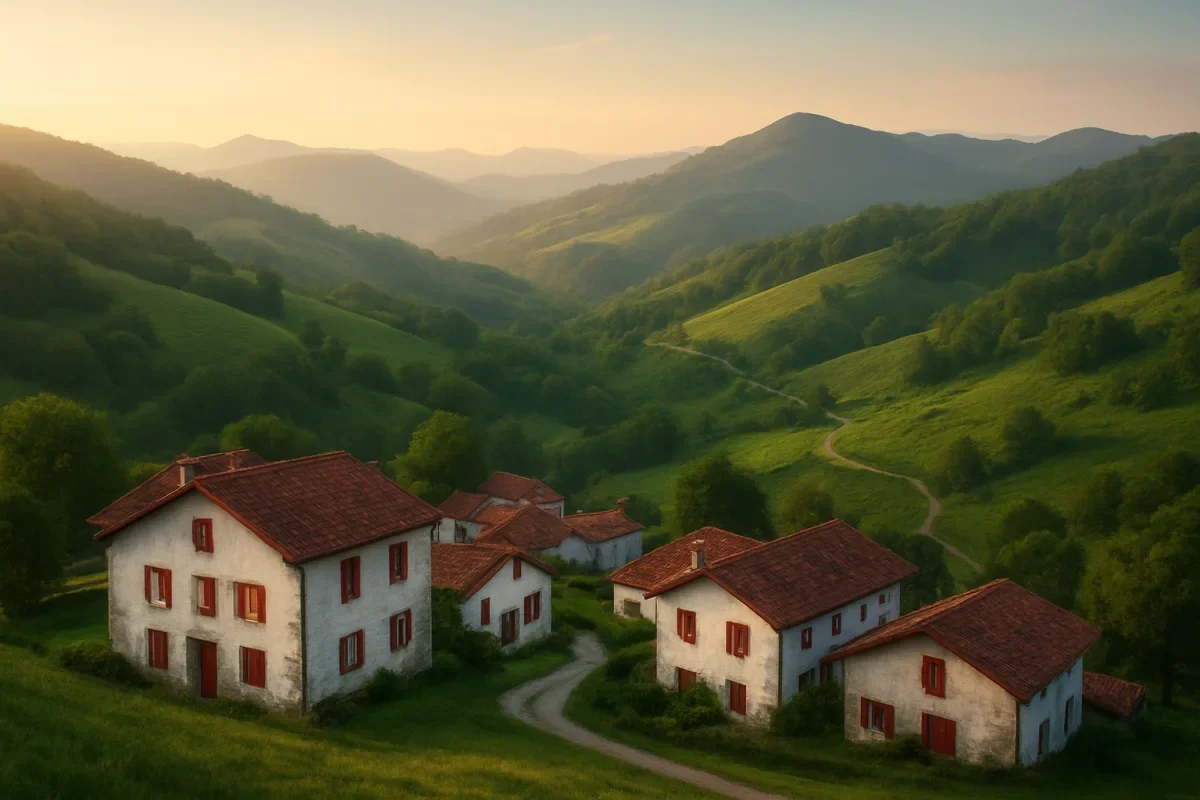
The inland Basque Country corresponds to the hinterland of the Basque coast, in the Labourd and Lower Navarre areas. People come here for the white half-timbered houses, valleys, mountain passes, pastures, marked trails, and the calmer atmosphere compared to the coast. It is precisely this contrast that makes the itinerary pleasant over three days: alternating heritage, walking, and short journeys.
What is the best time to enjoy the villages and hikes?
The best compromise is in spring and autumn: milder temperatures, superb light, often lighter crowds, and still pleasant trails. Summer remains very convenient thanks to long days, but you need to start early. In winter, the atmosphere is quieter, but wet paths, wind, and visibility can change the plan.
- April to June: green landscapes, flowering, good conditions for walking without strong heat.
- September to October: lower light, beautiful reliefs, villages often less crowded during the day.
- July-August: plan parking and lunch breaks well in advance.
- November to March: keep a plan B with a short walk or a heritage visit.
How to get around inland Basque Country?
The car remains the most flexible solution. Villages are close on the map, but roads are winding, sometimes narrow, and travel times are rarely those of an optimistic GPS. Between Ainhoa and Sare, count about 10 to 15 minutes; between Sare and Saint-Jean-Pied-de-Port, rather 45 to 55 minutes; from Saint-Jean-Pied-de-Port to the Aldudes valley, 25 to 35 minutes depending on the arrival point.
For parking, plan ahead: in the most visited villages, it is better to arrive before 10 a.m. in high season. Look for parking lots at the entrance of the villages or spots within walking distance of the center. Parking is generally easy outside of summer weekends, but it is better not to improvise.
Which route map to follow for a road trip in the inland Basque Country?
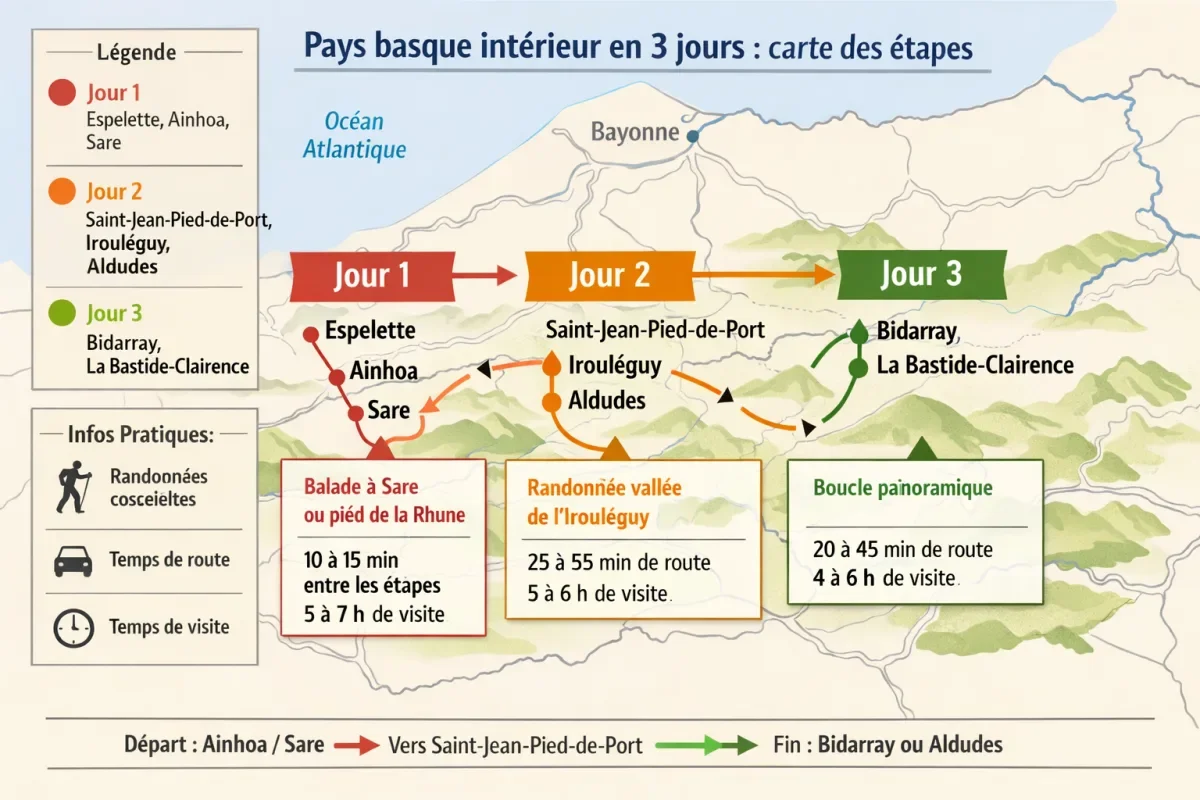
The smoothest map is one of a geographical progression: a first day around Ainhoa and Sare, a second around Saint-Jean-Pied-de-Port and the valley, then a third in a quieter area like Bidarray or the Aldudes valley. This logic limits backtracking and keeps time for walking.
| Day | Villages / area | Recommended hike | Driving time | Visiting time |
|---|---|---|---|---|
| Day 1 | Espelette, Ainhoa, Sare | Panoramic walk around Sare or a short walk at the foot of the Rhune | 10 to 15 min between stops | 5 to 7 h with breaks |
| Day 2 | Saint-Jean-Pied-de-Port, Irouléguy, Aldudes | Moderate loop in the valley or on the slopes of the vineyard hills | 25 to 55 min depending on the loop | 5 to 6 h |
| Day 3 | Bidarray or La Bastide-Clairence | Panoramic trail, easy loop or moderate hike | 20 to 45 min depending on your base | 4 to 6 h |
If you want to reduce travel even more, the best strategy is to sleep two nights in the same area, for example around Saint-Jean-Pied-de-Port if you favor the valleys, or near Sare if you want a stay more focused on the villages of Labourd. In both cases, you avoid retracing the same routes.
Day 1: Espelette, Ainhoa and Sare, the ideal warm-up
This first day is the easiest to experience: it combines very recognizable villages, very short driving sequences, and a light hike in the late afternoon. It is the best start if you arrive from the coast or if you are starting a Basque Country road trip without wanting to push hard on the first day.
Morning: Espelette then Ainhoa
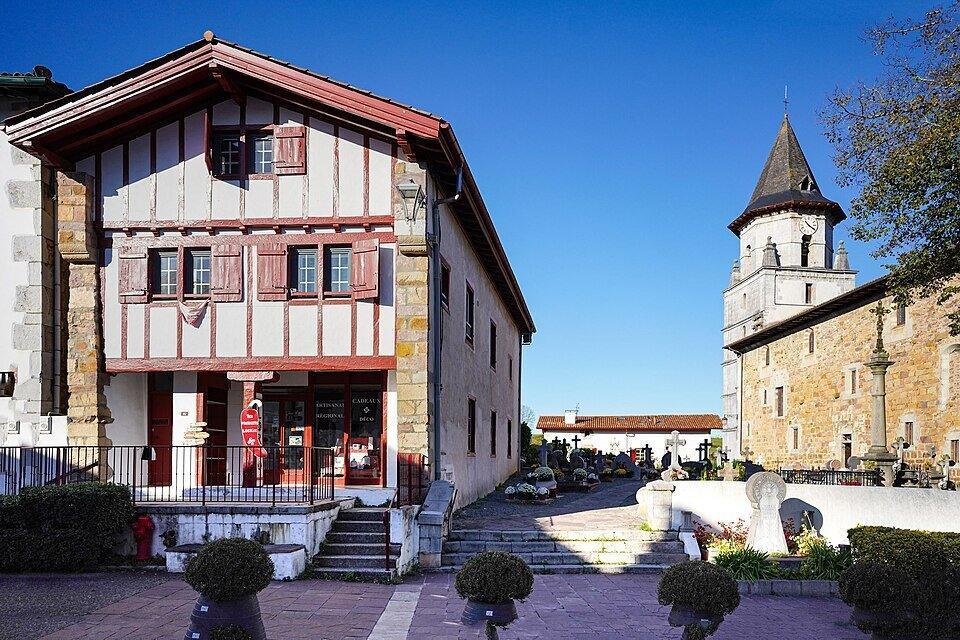
Start with Espelette if you like very identifiable villages and lively streets from the morning. Even without a market, people come for the atmosphere, the facades, and the local product shops. Then head to Ainhoa: the village is quieter, clearer, and can be well discovered in 45 minutes to 1 hour of easy walking.
If your stay falls on a market day, keep Espelette as the first stop. However, if you prioritize traffic and parking, the reverse order also works: Ainhoa in the morning, Espelette early afternoon. In both cases, do not overload the morning; this area is better savored by taking time to walk and stop.
Lunch: a tasty break without complications
For lunch, keep it simple: a village inn, a small menu, or a picnic made up of sheep’s cheese, local charcuterie, bread, and fruit. The goal is not to have a big gourmet meal, but to save time and avoid a too long break before the afternoon walk.
Afternoon: Sare and a panoramic walk
Finish with Sare, then add a short or moderate inland Basque Country hike around the nearby hills. A loop of 1.5 to 3 hours, with a moderate elevation gain, is enough to give the nature dimension of the stay. If you want to push a bit more, choose a route at the foot of the Rhune, but do not aim too high if the weather is wet or windy.
Why this day works: the distances are short, the villages complement each other, and the walk comes at the right time, when you have already found your bearings. It is the best introduction for an Inner Basque Country itinerary over three days.
- Total driving time: about 30 to 40 minutes accumulated over the day.
- Recommended pace: 2 villages in the morning, light lunch, hike in the afternoon.
- Slower version: keep only Espelette and Sare if you are traveling with family.
Day 2: Saint-Jean-Pied-de-Port, Irouléguy and the Aldudes Valley
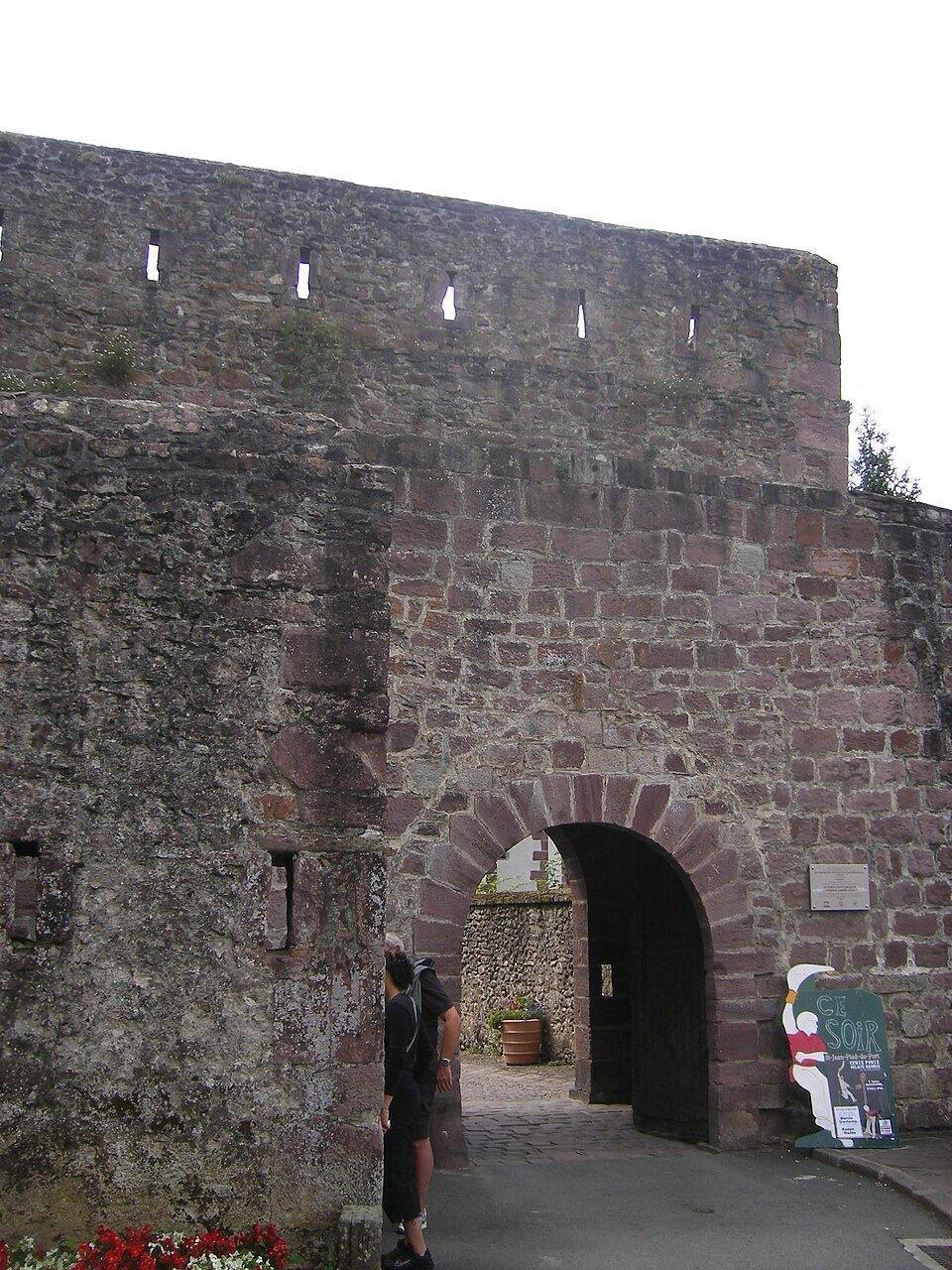
This second day adds more depth to the stay. It focuses on heritage, valley panoramas, and a slightly more marked walk. It is the right stage to see Saint-Jean-Pied-de-Port visit rhyme with alleys, ramparts, bridge, and the atmosphere of departure towards the Camino de Santiago paths.
Morning: strolling in the old town
Arrive early to enjoy the alleys before the crowds. The old center is best explored on foot: ramparts, gate, bridge, main street, and traditional facades provide a clear reading of the town in 1 hour 30 minutes to 2 hours. It is also the time to take some photos without having to deal with heavy traffic.
If you like concrete landmarks, this is where you should look at heritage signs, old layouts, and views towards the valley. The town lends itself very well to a short and dense visit, without dispersion. Keep in mind that in high season, the parking lots closest to the center fill up quickly.
Lunch: local products and valley
For lunch, look for either a town center address or a quieter table when leaving the town. The area is conducive to simple but well-executed plates: sheep cheese, pepper, Basque cake, local meat, seasonal vegetables. Here again, the idea is to stay in the rhythm of the day.
Afternoon: Irouléguy or Aldudes Valley
In the afternoon, choose between Irouléguy and the Aldudes Valley. The first is perfect if you want to read the territory through its vineyards and hillsides; the second gives a more mineral and mountainous feeling, with narrower roads and a real impression of remoteness. A loop of 2 to 4 hours is more than enough.
In practice, take a hike of easy to moderate level if you have already walked the day before, or a more sustained outing if you are comfortable with elevation gain. Check water, signage, and weather, especially if you aim for a pass or a more exposed slope. In this part of the stay, the landscape counts as much as the performance.
- Short variant: visit Saint-Jean-Pied-de-Port + panoramic walk of 1 hour 30 minutes.
- Intermediate variant: town in the morning, 3-hour hike in the hills in the afternoon.
- More sporty variant: hilly loop with return via a small pass or a ridge trail.
Day 3: quieter villages and end of nature stay
The last day serves to slow down a bit without losing the intensity of the trip. It is the right time to visit a less frequented village, walk a few more hours, and finish with a viewpoint that gives the impression of closing a loop. For this, Bidarray or La Bastide-Clairence are very good choices depending on your starting point.
Morning: La Bastide-Clairence or Bidarray
La Bastide-Clairence is suitable if you like quiet towns, reading the architecture, and a short but precise visit. Bidarray works better if you want to stay in a valley atmosphere and prepare for a more marked hike. In both cases, two hours are enough to see the essentials without rushing.
This choice mainly depends on your overall itinerary. If you are still staying near Saint-Jean-Pied-de-Port, Bidarray remains logical. If you are heading back west or towards the coast, La Bastide-Clairence reduces detours. The most important thing is to avoid multiplying valley changes on the same day.
Lunch: last local stop
At this stage, a quick lunch saves time: inn, village café, or a well-prepared picnic. If you are traveling in warm weather, favor a lighter meal to conserve energy before the last walk. If the weather turns, keep a plan B in the village with crafts, a short visit, and an extended coffee break.
Afternoon: closing hike
To finish, choose a panoramic walk or an accessible loop rather than a long demanding hike. The goal is to end with pleasure, not to finish exhausted. A walk of 1.5 to 3 hours with a beautiful final viewpoint is more than enough to mark the end of the stay.
The best option is often to take a marked trail that remains clear even when visibility decreases. If you have already done a more sustained climb the day before, this day should remain flexible. In case of fatigue or rain, replace the hike with a village, a heritage visit, or a longer gourmet break.
| Level | Type of itinerary | Duration | Indicative elevation gain | For whom? |
|---|---|---|---|---|
| Easy | Loop around a village, panoramic trail, short round trip | 1.5 to 2.5 hours | 100 to 250 m | Slow travelers, families, recovery day |
| Moderate | Valley hike, gradual ascent, well-marked loop | 2.5 to 4 hours | 250 to 500 m | Good compromise for a 3-day stay |
| Strenuous | Pass, ridge, long round trip or portion of GR | 4 to 6 hours | 500 m and more | Travelers used to walking and managing the weather |
Priority villages of the inland Basque Country to favor
If you had to keep only a few stops, keep a tight selection. The real trap in the area is wanting to see everything: the villages are beautiful, but the differences in driving time, breaks, and parking require making choices. Better four well-experienced stops than eight rushed visits.
- Espelette: for the immediate atmosphere, the facades, and the lively center.
- Ainhoa: for Labourd architecture and a compact visit.
- Sare: for the transition between village and relief, with good walking options.
- Saint-Jean-Pied-de-Port: for the heritage, the ramparts, and the departure atmosphere.
- Bidarray: for a quieter village, in the valley, with a stronger nature dimension.
- La Bastide-Clairence: for a quiet stop and an easy-to-read historic center.
For a first discovery, the most balanced trio remains Ainhoa, Sare, and Saint-Jean-Pied-de-Port. If your goal is more “postcard” and slower, add Espelette. If you like less frequented areas, slip Bidarray or the Aldudes valley instead of another stop.
Which hikes to choose according to your level?
The right hike is not necessarily the longest: it is the one that fits well into your day. Over three days, it is better to have a clear, well-marked walk compatible with the weather than an overly ambitious outing that cuts your afternoon short or forces you to shorten a visit.
Easy hikes
Aim for short loops around villages, walks at the foot of hills, or panoramic trails that are not technical. This is ideal if you are traveling with family, chaining several visits, or want to keep time for lunch breaks and photos.
Intermediate hikes
The best pleasure/effort ratio is often found here: 2 to 4 hours of walking, a moderate elevation gain, a beautiful viewpoint, and a stress-free return. The areas of Sare, Irouléguy, and the Aldudes valley are very suitable for this.
More athletic hikes
Reserve these for travelers accustomed to walking and reading terrain. In this case, always check the markings, water, weather coverage, and return time. Over three days, an overly demanding outing can unbalance the entire stay. The goal is to stay consistent, not to end the weekend “broken”.
- Before leaving: load your route onto an IGN map or a reliable app.
- On site: follow the marked trails and respect private property.
- In the mountains: leave with a jacket, water, and a real safety margin.
- During hunting season: check locally before the hike.
Summary map of the 3 days
Here is the simplest way to keep it in mind: Day 1 in the villages of the Ainhoa / Sare area, Day 2 around Saint-Jean-Pied-de-Port and the valley, Day 3 in a quieter village and a final panoramic walk. This logic works very well for a short and coherent itinerary.
For an optimized version, keep a single sleeping base if your program is focused on the villages of Labourd, or a maximum of two bases if you want to balance the interior coast and valleys. This is the best way to limit unnecessary travel without sacrificing the most interesting stages.
Practical tips for a successful stay
The success of a three-day stay often depends on very concrete details: parking, departure time, weather, and type of shoes. These are what turn a theoretically interesting itinerary into a truly good trip. It is therefore better to prepare these points before departure.
Where to sleep?
Choose a guesthouse, a small hotel, or central accommodation according to your itinerary logic. To easily get around, the areas of Sare and Saint-Jean-Pied-de-Port are practical. If you want to limit changes, sleep two nights in the same place and build your days as day trips.
Where to eat?
Favor local addresses, daily menus, and short menus. The interior Basque Country does not need to be complicated to be good: seasonal cuisine, local products, and a simple dining room are enough. Book if you come in summer, especially in the most well-known villages.
What to put in the bag?
- Walking shoes with soles suitable for wet trails.
- 1 to 1.5 liters of water per person for midday hikes.
- Light jacket or raincoat, even in summer.
- Map or GPS, especially on valley loops.
- Sun protection and a cap if you walk in open terrain.
Mistakes to avoid
- Trying to visit too many villages in one day.
- Underestimating travel times on secondary roads.
- Choosing a hike without checking the elevation gain or actual duration.
- Leaving too late and facing a lack of space in central parking lots.
- Forgetting that changing weather can make a trail longer or slower than expected.
For schedules, access, and local rules, always cross-check information from tourist offices, municipal websites, and IGN maps. In this area, details sometimes change depending on the season, works, events, or temporary restrictions.
FAQ
Is a car necessary to visit the interior Basque Country in 3 days?
Yes, it is highly recommended. The villages and valleys are close, but public transport connections remain poorly suited for a short itinerary. With a car, you can better manage schedules, hikes, and lunch breaks, while avoiding wasting time on transfers.
Which villages to choose if you can only see three?
The most balanced trio is Ainhoa, Sare, and Saint-Jean-Pied-de-Port. You get Basque architecture, a valley atmosphere, and a more pronounced heritage. If you prefer quieter villages, replace one of them with Bidarray.
Can this trip be done with family?
Yes, provided you choose easy or moderate hikes and lighten the program. The villages are very suitable for visiting with children, and the short loops around Sare or Ainhoa are often more appropriate than long walks at altitude.
Which hike to prioritize if you want a beautiful panorama without walking too much?
Choose a short loop around Sare, a balcony walk towards the neighboring hills, or a moderate trail in the Aldudes valley. The right criterion is not the pure distance, but the balance between view, duration, and fatigue.
Where to find a reliable map of the stages?
The most reliable base remains an IGN map supplemented by information from local tourist offices and the municipalities crossed. For a 3-day trip, especially check parking, trail markings, walking times, and any seasonal restrictions.