
Why Adopt Minimalism Step by Step
Many imagine minimalism as a radical purge: emptying the house, changing style, completely overhauling daily life. However, this vision often causes anxiety and quick failure. A gradual approach allows testing new habits, adjusting the pace according to constraints, and integrating each achievement more deeply into one’s lifestyle. When starting with a small weekly sort, you create regular success and strengthen your motivation.
The Fundamental Principles of One Habit Per Week
1. Define a Specific Goal
Each Monday, take a few minutes to choose a concrete goal, for example: “Declutter a kitchen drawer” or “Reduce my digital subscriptions.” The clarity of intention helps stay focused. Rather than saying “tidy up a bit,” prefer “sort unused utensils” with a 20-minute timer. This method provides structure and avoids scattering efforts.
2. Use Micro-Time Management
Assigning a specific time slot to your new habit promotes its integration. A simple timer of 10 to 30 minutes is enough. You could also establish a ritual: for example, every Wednesday after the meal, sort an administrative folder or move five unnecessary items into a donation box. This weekly repetition creates a gentle automaticity.
3. Documenting Your Progress
Keeping a personal journal for 5 minutes a day helps to take a step back from your approach. In a short paragraph, note the result of your action and your feelings. Over the weeks, you will see the cumulative impact of your efforts, which fuels motivation. This writing habit fits perfectly with decluttering, reinforcing both reflection and action.
Examples of Monthly Routines
To give a more concrete overview, here is a small calendar of habits to adopt over a month:
- Week 1 – Sort a kitchen drawer and donate unused utensils.
- Week 2 – Uninstall two apps on your smartphone that you no longer use.
- Week 3 – Organize your bills and administrative papers into folders.
- Week 4 – Clean your mailbox by deleting obsolete newsletters.
You can then repeat the cycle by tackling another area of the house or digital space. Each mini-action, when done regularly, leads to a significant transformation without excessive pressure.
Tools and Resources to Support You
Lists and Calendars
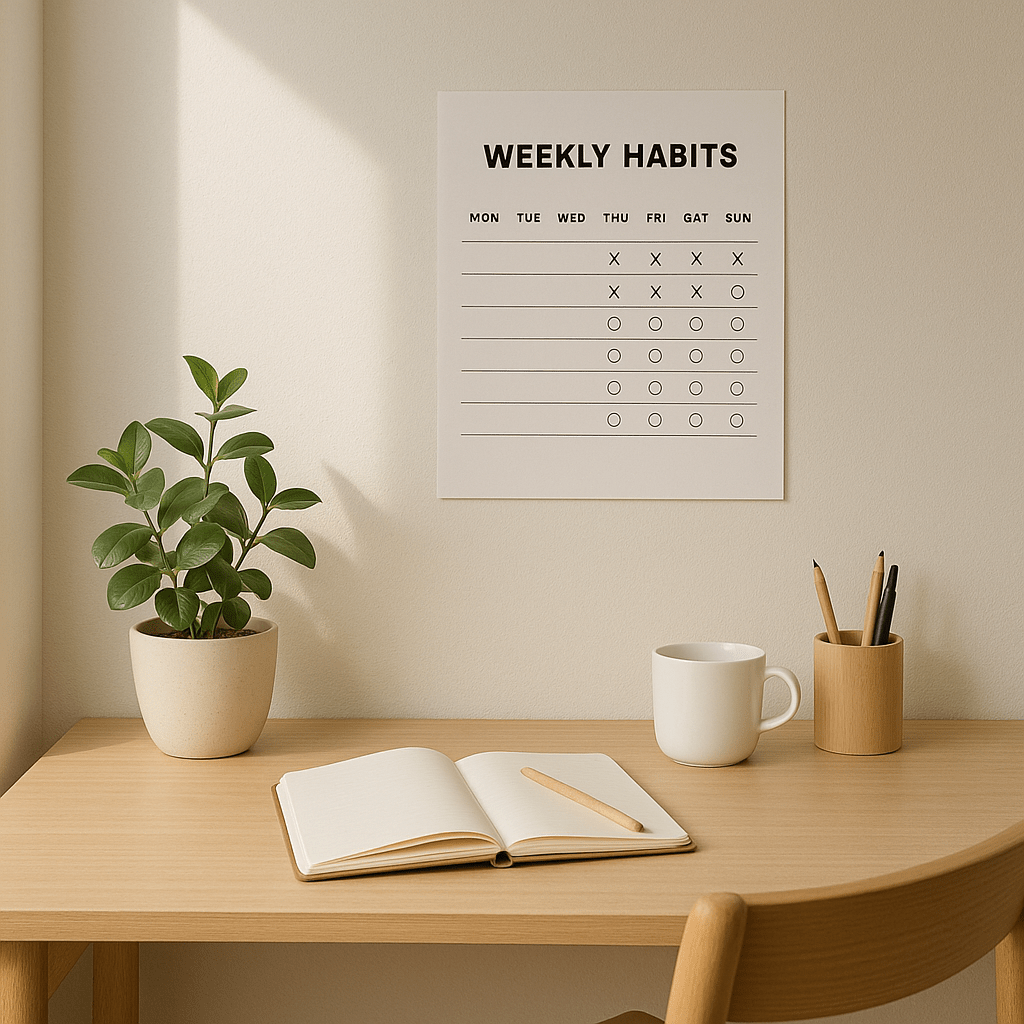
Task lists remain a valuable ally. Whether it’s a simple loose sheet or a dedicated app, they offer a clear view of weekly goals. You can also use a wall calendar to check off each completed week: the visual progress creates a reward effect.
Sorting Boxes and Labeling
To speed up decluttering, equip yourself with three boxes: “To Keep,” “To Donate,” and “To Throw Away.” Labeling simplifies the decision phase, especially when in doubt. Once an item goes into the “To Donate” box, it does not come back.
Support Materials
Practical guides, podcasts, or themed videos can inspire new ideas. For each topic covered, a quick online search often provides specific advice (e.g., optimizing a minimalist desk, tips for a streamlined wardrobe…).
Turning Your Habits into a Lifestyle
After a few months, your weekly micro-routines become true reflexes. You no longer think: you spontaneously spot what clutters your environment or mind. Minimalism stops being an isolated project and blends into your way of living. You will learn to anticipate, to ask yourself before each purchase if the item will really be useful, to prioritize experience rather than accumulation.
FAQ
How much time per week should be dedicated to progressive minimalism?
Generally, 20 to 30 minutes is enough. The goal is not to spend hours sorting, but to take regular steps. With a short ritual, you achieve consistent results without mental overload.
What if I miss a week?
It’s not a problem: the important thing is to resume. Don’t overwhelm your motivation; simply adjust your plan and start the next action again. Flexibility ensures the sustainability of the project.
Can I combine several mini-actions in one session?
Yes, as soon as you feel comfortable. However, starting with just one weekly habit allows you to clearly measure its effect and avoid spreading yourself too thin.
How to maintain the benefits after several months?
Periodically integrate a “review week”: revisit the areas already treated, adjust if necessary, and celebrate your progress. You can also move on to more ambitious actions once the rhythm is established.