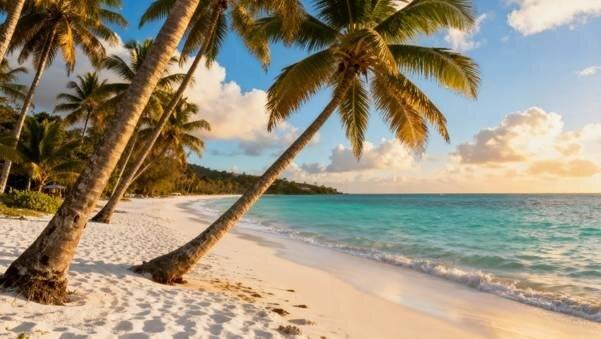
Martinique reveals its contrasts between the Atlantic Ocean and the Caribbean Sea. This volcanic land combines paradisiacal beaches, historical heritage, and lush nature to offer an authentic Caribbean experience. From the volcanic peaks of Mount Pelée to the crystal-clear lagoons of Les Salines, discover the destinations that make Martinique an essential stop in the Antillean arc.
To fully explore these wonders, car rental in Martinique from a local agency is essential. The freedom it provides allows access to the most remote sites and the ability to create your itinerary according to your desires, far from the constraints of organized tours.
Sommaire
1. Les Salines Beach – The Iconic Martinican Seaside
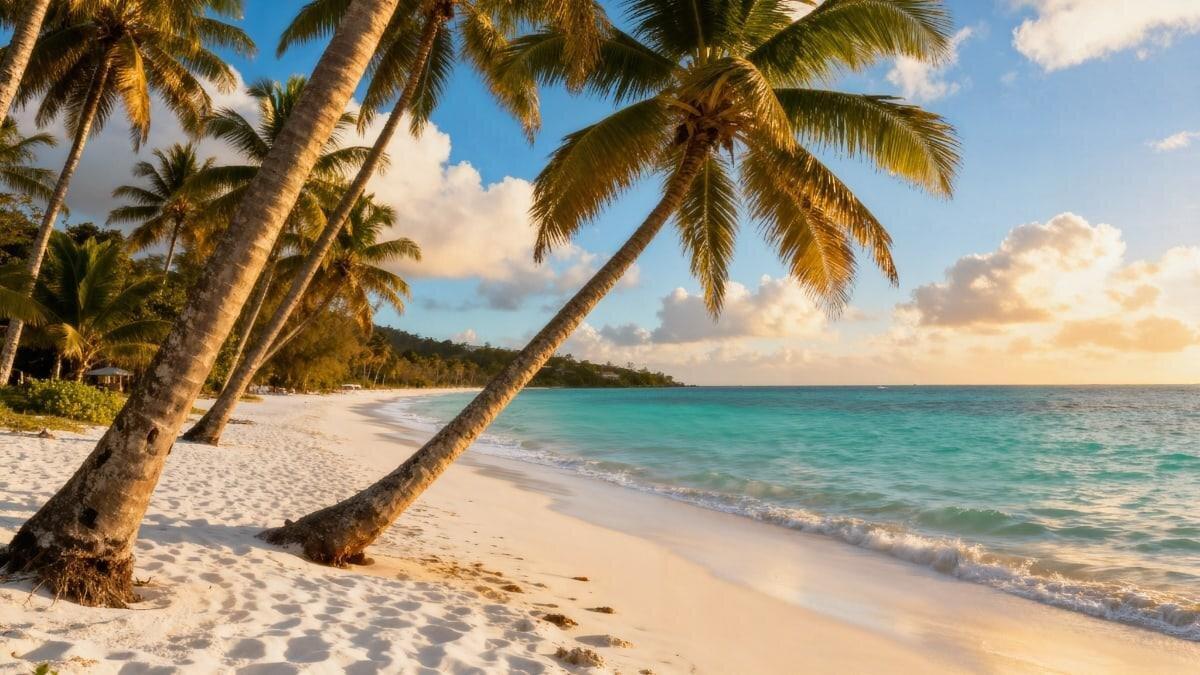
Located in Sainte-Anne, Les Salines beach embodies the postcard image of Martinique. This stretch of white sand nearly two kilometers long, bordered by a natural coconut grove, offers an idyllic setting under the trade winds. Its shallow and calm waters make it a favored spot for families, while its shaded back beach invites tropical relaxation.
The site’s authenticity lies in its natural preservation. Unlike other Caribbean destinations, Les Salines has managed to retain its wild character. Traditional carbets punctuate the beach, offering shaded areas for picnicking facing the lagoon.
2. Mount Pelée – Volcanic Majesty of the Antilles
The highest point in Martinique, at 1,397 meters altitude, Mount Pelée dominates the island landscape with its imposing silhouette. This active volcano, sadly famous for the 1902 eruption that destroyed Saint-Pierre, now offers one of the most spectacular hikes in the French Antilles.
The ascent from Grande Savane requires three and a half hours of sustained effort to climb 720 meters of elevation gain. At the summit, the panorama embraces the entire Martinican archipelago, from the Caribbean coast to the southern peaks. The vegetation changes remarkably with altitude, shifting from dense tropical forest to high-altitude cloud formations.
3. Balata Garden – Tropical Botanical Jewel
Created in 1982 by landscaper Jean-Philippe Thoze, Balata Garden is the most beautiful botanical garden in Martinique. Located ten kilometers north of Fort-de-France, on the heights of Balata, this plant sanctuary gathers more than 3,000 species of tropical plants from around the world.
The discovery trail, lasting at least an hour and a half, winds through different botanical atmospheres. The suspended walkways in the canopy offer a unique perspective on the lush vegetation and the bay of Fort-de-France. The restored Creole house, transformed into a museographic space, completes this immersion into the tropical way of life.
4. Les Anses d’Arlet – Preserved Caribbean Authenticity
The village of Les Anses d’Arlet, nestled in a protected bay on the Caribbean coast, preserves the authentic atmosphere of Martinican fishing villages. The church with its white bell tower, set facing the sea, composes with the colorful Creole houses a picturesque tableau of traditional Martinique.
Anse Dufour and Anse Noire, located nearby, illustrate the geological diversity of the island. The first reveals its light sands while the second, formed by volcanic erosion, features a black sand shore contrasting with the Caribbean blue. These two coves, separated by a rocky promontory, are popular diving sites for observing sea turtles.
5. Saint-Pierre – Living Memory of Antillean History
Former economic capital of Martinique, Saint-Pierre preserves in its ruins the poignant testimony of the volcanic eruption of May 8, 1902. Nicknamed the “Little Paris of the Antilles” before the disaster, the city is gradually reborn around its exceptional historical heritage.
The Franck Perret Museum, housed in the former volcanic dungeon, traces the history of this tragedy that caused 28,000 victims. The remains of the theater, the cathedral, and old residences punctuate a striking memorial route. The covered market, a faithful reconstruction of colonial architecture, testifies to the resilience of this historic city in the face of natural adversity.
6. The Caravelle Peninsula – Atlantic Nature Reserve
A wild promontory on the Atlantic coast, the Caravelle Peninsula offers a striking contrast with the Caribbean gentleness. This 388-hectare nature reserve preserves varied ecosystems: mangroves, dry forests, high-altitude meadows, and rocky coastline battered by the trade winds.
The discovery trail leads to the Caravelle lighthouse, an exceptional viewpoint over the Atlantic Ocean and the islets of Robert. The orientation table indicates the main islands of the Antillean arc visible in clear weather. The endemic flora, adapted to salty spray and constant winds, demonstrates the remarkable adaptation of tropical vegetation to maritime conditions.
7. Le Diamant and its Legendary Rock
The commune of Le Diamant takes its name from the famous rock rising 175 meters off its coast. This volcanic formation, fortified by the British at the beginning of the 19th century, is one of the most photographed sites in Martinique.
Le Diamant beach stretches over four kilometers of volcanic gray sand facing this stone giant. Swimming conditions, sometimes rough due to the Atlantic swell, are more suited to surfers than families. The Anse Cafard Memorial, a set of fifteen statues commemorating the victims of slavery, overlooks this historically charged coast from the hill of the same name.
8. Fort-de-France – Creole Capital of the Antilles
Prefecture of Martinique, Fort-de-France concentrates Antillean urban bustle around its colonial historic center. The Schœlcher Library, the work of Henri Pick in metal architecture, testifies to the cultural ambition of the tropical Belle Époque.
The covered market, the true beating heart of the capital, gathers spices, tropical fruits, and local crafts in a typically Antillean atmosphere. Saint-Louis Cathedral, rebuilt after the 1891 earthquake, illustrates the adaptation of religious architecture to tropical seismic constraints. Fort Saint-Louis, still in military use, has been watching over the bay for more than three centuries.
9. Rum Distilleries – Martinican Taste Heritage
Martinique claims the only Appellation d’Origine Contrôlée for rum in the Antillean arc, a testimony to the excellence of its sugar production. The Clément Estate, in François, combines historical heritage, botanical gardens, and tasting in an exceptional setting of the former plantation.
The Neisson distillery, in Carbet, continues the traditional methods of producing agricole rum in its famous square bottle “Zépol Karé”. The Saint-James distillery, in Sainte-Marie, offers a comprehensive museum route tracing the evolution of distillation techniques since the 18th century. These sites combine industrial heritage, ancestral know-how, and Creole art of living.
10. The Islets of François – Secret Lagoons of the Atlantic Coast
The bay of François, protected by the coral reef, shelters a string of islets with crystalline waters contrasting with the roughness of the Atlantic. The islet Thierry and the islet Oscar, accessible by ferry, offer white sandy beaches preserved from mass tourism.
La Baignoire de Joséphine, a sandy shoal located between the two islets, allows a unique swim in the middle of the turquoise lagoon. This site, accessible only by boat, hosts the traditional rum baptism, an initiatory ritual with Creole flavors. The seabeds, protected by their status as a nature reserve, reveal exceptional marine biodiversity to diving enthusiasts.
Practical Tips for Your Discovery
Martinique is ideally visited with a rental vehicle allowing access to the most remote sites. Mountain roads, sometimes winding, require cautious driving, especially towards Pelée and Caravelle. The dry season, from December to May, offers the best climatic conditions for hiking and discovering natural sites.
Entrance fees for paid sites generally range between 5 and 16 euros for adults. Combined passes, such as the one linking the Balata garden and the Martinique zoo, allow savings on multiple visits. Online booking, recommended during the high tourist season, guarantees access to the most frequented sites.