
Why offer an emotion box?
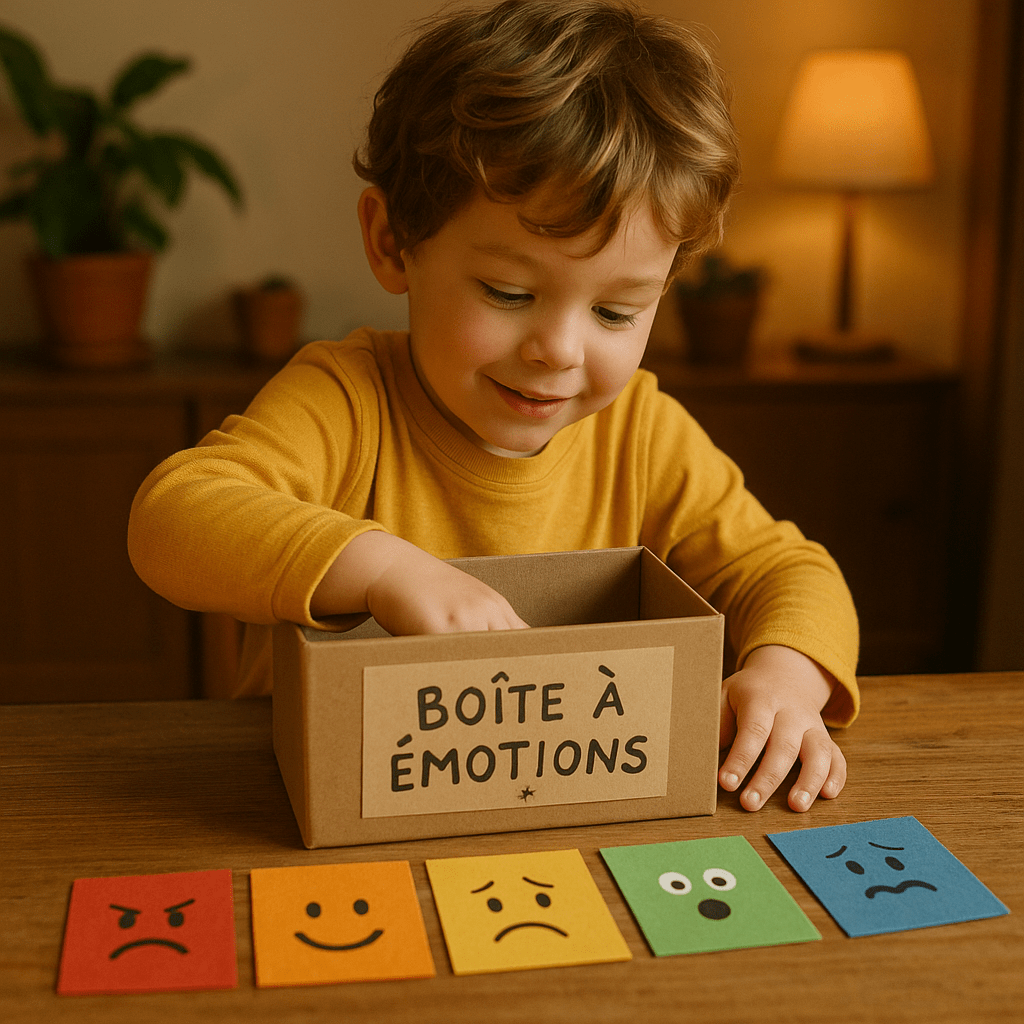
During early childhood and the first years of primary school, the child discovers an ever wider range of feelings. They may feel overwhelmed by intense emotions, without always knowing how to express them. The emotion box acts as a mediator: it verbalizes the invisible and offers a structured framework for dialogue. Using images, small figurines, or cards, it allows pointing out what is happening inside, while helping the adult decode emotional cues.
Emotional development goals
Three main areas are targeted: strengthening the emotional vocabulary, training the recognition of bodily signs (clammy hands, racing heart…) and encouraging regulation through simple strategies (breathing, drawing, sharing). Each card, each object coming out of the box then becomes a conversation starter, a gateway to explore the inner world.
Contexts of use
- In class, during group time, to check how each student feels before a collective activity.
- At home, at the beginning or end of the day, to establish a ritual of sharing and kindness.
- In an office or specialized setting, as a visual aid during psycho-pedagogical assessments.
How to build your emotion box?
Nothing could be simpler and more accessible: all you need is a cardboard box, a wide selection of small objects or images, and a touch of creativity. The idea is to let the imagination run free so that the child truly feels like an active participant in the tool.
- Select the box: a shoebox or a small wicker basket will do.
- Prepare the materials: printed cards, cut out from a magazine, or markers to draw expressive faces.
- Add accessories: colorful pompoms, small figurines, beads… anything that evokes a feeling.
- Label each item by writing the words “joy,” “anger,” “sadness,” etc.
- Personalize the box: let the child decorate it so they associate it with a feeling of pride.
Using the emotion box daily
In school
Before a creative workshop or a reading session, the teacher can invite each student to pick a card and explain why they identify with that particular emotion. This ritual, repeated weekly, establishes a reassuring framework: every voice is heard, every feeling validated. In the long term, there is often an improvement in group cohesion and a decrease in minor tensions among classmates.
At home
In the evening, around a snack or before bedtime, offering this time for exchange also makes it easier to quickly identify any discomfort. For example, a child who consistently picks the “sadness” card after school may be expressing a need for comfort or may have encountered a difficulty. Rather than leaving things unsaid, the box becomes a support to start the conversation gently.
Tips for facilitating the activity
- Establish a climate of trust: no emotion is judged.
- Vary the materials: include textures (fabric, foam) to stimulate other senses.
- Encourage creative expression: the child can write, draw, or tell a little story.
- Regularly reassess: add new cards or replace those that lose interest.
FAQ
- From what age is the emotion box suitable?
- This tool can be introduced from age 3, as soon as the child begins to recognize some basic emotions. For younger children, simple images and bright colors are preferred.
- How many cards or objects should be prepared?
- About fifteen items is a good starting point: 5 primary emotions (joy, sadness, anger, fear, surprise) and 10 complementary shades or situations.
- Can the box evolve over time?
- Absolutely! Depending on age and needs, new emotions can be added or mini-workshops related to the chosen theme can be created.
- Is it necessary to always be present during use?
- It is recommended to accompany the child, especially at first, to give them confidence and model emotional language.