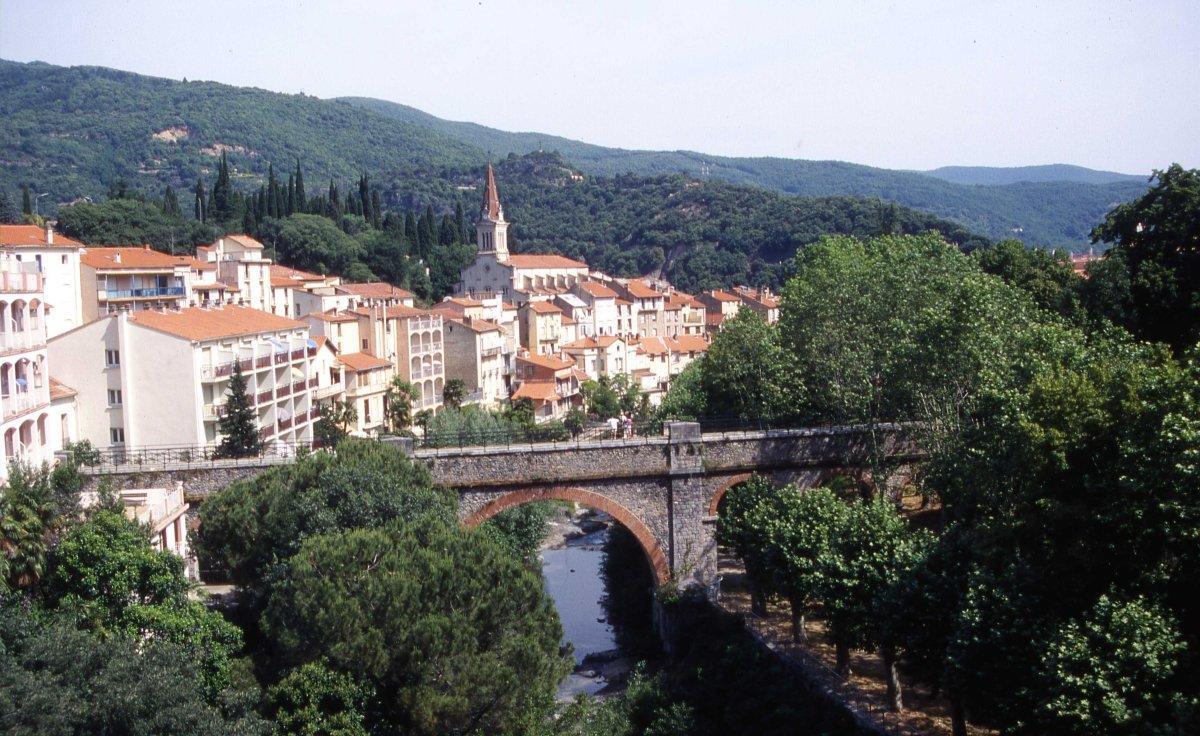
Why choose the Pyrénées-Orientales
The first asset of the department lies in its very compact geography. From a campsite near Céret, you can easily reach the villages of Vallespir, the roads to Amélie-les-Bains, the landscapes of the Albères, and, depending on traffic, the coastline of the Côte Vermeille. This stay logic avoids the “exhausting road trip” effect: you return in the evening to the same place, children keep their bearings, and the days remain flexible.
The second, more cultural asset comes from the Catalan identity. Here, place names, colorful facades, markets, local festivals, and cuisine tell a story of a border more open than a simple line on a map. Holidays quickly take on a concrete rhythm: market in the morning, swimming or visiting in the afternoon, cool walk along the Tech at the end of the day.
The department also appeals to families who do not want to choose between sea and mountains. Collioure, Banyuls-sur-Mer, the Canigó, Villefranche-de-Conflent, or Céret do not tell the same story but compose a balanced stay. Local tourist offices highlight these major sites, notably the Canigó Grand Site, the Yellow Train, Collioure, and the fortified villages. Source: Tourisme Pyrénées-Orientales and local tourist offices.
Strengths and limits of the stay
Tourism in the Pyrénées-Orientales is appealing because it remains clear: the main hubs are easy to identify, panoramic roads are numerous, and activities adapt well to different ages. For a family stay, this variety is precious. Teens may enjoy the coves or descents to the sea, younger children the rivers and small trains, adults the villages and museums.
- Sea and mountains: two atmospheres accessible during the same stay.
- Catalan villages: Céret, Palalda, Collioure, Villefranche-de-Conflent.
- Family activities: swimming, markets, walks, heritage, Yellow Train.
- Long seasons: very pleasant spring and autumn outside peak times.
- Practical base: Vallespir suited for excursions to sea and mountains.
- Summer limit: heavy traffic to the coast in July-August.
- Weather: possible tramontane wind, especially on the coast.
- Mountains: routes to adapt to heat and skill level.
The good reflex is not to want to “do everything.” It is better to choose one big outing per day, then keep some breathing time: pool, river, nap, market, pétanque, reading in the shade. This pace fits well with the spirit of camping holidays, where accommodation is not just a stopover but a real part of the stay.
Céret and Vallespir gently
Céret is one of the best gateways to discover the Pyrénées-Orientales beyond the beach. The town has a true personality: shaded alleys, plane trees, terraces, market, bridges over the Tech, and artistic tradition. The modern art museum recalls the visits of great 20th-century artists in the town and its surroundings. Source: Céret Modern Art Museum.
For a family, Céret can be visited without pressure. You can stroll through the center, buy seasonal fruits, walk up to the Devil’s Bridge, then come back to have a drink under the trees. The town also provides access to the roads of Vallespir, this transitional territory between Pyrénées, holm oaks, perched villages, and Catalan borders.
From Céret, a simple excursion leads to Amélie-les-Bains-Palalda, known for its thermal setting and lush landscapes. The name Amélie les Bains evokes both hot springs and peaceful walks, bright façades, and hills covered with vegetation. It’s an easy outing to slip into a gentler day, without unnecessary kilometers.
“Vallespir is an excellent family base: close enough to the sea for a beach outing, inland enough to find coolness, and lively enough not to depend on a single activity.”
Field observation, tourism writing, 2025
Canigó, fortified villages, and the Yellow Train
Canigó is not just a summit. It is a visual, cultural, and emotional landmark for the Catalan Country. The massif has been classified as a Grand Site of France since 2012 according to Tourisme Pyrénées-Orientales, and the Syndicat Mixte Canigó Grand Site indicates that many municipalities are committed to its preservation and enhancement. Source: Tourisme Pyrénées-Orientales and Canigó Grand Site.
With family, it is not necessary to aim for the ascent. The best memories often come from a valley road, a viewpoint, an abbey, a forest walk, or a stone village. The Saint-Martin-du-Canigou Abbey, perched at nearly 1,100 meters, is one of the emblematic sites of the area. Source: Conflent Canigó tourist office.
Another strong experience: the Yellow Train. This historic TER connects Villefranche-de-Conflent to Latour-de-Carol, crosses the landscapes of the Catalan Pyrenees, and remains one of the most memorable outings for children. Practical information should be checked before departure, as schedules, works, and offers may vary depending on the season. Source: liO Train SNCF Occitanie.

Villefranche-de-Conflent also deserves a half-day. Its ramparts, Fort Libéria, and its inclusion in the Vauban network recall the strategic dimension of this valley. The municipality indicates that the fortifications of Villefranche are among the twelve Vauban sites listed as UNESCO World Heritage since 2008. Source: Villefranche-de-Conflent municipality.
Collioure and the Vermilion Coast
It is impossible to talk about tourism in the Pyrénées-Orientales without mentioning Collioure. The village embodies the postcard image of the department: a bell tower by the water, colorful façades, boats, royal castle, narrow alleys, and bright light. The visit is superb, but it requires some anticipation in high season. Arriving early, traveling light, and accepting to walk a few minutes from outside parking changes everything.
For families, Collioure is experienced simply: a walk along the seafront, ice cream, a small beach, alleys, a break in the shade. Painting enthusiasts can also tell children why this light attracted artists. The stay benefits from not being fixed solely on Collioure: Port-Vendres, Banyuls-sur-Mer, Paulilles, and Cerbère complement the day very well.
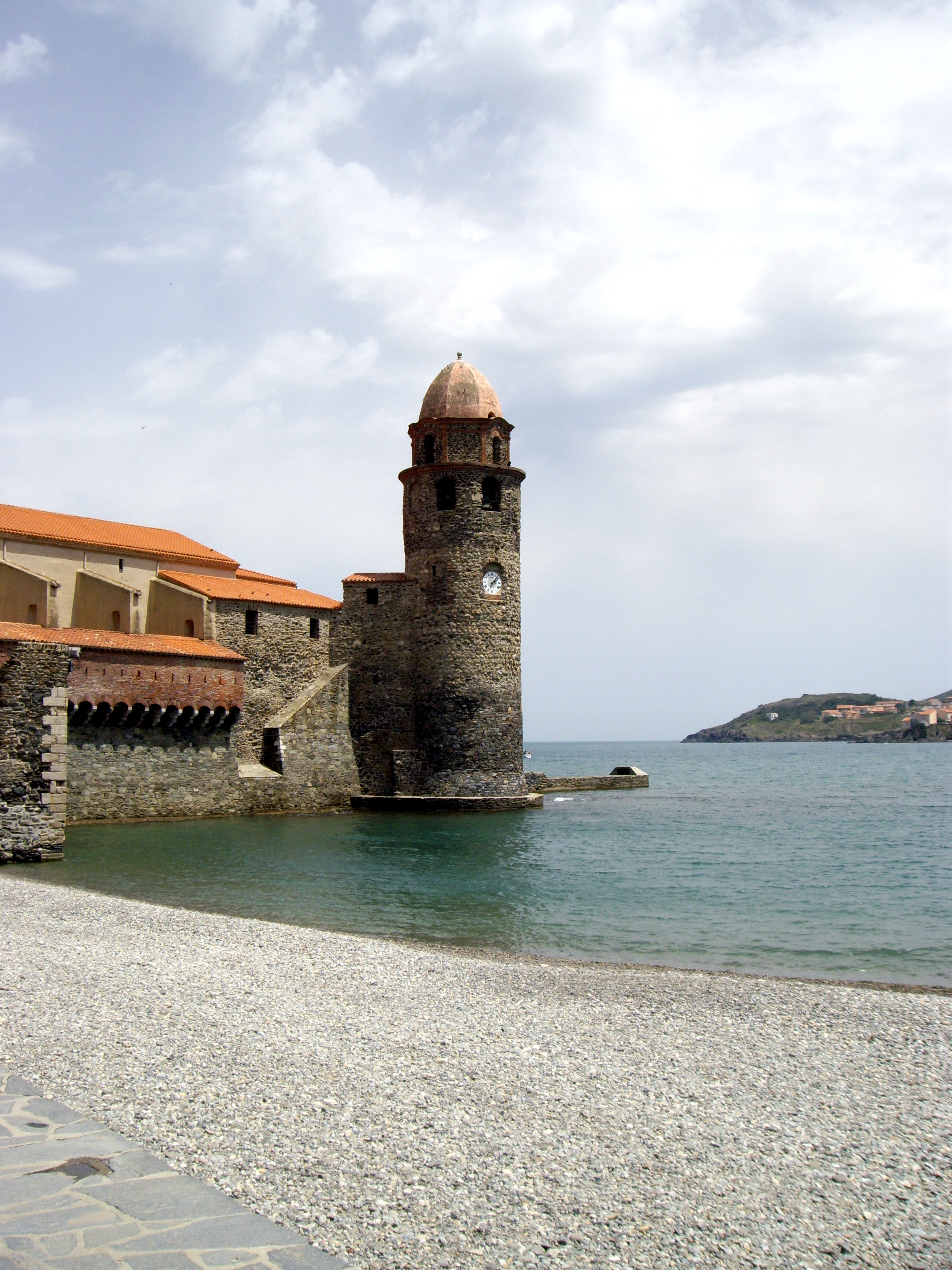
Further south, the Cerbère-Banyuls marine nature reserve protects a fragile area between Banyuls-sur-Mer and Cerbère. The reserve covers 650 hectares along 6.5 km of coastline according to the Banyuls-sur-Mer tourist office, which also recalls its creation in 1974 as the first French marine nature reserve. Source: Banyuls-sur-Mer tourist office.
“On the Côte Vermeille, the best day is not the busiest. A cove, a village, a viewpoint, and returning before the heat is better than four stops made too quickly.”
Practical advice, Pyrénées-Orientales field guide, 2025
Planning a week without rushing
A successful week in the Pyrénées-Orientales relies on balance. The classic trap is to stack the “must-sees”: Collioure, Canigó, Yellow Train, Spain, beaches, villages, hikes. Everything is tempting. But fatigue, heat, and winding roads quickly remind that a good stay needs breathing space.
| Day | Main idea | Recommended pace |
|---|---|---|
| 1 | Settle in, swim, discover the campsite | Gentle, no car |
| 2 | Céret, market, Devil’s Bridge | Active half-day |
| 3 | Collioure or Côte Vermeille | Early start |
| 4 | Amélie-les-Bains and Vallespir | Leisurely walk |
| 5 | Villefranche-de-Conflent or Yellow Train | Heritage day |
| 6 | Canigó, abbey or viewpoint | Depending on weather |
The last day can remain free: revisit a favorite market, swim, short walk, Catalan meal, buy local products. This flexibility transforms the holiday. It also allows full use of the campsite services: pool, catering, activities, play areas, or welcome advice depending on the facilities available on site.
Method and practical advice
This selection was designed as a travel guide, not as an exhaustive inventory. The method retains 6 criteria: family interest, realistic distance from Vallespir, variety of landscapes, heritage value, possibility of fallback in case of heat or wind, and ease of organization. The sources used prioritize tourist offices, site managers, and institutional organizations.
- Before departure: check schedules, access, parking, and local weather.
- In summer: book major outings in the morning.
- With children: bring water, hat, closed shoes.
- On the coast: anticipate parking and tramontane wind.
- In the mountains: do not underestimate sun and elevation gain.
- At the campsite: alternate active days and rest days.
The limits are clear: some schedules change according to seasons, traffic conditions can lengthen journeys to the sea, and mountain activities depend on the weather. For families, the best choice often remains a flexible program built around 2 major outings, 2 local half-days, and 2 free days.

Pyrenees-Orientales Tourism FAQ
What is the best time to go?
May, June, September, and early October are often the most comfortable periods: pleasant temperatures, clear light, lighter crowds. July-August remain very lively but require more planning for the coast and parking.
Where to stay for easy exploration?
The Vallespir, around Céret and Saint-Jean-Pla-de-Corts, is convenient for alternating between villages, mountains, nearby Spain, and trips to the Mediterranean. It’s an interesting option to avoid changing accommodations multiple times.
What to do with children?
Safe bets are Céret, supervised swimming depending on the season, the Yellow Train, Collioure early in the morning, markets, walks along the Tech river, and fortified villages. The right pace: one major activity per day, then a return to calm.
Is Collioure worth visiting in summer?
Yes, provided you plan ahead. You need to arrive early, avoid the hottest hours, be willing to walk, and limit your itinerary. Collioure is better enjoyed in a well-prepared half-day than in an impromptu 3 p.m. visit.
Is Canigó accessible to families?
The massif is accessible, but not all its hikes. For a family, it’s better to choose viewpoints, villages, abbey, or short walks. The summit ascent requires real physical and weather preparation.
Should you book the Yellow Train?
It’s wise to check schedules, prices, and conditions before departure with SNCF liO or tourist offices. During busy periods, it’s better to plan your trip in advance, especially with children.
What to do if it’s too windy on the coast?
You can turn to Céret, Amélie-les-Bains, the villages of Vallespir, a museum, a market, or an inland walk. The tramontane wind is part of the territory: having a plan B prevents losing a day.
How many days should you plan?
Four days give a nice overview, a week allows a real balance. With seven days, you can combine Céret, Collioure, Canigó, Yellow Train, Amélie-les-Bains, and free time without turning the vacation into a marathon.
Can you easily combine sea and mountains?
Yes, it’s even one of the great pleasures of the Pyrenees-Orientales. The secret is not to seek performance: sea one day, mountains the next, then a calmer day at the campsite or in the villages.
Is the stay suitable for active seniors?
Very much so. Distances remain reasonable if you choose a central base, there are many heritage visits, and walks can be adjusted. Spring and autumn often offer the best comfort.