Quick verdict for making the right choice
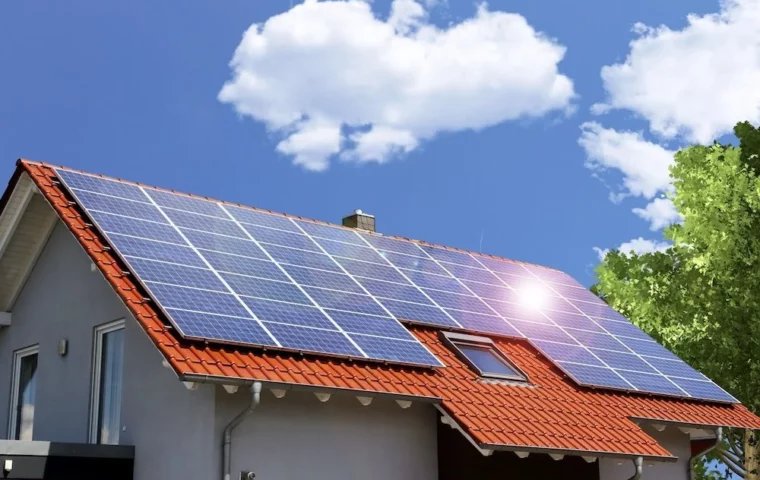
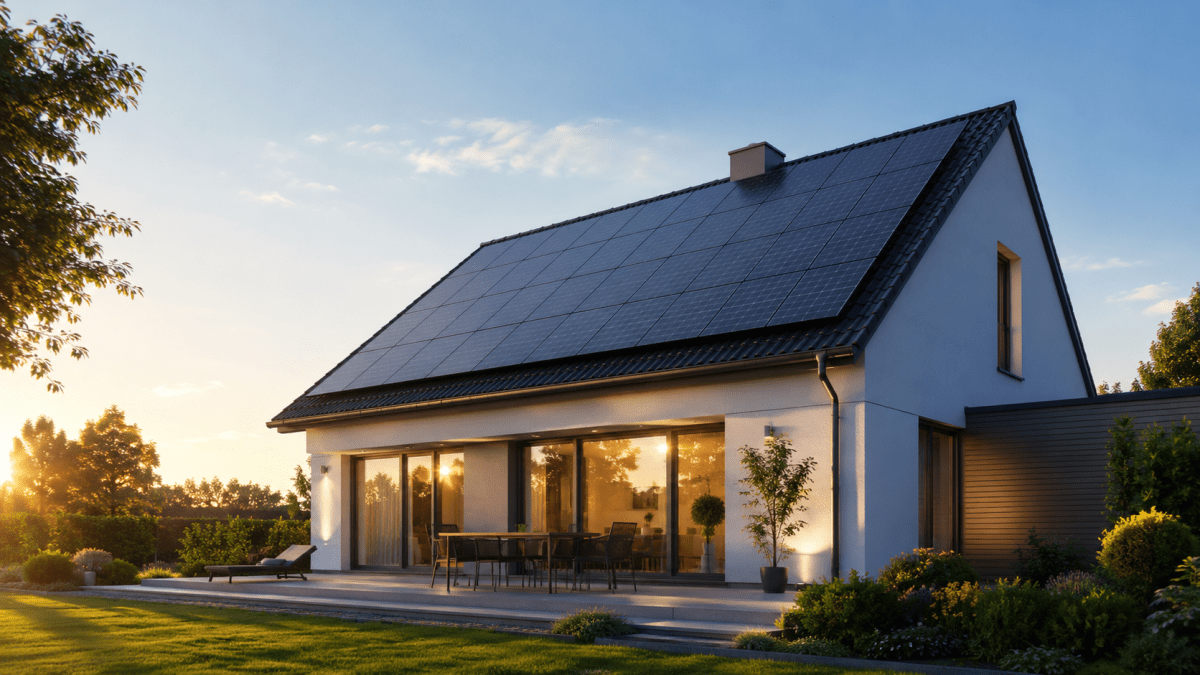
To get straight to the point, the right method is not to chase the “number 1” panel, but first to compare the best solar panels in 2026 and then reread each technical sheet with three filters: surface performance, durability over time, and compatibility with your roof. In practice, an excellent residential choice is often a modern monocrystalline module, with an efficiency around 22%, a 25-year product warranty, a long power warranty, and a low temperature coefficient.
Guide rating: 8.8/10. Recommended for: homeowners who want to reduce their bill, keep a simple installation, and avoid overpaying for a design or a poorly sized battery. Conversely, a heavily shaded household, a tiny roof, or a purely aesthetic project require a finer trade-off: sometimes, the “best panel” is not the most profitable, but the one that best values the available surface or the visual integration.
The decisive point in 2026 is reading the complete chain. A high-performance module mounted on a poorly exposed roof, with a poorly designed string or an optimizer installed “by reflex,” can give a disappointing result. Conversely, a slightly less prestigious panel, but well sized, well installed, and well wired, will often perform better in real life. This is precisely where smart purchasing is decided.

Real strengths and limits to know
A good article on solar must also talk about limits. Yes, residential photovoltaics works. No, it does not make all roofs equal. The project’s interest increases when you have an exploitable roof, a decent daytime consumption, and an installer able to justify the sizing without reciting a standard offer.
- Useful efficiency: more watts on a small roof.
- Long warranty: better visibility on operating duration.
- Low thermal coefficient: fewer losses on hot roofs.
- Bi-glass or dual-glass: potentially better mechanical robustness.
- Clear compatibility: cleaner integration with inverter and structure.
- Chasing watts: a big number is never enough alone.
- Neglected shading: chimney, tree, parapet change everything.
- Battery added too early: high cost, sometimes poorly targeted use.
- Vague warranty: application conditions sometimes very restrictive.
- Overpriced aesthetics: full black useful, but not at any price.
Another often underestimated point: the stationary battery is not the logical starting point for all households. It is better first to work on sizing, orientation, and daytime usage management.
The same caution applies to optimizers. Under low to medium shade, they are not automatically superior to a simpler string inverter architecture. They become truly relevant when the shading is more pronounced, more complex, or more diffuse over time. In short: it is not an accessory to install out of habit, but a response to a specific problem.
The technical criteria that really matter
Reading the datasheet without getting lost
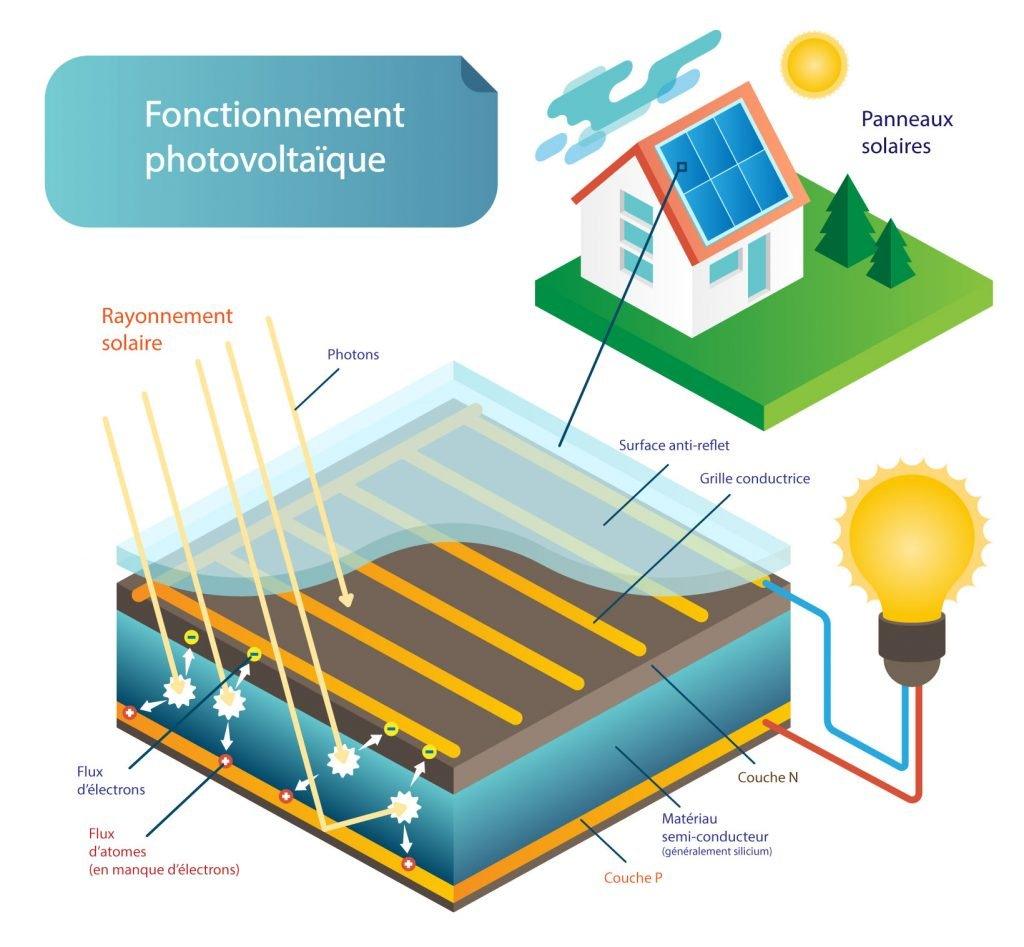
When you open a product datasheet, focus on six indicators: power, module efficiency, temperature coefficient, product warranty, power warranty, and mechanical loads. The rest also matters, but these data are already enough to distinguish a serious module from one that is simply well marketed. In residential, the premium market often revolves around 430 to 470 W and 22 to 22.8% module efficiency on formats suited to domestic roofs.
| Criterion | Useful benchmark in 2026 | Why it’s decisive |
|---|---|---|
| Module power | About 430 to 470 W | Allows to maximize the available roof surface. |
| Efficiency | Around 22% and above | Important as soon as the roof area is limited. |
| Temperature | Low negative value | Less loss during high heat. |
| Product warranty | 20 to 25 years | Protects against manufacturing defects. |
| Power warranty | 25 to 30 years | Gives an idea of long-term durability. |
| Mechanical loads | High tested values | Useful in windy or demanding areas. |
The temperature coefficient deserves special attention. On a summer roof, the panel rarely works under ideal laboratory conditions. Some manufacturers highlight values like -0.24%/°C or -0.26%/°C on certain recent ranges; the lower the absolute value, the better the module performs when the cells heat up. It’s a subtle criterion, but very useful to differentiate two products close on paper.
Do not neglect mechanical resistance either. Recent residential series show high test loads for snow and wind. These figures are not meant to impress: they help verify that the panel fits the local context, especially on exposed roofs or harsh climates.
Practical benchmark: an installation of about 25 m² can produce around 2,500 kWh per year for a household of four people, excluding heating, cooking, and hot water. This is not a universal promise; it is a good basis for discussion to avoid unrealistic sizing.
Source: ADEME, 2026
PV Technologies: which to choose at home
Monocrystalline, TOPCon, HJT and dual-glass
For a house, monocrystalline remains the simplest foundation to recommend. It is the dominant family in residential, with more recent technological variants like TOPCon or heterojunction that improve power, efficiency, or heat behavior. The 2025-2026 ranges show very solid residential TOPCon and HJT series, with 22% and above efficiency, long warranties, and good roof compatibility.
The dual-glass or bi-glass deserves attention when aiming for durability, better resistance, or a premium product. Some full black residential ranges combine 435 to 455 W, more than 22% efficiency, 25 years product warranty, and 30 years power warranty. For a roof visible from the street, this type of module can reconcile aesthetics and reliability.
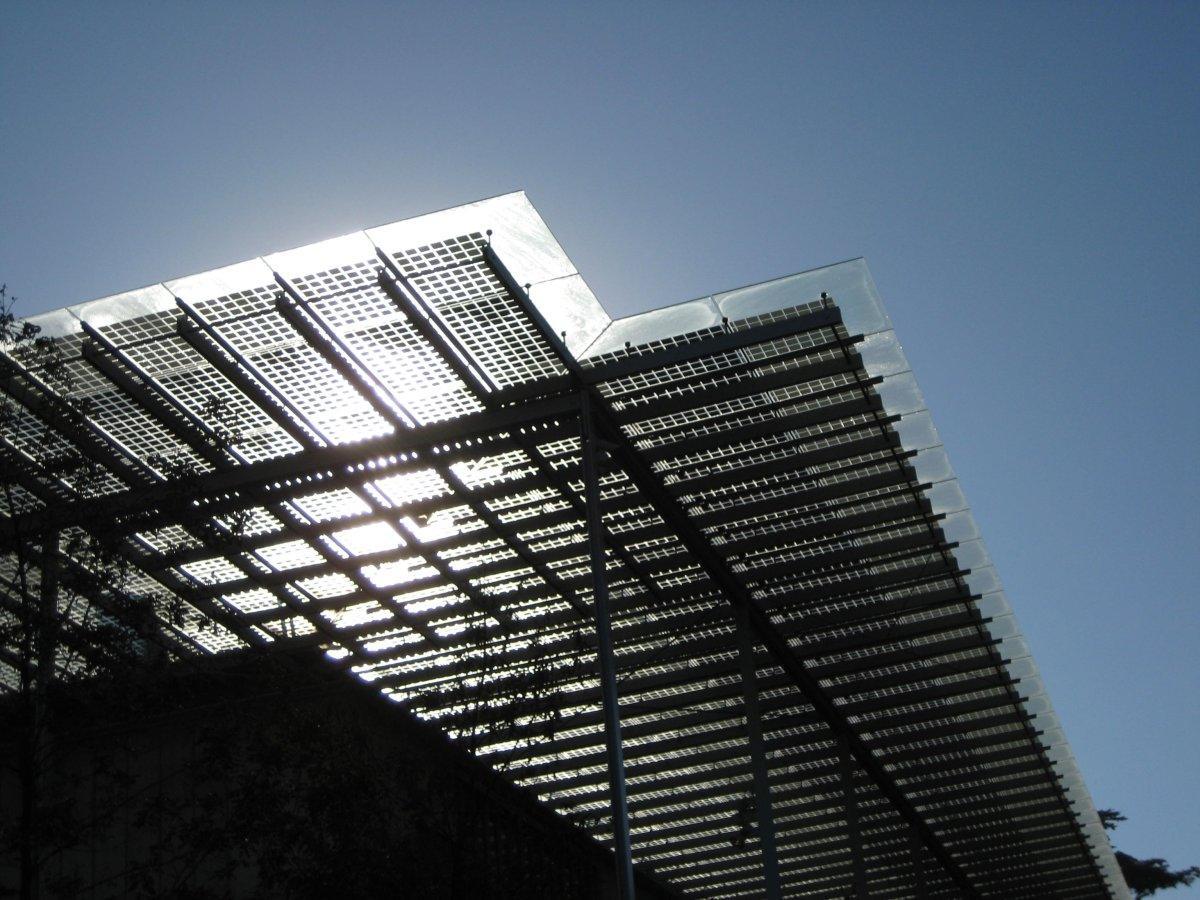
The bifacial one is not automatically the best answer for a single-family home. On a classic roof, the gain depends heavily on the context: height, reflectivity, installation, rear shading. On a carport, pergola, or very particular roof, it can become interesting. On a standard roof, it is often better to favor a good front-performing panel rather than a bifacial argument that is little exploited.
Last trap: believing that technology compensates for everything. Partial shading causes disproportionate losses and can create hotspots; in the most sensitive cases, one must consider both module placement, shade tolerance, and appropriate electronics. In other words, an excellent technology badly placed remains a bad choice.
| Technology | For whom | Point of attention |
|---|---|---|
| Classic Monocrystalline | Simple project and controlled budget | Compare warranties and actual performance. |
| TOPCon | Search for current performance | Check thermal behavior and warranty. |
| HJT | Small roof, premium search | Often higher price. |
| Dual-glass / bi-glass | Durability, aesthetics, exposed climate | Weight and integration to confirm. |
| Bifacial | Carport, pergola, specific installation | Limited gain on ordinary residential roof. |
Sizing according to the roof and usage
Orientation, shade, and lifestyle
The best panel for your neighbor is not necessarily the best for you, because the project is primarily played out on the roof. An installation on several orientations South, East, and West can be very interesting for self-consumption: the producible decreases a bit compared to full south, but the self-consumption rate can rise thanks to a more spread production from morning to evening. For a household that mostly lives outside the “full solar noon,” this is not a detail.
Concretely, a small well-exposed roof pushes to choose more efficient modules. An East-West roof often justifies a finer reasoning on self-consumption. A hot roof gives more weight to the temperature coefficient. A visually sensitive roof can legitimately value a homogeneous full black. The right panel is therefore not only a high-performance product; it is a product coherent with the site constraints.
Shade must be treated realistically. A small moving shadow on a corner of the roof does not call for the same response as a large tree or a neighboring building. Under low shading, a simple design may suffice. Under medium to heavy shading, one must arbitrate between more tolerant modules, power electronics, and repositioning of the panels. The right reflex, before buying, is to demand a mask simulation and not a vague promise.
To remember: when the household consumption is mainly in the morning and late afternoon, a distributed East-South-West roof is not a plan B. It is sometimes a better overall compromise than a theoretically optimal full south, because it better matches real living hours and limits poorly valued surpluses.
Source: ADEME, photovoltaic self-consumption opinion, 2025

Total cost, lifespan, procedures
The panel alone does not make the budget
The price of a solar project does not depend only on the panel. It varies with the materials, the installation method, and the professional chosen. That is why it is necessary to compare complete offers, not just the module price. More favorable taxation may apply under certain conditions for small residential installations, which strengthens the interest of a detailed and up-to-date quote.
In terms of lifespan, solar panels generally have a lifespan of 25 to 30 years. The inverter, on the other hand, must be considered with a shorter horizon, around 10 years for a probable replacement. This simple point changes the economic reading of the project: a very attractive offer on the modules can lose its appeal if it underestimates the costs related to electronics, maintenance, or roof after-sales service.
On the administrative side, the rule is simpler than one might think: for an existing roof, a prior declaration of work is generally required at the town hall, because you are modifying the building’s exterior appearance. It is also necessary to check for any local restrictions and call on an RGE professional. This is not gratuitous formalism: it is what secures the project and prevents a good technical file from being blocked due to procedural issues.
Regarding maintenance, there is no need to fantasize about a huge expense, but it should not be ignored. Soiling is one of the factors that influence performance. In a typical residential environment, this does not mean obsessive cleaning; it mainly means monitoring production, spotting an abnormal drop, and intervening if the site really allows it.
Administrative framework: for a roof installation, it is generally necessary to submit a prior declaration to the town hall. It is better to address this issue right away, even before comparing modules, because an excellent technical choice loses value if it arrives too late or does not comply with local facade and roofing constraints.
Source: Service-Public.fr, 2025

Guide methodology and final recommendation
This guide is based on a documentary analysis and not on a fake “lab test” invented to look nice. The comparison was built from technical datasheets of recent residential modules, reading French institutional sources, and specialized technical reports. The criteria used were weighted around six axes: surface performance, hot behavior, warranties, mechanical robustness, shading sensitivity, and economic coherence of the complete system.
Guide limitations: it does not replace a site visit, a shading study, or a detailed electrical sizing. It also does not provide a universal ranking, because the best reference changes with the roof surface area, the shape of the slope, shading, the climate zone, and the household priority — savings, aesthetics, durability, or simplicity.
The most useful recommendation is therefore very simple: first aim for a highly technically readable panel, with solid guarantees, low temperature coefficient, and clear compatibility with your setup. Only then decide between full black, dual-glass, optimizer, or battery. The next logical step is not to buy in haste; it is to request two comparable quotes, each with a production simulation, a scenario without a battery, and a scenario without a “default” optimizer. This is where serious offers stand out.
FAQ on choosing panels
What is the best type of solar panel for a house?
In most cases, a recent monocrystalline module remains the best choice. It offers a good balance between efficiency, occupied surface, aesthetics, and compatibility with residential roofs. TOPCon or HJT variants become very interesting when space is limited or when seeking a more premium range.
Should you choose the panel with the highest wattage?
No. The displayed power is only one indicator among others. It must be considered alongside efficiency, temperature coefficient, warranty, and module size. Two panels close in watts can have very different value depending on roof heat, warranty duration, or integration quality.
Is an East-West roof penalizing?
Not necessarily. An East-West or multi-orientation installation can slightly reduce total yield while improving self-consumption thanks to a more spread-out production during the day. For many households, it is a very rational compromise.
Are optimizers always useful?
Not necessarily. They are mainly useful in the presence of real shading or complex configurations. In simple cases, a more straightforward architecture may suffice.
Is a battery needed from the start?
Often, no. The logical order is: good panel, proper sizing, good usage management, then consider the battery if the profile justifies it.
How long does a solar panel last?
The general lifespan is often estimated between 25 and 30 years, with particular attention to the inverter, which is replaced sooner. That is why it is important to think of the overall project, not just an isolated panel.
Is a declaration to the town hall required?
Yes, in the general case of installation on an existing roof, a prior work declaration is required because the building’s exterior appearance is modified. It is better to check this point very early, especially in areas subject to specific architectural constraints.
What simple benchmark to estimate the useful size?
As a starting point, you can consider about 25 m² of panels to aim for an annual production of around 2,500 kWh in a typical residential setting, excluding heating and hot water. This benchmark helps frame the project, not replace a personalized study.
Does cleaning have a real impact?
Yes, soiling can reduce performance. The right reflex is not to clean on a fixed date, but to monitor production, the roof environment, and the appearance of unusual drops.