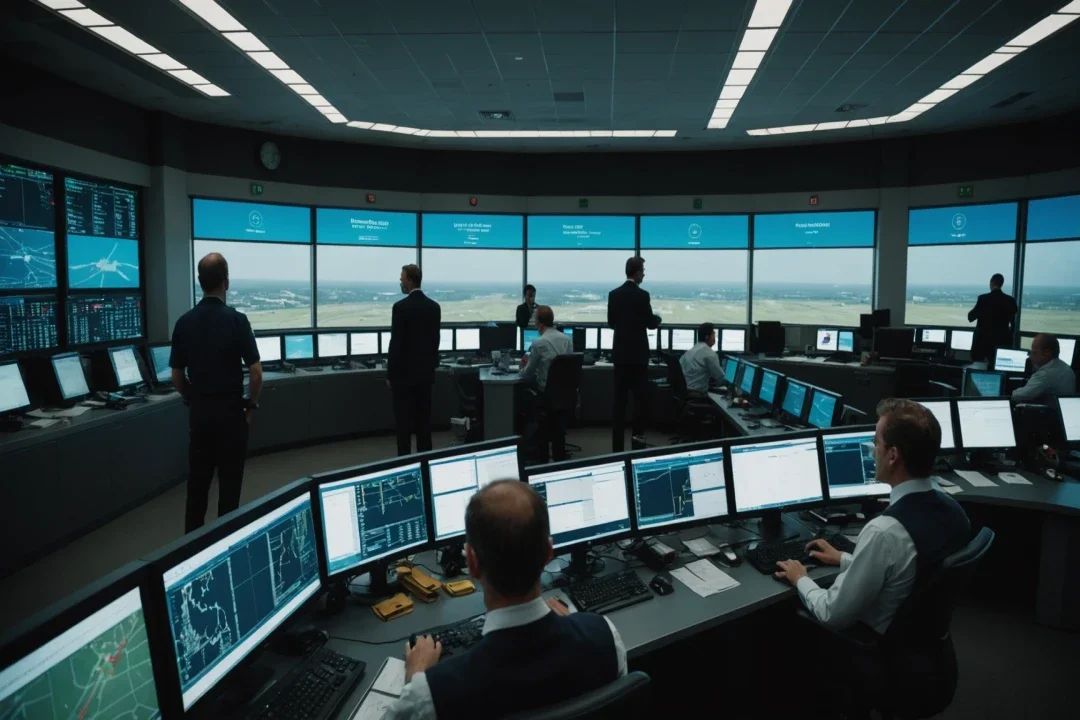
The evolution of aviation security technologies is radically transforming the way we envision air transport. From advanced detection systems to digital communications, these innovations significantly reduce the risks of incidents while optimizing operational efficiency. This convergence between connectivity and security outlines a safer, more reliable aviation perfectly integrated into the global digital ecosystem.
Sommaire
Artificial Intelligence: Improving Air Flight Safety
With the rapid advancement of technologies, the aviation sector is moving towards an era where connected systems play a central role. These innovations promise to enhance air safety by optimizing communication between aircraft and ground infrastructures. To explore how these technologies are already transforming our airspace, hubsafe.fr offers valuable resources on the latest solutions in air transport security. This integrated approach not only guarantees safer travels but also an improved user experience.
Artificial intelligence is revolutionizing aviation safety mechanisms by analyzing millions of data points in real time. These predictive systems can anticipate technical failures and hazardous weather conditions before they become critical.
Optimization of Maintenance through Predictive AI
Predictive maintenance algorithms play a key role in the continuous monitoring of critical aircraft components. Thanks to this proactive approach, parts can be replaced before they fail. This significantly reduces the risks of technical incidents during flight.
Anticipating failures is more than just a strategy; it is a revolution in aircraft maintenance. By constantly analyzing the condition of each component, these algorithms enable maintenance teams to act with precision and efficiency. Aircraft downtime is reduced, which optimizes not only safety but also the operational efficiency of airlines. This technology truly transforms the way we approach the reliability of complex systems.
Ultimately, adopting these innovative tools ensures peace of mind for passengers and flight crews. The technology works behind the scenes to guarantee that every flight proceeds smoothly while preserving the mechanical integrity of the aircraft in the long term.
Optimization of Piloting through Automated Systems
In today’s cockpits, sophisticated systems assist pilots by analyzing flight data in the blink of an eye. These virtual co-pilots become a valuable aid, offering clear recommendations to manage any unforeseen situation.
Imagine a pilot faced with an anomaly mid-flight. Rather than relying solely on experience and instinct, they now benefit from technological support that proposes optimal options to maintain safety. In case of unexpected turbulence or technical failure, these systems quickly evaluate the best course of action. The result? Additional assurance for every air journey, where human and machine work hand in hand to ensure a smooth trip.
Aeronautical Connectivity: Innovations in In-Flight Communication
Permanent connectivity between aircraft in flight, ground controllers, and weather systems now forms a global safety network. This informational mesh allows precise coordination of trajectories and immediate response to unforeseen events.
Innovations in Advanced Communication Networks
The combination of 5G and satellite technologies is radically transforming aviation communication. Thanks to them, flight data can be transmitted in real time with impressive fluidity. This seamless connectivity guarantees global coverage, effectively eliminating dead zones, even over ocean expanses and polar regions.
Imagine a world where every message, every signal crosses the globe without interruption. With this advanced infrastructure, aircraft benefit from continuous and reliable communication, regardless of their position. This not only strengthens safety but also the efficiency of air operations, thus redefining our concept of global connectivity.
Optimization of Air Data Sharing
Technological innovations are radically transforming the landscape of air safety. Advanced surveillance systems, coupled with artificial intelligence, enable proactive detection of potential threats at airports. To further explore these new solutions and their impact on security, visit the website www.le-marche-du-travail.fr. These technologies promise a future where air travel will be not only safer but also more efficient.
Collaborative platforms are transforming the air safety landscape by allowing companies to pool their experiences with the most advanced technologies. This information sharing accelerates the adoption of best practices, making the skies safer for everyone.
Thanks to these exchanges, each company can benefit from innovations tested and approved by other industry players. This creates a synergy where knowledge flows freely, increasing overall safety and fostering harmonious development of air safety standards. The progress made is not isolated but shared, creating a virtuous circle benefiting all participants in the sector.
Aeronautical Cybersecurity and Modern Challenges
The increasing digitization of the aviation sector raises significant cybersecurity issues. Protecting onboard systems against malicious intrusions becomes as crucial as the physical security of the aircraft.
Advanced Security of Critical Onboard Systems
Aircraft manufacturers are working to create compartmentalized computer systems, a strategic choice to protect flight controls. This approach maintains a security barrier between networks used by passengers for entertainment and those dedicated to piloting.
By isolating these different networks, it is ensured that the digital distractions offered onboard have no impact on flight safety. This technological compartmentalization has become a fundamental pillar in the fight against cyber threats targeting modern aviation. Thanks to this strict separation, the integrity of control systems is preserved, thus guaranteeing a calm and secure flight experience for all.
Network Security: Impact of Penetration Testing
Aviation authorities have adopted a new strategy to secure onboard digital systems. They now require sophisticated penetration tests, simulations of attacks that help detect and fix security vulnerabilities before they can be exploited by hackers.
These rigorous tests have become a cornerstone in protecting aeronautical systems against cyber threats. By simulating potential intrusions, they provide an overview of the robustness of digital systems onboard aircraft. This not only strengthens their security but also ensures that every flight proceeds smoothly. Companies in the sector are therefore investing heavily in these technologies to stay ahead in the fight against cyber hacking.
Digital Turbulence and Air Safety on the Rise
The future of air safety relies on the harmonious integration of connected technologies into every aspect of flight. From smart cockpits to secure communications, including predictive maintenance, these innovations form a coherent ecosystem that drastically reduces risks. While the human factor remains irreplaceable, its combination with these advanced technologies paves the way for ever safer and more efficient aviation.
Summary Table
| Aspect | Key Information |
|---|---|
| Air Safety Systems | Reduce the risk of incidents and optimize operational efficiency through connectivity. |
| Artificial Intelligence (AI) | Analyzes millions of data points in real time to anticipate technical failures. |
| Predictive Maintenance | Allows proactive replacement of parts to reduce the risk of in-flight incidents. |
Frequently Asked Questions
How does artificial intelligence improve air safety?
AI analyzes real-time data to anticipate technical failures and dangerous weather conditions, thereby increasing flight safety.
What is predictive maintenance in the aviation sector?
It is a proactive approach that uses algorithms to monitor and replace parts before they fail, thus reducing the risk of technical incidents.
What are the benefits of these innovations for passengers?
They ensure safer travels and enhance the user experience by guaranteeing optimal device operation and long-term mechanical integrity preservation.