
In Brief
📶 If your absolute priority is internet stability and an efficient urban environment, Kuala Lumpur and Taipei often offer the best compromise between infrastructure, transportation, and daily work comfort.
💸 For a contained monthly budget, Chiang Mai and Da Nang remain among the most competitive options, with a cost of living often around 700 to 1,200 € per month in reasonably comfortable mode.
🏝️ Bali, especially between Canggu and Ubud, retains strong appeal thanks to its nomad community and coworking offer, but the value for money has tightened on housing and traffic.
🛂 The right choice also depends on the visa, the season, and the time zone with your clients. A city attractive on Instagram can become impractical if you have to work in the evening or renew your stay too often.
How to Choose an Asian Destination When Working Remotely?
A good destination for digital nomads combines four criteria: reliable internet, sustainable cost of living, real coworking offer, and legally clear stay framework. If one of these pillars is missing, the stay quickly becomes less profitable, even in a city reputed to be attractive.
The first filter must be the quality of daily work life, not just the image of the destination. In practice, a nomad spends more time between accommodation, cafes, video calls, errands, commutes, and paperwork than pure exploration. A city may seem affordable on paper but become costly if you have to multiply taxis due to an impractical central district, frequently change accommodation, or pay for premium coworking to compensate for a poorly equipped apartment.
It is then necessary to distinguish between listed cost and full cost. An attractive rent is not enough if the air conditioning runs continuously, if cafes suitable for work are rare, or if social life requires frequenting expensive neighborhoods. The time zone also matters. Working from Bangkok or Bali for European clients often involves shifted days; from Taipei or Kuala Lumpur, it remains manageable, but this aspect must be considered before booking for several months.
On the ground, it is observed that many remote workers poorly tolerate “postcard” destinations beyond two or three weeks if daily commutes are long or noisy. The most positive feedback often concerns cities where everything can be done on foot or by fast transport from the same neighborhood.
Finally, check the administrative clarity. In 2025, several Asian countries have improved their messaging around mobile profiles, but the rules remain very different depending on whether you are a freelancer, a remote employee, or an entrepreneur. Official pages consulted in 2025, such as Indonesia’s eVisa portal, the Taiwan Employment Gold Card site, or the DE Rantau program in Malaysia, clearly show that flexibility is not uniform depending on profiles and intended duration.
What are the 5 best Asian destinations for digital nomads in 2025?
The five strongest destinations in 2025 are Chiang Mai, Bali, Kuala Lumpur, Da Nang, and Taipei. They stand out for different reasons: price, internet stability, density of coworking spaces, urban comfort, or clearer administrative framework for extended stays.
1. Chiang Mai, Thailand: the still relevant classic
Chiang Mai remains a very coherent choice for independents who want a reasonable cost of living without sacrificing minimal infrastructure. In the neighborhoods around Nimman and the old town, it is still possible to live decently with 700 to 1,100 € per month solo, including simple housing, local meals, moderate coworking, and occasional travel. The great advantage is not only the price: it is the daily fluidity. Cafes suitable for laptops are numerous, the foreign community has been established for a long time, and landmarks are easy to grasp from the first week.

Its limitation is well known: Chiang Mai is especially suitable for those seeking a calm, productive, and structured life, less so for those wanting a hyperconnected capital or maritime access. The seasonal pollution period must also be monitored, generally more sensitive at the end of winter and beginning of spring. Therefore, it is not an “all year round” destination with the same quality of life.
2. Bali, Indonesia: strong community, but less obvious value for money
Between Canggu and Ubud, Bali remains a huge magnet for digital nomads because almost everything can be found there: varied coworking spaces, cafes designed for work, flexible accommodations, networking events, and a very dense wellness offer. For someone who wants to quickly meet other freelancers or creators, it is probably the easiest ecosystem to integrate. However, the budget is no longer what made the island’s reputation. For a comfortable stay in the most sought-after areas, one should rather plan 1,100 to 1,800 € per month, sometimes more in high season.
The real trade-off in Bali concerns logistical friction. Short distances quickly become long due to traffic, especially around Canggu. This weighs on concentration and useful working time. Ubud may better suit profiles favoring a more relaxed pace, while Canggu attracts more social, creative, or e-commerce profiles.
3. Kuala Lumpur, Malaysia: the most underrated destination for serious work
Kuala Lumpur is often less “desirable” online than Bali, but it wins on very concrete criteria: efficient transportation, modern buildings, excellent mobile coverage, convenient shopping centers, a mature coworking offer, and English widely used in everyday situations. For a digital nomad juggling meetings, production, and urban travel, it is a very rational city. With 900 to 1,500 € per month, one can aim for a level of comfort superior to many seaside destinations of similar renown.
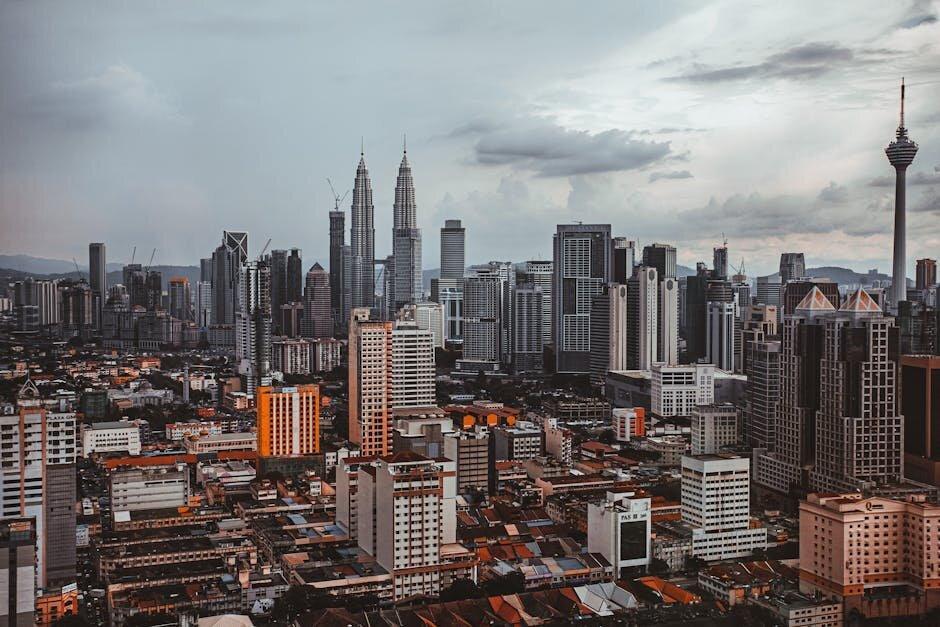
Another advantage: the city works well for longer stays. The DE Rantau program, supported by the Malaysia Digital Economy Corporation, has increased the country’s visibility among mobile workers. Kuala Lumpur may not have the immediate charm of Ubud, but for teleworking every day without logistical wear and tear, it is among the most robust options on the continent.
4. Da Nang, Vietnam: excellent compromise between sea, price, and work pace
Da Nang is steadily rising in serious recommendations, and it is not a fad. The city offers a rare balance between the waterfront, affordable restaurants, less chaotic traffic than some large Vietnamese metropolises, and the gradual increase of coworking spaces. For a freelance or remote employee profile who wants a base less saturated than Bali and less dense than Ho Chi Minh City, Da Nang is very convincing. The monthly budget often remains between 750 and 1,200 € for a comfortable but not luxurious lifestyle.
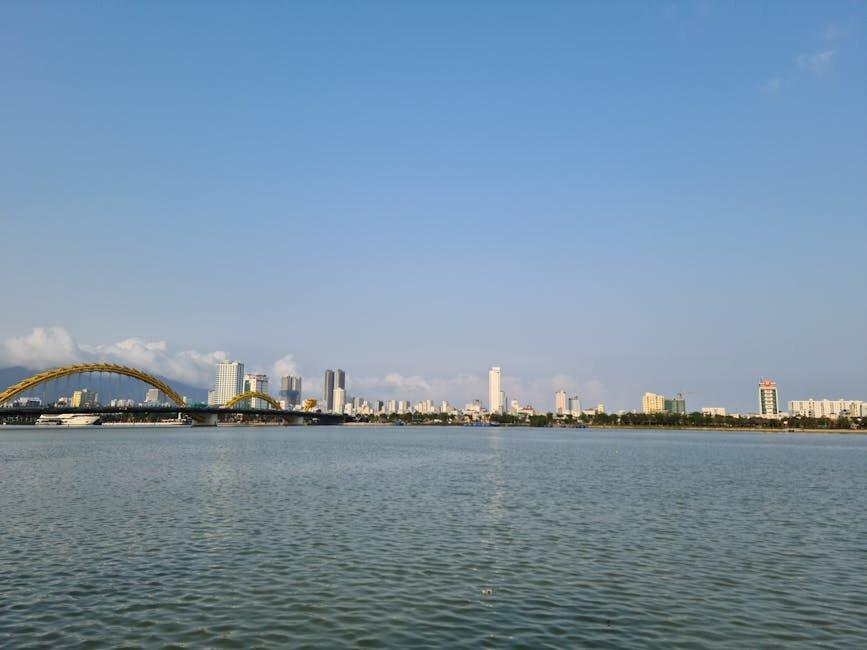
Da Nang is particularly suitable for those who want a more breathable environment without giving up a minimum of infrastructure. However, one must accept an international ecosystem less dense than that of Chiang Mai or Bali. For some, this is a drawback; for others, it is precisely what allows better work.
5. Taipei, Taiwan: the best premium choice for stability
Taipei is not the most economical in the ranking, but it is probably one of the most reassuring for an extended work stay. The city combines remarkably reliable transport, clean public spaces, high security, a serious offer of cafés and coworking, and very good network quality. For someone who charges properly and wants to minimize unforeseen events, it is a very solid destination. The budget to plan is often between 1,300 and 2,200 € per month depending on the neighborhood and type of accommodation.
The strength of Taipei lies less in the “cost” than in the predictability. You pay more than in Chiang Mai or Da Nang, but you also buy a steady living environment, particularly interesting for profiles with frequent calls, managing international clients, or on long missions. The Taiwan Employment Gold Card program, according to the official site consulted in 2025, also illustrates this desire to attract qualified profiles for more structured durations.
Monthly budget, internet, and coworking: the useful comparison
To properly compare these five destinations, one must look at the housing-work-mobility trio. This determines the actual expense. A slightly more expensive city can become more cost-effective if transportation is simple, coworking well located, and internet stable enough to avoid lost days. Conversely, a cheap but scattered destination can quickly wear out the budget and energy.
| City | Realistic monthly budget | Coworking | Ideal profile |
|---|---|---|---|
| Chiang Mai | 700 to 1,100 € | 80 to 160 €/month | Freelance, solo, creative, controlled budget |
| Bali | 1,100 to 1,800 € | 120 to 220 €/month | Creator, coach, very community-oriented profile |
| Kuala Lumpur | 900 to 1,500 € | 90 to 180 €/month | Consultant, remote employee, urban couple |
| Da Nang | 750 to 1,200 € | 70 to 140 €/month | Calm nomad, sea-work rhythm |
| Taipei | 1,300 to 2,200 € | 120 to 220 €/month | Long mission, strong need for stability |
On the ground, the hierarchy of connectivity generally leans towards Taipei, Kuala Lumpur, and Bangkok if we broaden the regional view. In our top 5, Taipei and Kuala Lumpur stand out for their urban consistency, whereas Bali or Da Nang can vary more depending on the exact neighborhood, type of accommodation, and season. This does not mean working there is difficult; simply, the choice of neighborhood has more impact.
A coworking manager in Southeast Asia often observes the same pattern: digital nomads who first book an “Instagrammable” accommodation and then look for their work routine move more quickly than those who first choose a functional neighborhood close to a reliable workspace.
Visa, season, and neighborhood: the three variables that change everything
Budget and Wi-Fi are not enough. Three variables, often underestimated, determine the success of a stay: the residence status, the weather season, and the actual living neighborhood. In Bali, for example, living away from the busiest areas can greatly improve daily quality, even if the rent increases a bit. In Chiang Mai, the appeal of Nimman comes from its density of services, not just its reputation. In Kuala Lumpur, areas well connected to the MRT can significantly reduce travel costs and fatigue.
The visa deserves special attention. Official websites consulted in 2025 show favorable developments in several countries, but with distinct approaches: the Indonesian eVisa addresses specific cases, the Taiwanese Gold Card targets qualified profiles for more structured stays, and the DE Rantau program in Malaysia is part of a digital attractiveness strategy. Therefore, it is necessary to check not only the announced duration but also the income proof conditions, possible extensions, and consistency with your professional status.
The best nomad destination is not necessarily the cheapest; it is the one that lets you work with the least friction possible for several weeks in a row.
The season also plays a decisive role. A marked monsoon, constant humid heat, or a period of pollution can reduce the appeal of a destination that is otherwise excellent on paper. This is especially true if you plan to stay more than a month. Sometimes it is better to pay a bit more in a more stable city than to stubbornly choose a “cheap” option that ends up disrupting sleep, health, and productivity.
The most common mistakes of digital nomads in Asia
The first mistake is to think in terms of daily cost instead of thinking in terms of lifestyle system. A low-priced apartment is worth little if you add dozens of euros each week on cafes, occasional coworking, or transportation due to an unsuitable neighborhood. The second mistake is to confuse city and micro-neighborhood: living in Canggu, Ubud, Nimman, Bukit Bintang, or Xinyi does not produce the same experience as living “in Bali,” “in Chiang Mai,” “in Kuala Lumpur,” or “in Taipei” in an abstract way.
Another common pitfall: underestimating the need for social and professional structure. Some profiles thrive in very social hubs like Bali; others lose concentration there. Conversely, Taipei or Kuala Lumpur may seem “colder” at first, but they suit profiles that prioritize work continuity, client meetings, and punctuality better. The right ranking therefore also depends on your profession: developers, consultants, content creators, or coaches will not use the city in the same way.
Finally, many neglect the trade-off between a short stay and a real settlement. For two weeks, almost all these destinations can work. For two or three months, the criteria change radically: storage, laundry, mattress quality, noise, kitchen, gym, daily transport, banking procedures, or availability of an international clinic become more important than the simple beauty of the place.
FAQ
Which Asian destination should I choose if I don’t have a scooter?
Kuala Lumpur and Taipei are the simplest options without a two-wheeler thanks to their reliable urban transport. Chiang Mai can also be suitable if you stay in a compact area like Nimman, but autonomy is generally more limited outside central neighborhoods.
Which city is best suited for a couple of digital nomads?
For a couple, Kuala Lumpur often stands out as the most balanced: modern apartments, convenient shopping centers, efficient transport, and still competitive costs. Expect often €1,400 to €2,200 per month to live as two in good conditions without excessive luxury.
Can you work only from cafés instead of coworking spaces?
Yes, but it depends heavily on the city and the type of work. In Chiang Mai or Taipei, it is sometimes viable for a few weeks if you have few calls, whereas in Bali or Da Nang, a coworking space can become useful as soon as you need silence, stable air conditioning, and regular video conferences.
What is the best season to go to Asia as a digital nomad?
There is no universal season. In practice, many avoid the wettest period in Bali and monitor seasonal pollution in Chiang Mai. For a first stay, aiming for a window of 4 to 8 weeks outside climatic peaks is often safer than committing long-term immediately.
Should I book accommodation by the month or by the week at the beginning?
For a first arrival, booking 7 to 10 nights and then visiting on site often remains the safest strategy. This avoids discovering too late a noisy neighborhood, poorly ventilated accommodation, or an insufficient connection to work properly.