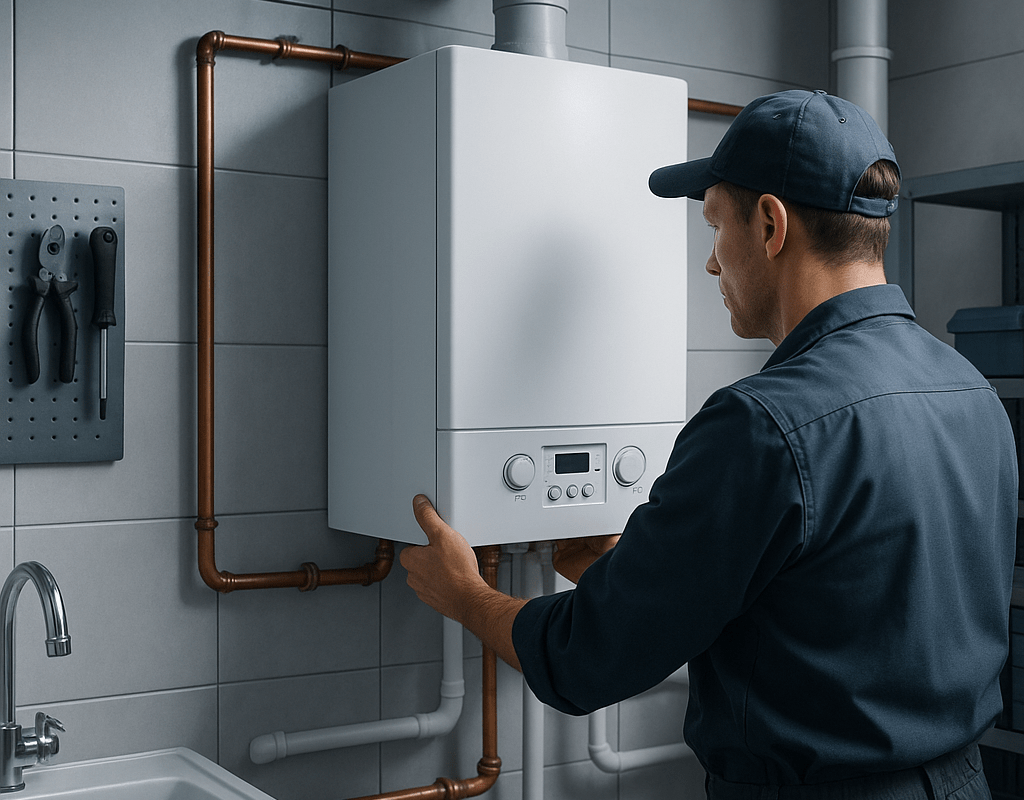
Installing a Condensing Boiler: Steps, Constraints, and Mistakes to Avoid
| 📌 | Definition: a condensing boiler recovers part of the heat contained in the fumes to heat the water in the circuit. |
| 💡 | Key point: it works better with a low water return, often below 55 °C, which promotes condensation. |
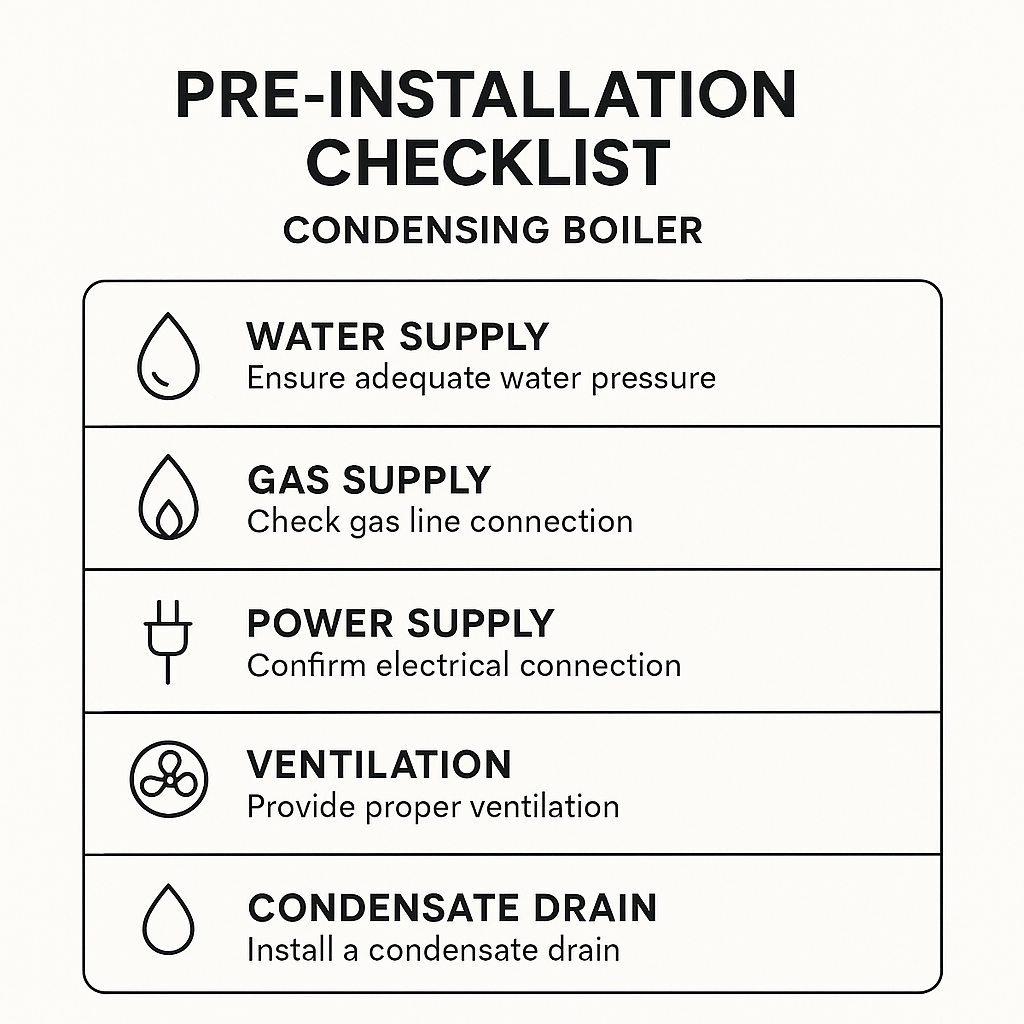
| 🛠️ | Before installation: you must check the flue, condensate drainage, gas supply, and maintenance access. |
| 💶 | Typical budget: in renovation, a simple installation often costs around 3,000 to 6,500 €, depending on necessary adaptations. |
| ⚠️ | Common mistakes: poorly adapted flue, forgotten condensates, settings too high, and postponed maintenance. |
| 🔎 | To remember: the right job is not the fastest, it is the one that properly prepares the existing setup. |
Installing a condensing boiler is not just about replacing an old metal box with a more modern model. Jokes aside, the real issue lies in the details: hydraulic circuit, flue evacuation, condensates, settings, technical access. If the installation is well thought out, efficiency follows. Otherwise, the promise quickly crumbles.
The very principle of the system deserves to be understood before pulling out the toolbox. To grasp what really changes compared to a conventional boiler, also keep handy the operation of a condensing boiler. At the same time, ADEME reminds us that this type of generator gives its best results when the installation accepts low return temperatures, which implies a minimum of upstream compatibility.
Sommaire
Installing a Condensing Boiler: What You Need to Know Before Starting
Even before discussing installation, the project must be defined. A condensing boiler cannot be installed “blindly”: it must integrate into a central hot water heating network, have condensate drainage, and remain accessible for maintenance. In other words, the initial diagnosis avoids unpleasant surprises and budget overruns.
What a Condensing Boiler Installation Covers
The installation includes much more than just mounting the device. You must manage hydraulic connections, the gas connection if the model runs on gas, flue evacuation, condensate drainage, and commissioning. This is where the professional makes all the difference: they check safety, adjust parameters, and verify that the boiler actually condenses under the dwelling’s conditions.
In practice, it is often observed that the chosen equipment is not the real problem. The hard point is the existing setup: walls, ducts, piping, drainage slope, available space. A clean installation starts there, not with the model displayed in the store. To compare technologies and avoid shaky choices, the article on the gas, oil condensing boiler helps clarify things.
Why a Preliminary Study is Essential
A preliminary study serves to answer three simple but decisive questions: where will the device go, how will the fumes exit, and where will the condensates go? If even one answer is problematic, the project is delayed. In some older homes, the cost of upgrading the flue or technical room weighs almost as much as the equipment itself.
It is observed in the field that, in renovated houses from the 1970s-1990s, the boiler often fits without major issues… but the condensate drainage and flue lining hold the real surprises. An anonymous installer in the Lyon region reports that these points account for the majority of reworks after technical inspection.
- The dwelling must allow the passage of smoke and condensates without risky makeshift solutions.
- The heating system must be compatible with a condensation logic.
- Maintenance must remain simple, with real access to the main components.
How to know if your dwelling is compatible?
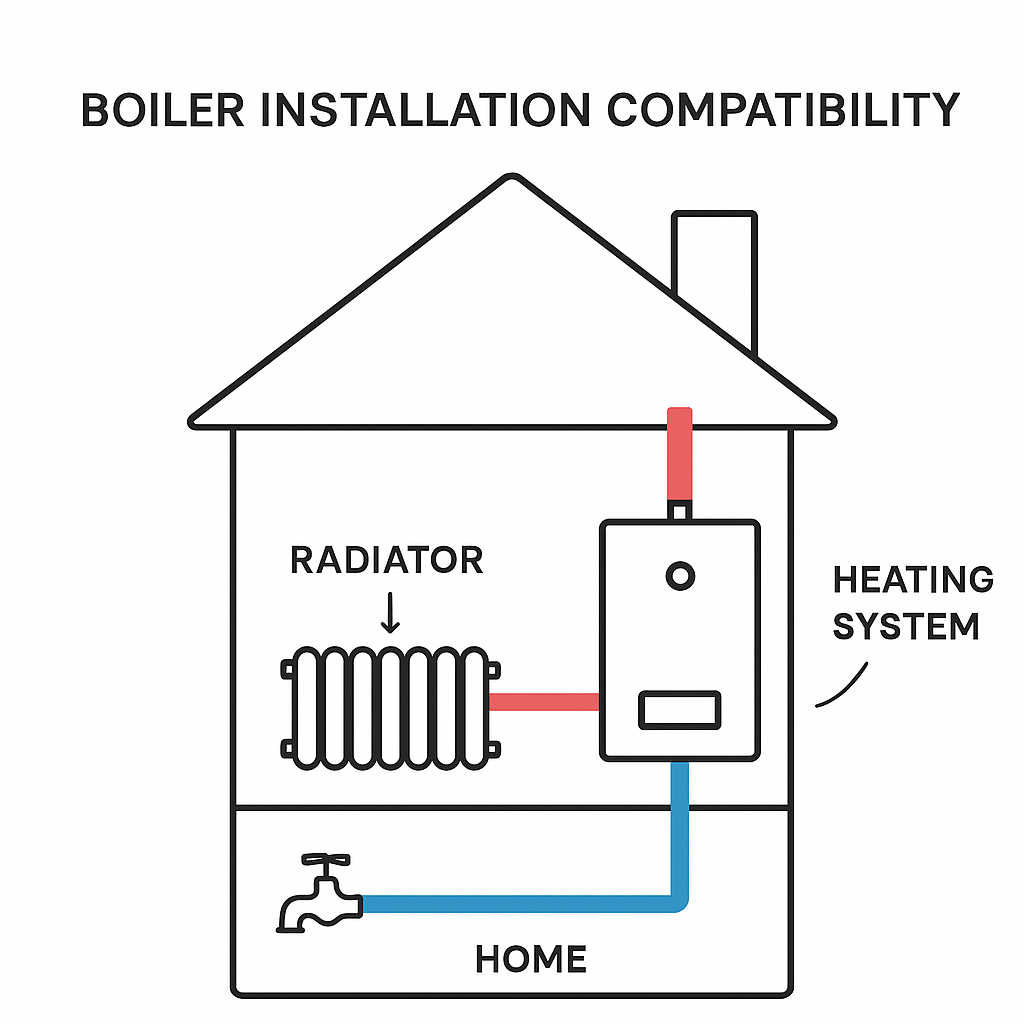
Compatibility depends first on the type of installation already in place. If you have a hot water central heating system, the project is often realistic, sometimes without major work. Conversely, the absence of a hydraulic circuit, a too degraded flue, or impossible condensate drainage puts the project into another category, more costly and more technical.
A dwelling is generally compatible if the current boiler already supplies radiators or underfloor heating, if the smoke flue can be adapted, and if the condensates can be connected to a wastewater network. Without these three points, the project often needs to be reconsidered before ordering the equipment.
Dwelling compatible without heavy work
The most comfortable case remains replacing an old gas boiler with a condensing boiler, with the hydraulic network already in place. In a single-family home, if the flue is usable and the condensate drainage already exists or can be easily connected, the project remains quite smooth. This is often the scenario that costs the least in adaptation.
Installation possible under conditions
An apartment, a condominium, or a cramped technical room quickly impose additional constraints. It is then necessary to check evacuation rules, allowable placement, clearances around the device, and sometimes the condominium regulations. When the flue is old, lining or upgrading may become unavoidable, even if the rest of the installation is sound.
If your project also depends on the energy mode, keep in mind that some configurations are better suited to gas, others to oil or hybrid. This is not theoretical: the comparison gas, oil condensing boiler quickly shows where the differences in constraints and budget lie.
Cases to avoid or to have validated before starting
When there is no hot water central heating circuit, the installation loses all its interest, or even becomes impossible without system overhaul. The same applies if the room lacks ventilation or if the flue is incompatible with colder and more humid smoke. In these cases, it is better to have the project validated before signing the quote.
A family who moved into a renovated house on the outskirts of Nantes reports having discovered, after the technical inspection, that the initial budget did not cover the lining nor the condensate connection. Result: the project was postponed by a month, time to review the configuration and adjust the bill.
| Situation | Quick reading | Decision |
|---|---|---|
| Gas boiler + existing radiators | Simple case | Compatible, pending flue verification |
| Apartment in condominium | Placement and evacuation constraints | Compatible under conditions |
| No central heating | No usable hydraulic network | Project to reassess |
Compatibility of the central heating system
A condensing boiler works really well when the water returning to it is quite cool. The lower the return temperature, the more the steam contained in the flue gases condenses, and the more heat is recovered. Cast iron radiators, oversized radiators, or underfloor heating can help, but it all depends on the overall balancing of the network.
What technical constraints should be checked before installation?
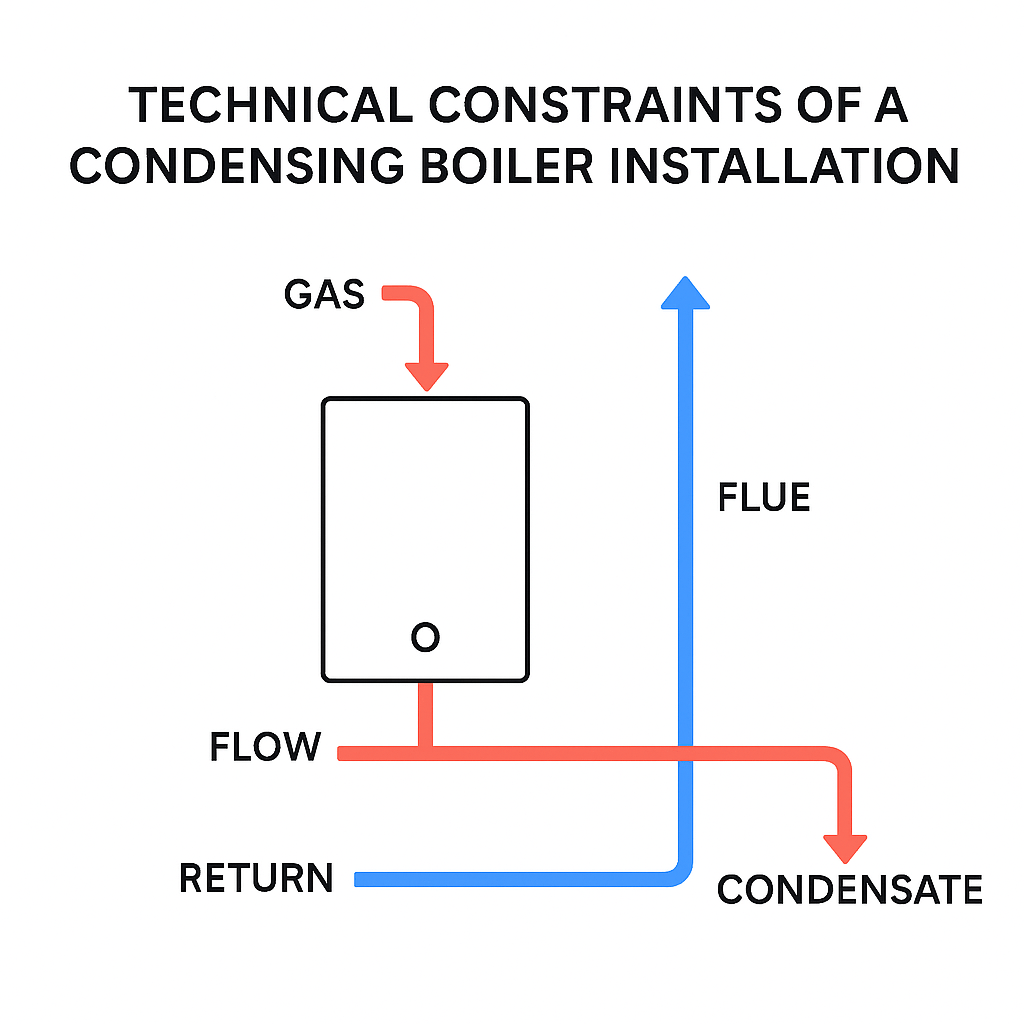
The project hinges on four technical blocks: flue gases, condensates, connections, and location. If any of these blocks is poorly prepared, the installation loses efficiency or becomes difficult to maintain. The idea is not to complicate things for the sake of it, but to avoid the classic “it heats, so it’s fine” when in reality the device is working below capacity.
Flue gas evacuation and existing flue
The condensing boiler emits flue gases that are colder and more humid than an older device. The flue must therefore be compatible with this operation; otherwise, it must be lined or adapted. This point is not cosmetic: poor sizing or a poorly thought-out outlet can affect safety, draft, and the system’s lifespan.
It should be noted that the manufacturer’s specifications always take precedence over site habits. What seems “acceptable” to the naked eye is not necessarily technically acceptable. Hence the importance of a professional who checks the flue section, length, bends, and outlet on the roof or facade.
Condensate evacuation
Condensates must be collected and then properly discharged to the appropriate network. Their presence is normal: it precisely reflects heat recovery. But this liquid is slightly acidic, so it should neither be improvised nor allowed to drain anywhere. Depending on the configuration, a trap, a lifting pump, or a neutralization device may be useful.
Good to know: in cold periods, a poorly protected evacuation section can freeze, especially in an unheated room. That is why the slope, insulation, and quality of the connections are as important as the boiler itself.
Gas, water, and electricity connections
A compliant gas supply, a watertight hydraulic connection, and a clean electrical supply remain fundamental. On an old network, the professional can also check safety devices, valves, filters, and pressure. A small leak or an approximate connection may seem harmless on the first day but can turn into a recurring breakdown after a few weeks.
If your consideration also includes the overall price, the article on the budget of a condensing boiler details well the differences between device, accessories, and adaptation work. In renovation, the difference often lies in “small” items which, added up, weigh heavily.
Location, ventilation, and accessibility
The right location is not just the one that looks nice in the utility room. You must be able to open, check, troubleshoot, and maintain the device without dismantling half the room. Volume ventilation, clearances around the boiler, and accessibility of connections play a direct role in future maintenance. A boiler that is difficult to access often ends up unloved and poorly maintained.
How does the installation proceed step by step?
The process is not a magic screwdriver turn. A good project follows a precise order: diagnosis, removal, installation, connection, testing, then commissioning. This sequence seems obvious, but it is precisely when it is rushed that defects appear. A clean installation limits rework, leaks, and approximate adjustments.
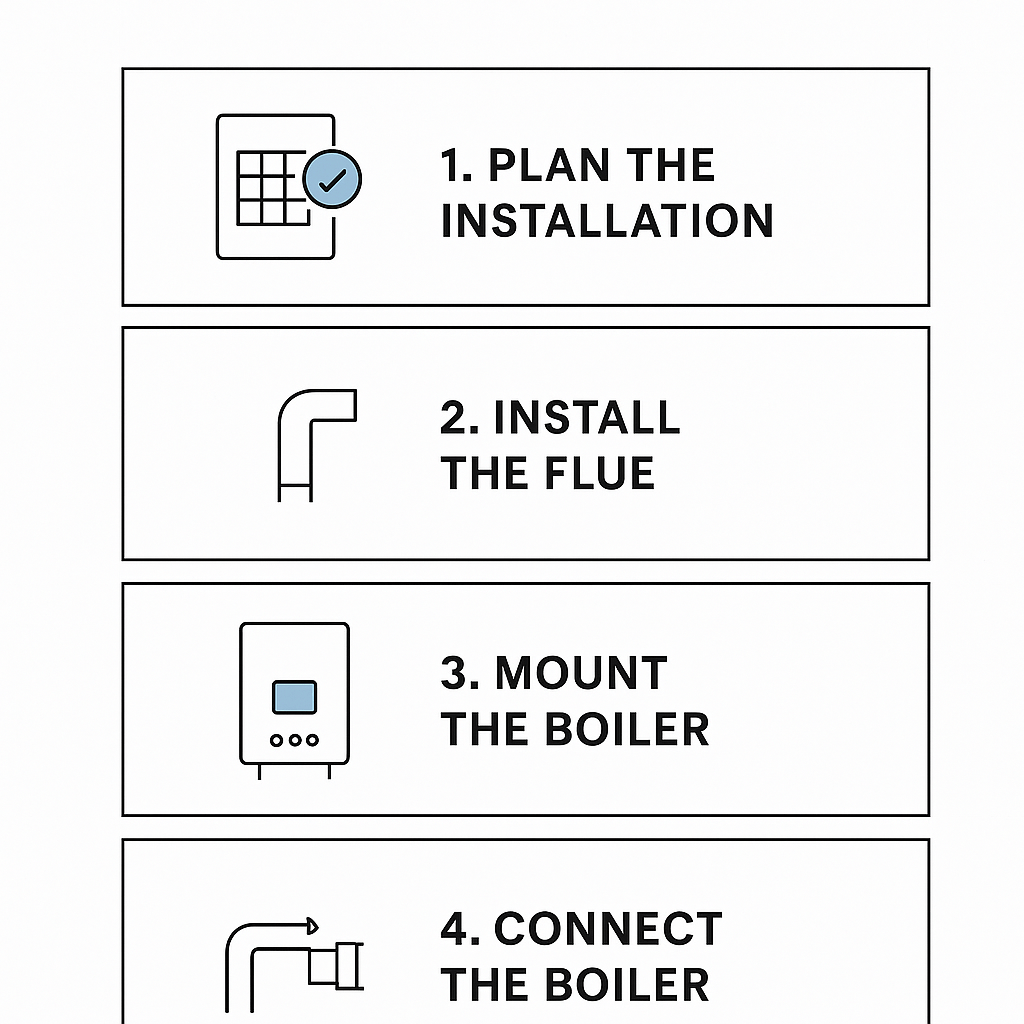
1. Diagnosis and site preparation
The professional begins by inspecting the existing setup, noting constraints, and validating supplies. This is the phase where the flue liner, smoke outlet, condensate recovery, and connection compatibility are anticipated. The more thorough this step, the fewer surprises arise in the middle of the work, when everyone would rather go home.
2. Removal of the old equipment
The old boiler is taken out of service, drained if necessary, and removed under safe conditions. The area is then cleaned to accommodate the new device. This step may seem basic, but it also allows for assessing the actual condition of the supports, pipes, and old connections. It is often here that hidden minor defects are revealed.
3. Installation and connection of the boiler
The device is installed in its final location, then connected to the heating, gas, water, and drainage circuits. Every seal matters, every connection is checked. If the boiler must be wall-mounted, the support must be strong enough, well planned, and compatible with the total weight, including water.
4. Commissioning and adjustments
Commissioning is not just about pressing a button. It requires draining, testing safety devices, adjusting combustion, and adapting parameters to the dwelling. Depending on the emitters, the professional can adjust the heating curve, the departure temperature, or the water law so that condensation actually occurs. Without these adjustments, you pay for a condensing boiler… that only partially condenses.
Which standards and obligations must be respected during installation?
Compliance is not always visible at first glance, but it determines the safety, warranty, and peace of mind of the owner. Between gas regulations, manufacturer’s instructions, ventilation constraints, and acceptance documents, it’s better to leave nothing to chance. A clean installation is also a traceable installation.
A condensing boiler does not forgive approximations: if the adjustment, evacuation, or maintenance access are shaky, efficiency drops and problems come faster than expected.
Safety rules and site compliance
The installation must comply with the manufacturer’s manuals, gas safety rules, and smoke evacuation requirements. Control devices must remain accessible and the device’s environment must not hinder maintenance operations. When in doubt, the best reflex is to start from the technical documentation, not from the neighbor’s habit.
Annual maintenance is also a topic to anticipate from the installation stage. The article on maintenance of a condensing boiler reminds of the steps to take to maintain a good level of safety and avoid consumption drifts. A boiler well adjusted at the start is often easier to maintain later.
Certificate, acceptance, and documents to keep
At the end of the work, the owner must receive the manuals, usage instructions, commissioning parameters, and any compliance certificates. These documents are useful for maintenance, warranty, and future interventions. They also serve as a record of the work, which avoids starting from scratch if a defect appears a few months later.
For renovation aids, France Rénov’ details the MaPrimeRénov’ aids and eligibility conditions depending on the type of work. This point is especially relevant if you are replacing an old generator rather than installing a new system from scratch.
Special cases not to be overlooked
In co-ownership, the property manager, the rules regarding the facade or roof, and the requirements for drainage can impose additional constraints. Similarly, an old flue may require upgrading before any commissioning. The worksite sometimes needs to be coordinated with other trades, especially when masonry, ventilation, or electricity are involved.
What mistakes should be avoided with a condensing boiler?
The most costly mistakes are rarely spectacular. They usually stem from a poor diagnosis, a sloppy connection, or settings that are too high. A condensing boiler dislikes approximations and shortcuts. If the project is well prepared, it can do the job neatly. Otherwise, it just becomes a boiler that is a bit more expensive than others.
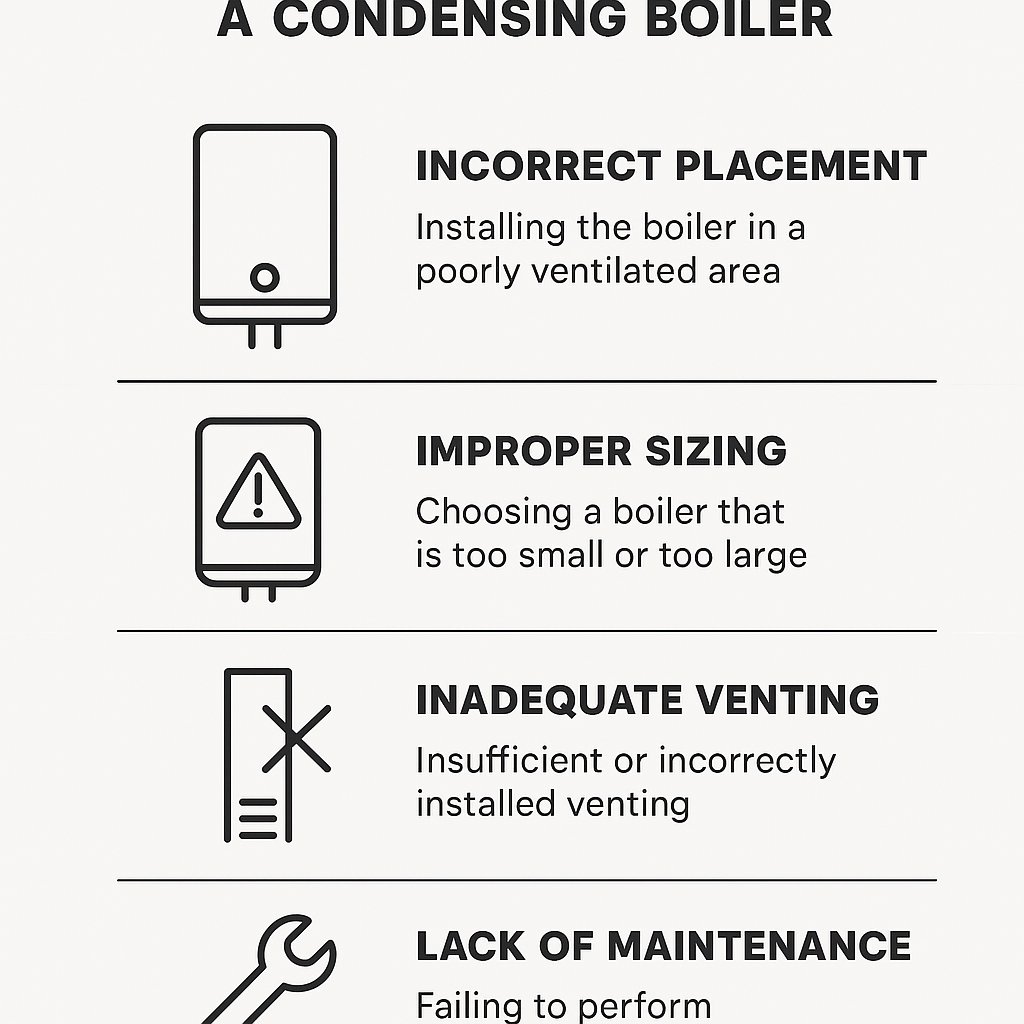
Project preparation mistakes
The first mistake is signing a quote without a complete diagnosis. The second is underestimating the adaptations needed for the flue or condensates. The third is forgetting future maintenance. This trio often drives up the actual cost of the work and reduces user comfort, even though the initial intention was to save money.
Most common installation mistakes
Poorly thought-out condensate connections, inadequate smoke evacuation, or too high temperature settings prevent the boiler from working in condensation mode. The benefit of the system is then lost. Efficiency drops, cycles shorten, and the installation may end up consuming more than expected.
Mistakes after installation
Once the boiler is in service, one must still avoid complacency. Starting the device without checking the final parameters, neglecting the manual, or postponing annual maintenance are classic recipes for creating problems that could have been avoided. The first year is often the most useful for correcting small setting deviations.
In the field, it is observed that a dwelling set too high, around 65 °C or more at the outlet, often loses a good part of the condensation benefit. A family who made this setting blindly saw their bills stagnate until the installer resumed the configuration.
- Do not check compatibility before purchasing the device.
- Ignore condensates or connect them without a reliable slope.
- Choose a difficult location to maintain.
- Forget the initial setting and the return temperature.
- Postpone maintenance even though the system has just been installed.
FAQ: Installing a condensing boiler
How long does it take to install a condensing boiler?
For a simple replacement, it often takes one day. If the flue needs to be lined or if the condensate drainage needs to be created, the work may take longer. Commissioning must always be included in the schedule, otherwise the “almost finished” quickly becomes a false good plan.
Can you install a condensing boiler yourself?
In theory, some people feel capable. In practice, gas connections, safety checks, and commissioning require real skills. A non-compliant installation exposes you to risks of leaks, breakdowns, and loss of warranty. With this type of equipment, initial savings can end up costing a lot.
Yes, the condensing boiler can work with cast iron radiators, provided the installation is well balanced and the return temperature remains sufficiently low. The type of emitter matters, but the overall network setting matters even more.
Is it always necessary to modify the smoke flue?
No, not systematically. But it must be seriously checked, because the condition of the flue, its length, and its material guide the decision. In many old dwellings, lining or adaptation remains preferable to secure the whole system and avoid draft or parasitic condensation issues.
Which settings really promote condensation?
The supply and return temperatures must be reasonable, otherwise the boiler loses its advantage. In renovations, lower settings are often targeted than with an old device, especially if the emitters allow it. Proper hydraulic balancing also helps stabilize operation and limit comfort variations.
When should maintenance be considered after installation?
Actually, from the first season. Annual maintenance allows checking combustion, safety features, condensate drainage, and the general condition of the device. If you have replaced an old boiler with a condensing boiler, this is the best way to maintain the promised efficiency and extend the equipment’s lifespan.