Which Cathedrals Really Offer the Most Impressive Panoramic Views?
For an immediately spectacular panorama, the strongest references are Strasbourg, Seville, Cologne, Vienna, and Santiago de Compostela. They combine height, readability of the urban landscape, organized public access, and a sufficiently clear viewpoint to justify the ascent, even if the city stay is short.
The decisive criterion is not just raw height. A tower can be very tall but offer a disappointing view if the platform is narrow, if guardrails block the horizon, or if the surrounding city lacks relief. Conversely, a slightly lower ascent becomes memorable when it reveals a dense historic center, a river, a monumental square, or a mountain range. This is why sites like the Giralda in Seville or the Strasbourg platform remain so convincing: you can read the city at a single glance.
The following ranking therefore prioritizes three concrete elements: the quality of the panorama, the regularity of public access, and the practical value of the visit. When hours may vary, they are indicated as generally observed time slots, with a recommendation to verify on the official site before traveling. This is the most reliable method, as many cathedrals adjust their ascents according to the tourist season, religious services, maintenance, or safety constraints.
Top 12 Cathedrals to Prioritize for a Panoramic Climb
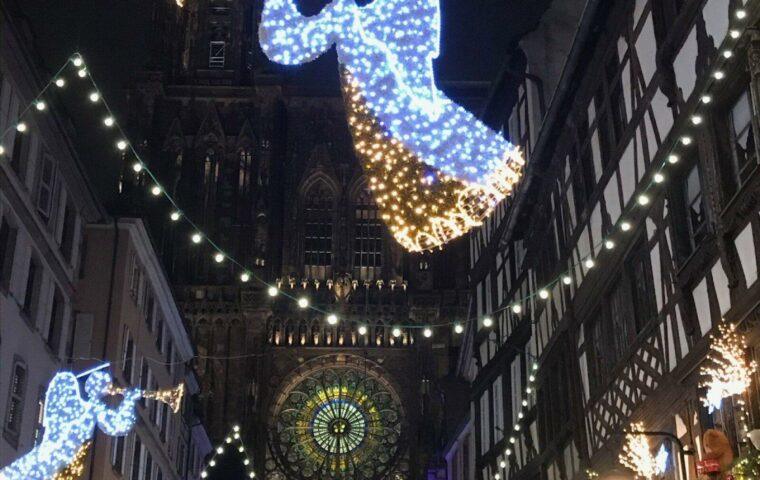
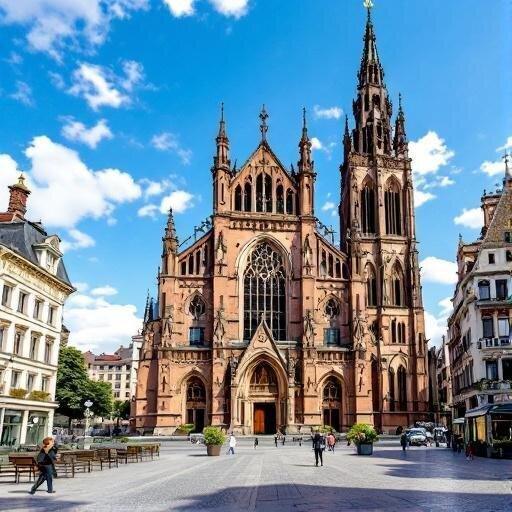
1. Notre-Dame Cathedral of Strasbourg, France
The climb to the Strasbourg platform remains one of the most balanced experiences in Europe. The panorama works because it doesn’t just show roofs: it reveals the tight layout of the Grande Île, the bridges, the canals, and, in clear weather, a depth towards the Alsace plain and sometimes the Vosges. The reading of the city is exceptional, which distinguishes this climb from other taller but less legible towers.
In practice, the ascent is usually done during the day, with varying hours depending on the season. You should count on about 330 steps and expect a fairly physical climb, especially in summer. Booking is not always mandatory, but it becomes strongly recommended on weekends, during Christmas markets, and on long holiday weekends. For a photographer, the best window is often in the clear morning or late afternoon when the stone takes on a warmer hue.
2. Seville Cathedral and its Giralda, Spain
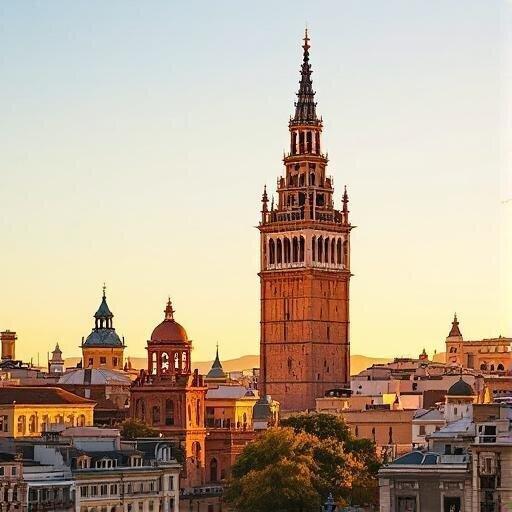
The Giralda has a major advantage: access is via a ramp, not a long series of narrow steps. This radically changes the comfort of the visit. Once at the top, the view covers the historic center of Seville, the Alcázar, the warm roofs of urban Andalusia, and, in the distance, a city that appears almost flat as the tower dominates its immediate surroundings.
Climbing hours generally follow those of the cathedral visit, with fairly wide time slots in high season. Here, online booking is highly recommended, as the site attracts continuous international attendance. For a short stay, it is one of the best choices in the ranking: the effort is moderate, the view is wide, and the climb suits visitors who hesitate in front of a very sporty staircase.
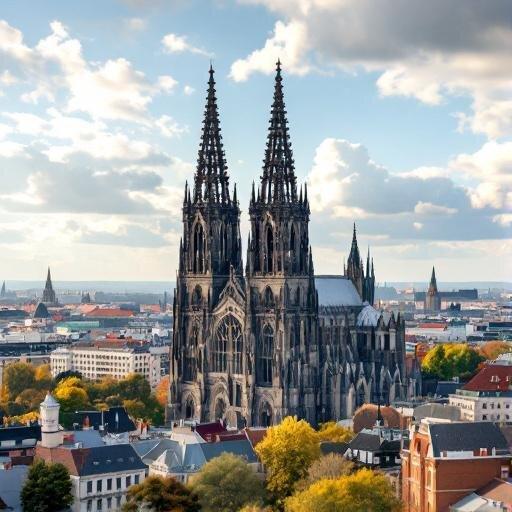
3. Kölner Dom, Cologne, Germany
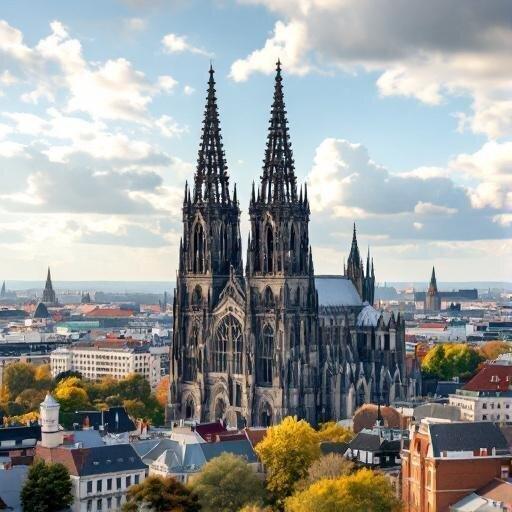
The south tower of Cologne cathedral offers a more demanding climb, but the panorama rewards the effort with a powerful reading of the Rhine, the bridges, and the Rhineland urban fabric. The city, visually less compact than Strasbourg or Seville, takes on another dimension here: one understands the role of the river, the location of the station, and the monumental scale of the building itself.
You should count on a little over 500 steps, which places Cologne among the most physically demanding climbs in this selection. Tower hours may be more limited than those of the nave, and it is wise to come early. Booking is not always imperative for an individual traveler, but it becomes relevant for groups, school holidays, and periods of high tourist attendance.
4. Stephansdom, Vienna, Austria
In Vienna, the south tower of St. Stephen’s Cathedral offers a particularly interesting panorama because it juxtaposes the historic roofs of the center, the major breakthroughs of the imperial capital, and, when visibility is good, a wider opening towards the metropolitan area. The climb is an integral part of the Viennese experience: you move from a very frequented liturgical space to an almost cartographic urban observatory.
Depending on the periods, the ascent is organized in slots generally concentrated during the day. Booking is recommended in high season, but the real issue here is comfort: the staircase can be narrow and sustained. For a visitor seeking the best view of Vienna from a historic monument, this tower remains one of the most convincing, ahead of several viewpoints that are easier to access.
5. Murcia Cathedral, Spain
The Murcia Cathedral tower captivates with a rare combination: panoramic views, interior architectural interest, and often less overwhelming crowds than at major international sites. From the heights, one can clearly grasp the structure of the old town, the squares, the nearby reliefs, and the city’s placement within its broader Mediterranean environment.
Tower visits are generally organized in guided or semi-scheduled slots, making reservations particularly useful. It is an excellent choice for those seeking a strong ascent without the pressure of constant crowds. On site, it is often observed that visitors who book a mid-morning time slot enjoy more stable lighting and somewhat smoother group flows.
A local guide notes that the best ascents are not always those with the greatest fame. In practice, sites like Murcia or Salamanca sometimes offer a more comfortable experience, as the climb proceeds at a less saturated pace and allows more time to observe the city.
6. Santiago de Compostela Cathedral, Spain
In Santiago de Compostela, the routes on the roofs and high areas of the cathedral are among the most memorable visits in Galicia. The view works very well because it gives meaning to the pilgrimage: the old town appears as a dense, almost mineral whole, and one appreciates the cathedral’s importance in the city’s organization.
Ascent times are often structured by guided tours or reservable time slots. Here, booking is generally a good idea, especially from April to October. This site is not always the first choice for a simple city-breaker, but it ranks among the richest for those looking to combine heritage, urban views, and historical understanding of the place.
7. Salamanca Cathedral, Spain
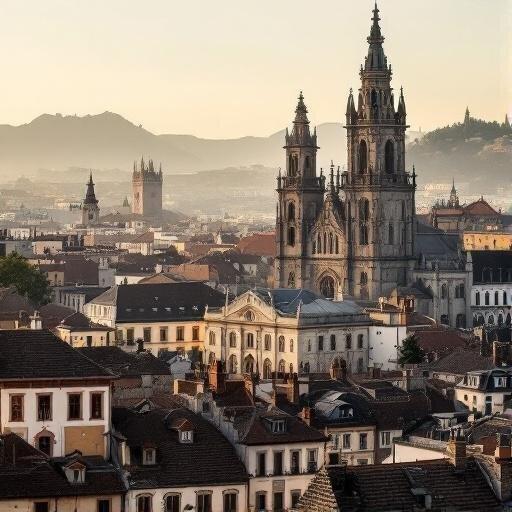
The Ieronimus route, which allows discovery of the towers and upper parts of Salamanca’s cathedrals, is among the best panoramic experiences for an architecture enthusiast. The interest is not only the view over the golden city; it is also the progression through the monument, between rooms, passages, and belvederes, that enriches the ascent.
The schedules are generally regular but depend on the season and cultural programming. Reservation is recommended, especially on weekends. For those who like to understand a monument from the inside rather than simply climb for the final photo, Salamanca is a particularly solid choice, often more comprehensive than a tower visited in a few minutes.
8. Palma Cathedral, Mallorca, Spain
The Seu de Palma offers a panorama that shifts register: here, the view combines the city, the waterfront, and a very specific luminous presence typical of the Mediterranean. The site is spectacular because the cathedral dominates an already strong urban position facing the bay. For those seeking a sharp contrast between Gothic stone and the marine horizon, Palma ranks very high.
The ascent or terrace circuits may be more limited than the classic visit. Booking is therefore prudent, sometimes essential depending on the period. In summer, it is better to avoid the hottest hours; the morning slot often remains the most comfortable, especially for those who want to enjoy the light without enduring a climb in excessive heat.
9. Milan Cathedral, Italy
The Milan Cathedral is a somewhat special case: the flagship experience is enjoyed more on the terraces and high areas than from a simple isolated tower. Yet, for a monumental panorama, it is hard to overlook. The forest of pinnacles, the reading of the square, and the opening onto the modern city offer a very different urban viewpoint, more sculptural than strictly vertical.
The opening hours are generally broad, but demand remains strong almost all year round. Here, online booking is highly recommended, even essential to save time. For a visitor who wants an accessible and photogenic classic, Milan is one of the safest sites, even if the experience differs from the narrower and more medieval climbs of Strasbourg or Cologne.
10. Cathedral of Saint Mary of Girona, Spain
Girona is not always mentioned first, yet its heights offer a remarkable relationship between monument, alleys, ramparts, and Catalan reliefs. The old town is particularly photogenic, with a density of volumes that adds real value to any authorized climb in or around the high parts of the cathedral complex.
Access conditions can be more variable than in very large international sites, hence the interest in checking in advance. Booking is recommended as soon as a guided tour is announced. For a traveler combining heritage, photography, and urban atmosphere, Girona can be one of the pleasant surprises of the ranking, especially outside the summer peaks.
11. Saint Rumbold’s Cathedral, Mechelen, Belgium
The tower of Saint Rumbold’s Cathedral in Mechelen is often underestimated on a European scale. Yet, its ascent offers a very clear panorama of the Flemish city, with a more horizontal urban horizon that highlights the verticality of the tower itself. The interest is enhanced by the interior route, which makes the climb more immersive than a simple terminal viewpoint.
The visiting hours are generally well structured, but not always as extensive as in major tourist capitals. Booking remains a good practice, especially during holidays and weekends. For a fan of less crowded heritage viewpoints, Mechelen is a convincing option, often more peaceful than the most publicized monuments.
12. Florence Cathedral, Italy
In Florence, the most sought-after panoramic view related to the cathedral complex often comes from the dome of Santa Maria del Fiore, and not from a tower in the strict sense. The result remains exceptional: the Renaissance city unfolds with rare clarity, between red tiles, Tuscan hills, and the monumental density of the historic center.
Booking is generally almost essential, especially in spring, summer, and on long weekends. The ascent is physical and often accompanied by specific time slots. For an urban trip where one wants an immediately iconic view, Florence remains essential, even if the experience is more of a dome climb than a classic Gothic tower.
How to choose the best ascent according to your visitor profile?
The right choice mainly depends on three criteria: acceptable physical effort, the type of panorama sought, and the time available. For an easy climb, Seville is ideal; for a dense heritage experience, Strasbourg or Salamanca excel; for an iconic view to be booked early, Florence and Milan dominate.
For a first ascent, it is often wiser to choose a comfortable site rather than a record number of steps. Seville, with its ramp, or Santiago de Compostela, with its strong narrative interest, are well suited for visitors who want a smooth experience. Conversely, Cologne or Vienna will appeal more to those who accept a more athletic climb in exchange for a clearer sense of conquest upon arrival.
The second criterion is the nature of the panorama. Some travelers prefer a compact and immediately readable historic center, like in Strasbourg or Florence. Others seek a wider horizon, with river, bay, or reliefs, like in Palma or Murcia. Finally, architecture enthusiasts often derive more pleasure from immersive routes like Salamanca or Saint Rumbold, where the interior route is almost as interesting as the final view.
In practice, a family often says that they remember better a 20 to 30-minute well-organized ascent than a very hard climb followed by a viewpoint saturated with visitors. For those traveling with children, it is therefore better to balance prestige and real comfort. This point may seem trivial, but it determines the quality of the memory far more than a few extra meters of height.
The most beautiful panorama is not always the highest: it is often the one that really helps to understand the city, without turning the visit into a logistical challenge.
Ascent times and reservations: when should you book?
You must book as soon as a site operates by time slots, guided tours, or access quotas, which is common in Florence, Milan, Salamanca, Murcia, or Santiago de Compostela. Without a reservation, aiming for opening hours in low or mid-season remains the safest strategy to limit waiting.
Ascent times are more fragile than the general opening hours of a cathedral. A nave may remain visitable while a tower closes due to strong wind, maintenance, ceremony, or capacity reached. That is why official pages are essential. According to Service-Public.fr for the main principles of trip preparation and institutional heritage portals, the most reliable information is always that published just before the visit date, especially during holidays and public holidays.
In practice, three situations often recur:
- Free access with ticket on site: convenient in low season, but uncertain on weekends.
- Reservable time slots: the most common formula for highly demanded sites.
- Mandatory guided tours: frequent when a complex route or narrow passages must be supervised.
To avoid unpleasant surprises, the simple rule is as follows: book if the city is very touristy, if the monument is iconic, or if the climb is on a guided circuit. In high season, booking 48 hours to a week in advance is reasonable. Off-season, a slot taken the day before is often enough, except for Florence and Milan, where demand remains strong most of the time.
Comparison table: effort, visual interest, and recommended booking
| Cathedral | Type of panorama | Level of effort | Recommended booking |
|---|---|---|---|
| Strasbourg | Old town, canals, Alsace plain | High | Yes on weekends and in December |
| Seville | Andalusian historic center, wide view | Moderate | Yes, almost all year round |
| Cologne | Rhine, bridges, urban skyline | Very high | Useful during high attendance |
| Vienna | Imperial center and extensive urban fabrics | Very high | Recommended in high season |
| Murcia / Salamanca / Compostela | Readable historic centers, rich cultural circuits | Medium to high | Yes, often necessary |
| Florence / Milan | Iconic views over monumental centers | Medium to high | Highly recommended |
This table summarizes a useful trend: the “easiest” panoramas are not necessarily the least impressive. Seville is the best example. Conversely, harder climbs like Cologne offer a particular satisfaction, but they require real physical availability. For a short stay, this difference matters almost as much as the beauty of the panorama itself.
According to demographic and urban data available via INSEE for major territorial benchmarks in France, and according to heritage offices or cathedral visit services concerned, the value of a view also depends on the size and structure of the old town. A dense city of 100,000 to 300,000 inhabitants with a preserved historic core often produces a stronger panoramic reading than a larger metropolis but visually fragmented from the heights.
FAQ: Frequently asked questions before climbing a cathedral tower
Can these ascents be done with children?
Yes, but not everywhere under the same conditions. Seville is one of the simplest options thanks to its ramp, whereas Cologne or Vienna require continuous effort. For a child not used to long climbs, aiming for a route of 20 to 30 minutes maximum remains more realistic.
What is the best season to enjoy a panoramic view?
Spring and early autumn often offer the best compromise between light, temperature, and crowd levels. In summer, visibility can remain excellent, but the heat makes some climbs noticeably more tiring, especially in narrow and poorly ventilated towers.
Should certain times be avoided for photos?
Yes. Generally, midday gives harsher light and more crowds. Time slots around 9 a.m. to 11 a.m. and 4 p.m. to 6 p.m., depending on the season, are often more pleasant to get relief on roofs and facades.
Can people prone to vertigo attempt the ascent?
It all depends on the type of platform. An indoor climb with a well-protected viewpoint, as in some organized circuits, can remain bearable. On the other hand, narrow, very airy, or heavily open platforms are often more difficult for visitors sensitive to heights.
Can a ticket be bought on site the same day?
Often yes, but it is not the safest strategy for highly demanded sites. In Florence, Milan, Seville, or some guided Spanish circuits, online tickets mainly allow avoiding fully booked slots. In high season, it can save 30 minutes to more than an hour of cumulative waiting time.
Are there unexpected closures even with a ticket?
Yes, especially in case of bad weather, liturgical constraints, or technical intervention. A tower is more exposed than a typical museum space. It is rare, but frequent enough to justify a check on the official page or at the monument’s ticket office on the very morning.