In brief
- A heat pump from 4 to 70 kW must undergo a periodic check every 2 years.
- The actual frequency also depends on the type of device: air/air, air/water, geothermal, or reversible.
- The price mainly varies according to the service, access to the installation, and the existence of a contract.
- The tenant often pays for routine maintenance, but it all depends on the lease and the mode of operation.
- The technician checks sealing, exchangers, condensates, and the general state of the thermodynamic cycle.
Why is heat pump maintenance essential?
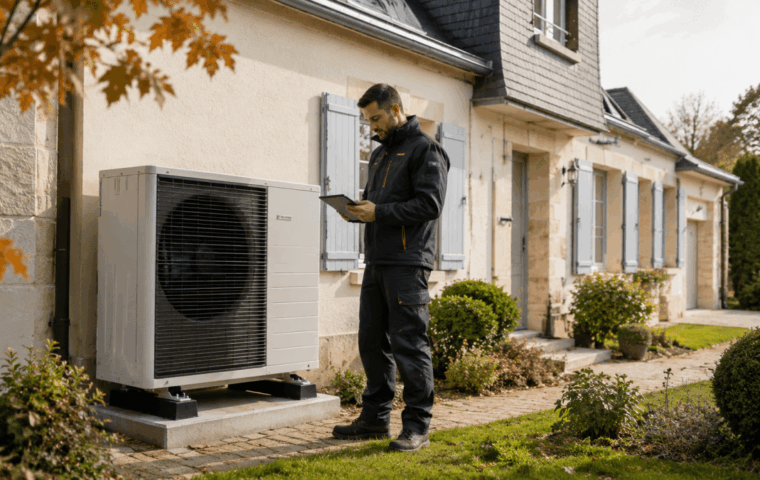
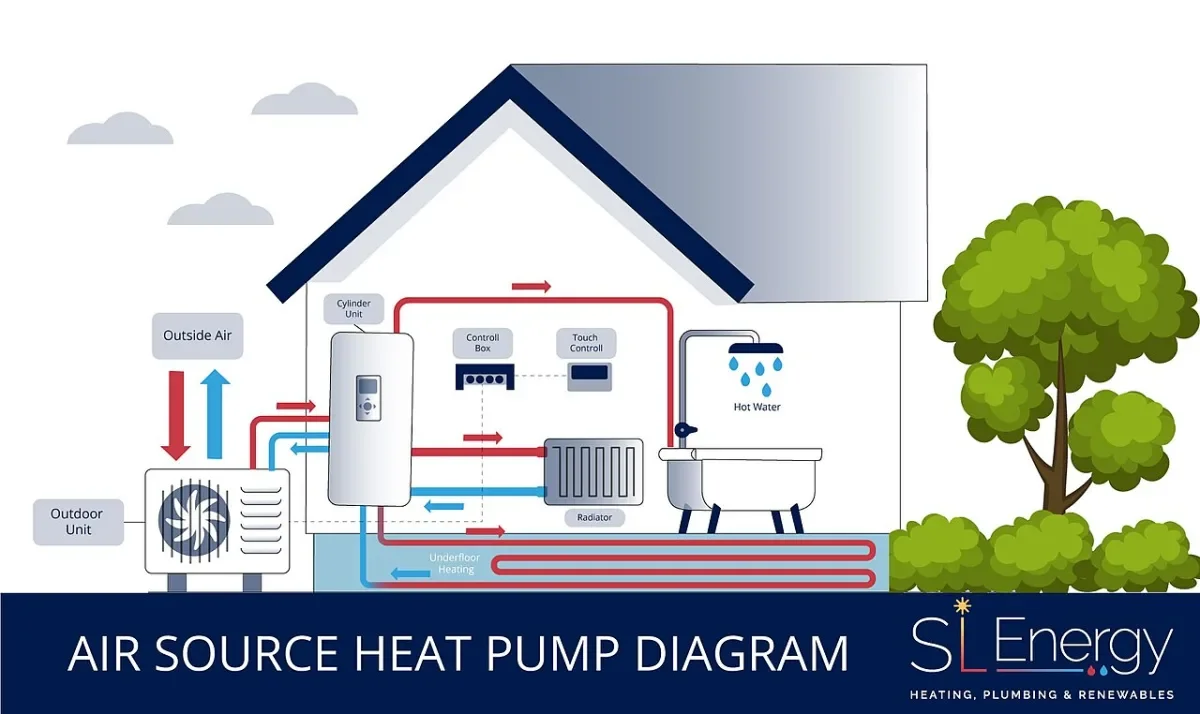
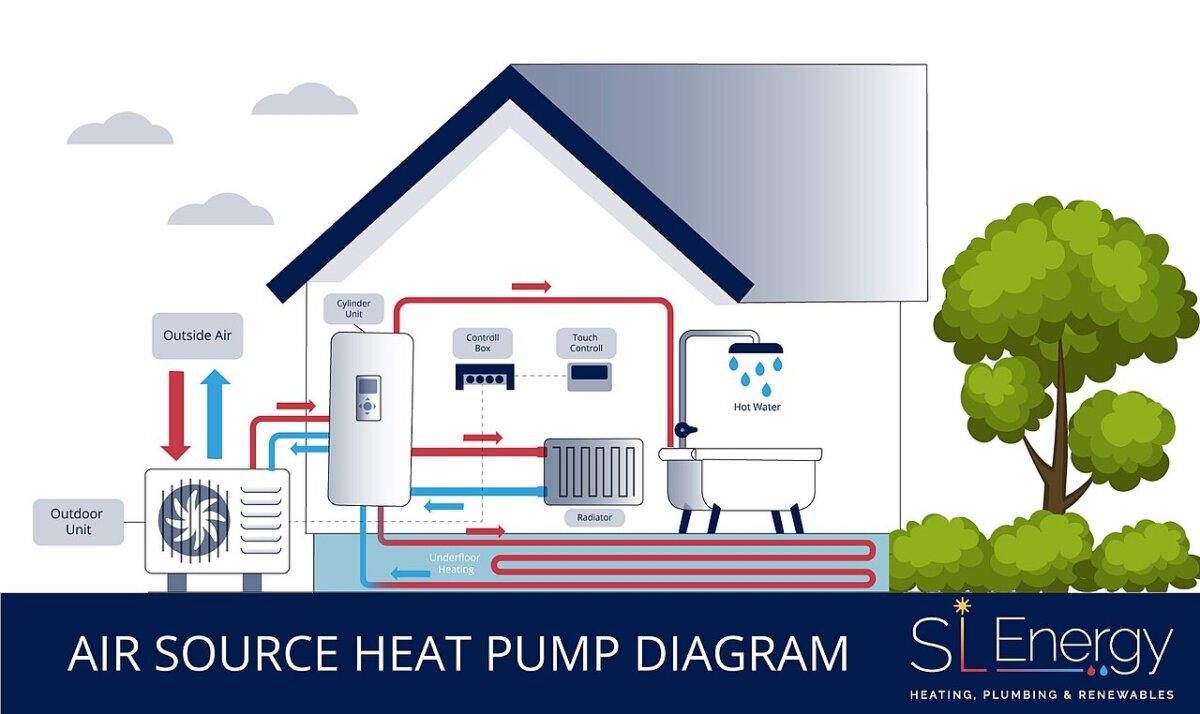
A heat pump works continuously with thermal exchanges, fans, exchangers, and sometimes a pressurized refrigerant fluid. In other words, it is not a simple “on/off” device. Without maintenance, filters clog, performance drops, overconsumption rises, and minor defects eventually become real breakdowns.
On the ground, the most common problems are very down-to-earth: clogged filters, blocked condensate drainage, deformed fins, abnormal fan noise, or adjustment drift. Nothing spectacular, but enough to lose several efficiency points. And since the heat pump relies on a thermodynamic cycle, a small exchanger anomaly can quickly translate into a large electricity bill.
“A well-maintained heat pump does not necessarily make more noise; it simply works better and longer.”
Good to know: maintenance should not be confused with repair. The first is preventive, planned, and aims to maintain performance; the second occurs when the device is already in trouble. That is precisely why a periodic check, even if it seems routine, often remains the cheapest operation throughout the equipment’s life.
Is maintenance of a heat pump mandatory?
Yes, in most cases as soon as the nominal power of the equipment is between 4 and 70 kW. The decree of July 28, 2020 then requires a periodic inspection every 2 years. Beyond 70 kW, the frequency changes to every 5 years. Below 4 kW, maintenance is mostly recommended, but it would be a shame to do without it.
Power thresholds to know
The regulatory text targets heating and air conditioning systems, including certain reversible heat pumps. The central criterion is not the type of housing, but the power. This point changes everything, as a small apartment heat pump does not necessarily fall under the same regime as an air/water installation for a single-family home or a more robust collective system.
| Type / power | Frequency | Obligation | Average observed price | Usual responsible party |
|---|---|---|---|---|
| Heat pump 4 to 70 kW | Every 2 years | Yes, periodic inspection | €100 to €250 | Occupant or according to lease |
| Heat pump over 70 kW | Every 5 years | Yes | €200 to €500 | Owner / co-ownership |
| Heat pump under 4 kW | Depending on use, often annual | Not systematic | €80 to €180 | Occupant |
| Collective installation | According to operating contract | Yes depending on configuration | On estimate | Co-ownership / property manager |
What the decree of July 28, 2020 provides
This heat pump maintenance decree mainly clarified one thing: a thermodynamic installation is not left to operate “blindly.” The professional must check the general condition, operating parameters, and, when relevant, the components related to the refrigerant fluid. It is not just an administrative paper; it is a real prevention logic.
“The periodic inspection is not to tick a box. It is to spot what is drifting before consumption or breakdown does it for you.”
Who is responsible for maintenance?
In housing occupied by the owner, it is simple: it is up to them to organize maintenance. In rental, the division often depends on the lease and the nature of the work. Routine maintenance and periodic visits are very often the occupant’s responsibility, while replacing a major part, a significant leak, or a compressor breakdown is more the landlord’s responsibility.
How often to maintain a heat pump according to its type?
The short answer: the regulatory frequency depends primarily on power, but the practical frequency depends on the type of heat pump and its use. An air/air heat pump used for heating and air conditioning requires more attention to filters than a well-stabilized geothermal system. In all cases, a professional check every 1 to 2 years remains a good baseline.
Air/air heat pump
The air/air heat pump is often reversible, so it is used in winter as well as summer. Its filters deserve regular cleaning, sometimes every month during intensive use periods, especially if the dwelling is dusty. The professional checks the indoor units, airflow, condensate drainage, and the general condition of the heat exchanger.
Air/water heat pump
The air/water heat pump is probably the most talked about in single-family homes. On an 8 kW model, for example, there is often a visit every 1 to 2 years, with a check of the hydraulic circuit, the circulator, the pressure, and performance. If the underfloor heating or radiators are clogged, the heat pump pays dearly.
Geothermal heat pump
Geothermal requires less daily monitoring but more technical rigor during the visit. The professional then focuses on the primary circuit, hydraulic components, and overall efficiency. Since the installation is often heavier and more expensive, preventive maintenance protects an investment that is clearly not short-term.
Routine maintenance to do yourself
- Remove leaves, dust, and debris around the outdoor unit.
- Visually check accessible filters and clean them if the manufacturer allows it.
- Watch for unusual noises, vibrations, and suspicious leaks.
- Ensure nothing is blocking the intake and exhaust grilles.
- Avoid reckless adjustments that increase consumption unnecessarily.
“A clean filter and a clear outdoor unit are often worth more than one more adjustment.”
What does a heat pump maintenance visit include?
A thorough visit usually lasts between 1 and 2 hours. The technician does not just take a quick glance: they check the overall condition of the installation, clean accessible components, verify operating parameters, measure temperature or pressure differences, and provide a report. If the device is poorly adjusted, this is when they notice it.
Technician intervention checklist
- Check the outdoor unit and the indoor unit.
- Clean filters, exchangers, and accessible parts.
- Check condensates and drainage.
- Read operating parameters and any faults.
- Check the refrigerant circuit tightness if the equipment requires it.
- Verify pressure, safety features, and performance.
- Provide a heat pump maintenance certificate or a visit report.
In real life, this visit can also reveal very concrete details: an intake grille too close to a wall, a displaced sensor, a lack of water flow, or a condensate tray that needs cleaning. These are small stones in the shoe that eventually cause the whole installation to limp.
Example of anonymized invoice
| Service | Amount |
|---|---|
| Travel + diagnosis | €45 incl. tax |
| Cleaning units and filters | €35 incl. tax |
| Leak tightness / refrigerant check | €40 incl. tax |
| Adjustments, operation test, certificate | €30 incl. tax |
| Total | €150 incl. tax |
This type of invoice is realistic for an air/water heat pump in a single-family home, excluding breakdowns, parts replacement, and emergencies. As soon as a long-distance trip, a contract with repair service, or an evening intervention is added, the bill quickly rises.
How much does heat pump maintenance cost?
In practice, expect most often between €100 and €250 for a one-time visit. The heat pump maintenance price depends on the type of equipment, region, accessibility, company reputation, and level of service. An annual contract may cost more, but it sometimes includes repairs, discounts, or priority intervention.
One-time maintenance or annual contract?
One-time maintenance is suitable if your heat pump is recent, easy to access, and rarely problematic. The heat pump maintenance contract becomes more interesting if you want to smooth out expenses, avoid forgetting the regulatory deadline, or secure quick repairs. Cherry on the cake, some contracts include priority checks during cold periods.
Factors that affect the price
- The type of heat pump: air/air, air/water, geothermal, or reversible.
- The power of the installation and its hydraulic complexity.
- The accessibility of the outdoor unit or technical components.
- The presence of options: emergency, long-distance travel, repair, deep cleaning.
- The age of the device and the level of dirt buildup.
“A contract is only interesting if it saves you from a breakdown, a forgetfulness, or an intervention that is too expensive at the wrong time.”
What are the risks if maintenance is not done?
The risk is not only technical but also financial. A neglected heat pump consumes more, heats less efficiently, breaks down more often, and wears out faster. Administratively, lack of maintenance can also complicate disputes, manufacturer warranty claims, or insurance coverage.
Technical consequences
When maintenance is postponed for too long, the exchangers lose efficiency, condensates drain poorly, the compressor works harder, and performance drops. In the end, you pay more to get less. This is exactly the opposite of what is expected from a heat pump, which is supposed to reduce the bill, not increase it.
Administrative and financial consequences
Without proof of maintenance, it becomes more complicated to defend a case in the event of a major breakdown. A dated certificate or report carries weight if a manufacturer requests maintenance traceability. In a rental, the absence of maintenance can also lead to a disagreement over responsibilities. And that can quickly become troublesome.
How to choose a professional for heat pump maintenance?
The right professional is the one who knows what they are checking, explains what they are doing, and documents their visit. For heat pump maintenance, it is better to have a technician comfortable with refrigerants, hydraulic adjustments, and regulatory obligations than a simple “Sunday handyman.” The quote must be clear, complete, and without unpleasant surprises.
Selection criteria
- Qualification and experience with the type of heat pump concerned.
- Ability to work on refrigerants and thermodynamic circuits.
- Detailed quote specifying what is included and what is not.
- Availability of after-sales service and response time.
- Reputation, customer reviews, and reliability in providing documentation.
Good questions to ask before signing
- Does the visit include cleaning, adjustments, and certification?
- Is travel included or charged separately?
- Does the contract cover repairs or only preventive maintenance?
- What happens if a part needs to be replaced during the visit?
Heat pump maintenance: owner, tenant, co-ownership, who pays?
The answer depends on the housing and the contract. In a single-family home, the owner-occupant generally pays for maintenance. In rental, routine maintenance often falls to the tenant, especially if it is a usage charge provided for in the lease. In co-ownership or collective installation, it is often the property manager or technical manager who organizes and allocates the costs.
Practical cases
- Owner-occupied house: the bill is borne by the owner, who retains control over maintenance.
- Unfurnished or furnished rental: the tenant may be responsible for routine maintenance, unless a specific clause states otherwise.
- Apartment with reversible heat pump: the allocation depends on the lease, operating contract, and the equipment concerned.
- Collective installation: the co-ownership or property manager often centralizes the contract and interventions.
Concrete example: in a rental with a reversible air/air heat pump in an apartment, the tenant may take charge of regular filter cleaning, while the landlord finances major repairs and replacement of key components. If a maintenance contract already exists, it is especially important to check what it covers, as the mechanics can be somewhat tricky.
FAQ on heat pump maintenance
Is heat pump maintenance mandatory?
Yes for many installations from 4 to 70 kW, with a periodic check every 2 years. Beyond 70 kW, the frequency is every 5 years. Below 4 kW, maintenance is not always mandatory, but it is strongly recommended to protect performance and limit breakdowns.
How much does heat pump maintenance cost?
Most one-time visits cost between €100 and €250. A heat pump maintenance contract can cost more, but it sometimes includes repairs, travel, or priority intervention. The exact price depends on the type of device, the region, and the level of service.
Who should pay for maintenance, the owner or the tenant?
In rental, routine maintenance is often the tenant’s responsibility, unless otherwise stipulated in the lease or specific contract. The owner generally bears the cost of major repairs and replacement of important components. In co-ownership, the allocation often goes through common charges.
Can you clean your heat pump yourself?
Yes, for simple tasks: clearing the outdoor unit, removing leaves, cleaning some accessible filters, and monitoring drainage. However, you should not intervene on the refrigerant, pressures, or sealed components without qualification. In those cases, leave it to the professional.
What should the heat pump maintenance certificate contain?
It must at least mention the date of the intervention, the identification of the professional, the checks carried out, any observations, and, if necessary, the recommendations or detected anomalies. This is the document to keep in case of dispute, warranty, or later inspection.
In practice, good heat pump maintenance is not just about “having someone come by once in a while.” It protects your comfort, your budget, and the lifespan of the device. If you take away only one thing, it’s this: regular and documented maintenance is better than a heat pump that ends up failing you at the worst moment.