/* Css En-Bref */
| Key Points | Details to Remember |
|---|---|
| 🌱 Definition | Understand the interest of ecological cleaning |
| 🧪 Basic Ingredients | Identify vinegar, baking soda, vegetable soap |
| 📝 DIY Recipes | Apply formulas for specific surfaces and rooms |
| 💡 Practical Tips | Optimize preservation, dosage, and safety |
| 🔬 Precautions | Test before use and label clearly |
| 📦 Storage | Keep away from heat and children |
Thinking “zero waste” and “non-toxic” quickly becomes obvious when you realize the impact of conventional household products. By adopting homemade solutions, you limit plastic packaging, reduce harmful emissions, and balance your interior without sacrificing effectiveness. This article offers several basic recipes, to be combined according to your needs, to reinvent your cleaning routine with peace of mind.
Sommaire
Why choose ecological cleaning?
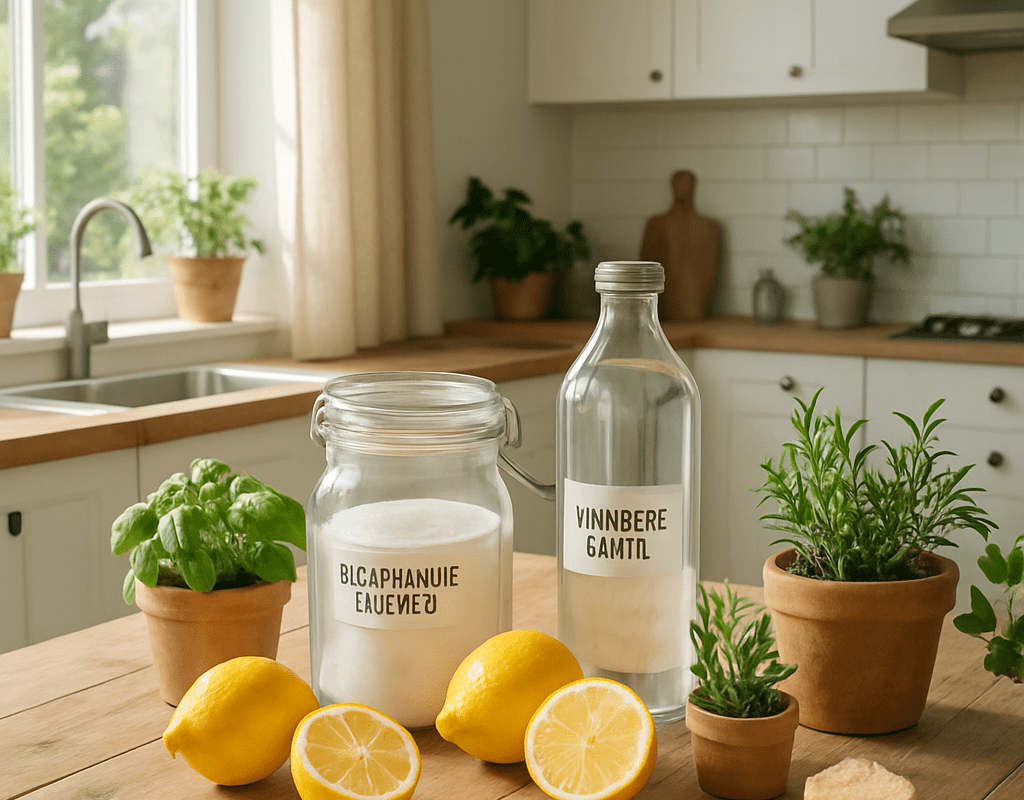
At first glance, one might think that industrial products are more effective, but natural formulas compete on many surfaces. White vinegar degreases without leaving a film, baking soda eliminates stubborn odors, and black soap unfolds a powerful cleaning ability. Moreover, you eliminate exposure to potentially irritating substances and contribute to the preservation of your sanitation network. It is a concrete gesture for the planet, but also for indoor air quality.
Essential Ingredients
White Vinegar
Iconoclastic and remarkably effective, white vinegar is a natural acid (acetic acid at about 5%) that dissolves limescale, degreases, and deodorizes. It is used diluted (between 10 and 20% depending on the task) to avoid overly sensitive surfaces such as limestone or marble. On tiles or stainless steel, a simple spray is enough to restore shine.

Baking Soda
In the form of a white powder, it has the particularity of being slightly abrasive, excellent for scrubbing without scratching. Its alkaline pH allows it to neutralize grease and fight odors. In a tablespoon of baking soda added to a liter of hot water, brushes and sponges are soaked to naturally deodorize them.
Vegetable Soaps
Whether it is Marseille soap or black soap, they offer mild surfactants, biodegradable and derived from vegetable oils. Black soap, in particular, often comes in paste form; it is diluted at the rate of two tablespoons per bucket of lukewarm water and used like a regular detergent, ideal for floors and walls.
Essential Oils
Beyond their fragrance, certain oils (tea tree, lavender, lemon) provide antiseptic or antifungal properties. Add 10 to 20 drops in a multi-purpose spray to enhance the disinfecting action, while leaving a pleasant aromatic touch.
Basic Recipes
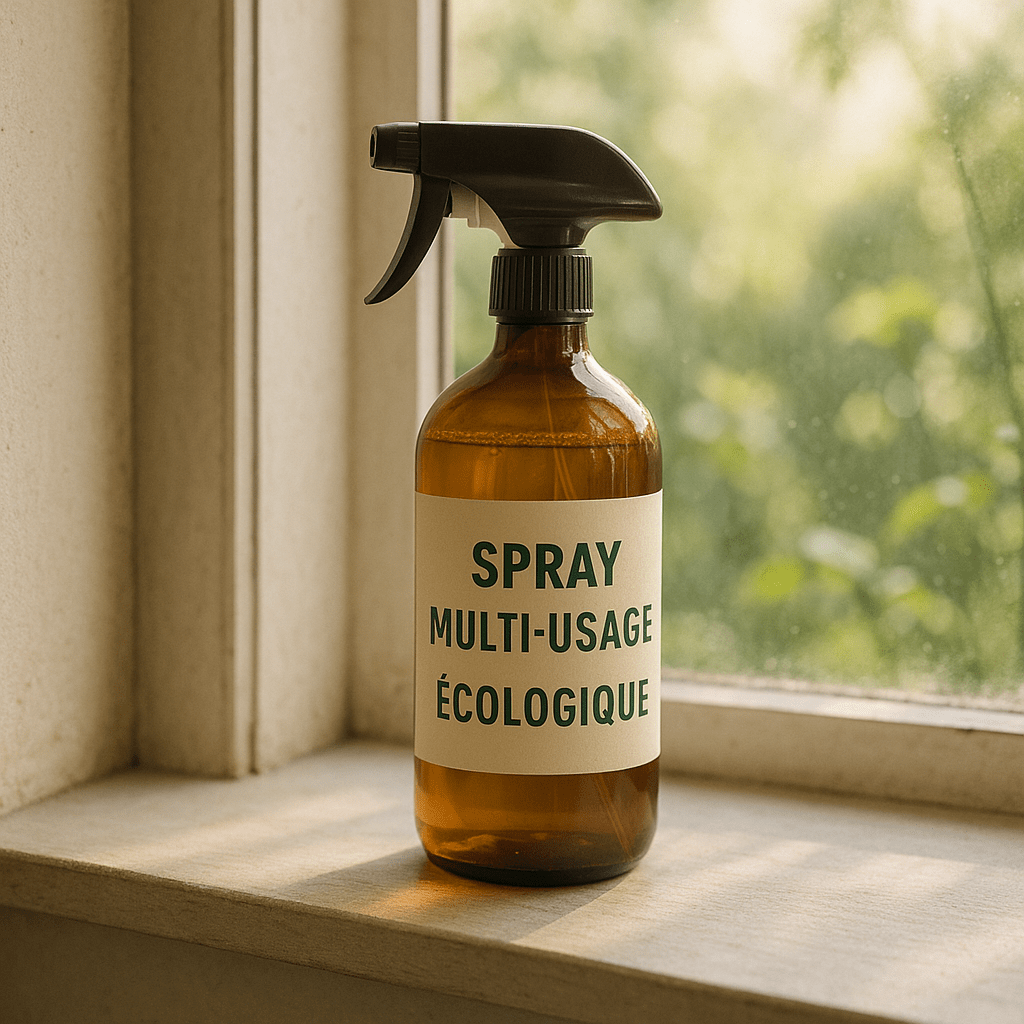
Multi-purpose Spray
- 50 cl of lukewarm water
- 10 cl of white vinegar
- 1 teaspoon of liquid black soap
- 15 drops of lemon essential oil
Mix everything in a bottle equipped with a spray nozzle. Shake before each use and spray on work surfaces, sinks, or windows. Wipe with a microfiber cloth to avoid streaks.
Bathroom Gel
- 200 ml of hot water
- 2 tablespoons of black soap
- 3 tablespoons of baking soda
- 10 drops of tea tree essential oil
In a container, dilute the black soap in hot water, add the baking soda gradually, then the essential oils. Mix carefully until a homogeneous paste is obtained. Apply with a brush on joints or tiles, let sit for 10 minutes and rinse.
All-purpose Cleaning Powder
- 100 g of baking soda
- 50 g of washing soda crystals
- 50 g of fine salt
Pour everything into a resealable jar. To scrub a pot or sink, sprinkle, then add a little water and scrub. This powder proves formidable on very greasy or blackened surfaces.
Homemade Dishwashing Liquid
- 3 tablespoons of grated Marseille soap
- 1 teaspoon of baking soda
- 1 liter of very hot water
Melt the soap in the water, incorporate the baking soda off the heat, mix gently and let rest for 24 hours before use. You get a creamy texture that foams enough to clean dishes without harming hands or the planet.
Practical and Safety Tips
For each preparation, clearly label your containers, mention the date and ingredients. Store in a cool place, away from light, and prefer glass or PET bottles. Always test on a small surface before widespread application to avoid unpleasant surprises. Avoid any eye contact and wear gloves if you have sensitive skin.
FAQ
Are these recipes really more effective than industrial products?
In most daily uses, yes. The proposed recipes offer sufficient degreasing and disinfecting power for regular maintenance. For very ingrained stains, a longer contact time or a slight increase in proportions can compensate.
Can I replace black soap with another vegetable soap?
Absolutely. Marseille soap or Aleppo soap can be suitable, provided they are pure and without additives. The important thing is the content of natural surfactants, not the color or smell.
How long do these preparations keep?
Generally 2 to 3 months under good conditions (dark bottle, temperate area). Check for any alteration in smell or texture before each batch. If a fatty substance becomes rancid, discard it.
Are there any ingredients to absolutely avoid?
Sodium percarbonate remains delicate on certain colored materials, and essential oils are not recommended near pets. Never mix acidic and alkaline products outside of the proposed recipes, as this generates abundant foam and can release carbon dioxide.
{
“@context”: “https://schema.org”,
“@type”: “FAQPage”,
“mainEntity”: [
{
“@type”: “Question”,
“name”: “Are these recipes really more effective than industrial products?”,
“acceptedAnswer”: {
“@type”: “Answer”,
“text”: “In most daily uses, these recipes offer sufficient degreasing and disinfecting power for regular maintenance, with a longer application time if necessary.”
}
},
{
“@type”: “Question”,
“name”: “Can I replace black soap with another vegetable soap?”,
“acceptedAnswer”: {
“@type”: “Answer”,
“text”: “Yes, Marseille or Aleppo soap are suitable if they are pure and without additives, the essential factor being the content of natural surfactants.”
}
}
]
}
{
“@context”: “https://schema.org”,
“@type”: “WebPage”,
“about”: {
“@type”: “Thing”,
“name”: “Ecological cleaning and basic recipes”
},
“keywords”: [“ecological cleaning”, “white vinegar”, “baking soda”, “black soap”, “DIY”]
}