Diving into the medieval world is not limited to donning armor or wielding a sword. Above all, it is about recreating a microcosm where every detail matters: from the choice of location to the campfire smoke, including hand-carved wooden dishes. Organizing a medieval camp means acting as the conductor of a small society from another age, where immersion is paramount, but without neglecting modern logistics. This guide is intended as a travel companion, rich in practical advice and concrete illustrations, to transform your reenactor’s project into a true journey through time.
Sommaire
1. Choosing the ideal location
Understanding the historical context
Each medieval army or group favored a site based on its strategy, season, and resources. Imitating this approach enhances authenticity: tall grass for a stealthy bivouac, an open plateau for a feast, or proximity to a watercourse for laundry and cooking. Before making any reservation, research the period and geographic area you wish to recreate. This will avoid, for example, setting up a camp of Viking mercenaries in a Cévennes valley where only tetrarch knights would have pitched their tents.
Practical criteria: access and topography
Being historically coherent is not enough to satisfy the site manager or the town mayor. Road accessibility, the presence (or absence) of parking, topography, and even exposure to winds must be scrutinized. A hilly terrain can offer a superb panorama but complicates tent installation and the transport of heavy equipment. Conversely, an area that is too flat risks retaining water after a shower. The idea is to combine medieval charm with logistical safety.
2. Essential camp elements
Tents and accommodation structures
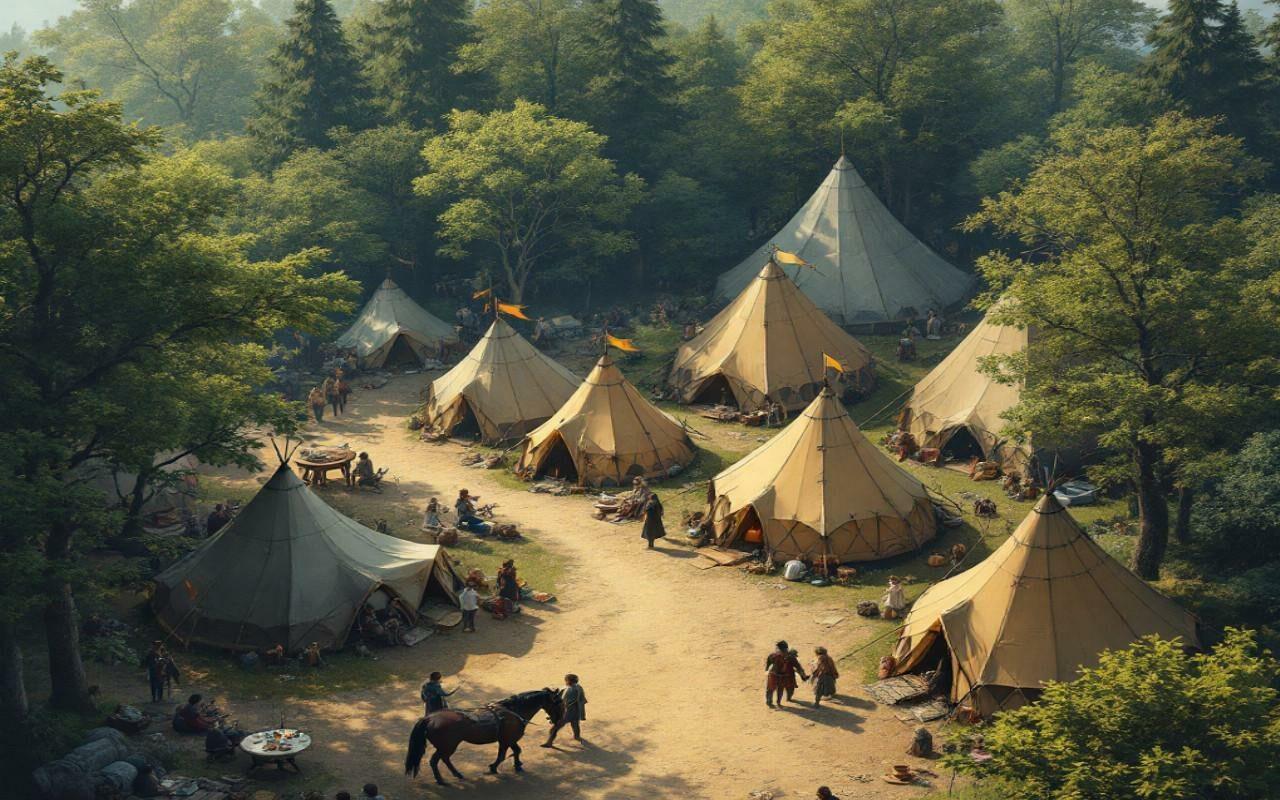
The tent is the heart of the camp. Several types can be distinguished: the conical tent (highly favored by mercenaries), the pavilion tent (very common among nobles), or even the fur hut for a more rustic adventurer. The choice depends on the level of comfort sought and the coherence with the character portrayed. Also consider bringing one or two “utility” tents to store wet equipment or keep the food supply out of curious eyes.
Furniture and daily equipment
A turned wooden chair, even rudimentary, changes everything: sitting comfortably while respecting the medieval aesthetic is the icing on the cake. Oak chests or trunks serve as pantry and makeshift wardrobe. Additionally, a few folding shelves, trestles for cooking, and trays made of maple or walnut provide a neat finish. The cherry on the slat: use historical models to inspire proportions and joinery.
3. Atmosphere and immersion
Decorations and signage
Faithfully reproducing banners, pennants, and coats of arms transported on carts or hung from poles quickly becomes a… legitimate obsession. You can refine each support by using thick fabrics dyed according to traditional recipes (madder, indigo, or even gallnuts). Directional signs, carved from chestnut planks, guide visitors to the “Artisans’ Quarter,” the “Lance Tavern,” or the “Archers’ Camp.” This finishing work strengthens the feeling of authenticity.
Camp and activities: living to the rhythm of the Middle Ages
Far from a mere backdrop, the camp must resonate: forge, calligraphy workshop, leather braiding, skill games (Kubb mats or hunting crossbow). Each of these centers offers both entertainment for the public and a breather for participants. When a blacksmith hammers his anvil, the echo resonates throughout the space, transporting the visitor several centuries back. Invite demonstrations, encourage interaction, let spontaneity emerge, even if it means readjusting the highlights each day.
4. Logistics and supply
Food management and medieval cooking
Forget disposable barbecues: focus on pot-au-feu cooking, onion tarts, or smoked meats. Plan a central hearth, surrounded by stones or refractory bricks to limit risks. Equip yourself with a wrought iron grill and spits for roasting. The period’s “slow food” approach allows for simple but tasty dishes: barley porridge, root vegetables, herb-scented soups. Play the immersive experience card by explaining each preparation step to visitors.
Water Supply and Hygiene
The Middle Ages were not known for the purity of their water sources… In this regard, keep a certified reserve of drinking water for first aid needs and drinking. Set up a washing point outside the camp, with wooden basins and buckets. Don’t forget the soap: although rare, there were indeed pastes made from ashes and animal fat. Finally, organize a discreet sanitary area, with individual wooden latrines. This preserves the atmosphere while avoiding the unpleasantness of a poorly maintained site.
5. Safety and Respect for the Site
Safety of Participants and Visitors
Tempered steel swords and functional crossbows are fascinating but require increased vigilance. Mark off demonstration areas, clearly display the rules, and form a small group of volunteer first aiders. A complete first aid kit, including bandages, natural disinfectants, and blister balm, is essential. Ideally, invite a health professional or firefighter for a short briefing session before the activities begin.
Environmental Protection and Leaving Minimal Impact
Recreating the past must not harm the present. Avoid harsh chemical compounds, favor reusable tents and materials, and plan a thorough cleanup before departure. The tradition of “Leave No Trace” applies here just as much as in modern wilderness: moving stones, cutting branches, or polluting the river are behaviors to be avoided. On the contrary, leave the site more beautiful than when you arrived.
6. Advanced Tips for a Successful Camp
Coordination and Role-Playing
Beyond material aspects, it is the group cohesion that makes the difference. Everyone must know their role: bailiff, argillier, minstrel, cart driver… Organize a small morning briefing, distribute scrolls showing the agenda, and use “evenings” to imagine patrol or negotiation scenarios with a “noble visitor.” This shifts from simple costume to a true narrative experience, where unforeseen events become captivating dramatic devices.
Communication and Planning
In the excitement of the camp, logistical details can be forgotten: meal times, wood distribution, guard shifts… A camp charter, posted on a wooden board, clarifies time slots and assigned tasks. Nowadays, a simple shared To-Do list app or a whiteboard facilitates synchronization: each participant checks off their completed tasks at the end of the day. This is the modern translation of a standard-bearer who orchestrates the whole.
Medieval Camp Checklist
| Equipment | Quantity | Comments |
|---|---|---|
| Tents (conical/pavilion) | 3–5 | Plan for an additional utility tent |
| Wooden chests | 2–4 | Waterproof if possible |
| Foldable furniture (trestles, benches) | 5–8 | Inspired by medieval models |
| Cooking utensils | complete set | Grill, spits, cast iron pots |
| Basins and buckets | 2–3 | Wood or metal, for water and washing |
| First aid kit | 1 | Bandages, disinfectant, balm |
FAQ
- Is it mandatory to have period equipment?
- No, the essential thing is visual and functional coherence. You can start with modern equipment reworked (cotton sheets, contemporary camouflaged tents) and gradually invest in historical reproductions.
- How to handle unexpected weather?
- Always anticipate a plan B: waterproof tarps, extra tents, wood reserves to shelter the camp. In case of rain, organize workshops inside utility tents or a covered space.
- What budget should be planned?
- Depending on the scale of the project, expect from 500 to several thousand euros. The most expensive item is often the ceremonial tent. The key is shared equipment within an association or a reenactment group.
- Can children and families be involved?
- Absolutely! Create a “children’s village” with leather, fustanelle, or pottery workshops. The youngest quickly become passionate little artisans while learning history in a different way.
- How to communicate about the event?
- Social networks, partnerships with schools, local posters, and press dedicated to historical leisure. A short teaser video, edited like a medieval chronicle, always grabs attention! 🎥