
Capital of Calvados, 15 km from the English Channel, Caen combines the medieval monumentality inherited from William the Conqueror, the urban planning of the Reconstruction, and an intense cultural life driven by its university, museums, and contemporary venues. A human-sized city and a hub of regional mobility, it shines between the coast (Ouistreham, Cabourg) and the bocage countryside.
TL;DR — Caen is a city of history and future: ducal castle and abbeys, a reference Memorial, tram and ferries to Portsmouth, Caen–Carpiquet airport, 108,398 inhabitants (INSEE 2022). Real estate 2025: around €3,000/m² for apartments (according to observatories). Ideal for a city break and to settle down.
Sommaire
Geography and Location
Caen is located at the center of the “Caen la mer” metropolitan area, at the confluence of the Orne and Odon rivers. The municipality covers 25.7 km² with a density of 4,218 inhabitants/km² (INSEE, 2022). Its position makes it a gateway to the Côte de Nacre, the D-Day beaches, and the Vire bocage. The city stretches between limestone plateaus and valleys, with a center rebuilt after 1944, large straight avenues, and preserved old neighborhoods (Vaugueux, surroundings of the castle). Key figures: population 2022: 108,398; households: 62,070 (INSEE, Municipality 14118). Official sources: INSEE comparator Caen.
History and Heritage
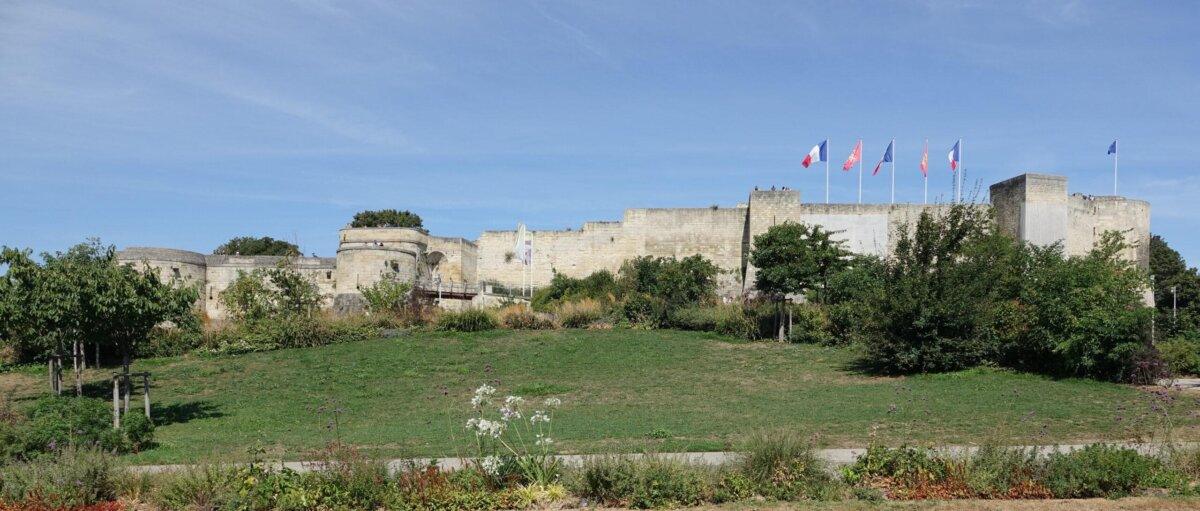
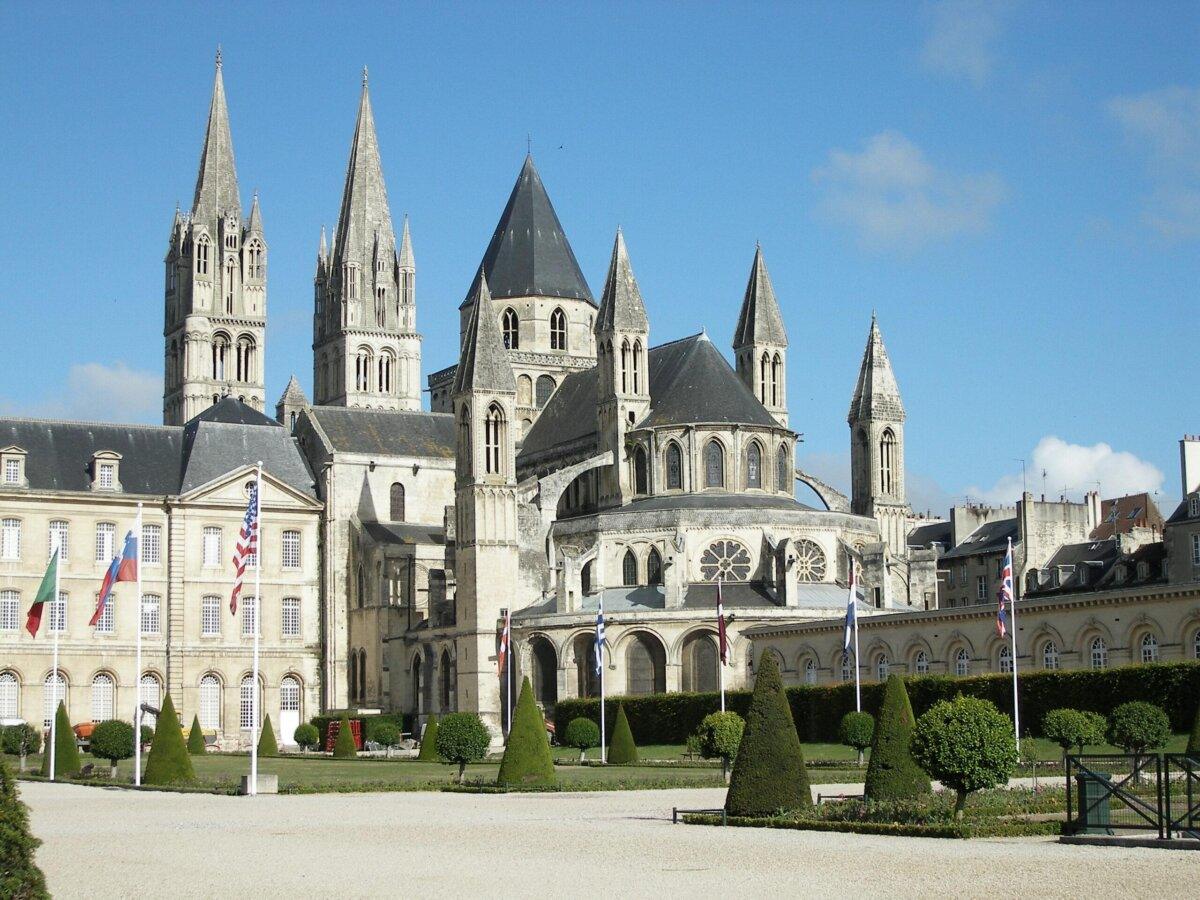
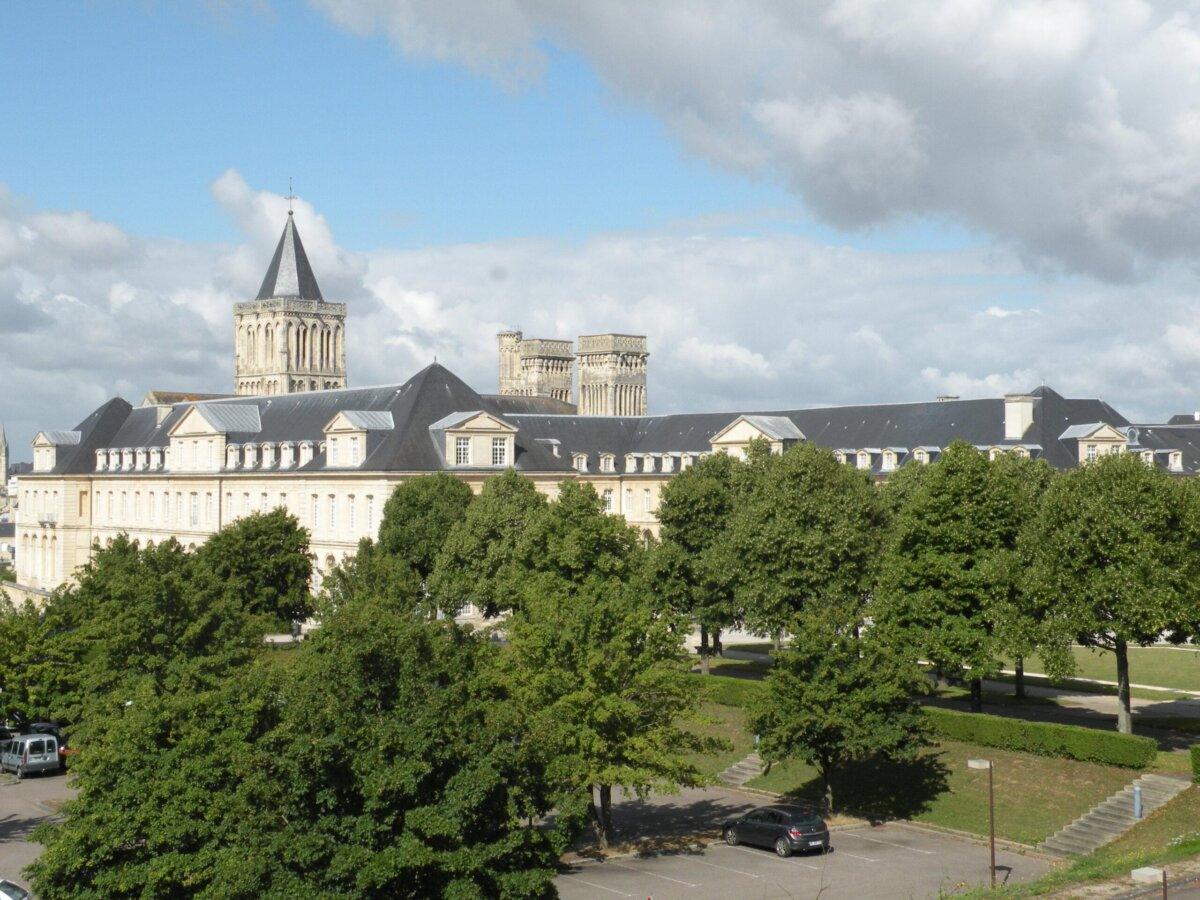
Founded and glorified in the 11th century by William the Conqueror and Matilda of Flanders, Caen stands out for an exceptional medieval ensemble: the ducal castle — one of the largest in Europe — and the monastic duo Abbaye aux Hommes (Saint-Étienne) and Abbaye aux Dames (Sainte-Trinité). Ravaged during the battle of summer 1944, the city became a laboratory of the Reconstruction carried out in the 1950s, with large breakthroughs and functional urban planning that still structures the urban fabric.
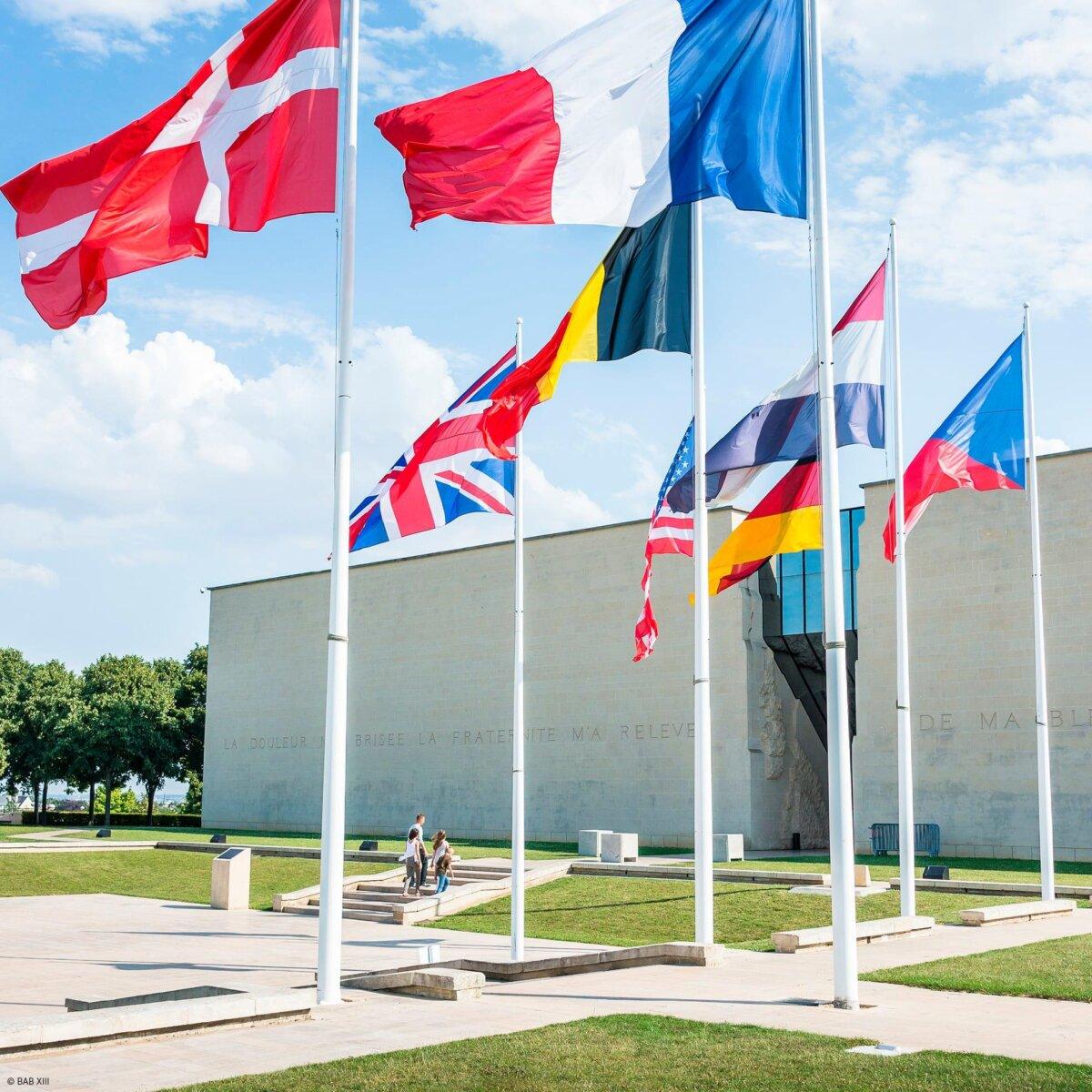
In the 20th century, Caen also established itself as a memory city. Inaugurated in 1988, the Memorial of Caen recounts the history of the Second World War, the Battle of Normandy, and more broadly the violences of the 20th century. The museum has become an international reference for understanding the fragility of peace and questioning our present.
Population and Demography
According to INSEE, Caen has 108,398 inhabitants in 2022, with an average annual growth of +0.5% between 2016 and 2022. The age structure reflects the profile of a university city, with a notable share of 18-29 year-olds and a high residential turnover rate. There are 62,070 households, indicating a significant stock of small and medium-sized dwellings, particularly in the city center and around university hubs.
| Indicator | Value | Year |
|---|---|---|
| Population | 108,398 | 2022 |
| Area | 25.7 km² | 2022 |
| Density | 4,217.8 inhabitants/km² | 2022 |
| Households | 62,070 | 2022 |
Source: INSEE — Commune 14118.
Economy and Employment
The Caen economy is supported by a foundation of education-research-health (University of Caen Normandy, University Hospital), a strong tertiary sector (public services, finance, insurance), industries (food processing, materials, pharmaceuticals), and growing digital sectors. The port of Caen-Ouistreham, connected with Great Britain, supports logistics and agro-industry. Metropolitan functions are concentrated around the center, the 1-2-3 campus, and peripheral business areas (Colombelles, Ifs-Mondeville, Hérouville-Saint-Clair).
Transport and Access
Getting Around Caen
The Twisto network operated for “Caen la mer” offers tramways T1-T3 and buses, with ticketing and digital services. The Caen tram includes three main lines (T1 to T3) that connect the main living hubs (center, campus, Hérouville, Ifs, etc.). Information, maps, and news: twisto.fr and tram page: tram network. An extension project for 2028-2029 has been planned by the urban community (Caen la mer).
To the Sea and the United Kingdom
At Ouistreham (15 km), Brittany Ferries operate daily ferries connecting Caen ↔ Portsmouth in about 6–7 hours, with day and night crossings depending on the dates (Brittany Ferries timetable).
By Air
The Caen–Carpiquet Airport (CFR), 6 km to the west, offers regular and seasonal connections (France and Europe). Check the destination map and daily flights on the official site caen.aeroport.fr. Route observatory: FlightConnections.
By Rail and Road
From Paris-Saint-Lazare, several Intercités and TER Normandie trains serve Caen daily (approx. 2 hours). By road, the A13 connects Paris-Rouen-Caen, the A84 serves Rennes, and the RN13 runs towards Bayeux-Cherbourg.
Tourism and Culture: 10 Must-Sees
From the ducal complex to memorial sites, Caen offers a concentration of open-air history. Here are the major stops to prioritize during a short stay.
- The Castle of Caen: enclosure, leveled keep, ramparts, Fine Arts Museum and Normandy Museum.
- Abbaye aux Hommes: Roman nave, Gothic choir, presumed tomb of William.
- Abbaye aux Dames: remarkable elevations, Ladies’ park, city panorama.
- Caen Memorial: World War II and 20th century route, temporary exhibitions, tours to the Landing Beaches. Info: official site and Normandy Tourism.
- Vaugueux District: medieval alleys, half-timbered houses, restaurants and terraces (Tourist Office).
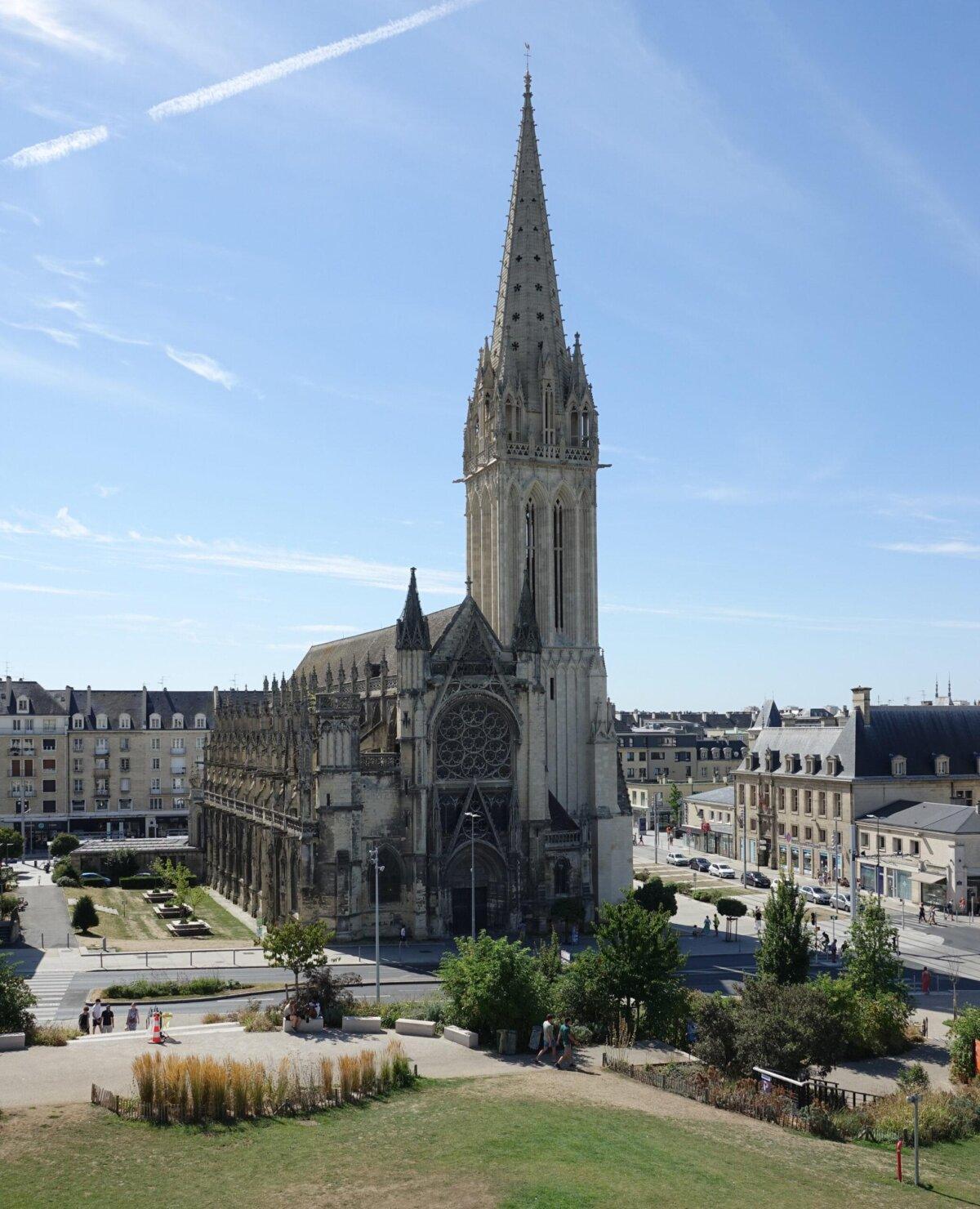
- Saint-Pierre Church: large flamboyant Gothic nave, slender spire.
- Botanical Garden: botanical garden created in 1736, a place for walks and collections (info sheet; Parks & Gardens).
- Fine Arts Museum: collections from the Renaissance to contemporary, housed within the castle.
- Port of Caen–Ouistreham: maritime atmosphere, lock, departures for England.
- Stages and festivals: theatre, contemporary music, contemporary art (FRAC, Artothèque, Le Cargö).
The two abbeys shape the urban silhouette and can be easily visited on foot from the center.
Saint-Pierre Church and the alleys of Vaugueux offer a refined reading of flamboyant Gothic and Caen’s Middle Ages in contact with post-war Reconstruction.
To understand the Battle of Normandy and the stakes of the 20th century, the Memorial is the central educational stop, complemented by tours to the Landing beaches.
Local life: education, sport, events
With the University of Caen Normandy and its multiple campuses, the city welcomes tens of thousands of students every year, energizing culture and commerce. On the sports side: sliding and water sports on the Côte de Nacre, rugby, handball, skating, multisport clubs and indoor facilities. Renowned markets: Saint-Sauveur square and peripheral neighborhoods. The gastronomic scene highlights Norman products: oysters from the Seine Bay, AOP cheeses, ciders and calvados, local sweets such as teurgoule.
Districts and lifestyle
- Downtown & Vaugueux: nightlife, heritage, restaurants and shops.
- Right Bank: Reconstruction, shopping streets, cultural facilities.
- University-Campus: libraries, sports facilities, student housing.
- Hérouville-Saint-Clair, Ifs, Colombelles: residential hubs connected by tram/bus.
“Caen is that astonishing city where, in twenty minutes, you go from the forecourt of a ducal abbey to a seawall swept by the offshore wind.”
Real Estate and Urban Planning: Prices, Trends, Tips
The Caen market remains more accessible than major metropolitan areas. Apartments: around €2,900–3,100/m² on average depending on neighborhoods and conditions (MeilleursAgents observatory, October 2025). Studios and one-bedroom apartments in the city center are valued due to student rental demand; two- and three-bedroom apartments offer a good price/space compromise. Houses: more heterogeneous values depending on location, condition, and garden. For precise and binding guidance, consult the notaries’ prices: Immobilier.notaires.fr — Caen and a market aggregator: MeilleursAgents, supplemented by Ouest-France Immo.
2025 Trend: after a downward cycle in 2023-2024, the national market shows signs of recovery, but local trajectories remain mixed. Caen has experienced recent adjustments, with significant differences depending on neighborhoods and intrinsic qualities of properties (see national analyses Le Monde Economy and Le Monde Money).
Where to Buy?
- Center/Vaugueux: heritage charm, small apartments, strong rental demand.
- Around tram lines T1-T3: value added by accessibility and frequency.
- Near outskirts: family houses, controlled budgets, local services.
Quick Tips
- Check the inspections and energy performance for older buildings rebuilt in the 1950s-60s.
- Favor tram lines and university hubs for rental investment.
- Compare the DVF and notarial maps to objectify the market price.
Nature and Leisure
Between urban parks (Jardin des Plantes, Michel-d’Ornano park, Prairie), the banks of the Orne River, and the beaches of the Côte de Nacre, Caen offers an airy living environment. The VéloMaritime cycle route and paths along the canal to Ouistreham invite you to bike rides.
Norman Specialties to Taste 🍎🧀
- AOP cheeses: Camembert, Livarot, Pont-l’Évêque.
- Seafood: oysters, scallops in season.
- Ciders, perry, calvados, Vire andouille sausage.
- Sweets: teurgoule rice pudding, salted butter caramels.
Recommended Itinerary for 48 Hours
Day 1: castle + museums, lunch in Vaugueux, Saint-Pierre church, walk along the Orne, evening at Cargö. Day 2: Caen Memorial in the morning, getaway to Ouistreham and the beach, return via the Jardin des Plantes and dinner in the historic center.
FAQ
What is the population of Caen?
108,398 inhabitants in 2022, for 25.7 km² and a density of 4,218 inhabitants/km² (source: INSEE, commune 14118).
How to get from Caen to Portsmouth?
Brittany Ferries ferries connect Ouistreham to Portsmouth in 6–7 hours, by day or night depending on the dates; check the schedules on the official website.
Which areas does the Caen tram serve?
Three lines T1-T3 structure the urban area between downtown, campus, Hérouville, Ifs, and business zones. Maps and traffic info on twisto.fr.
What are the average real estate prices?
Around €2,900–3,100/m² for apartments in 2025 according to observatories. For an official estimate, refer to the notaries’ prices of Caen.
What to see as a priority in 1 day?
Castle and ramparts, Abbey of Men, Saint-Pierre church, Vaugueux district. With more time: Caen Memorial.