Summary – France has a heritage of 330,000 sports facilities, spaces, and practice sites[1]. Behind this record number lie challenges: unequal territorial distribution, aging of part of the infrastructure, climate requirements, and post-2024 Olympic financing. The aim of this article is to provide a detailed overview (2024-2025 data) for local authorities, planners, and sports stakeholders, based on official databases (Data ES, INJEP, INSEE) and federations (FFF, FFT).
Sommaire
1. Numbers That Are Dazzling
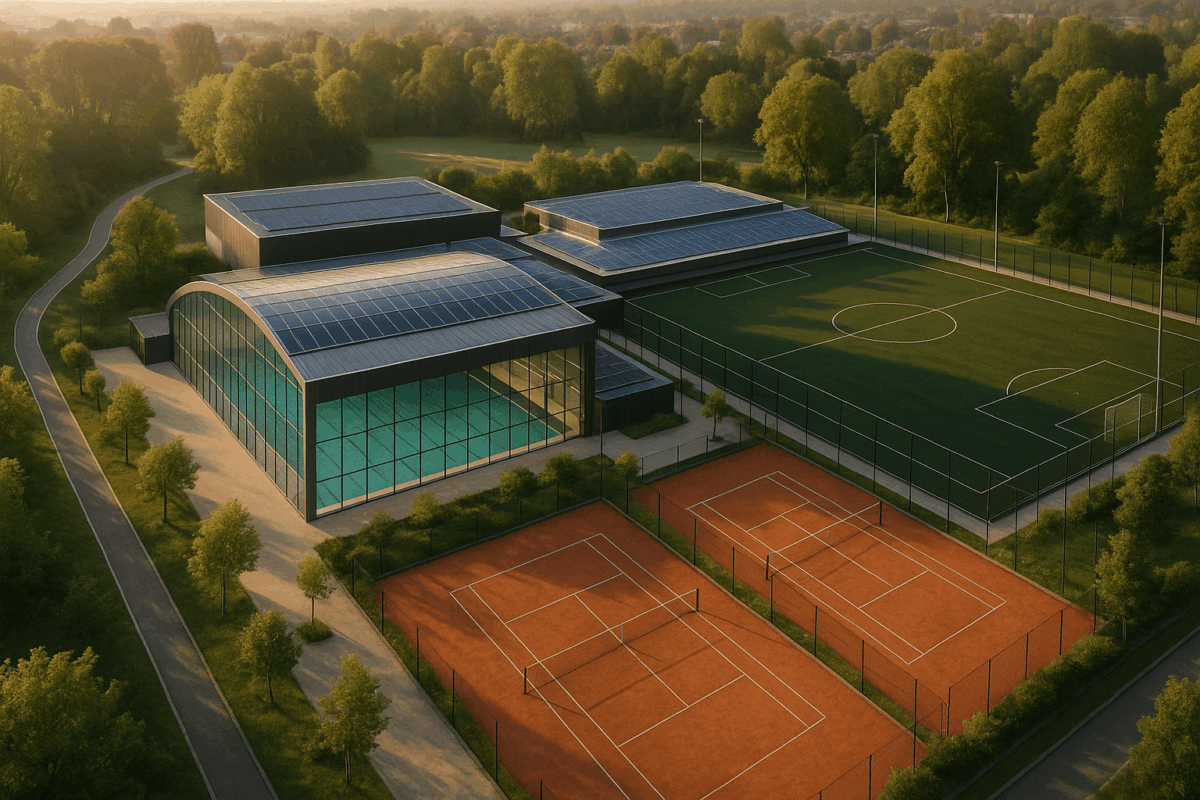
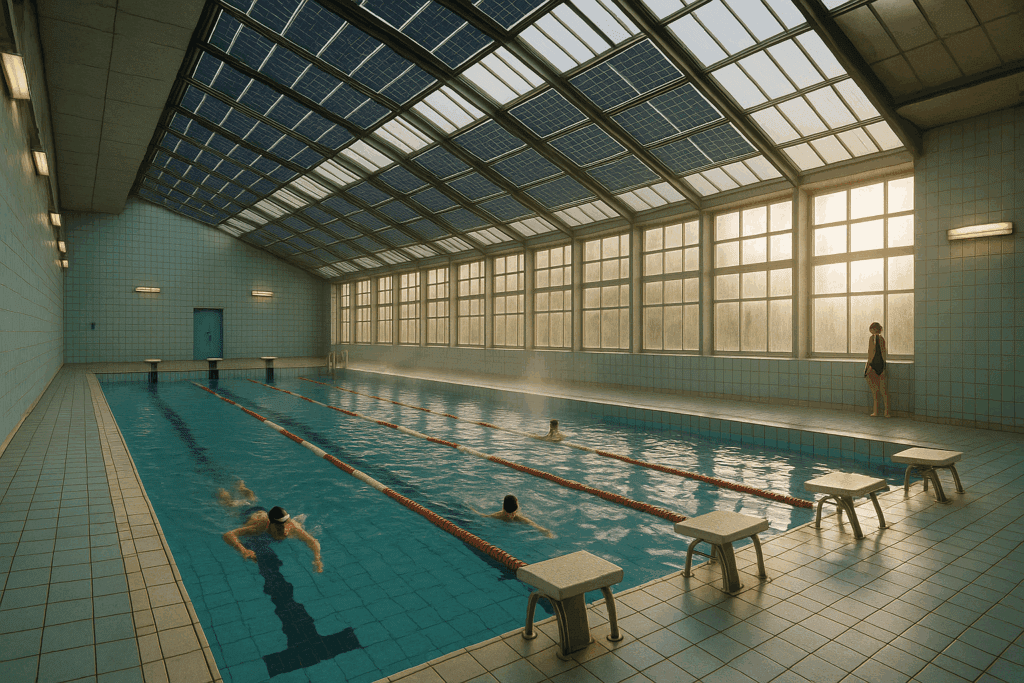
The Data ES database – the national “cadastre” of sports facilities – lists 182,700 built infrastructures (gyms, stadiums, swimming pools) and 147,300 outdoor sites (marked trails, bodies of water, cliffs). Relative to the population (67.9 million, INSEE 2024), this represents 27 facilities per 10,000 inhabitants, a ratio higher than that of Germany (22/10,000) or Spain (19/10,000) Locate a facility near you: Average age: 38 years. More than half of the pools built during the “thousand pools” plans of the 1970s now have waterproofing or energy performance issues. In 2023, 8% of local authorities had to reduce the water temperature (-1 °C) to curb the bill[5]. France has about 4,400 synthetic fields (20% of the stock), less sensitive to weather hazards but more expensive to renovate (€300,000 every ten years). The FFF supports the hybrid turf, combining natural grass and fibers, to reduce the carbon footprint[6]. While the total number of courts slightly decreases (-1%) – closures in rural areas – the FFT has approved more than 600 new padel courts between 2022 and 2024. Clubs are betting on this friendly discipline to revitalize the offer. The commercial sector accounts for 72% of new openings, driven by low-cost networks. Associations (FSCF, FSGT) are concerned about cannibalization and advocate for the creation of mixed “sport health” spaces funded by the ARS. Endowed with €200M, it aims to create mini multisport fields, local dojos, and 3×3 courts. As of December 31, 2024, 4,240 projects were funded (85% of the target). Priority to QPV and rural areas[3]. Since 2019, €12M per year support heavy renovation of swimming pools. Criteria: 30% reduction in energy consumption, full accessibility for persons with reduced mobility, swimming learning plan in CP. The National Association of Elected Officials in Charge of Sports (Andes) notes a 50% freeze on State credits for school and sports facilities for the 2024 fiscal year, endangering certain Olympic legacy projects[7]. With 27 facilities per 10,000 inhabitants, France leads Germany (22) and the United Kingdom (20). Only Finland (35) and Sweden (32) show a denser network, thanks to a very proactive municipal policy[8]. How many sports facilities exist in France? Approximately 330,000 according to Data ES (updated 2024)[1]. Which regions are best equipped? Île-de-France and Auvergne-Rhône-Alpes in absolute numbers; Brittany in inhabitants ratio. Is the “5,000 fields” plan completed? 4,240 projects funded by the end of 2024; new target 7,000 by 2027. What is the average age of public swimming pools? 38 years; 30% require major energy renovation[5]. How to locate a facility near me? Consult Data ES or the Webvilles directories listed above.3. Facility typology: four disciplinary focuses
3.1 Swimming pools: a heritage to renovate
3.2 Football fields: the synthetic revolution
3.3 Tennis courts: shift towards padel and pickleball
3.4 Weight training / fitness rooms: private sector locomotive
4. Public policies and funding
4.1 The “5,000 sports fields” plan
4.2 Swimming pool fund and “Aquatic ease”
4.3 Local budgets under pressure
5. Contemporary Issues
6. European Comparison
7. 2030 Perspectives
FAQ
Sources