Sommaire
Introduction
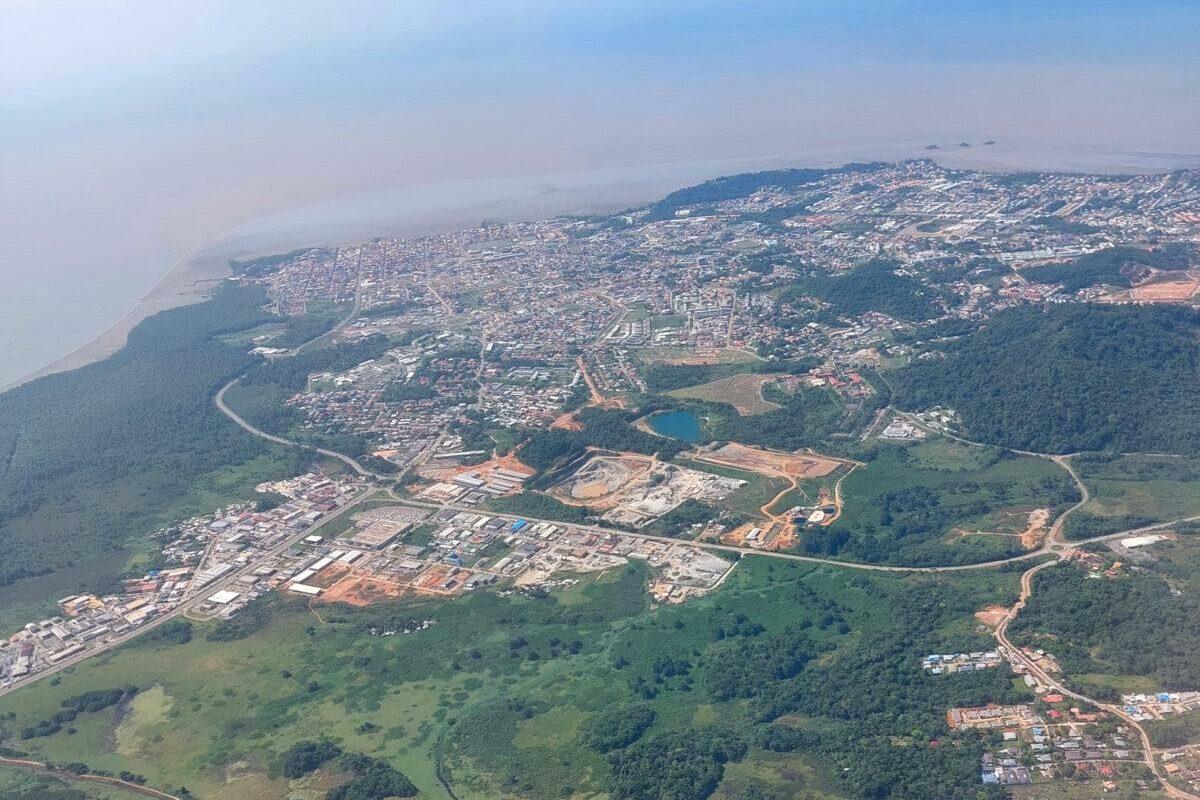
Capital of French Guiana, Cayenne is a port city located on the Atlantic coast of South America that concentrates a large part of the administration, services, and cultural life of the territory. More than just a prefecture, Cayenne is a historical crossroads — witness to Amerindian occupations, European colonial empires, the penal colony, and contemporary migratory dynamics. This article offers a detailed overview: geography, climate, history (key dates), recent demographic data, urban heritage, economy, tourism, culture, and environmental and social issues.
Geography and climate
Cayenne (approximate coordinates 4.9346° N, 52.3303° W) covers a municipal area of about 23.6 km²; it extends over a river-coastal island at the mouth of the Cayenne and Mahury rivers. The city is bordered by mangroves and opens onto the Atlantic Ocean, while the Guyanese hinterland remains covered by dense tropical forest. Its relative proximity to the equator conditions a humid equatorial climate, with stable temperatures (averages 24–30 °C) and high rainfall, concentrated roughly from December to July.
History — key dates and colonial period
Precolonial eras: The Cayenne area was inhabited by various Amerindian groups (Kali’na, Lokono/Arawak, Wayampi, among others) long before the European arrival. Archaeological sites and toponymy bear witness to an ancient occupation linked to the rivers and fishing.
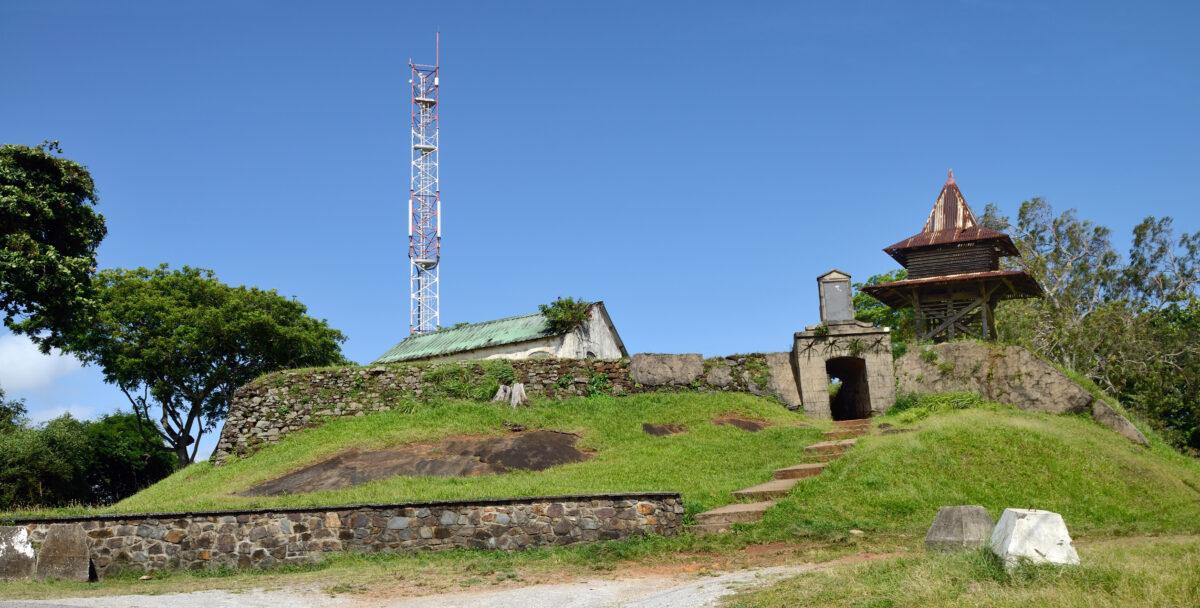
First contacts and colonization: European expeditions visited the coast as early as the 16th century, but the lasting foundation is generally dated to 1643 when Charles Poncet de Brétigny established a trading post and a fort on the Cépérou hill. The region experienced rivalries between the French, Dutch, and English in the 17th century, before a more stable French control was established in the second half of the century.
Slavery, abolitions, and economic changes: During the 18th–19th centuries, the colonial economy relied on sugar cane, cocoa, and plantations using enslaved labor. Slavery was abolished in 1848; the subsequent period saw social transformations, the introduction of contract workers, and the gradual change of production systems.
The penal colony and the gold rush: From the mid-19th century (beginning of convict transfers to Guyana around 1852), the penal colony became a major institution of the colony: the Salvation Islands and penitentiaries around Cayenne deeply mark the collective memory until the gradual closure of the penal colony in 1946. At the same time, gold discovery and exploitation, starting around 1855 and especially in the 20th century, attracted populations and shaped the local economy.
20th century and departmentalization: After World War II, Guyana became a French department in 1946, which profoundly transformed infrastructure, public services, and administrative organization. The 20th century also saw the modernization of transport (airport, ports) and the gradual integration of Cayenne into a broader economic network.
Demographics — Recent Figures (INSEE)
The municipal population of Cayenne is officially recorded at 63,956 inhabitants in 2022 (INSEE data). The municipal density is high (≈ 2,710 inhabitants/km²); the urban unit and the associated metropolitan area gather a larger population (urban units and attraction areas exceeding 125,000–150,000 inhabitants depending on definitions). These figures reflect sustained demographic growth in French Guiana, driven mainly by a high natural increase and, to a lesser extent, by migratory arrivals.
Structure: the population is relatively young (high proportion under 30 years old), with an ethnic mosaic composed of Guianese Creoles, Amerindian populations, Bushinengue (Maroon Blacks), as well as recent arrivals from mainland France, Brazilians, and other migrants (Haiti, Suriname). Multilingualism is common: official French, Guianese Creole, Amerindian languages, and Portuguese/Brazilian in certain communities.
Urban Planning, Heritage and Remarkable Places
The center of Cayenne features a colonial layout with squares, avenues, and Creole houses. Among the must-see sites:
- Fort Cépérou : founding historic site and viewpoint over the city (ruins and panorama).
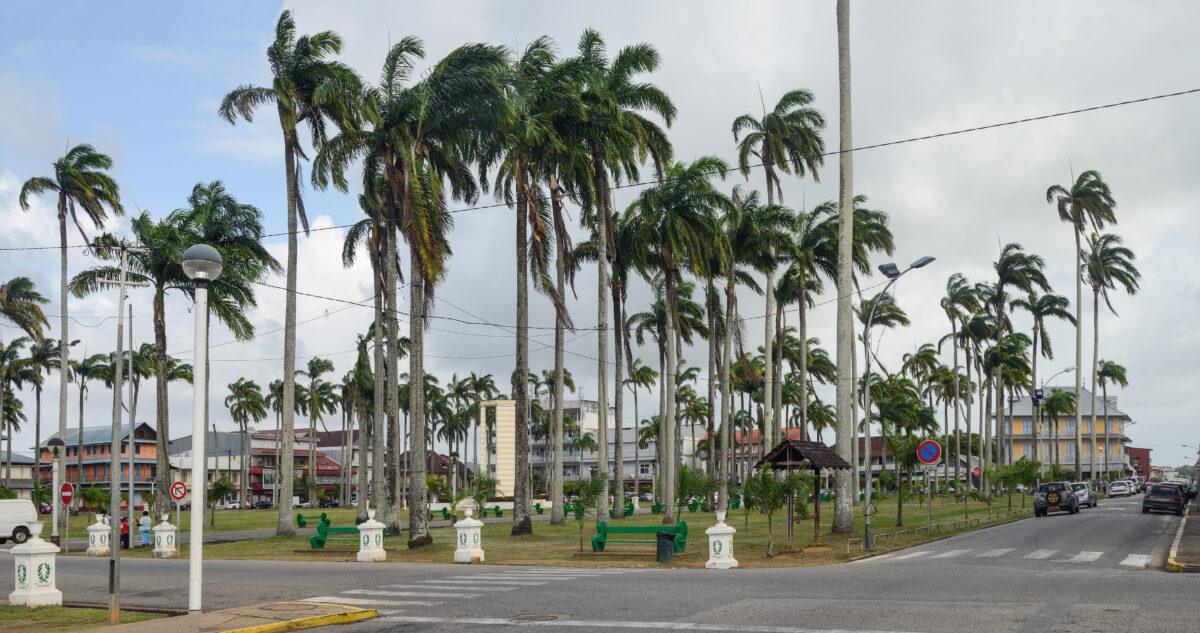
- Place des Palmistes : heart of the city, public garden and symbol of the urban landscape.
- Alexandre-Franconie Departmental Museum and public buildings from the colonial era.
- Montjoly Beaches (neighboring commune Rémire-Montjoly): sandy coast and seaside activities.
Economy and Employment
Cayenne primarily plays an administrative and tertiary role: a large share of jobs depend on public service, services, commerce, and the health and education sectors. Port activities (Dégrad-des-Cannes port) and the regional airport (Félix-Éboué in Matoury) structure commercial exchanges. The Guiana Space Centre (Kourou), located about a hundred kilometers away, influences the regional economy but Kourou remains an economically distinct locality. Tourism (cultural visits, nature excursions) complements the range of activities, with challenges of diversification and formalization of the informal sector.
Tourism, Nature and Excursions
Cayenne is often the gateway for excursions into the Amazon rainforest, visits to the Kaw marshes (nature reserve), and outings to the Salvation Islands. In the city, the central market, Creole houses, and cultural events (notably carnival) attract visitors and seekers of authenticity. The nearby Montjoly beaches allow seaside stops, while the hinterland offers naturalist and ecotourism routes.
Culture, Languages and Festivals
Cayenne’s culture is deeply mixed: Creole, Amerindian, Afro-Guianese, Brazilian, and European influences meet in cuisine, music (tout-loulou, biguine, zouk), religions, and festive practices. The Guyana carnival, which takes place from Epiphany to Ash Wednesday, is a major cultural event with costumes, parades, and deeply rooted local traditions.
Contemporary Challenges
Among the challenges facing Cayenne and French Guiana :
- Illegal gold panning: ecological impacts (deforestation, mercury pollution), land conflicts, and health risks for local populations.
- Urbanization and housing: land pressure, urban sprawl, informal housing, and needs for access to public services (water, sanitation, health).
- Biodiversity preservation: reconciling economic development and protection of Amazonian and coastal ecosystems.
- Identity issues and recognition: rights of indigenous peoples and coexistence of different cultural groups.
Environmental monitoring policies, public actions, and special operations (fight against gold panning) are regularly undertaken by the State and local authorities to limit the most harmful effects.
Key figures and dates (summary)
- 1643: sustainable foundation attested by the establishment of Charles Poncet de Brétigny.
- 1664–1676: periods of occupation and takeover between European powers.
- 1848: abolition of slavery (France).
- 1852–1946: operation of the penitentiary system and penal colony (Salvation Islands, penal camps).
- 1855: beginning of significant gold mining.
- 1946: departmentalization of French Guiana (full integration into the French Republic).
- 2022: municipal population 63,956 (INSEE).
FAQ
What is the best time to visit Cayenne?
The driest season (July–November) generally offers drier and easier conditions for nature excursions; however, the region remains warm year-round.
What to see in Cayenne in 3 days?
Day 1: historic center (Place des Palmistes, museums, Fort Cépérou). Day 2: excursions to Kaw or mangroves. Day 3: Montjoly beaches and local markets.
Is the city safe for a tourist?
As everywhere, basic precautions should be taken (avoid certain neighborhoods at night, watch personal belongings). Guided tourist circuits remain recommended for the interior and natural areas.
Main sources and references
- INSEE — Territory comparator / Cayenne municipality file (Population 2022: 63,956). Source: INSEE.
- Wikipédia — “Cayenne” (historical landmarks and summary).
- Wikimedia Commons — images: Place des Palmistes, Fort Cépérou, aerial view (links and licenses indicated in captions).
- INSEE — Regional populations and publications (PopRef2022_GUYANE.pdf).
- Press articles and recent analyses on gold panning and the environment (Le Monde, official reports) — consult local sources for details.