Sommaire
1. Essentials before leaving for Tunisia
1.1 Mobile connectivity: the eSIM, your ally to stay connected
Getting an eSIM card is now one of the first reflexes for traveling to Tunisia in 2025. This revolutionary technology allows you to have internet access upon arrival, without searching for a local shop or negotiating sometimes excessive rates.
To choose the best offer, it is recommended to use the best independent eSIM comparison site MyBestSim.com. These platforms objectively analyze the different available options, comparing prices and network coverage for Tunisia.
The eSIM has several major advantages: instant activation, no physical card to lose, possibility to keep your main number active. Moreover, you avoid the often prohibitive roaming fees from your usual operator.
Check your smartphone’s compatibility with eSIM technology before departure. Most recent models support it.
1.2 Other essentials for a successful trip
Beyond connectivity, several elements deserve special attention. Travel insurance remains essential to cover medical expenses and possible repatriation. A first aid kit adapted to the Mediterranean climate also proves useful.
Regarding equipment, plan for lightweight but covering clothes to respect local dress codes. A hat, high-protection sunscreen, and comfortable shoes complete the savvy traveler’s kit.
Don’t forget a universal electrical adapter, as Tunisian plugs may differ from those in your home country. Finally, a few Tunisian dinars in cash facilitate initial purchases upon arrival.
1.3 What you need to know before departure
Tunisia operates on a different rhythm, especially during the month of Ramadan. Shop and restaurant hours may be modified, so it is advisable to check the dates before traveling.
Bargaining is an integral part of the local culture, especially in souks. This practice, far from being offensive, is expected and appreciated by merchants. Start by offering about 30% of the initial price.
Tunisian hospitality is legendary, but it sometimes involves spontaneous invitations. Know how to politely decline if necessary, while respecting local traditions.
2. Entry formalities and required documents
2.1 Passport and visa according to your nationality
To travel to Tunisia in 2025, the passport must be valid for the entire duration of the stay. French nationals benefit from a visa exemption for Tunisia for tourist stays up to 90 consecutive days.
Citizens of other European nationalities generally enjoy the same facilities, but it is prudent to check with the Tunisian consulate. Some countries require a prior visa application, especially during the high tourist season.
Dual French-Tunisian nationals may present either their French passport or their Tunisian national identity card. This flexibility greatly facilitates entry procedures.
| Nationality | Visa required | Maximum duration | Documents |
|---|---|---|---|
| French | No | 90 days | Valid passport |
| EU/Schengen | No | 90 days | Valid passport |
| Canadian | No | 90 days | Valid passport |
| Others | Variable | Variable | Check consulate |
2.2 Specific formalities for minors
Minors traveling to Tunisia require special attention regarding documents. A parental authorization is mandatory if the child travels without both biological or adoptive parents.
This authorization must be written, signed by the absent parent(s), and sometimes legalized depending on the country of departure. Guardianship or custody documents may also be required in certain complex family situations.
It is strongly advised to contact the Tunisian embassy or consulate to obtain the exact list of required documents according to your specific situation.
2.3 Temporary vehicle importation
Travelers wishing to drive their own vehicle must comply with temporary import regulations. A customs transit carnet or international insurance specifically covering Tunisia is essential.
Vehicle declaration upon entry is mandatory, with strict respect for the allotted deadlines. Failure to comply with these formalities may result in significant financial penalties or temporary confiscation of the vehicle.
Keep all customs documents related to your vehicle carefully throughout your stay. They will be required upon leaving the territory.
3. Safety, health, and practical advice
3.1 Recommended vaccinations and health prevention
The recommended vaccinations for Tunisia include updating universal vaccines: tetanus, diphtheria, poliomyelitis, and whooping cough. Hepatitis A and B are also advised, especially for extended stays or travel in rural areas.
No vaccination is mandatory to enter Tunisia, but health caution remains necessary. Travelers should maintain strict food hygiene and prefer bottled water, especially in remote regions.
Prevention against vector-borne diseases, although rare, deserves attention during excursions in the desert or oases. Effective repellent and covering clothes in the evening reduce the risk of insect bites.
3.2 General safety and areas to avoid
Travel safety in Tunisia is generally satisfactory for tourists, but certain precautions are necessary. Border areas with Libya and Algeria are strictly discouraged due to persistent security risks.
In urban centers, usual traveler vigilance is generally sufficient. Pickpockets sometimes operate in crowded souks and public transport, but without particular violence. Night movements require increased caution, especially for women traveling alone.
Official advice, regularly updated by consular authorities, recommends staying informed of local news and respecting instructions from security forces.
3.3 Travel insurance and medical emergencies
Subscribing to a comprehensive travel insurance is an absolute imperative. This coverage must include medical expenses, hospitalization, medical repatriation, and incidents related to luggage or cancellations.
Tunisian medical facilities are adequate in major cities like Tunis, Sousse, or Sfax, but more limited in rural or desert areas. Good insurance guarantees quick and effective care in case of health problems.
Before departure, carefully note your embassy’s contact details, local emergency numbers (police: 197, rescue: 198), and your insurer’s contacts. This information can prove crucial in an emergency.
4. Budget, transport, and accommodation
4.1 Realistic budget according to your travel style
The travel budget in Tunisia varies considerably depending on the desired comfort level. A backpacker can manage with €25-35 per day, including hostels, local meals, and public transport.
Travelers seeking medium comfort should plan €50-80 daily for 3-star hotels, varied restaurants, and some organized excursions. The luxury segment, with thalassotherapy and high-end establishments, requires €120-200 per day.
The local currency, the Tunisian dinar (TND), is easily obtained at banks and official exchange offices. Absolutely avoid black market exchange, with often deceptive rates and real legal risks.
- Backpacker budget: €25-35/day
- Comfort budget: €50-80/day
- Luxury budget: €120-200/day
- Tips: 5-10% in restaurants
4.2 Transport in Tunisia: options and advice
Transport in Tunisia offers several alternatives depending on your needs. The airports of Tunis-Carthage, Monastir, and Djerba-Zarzis receive international flights with generally quick entry formalities.
On site, taxis are ubiquitous but always negotiate the price before the ride. Public transport (buses, trains) efficiently serves major cities but remains limited for exploring rural or desert areas.
Car rental is the most flexible option for autonomous travel. Require an international driving license, check the vehicle’s condition, and subscribe to comprehensive insurance. Local driving may surprise Europeans by its sometimes unpredictable nature.
4.3 Accommodation: from budget to luxury
Accommodation in Tunisia offers a wide range of options. Hostels and family guesthouses provide authentic immersion at moderate prices, often with traditional meals included.
Mid-range hotels combine modern comfort and local charm, especially in restored medinas. Coastal resorts offer all-inclusive packages, perfect for relaxing holidays.
For a unique experience, traditional riads and renovated Berber houses allow discovering local architecture while benefiting from personalized service. These often family-run establishments create memorable memories.
5. Things to do and visit in Tunisia
5.1 Must-see destinations
Destinations in Tunisia offer remarkable diversity on a relatively compact territory. The medina of Tunis, a UNESCO World Heritage site, is a fascinating labyrinth of alleys, souks, and historic monuments where Arab, Ottoman, and French influences mingle.
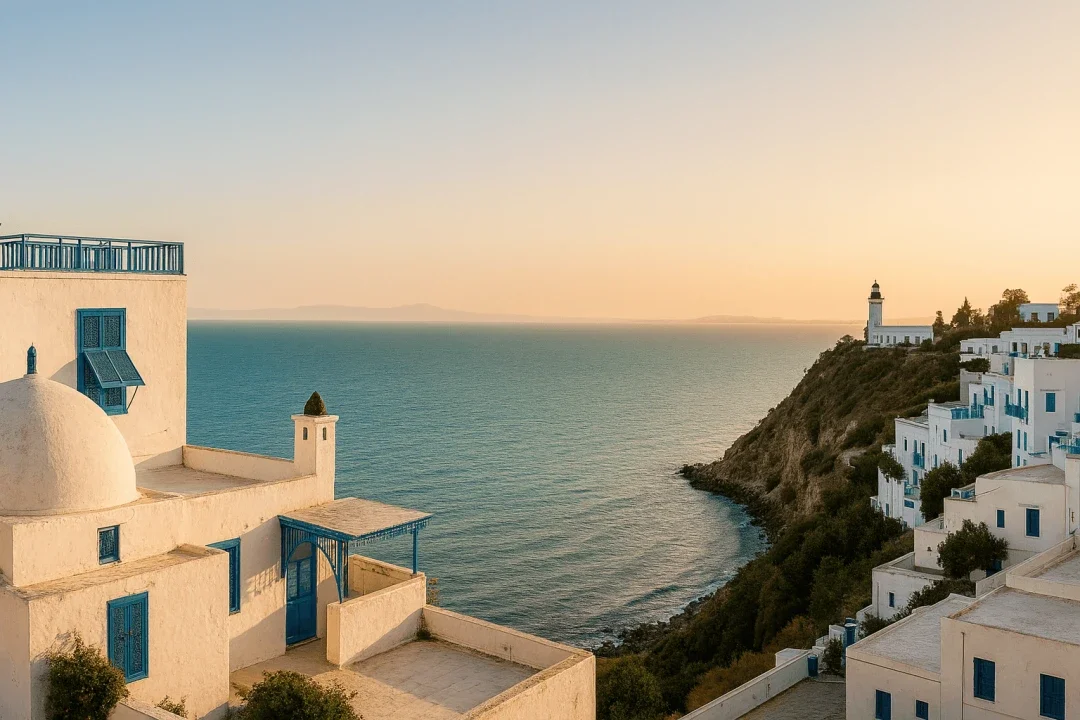
The archaeological site of Carthage reveals the remains of Punic and Roman civilization, while Sidi Bou Saïd charms with its white and blue houses overlooking the Mediterranean. The perfectly preserved amphitheater of El Djem rivals the Roman Colosseum.
The Sahara desert, accessible from Douz or Tozeur, offers camel excursions and nights under Berber tents. This unique experience allows discovering the vastness of the desert and traditional nomadic culture.
5.2 Culinary experiences not to miss
Tunisian cuisine skillfully blends Mediterranean, Arab, and Berber influences. Couscous, the national dish, comes in lamb, fish, or vegetable versions depending on regions and seasons.
Bricks (crispy pastries) with egg, tuna, or vegetables are an essential starter. Harissa, a spicy chili paste, accompanies most dishes and reveals the richness of local spices.
Don’t miss oriental pastries: makroudh with dates, honey baklava, or delicious loukoums scented with orange blossom. Mint tea, served in traditional glasses, pleasantly punctuates meals.
5.3 Authentic activities and experiences
Thalassotherapy in Tunisia enjoys a worldwide reputation thanks to specialized centers in Hammamet, Sousse, and Djerba. These establishments offer marine treatments, massages, and fitness programs in an idyllic setting.
Hiking enthusiasts will appreciate trails in Djebel Chambi or mountain oases near Tamerza. The Ras Djebel Trail offers an original nature discovery of Tunisian biodiversity.
For cultural immersion, participate in a pottery workshop in Nabeul, visit a traditional olive grove, or attend a Malouf music performance. These experiences create authentic connections with the local population.
5.4 Things to avoid and common mistakes
Avoid photographing military installations, security forces, or official buildings without authorization. This practice can lead to complications with local authorities.
Do not neglect dress codes, especially when visiting mosques or conservative neighborhoods. Covering clothes show respect for local culture.
Beware of fake guides offering their services at tourist sites. Always favor official guides or excursions organized by recognized agencies.
Avoid drinking tap water and consuming ice cubes in unreliable establishments. Prefer bottled water and restaurants frequented by locals, a guarantee of product freshness.
6. Conclusion
This comprehensive guide for traveling to Tunisia in 2025 gathers all essential information to organize a memorable stay. From essentials like the eSIM to entry formalities, through travel safety advice and must-see destinations, every aspect has been covered to allow you to travel with peace of mind.
Tunisia offers exceptional cultural, historical, and natural richness, accessible with adequate preparation. Do not hesitate to regularly consult official sources to stay informed of developments until your departure.
Have a good trip to Tunisia!