/* Css En-Bref */
| Key points | Details to remember |
|---|---|
| 💤 Definition of the ritual | Understand the importance of a calming sequence before bedtime |
| 🌙 Main benefits | Improve the quality and depth of sleep |
| ⏰ Ideal timing | Establish the routine 60 minutes before falling asleep |
| 🛀 Associated methods | Incorporate relaxing activities (reading, bath, stretching) |
| 📋 Tools and accessories | Select soft lighting, essential oils, yoga mat |
| 🔄 Expected results | Observe a regularization of the sleep rhythm within 2 to 4 weeks |
While we often live at 100 km/h, paying special attention to the day-night transition can transform how the body and mind prepare for rest. Beyond turning off screens, it’s about creating a bubble of calm where each step helps slow down thoughts and encourages natural falling asleep. Let’s dive into the world of evening routines to help you find the one that will hit the mark.
Sommaire
Why establish an evening ritual?
The mechanisms of falling asleep
In the last hours before bedtime, the brain goes through several phases: it decreases its alertness, releases melatonin, then gradually settles into light sleep before reaching the restorative stage. In reality, without precise markers, this sequence can be disrupted by internal distractions (ruminations, worries) or external ones (lights, noises). An evening ritual acts as a temporal and sensory landmark, reassuring the body that it’s time to slow down.
Influence of the circadian rhythm
In almost all living beings, the circadian cycle plays a central role in managing sleep and wakefulness. When our evening routine becomes regular, it synchronizes biological clocks (brain, hormones, body temperature) and anticipates the moment of falling asleep. If bedtime varies too much, the body struggles to produce melatonin at the right time, which weakens sleep quality.
Key steps of a calming ritual
Preparing Your Environment
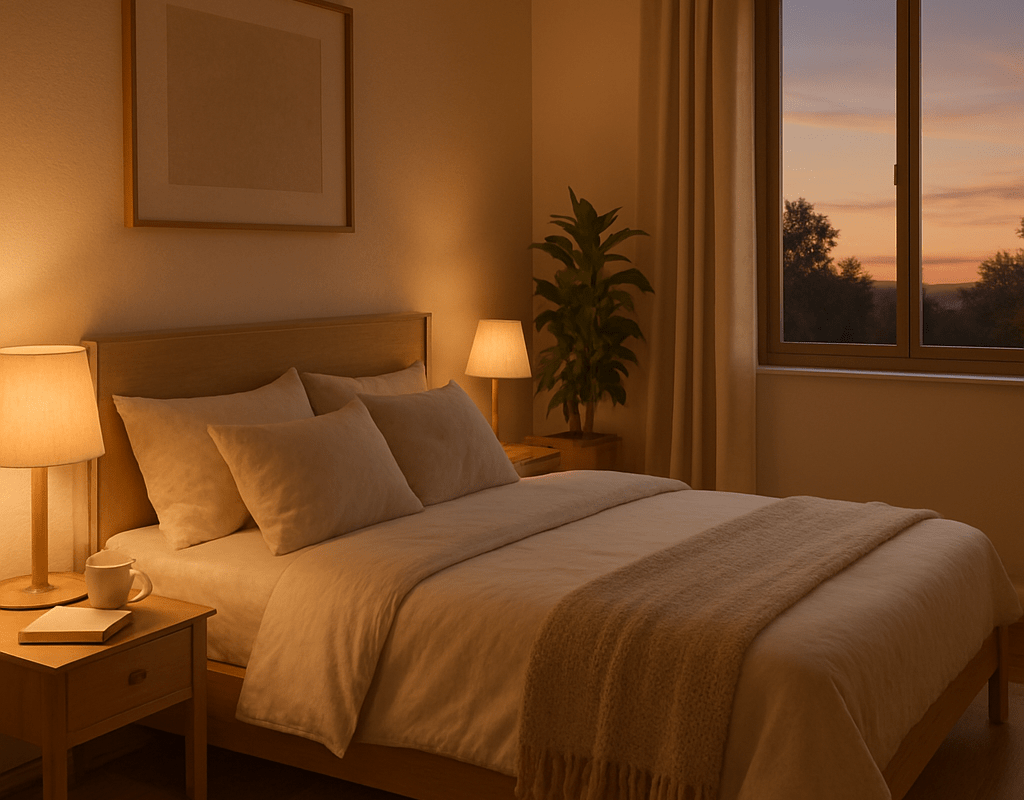
Transforming the space into a sanctuary dedicated to rest starts with a few sometimes simple adjustments. You can dim the lighting, favor a warm-spectrum bulb, close shutters or curtains to limit light pollution, and ensure an ambient temperature around 18 – 19 °C. The choice of bedding, natural materials (cotton, linen), and even a light scented mist can help create an atmosphere conducive to relaxation.

Engaging in a Relaxing Activity
It’s not just about “doing nothing,” but rather substituting the frenzy of tasks with an action that gently captures attention. Reading a light novel or a personal journal allows you to navigate between curiosity and introspection, without stimulating the cortex as a TV series would. A lukewarm bath, a short stretching session, or even a few pages of an adult coloring book—all these gestures mark a welcome pause in the day.
Breathing Techniques and Meditation
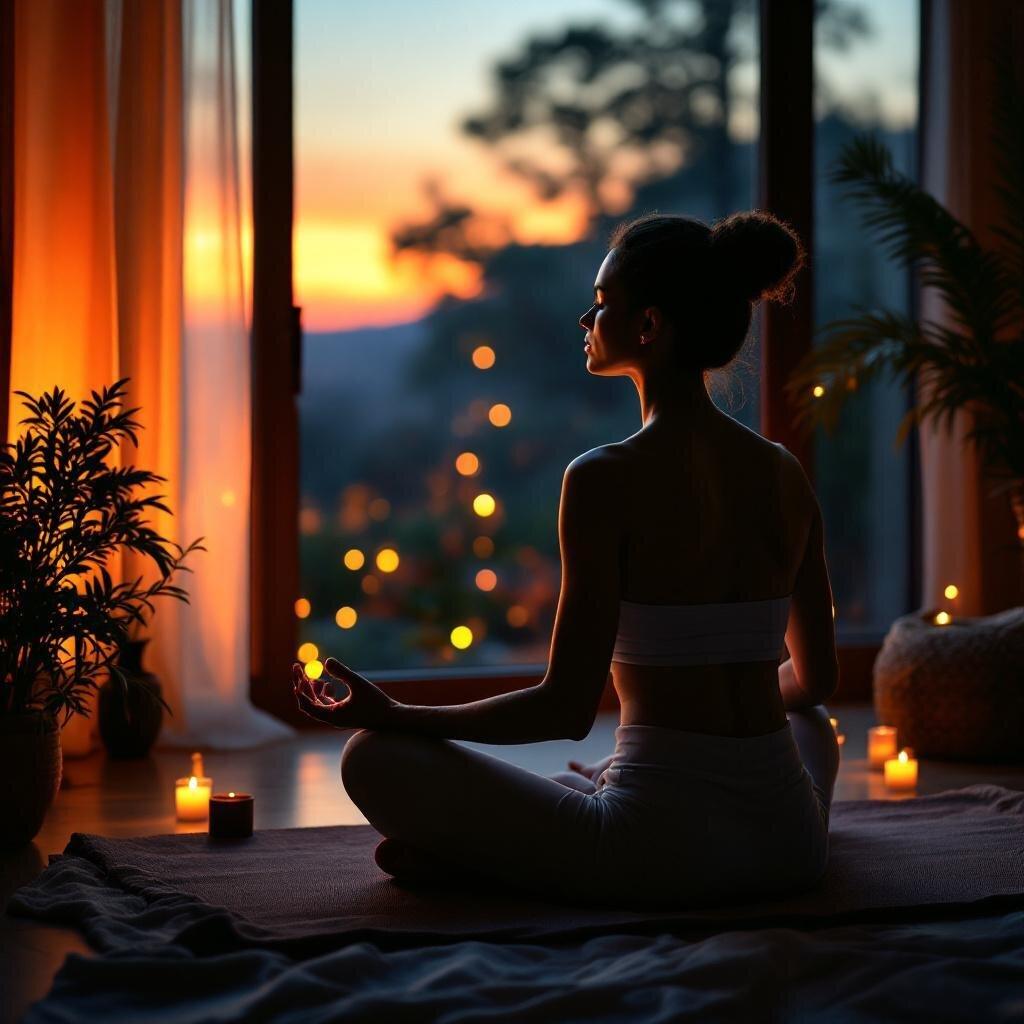
A few minutes dedicated to breathing exercises immediately slow the heart rate and promote the secretion of calming neurotransmitters. The so-called “4-7-8” method consists of inhaling for 4 seconds, holding the breath for 7 seconds, exhaling for 8 seconds, and repeating for 4 cycles. For those who prefer guided meditation, focusing on each point of contact of the body or gently sensing the breath is enough to release accumulated tensions.
| Technique | Recommended Duration |
|---|---|
| 4-7-8 Breathing | 4 cycles (about 2 minutes) |
| Mindfulness Meditation | 10 minutes |
Specific Rituals According to Needs
Rituals for Temporary Insomnia
When falling asleep remains impossible despite fatigue, you can combine breathing with visualization: imagine floating on a cloud, each exhale carrying away a little more weight. Repeating a word or a short phrase (mantra) like “calm,” “I let go” also helps steer the mind away from worries. Simply changing rooms—a moment in the armchair near a soft lamp—then returning to bed can reprogram the sleep reflex.
Rituals for Stress and Anxiety
Chronic stress can increase cortisol production, making falling asleep more difficult. Targeted gestures, such as self-massage of the temples, applying a drop of lavender essential oil on the wrists, or listening to a short sophrology session, help lower internal alertness levels. Structuring your gratitude journal, noting three positive elements of the day, allows you to close the mental chapter of the day on a lighter note.
Errors to Avoid
- Getting caught up in screens or social networks until the last minute
- Drinking coffee, tea, or energy drinks too late in the afternoon
- Doing intense sports less than two hours before bedtime
- Skipping relaxation steps under the pretext of “saving time”
Establish Your Ritual Starting Tonight
Each person is unique, and the effectiveness of a ritual is measured by how engaged one feels with it. Rather than trying to change everything at once, selecting one or two techniques and testing them for a week allows you to quickly observe their impact. Once the essentials are validated, it becomes natural to add other steps — soft music, herbal tea, or journaling — until you create a customized routine.
FAQ
How long before bedtime should one start their ritual?
About an hour before the desired time to fall asleep. This margin gives your body time to gradually shift into a state of relaxation.
Can these rituals be adapted when traveling?
Yes, the idea is to recreate a familiar environment even when away. Bringing a small nightlight, a notebook, or an essential oil is often enough to maintain your routine.
What should be done in case of waking up at night?
Repeating a breathing exercise or writing down what was looping in your mind can defuse anxiety. Avoid turning on bright lights and favor gentle actions.
Are all these rituals suitable for children?
Many can be adapted for a young audience by simplifying instructions: a kind exchange in the evening, a light massage, or a softly told story can be enough to create a soothing ritual for them.
Can multiple rituals be combined simultaneously?
Yes, but it is preferable to do so gradually to discern the impact of each method. Over the nights, you will identify the most effective elements for you.