What is slow living in an urban environment?
Slow living is sometimes too quickly reduced to “taking your time.” In reality, it is about restoring a peaceful relationship with every daily action: choosing a cup rather than a disposable cup, listening to the sounds of the street rather than notifications, planting a basil on the windowsill to ground yourself. In the city, this philosophy regains its meaning because it is in the most hectic environment that it reveals its full potential.
Origins and philosophy
Inspired by the slow food movement born in Italy in the 1980s, slow living has slipped from the bowl of pasta to all our actions. Where slow food encouraged taking time to savor, slow living suggests reconnecting with the natural rhythm unique to each person. The result is a quest for quality rather than quantity, a practice that displaces the pressure of “always faster” to reinstall awareness in every minute.
Fundamental principles
One might think that slow living imposes a rigid checklist: meditation, green juice, yoga upon waking. In truth, you develop your own framework. Three pillars stand out: presence (smelling the coffee, observing the sky), intention (defining why you slow down), and simplicity (shedding the superfluous). Each city dweller traces their path, sometimes fragmented, but always centered on the moment.
Creating Spaces Conducive to Calm
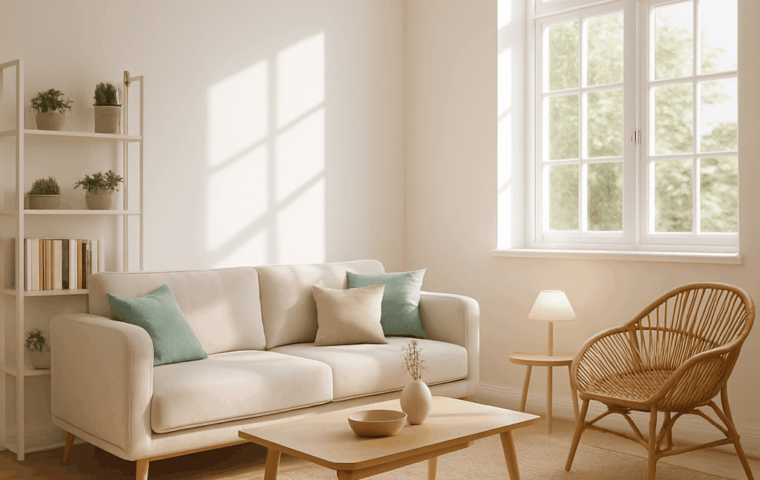
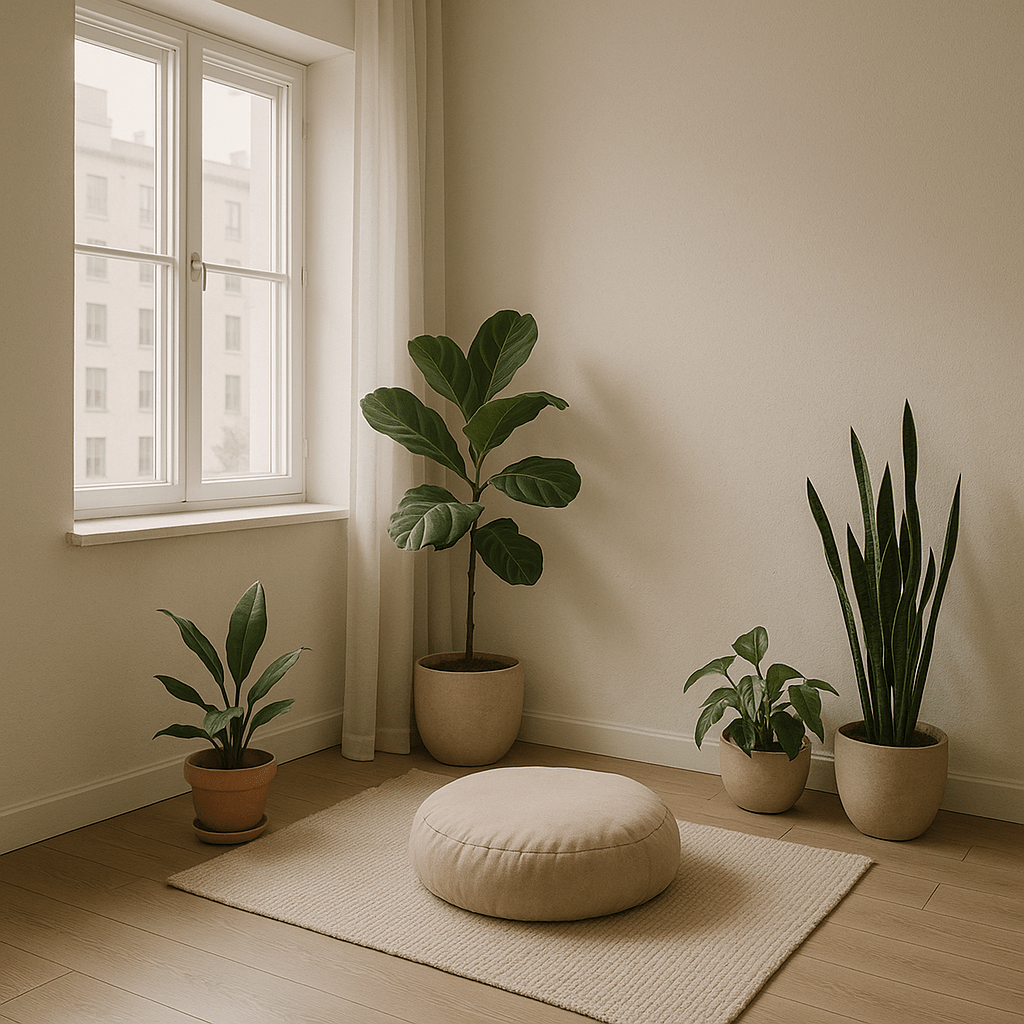
In a 20 m² space, anything can become a refuge. A clear desk corner, a soft lamp, a few pots of mint or rosemary are enough to transform the atmosphere. The idea is not to completely rearrange the room, but to define a micro-territory where one feels somewhat outside of time.
Candles, Plants, and Natural Light
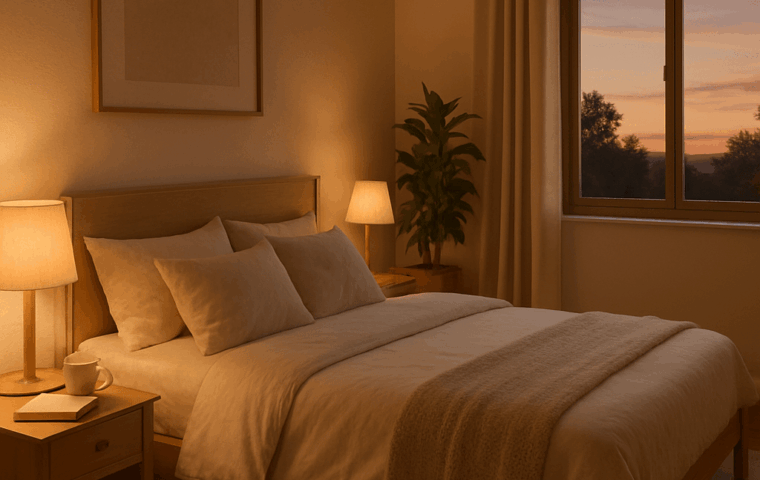
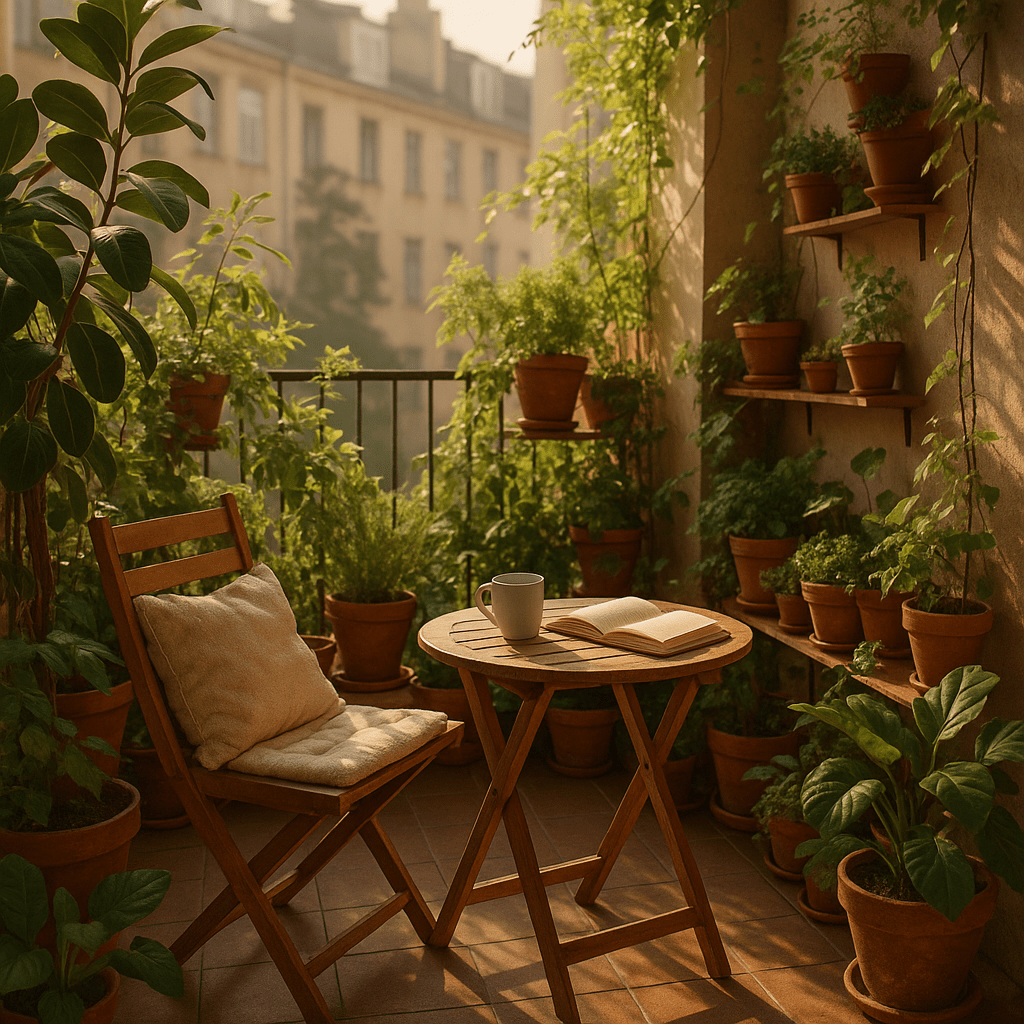
Lighting a scented candle at night reintroduces the twilight ritual, lost in front of urban lighting. Plants filter formaldehyde, but above all they anchor attention on their growth, each leaf becoming a soothing observation point.
Minimalism and Organization
Regular clearing of cupboards, sorting papers and excess cables, tidying as you go: every object must justify its presence. This decluttering is not just a cleaning act, it is an invitation to less mental agitation.
Integrating Daily Rituals
Habits often arise from the mechanical chaining of an action. Slow living does not banish routine, but directs it towards mindfulness: every gesture becomes a deliberate act and not a simple automatism.
Screen-Free Mornings
Instead of checking messages right from the pillow, reserve the first half hour for a tangible ritual: silent coffee, light stretches facing the window, gratitude journal. This diverted start redefines the pace of the day.
Contemplative Outdoor Breaks
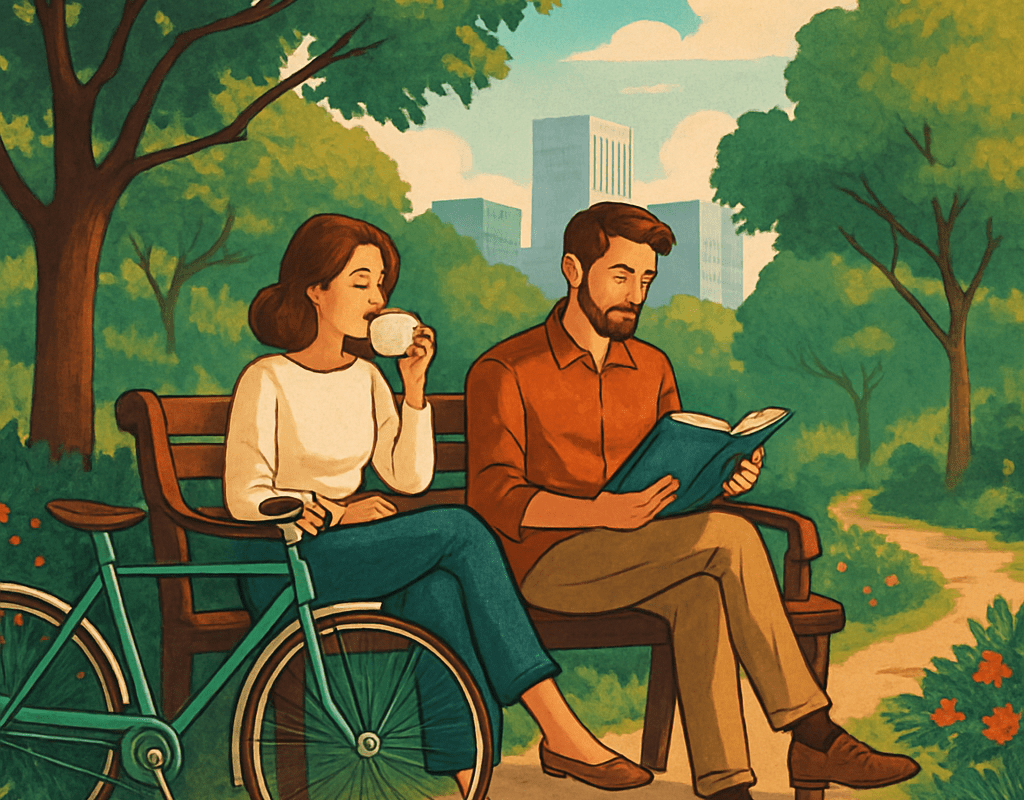
In the metro or between two meetings, a few moments are enough to look up at a colorful graffiti, listen to a bird’s song, or touch the bark of a tree at a street corner. These micro-breaks divert attention from the frenzy and tighten the connection with the living world.
Managing Time Differently
In the city, time flies at high speed. Taming this ingredient requires simple and often surprising adjustments.
Flexible Planning
Instead of scheduling every slot, plan a “buffer time” between two appointments to walk, breathe, jot down an idea, or simply watch the sky. This margin removes the tension of the unexpected and makes daily life more flexible.
Breathing Techniques and Meditation
Three minutes of box breathing (inhale for four counts, hold for four, exhale for four, hold for four) fit in your pocket and immediately affect heart rate. Accessible without an app, without reading text, without preparation: a simple point of attention focused on the air.
Facing Challenges
Slow living in the city does not impose itself automatically. Two major obstacles require patience and adaptation.
The Frenetic Pace of the City
Sirens, honking, and bustling sidewalks are part of the scenery; we will not leave them, we will learn to slip through differently. Wearing noise-cancelling headphones, choosing a quieter route, or simply adjusting perception by accepting the contrast between inside and outside helps preserve one’s core of slowness.
Digital Resilience
Notifications, like little jolts, can be stripped of their power. Activating “do not disturb” mode, disabling unnecessary alerts, or scheduling a single time slot per day to sort through messages: each barrier put in place protects a moment of tranquility.
Frequently Asked Questions
Is it possible to adopt slow living when working in an open space?
Absolutely: a few moments of seated meditation, indirect lighting, and post-it notes with calming quotes can transform the perception of this space.
Is slow living only for people without children?
Not at all. Family routines can become collective rituals: screen-free Sunday walks, cooking meals together, board games to close the day.
Do you necessarily have to change jobs to practice slow living?
Changing jobs can be relieving, but you can first adjust your relationship to work: regular breaks, deliberate management of emails, passion micro-projects within your tasks.
How to measure progress in slow living?
Rather than counting days without notifications, observe the evolution of your sleep quality, the frequency of muscle tension, the ability to stay focused without stress.
Can slow living be combined with an active social life?
Yes: favor small group meetings, organize calm outings (walks, literary cafés), and instill in your circle the idea that slowing down is not synonymous with isolation.