/* Css En-Bref */
Forging a medieval sword is not only a tribute to the craftsmanship of yesteryear, it is also an adventure where raw material transforms under hand and heat to reveal a blade full of character. Whether you are a history enthusiast, a daring DIYer, or an amateur blacksmith, this guide accompanies you step by step, from the first sparks in the hearth to the final shine of the polished steel.
🔨 Key Equipment: a furnace reaching 1,200 °C, a sturdy anvil, and hammers suited to the different shaping phases.
🔥 Essential Steps: heating, shaping, quenching, and finally polishing to obtain a blade that is both robust and sharp.
🛡️ Safety First: gloves, leather apron, and protective glasses are essential to limit burns and splashes.
⚙️ Finishing and Maintenance: good sharpening and light oiling extend the life of your sword and preserve its shine.
Sommaire
Essential Equipment
The Furnace or Hearth
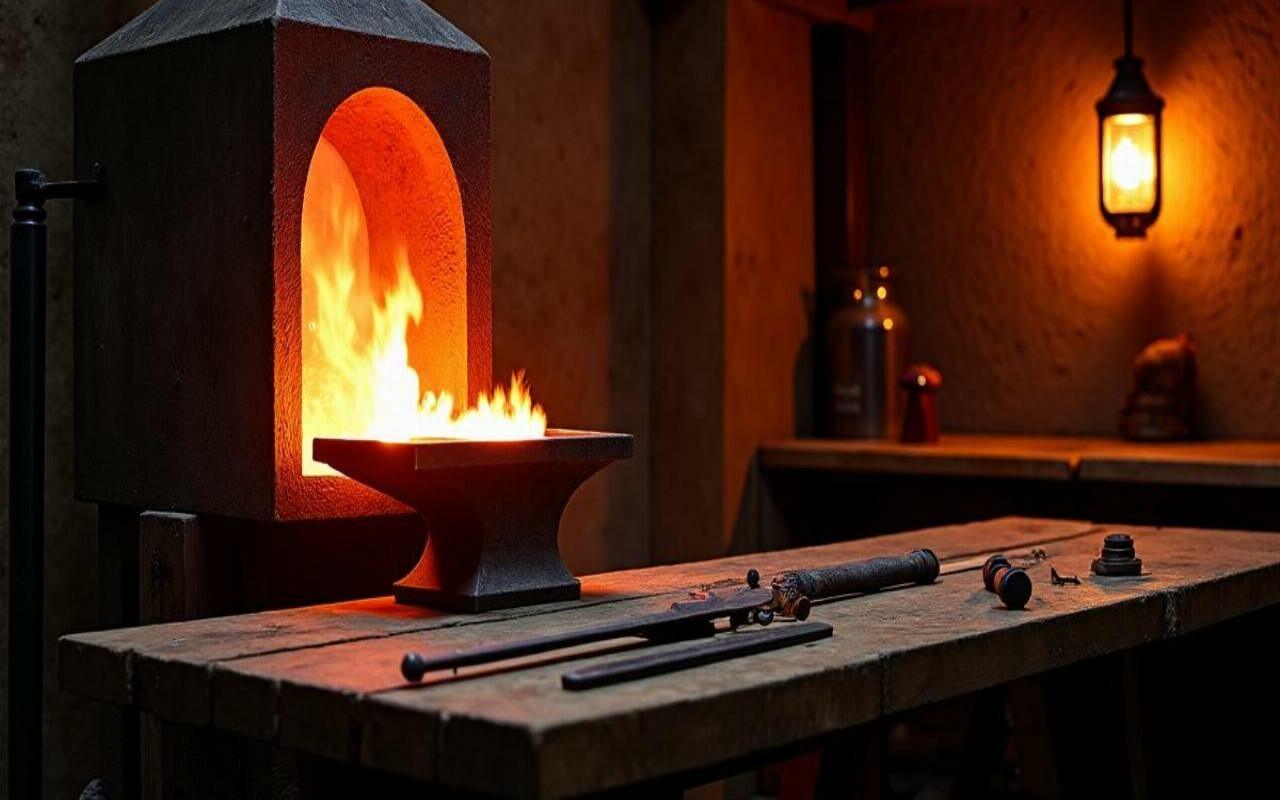
At the heart of the forge, the heat source must reach at least 1,100 °C to make the steel malleable. Traditional blacksmiths use a coal furnace, but a gas hearth can offer finer temperature control. In both cases, ensure a constant air supply via a bellows or ventilation system to maintain the flame steadily.
Forging Tools
- Hammers of various sizes: planishing, shaping, and finishing.
- Anvil: solid surface with a horn for possible bending.
- Tongs: to handle the heated metal safely.
- Wooden or plastic mallet: to strike without damaging the steel surface.
- Drill press (optional): if you plan to add a guard or rivets.
One might think the set of tools is expensive, but even a basic second-hand kit allows you to start. Additionally, medieval parchment restoration can inspire you in handling ancient materials, even though metal reacts differently.
Suitable Metals
Tool steel (5160 or 1075 carbon steel) is often recommended for forging a sword: it offers a good balance between strength and flexibility. In some cases, a soft core and a hard layer are combined to optimize solidity—a Damascus technique, which however requires more specialized tooling.
Forging Steps
Metal Preparation
Before any heating, remove any surface oxidation from the steel piece by brushing or lightly sanding it. Clean metal heats more evenly. Mark the center of gravity with chalk: this will help you balance the blade during shaping.
Shaping
Shaping takes place in several passes: first, the bar is lengthened to obtain the rough profile, then the width and thickness are refined. Each hammer strike changes the orientation of the steel grains. This is where the curvature, the spine of the sword, and especially the future edge are defined.
“A good blacksmith does not only seek strength in his hammer, but precision in each of his gestures.”
Cooling and Quenching
Quenching consists of plunging the hot blade into a bath of oil or water to harden the steel. This thermal shock requires increased vigilance: too sudden immersion can cause cracks. Use a warm, monitored bath and maintain gentle agitation to avoid the formation of steam pockets.
| Steel | Quenching Temperature | Cooling Medium |
|---|---|---|
| 5160 | 800 °C | Slow quenching oil |
| 1075 | 820 °C | Fast quenching oil |
| Damascus steel | 780–800 °C | Oil or air (depending on thickness) |
Tempering and Polishing
Tempering aims to reduce the brittleness induced by quenching: heat the blade to about 200 °C for 1 hour, then let it cool in air. Then proceed to polishing: from 220 grit sandpaper up to 1,200 grit, or even fine grinding wheel, to reveal the shine and smooth micro-defects.
Safety and Precautions
Personal Protective Equipment
- Blacksmith gloves: thick leather to resist splashes.
- Safety glasses: laterally protected against shards.
- Apron and long sleeves: likewise, made of thick leather or cotton.
- Steel-toe shoes: to prevent any crushing injuries.
Best Practices
Never work alone in an unventilated space: fumes can be toxic. Always keep a bucket of water and a fire extinguisher within reach. To consult archival documents on historical techniques, Gallica offers a rich collection of period forge engravings.
Waste Management and Environment
Steel shavings, quenching oil, and coal ashes must not be discarded carelessly. Separate metal waste for recycling and take used oils to an authorized waste disposal center. The environmental impact of a forge is thus limited to its carbon footprint, partially reduced if you opt for renewable energy for your furnace.
Maintenance and Finishing
Once the sword is made, a light oiling protects the steel from oxidation. Store the weapon in a ventilated sheath, ideally wooden without lining of damp fabrics. Inspect the blade after each use or handling: a quick polish with an oiled cloth is enough to maintain shine and rust resistance.
FAQ
What type of charcoal should be preferred for forging a sword?
High-density charcoal is recommended for its stable heat. Industrial charcoals produce more ash, while traditional charcoal offers cleaner heat.
How to avoid cracks during quenching?
Maintain gentle agitation in the bath and choose the right medium (fast or slow oil). Uniform heating before quenching reduces thermal shock.
Can a sword be forged without an anvil?
In theory, a solid metal surface can be used, but the anvil remains ideal for its shapes (horn, step) that facilitate bending and shaping.
{
“@context”: “https://schema.org”,
“@type”: “WebPage”,
“about”: {
“@type”: “Thing”,
“name”: “forging a medieval sword”
},
“keywords”: [“forge”, “medieval sword”, “quenching”, “forge safety”]
}
{
“@context”: “https://schema.org”,
“@type”: “FAQPage”,
“mainEntity”: [
{
“@type”: “Question”,
“name”: “What type of charcoal should be preferred for forging a sword?”,
“acceptedAnswer”: {
“@type”: “Answer”,
“text”: “High-density charcoal is recommended for its stable heat. Industrial charcoals produce more ash, while traditional charcoal offers cleaner heat.”
}
},
{
“@type”: “Question”,
“name”: “How to avoid cracks during quenching?”,
“acceptedAnswer”: {
“@type”: “Answer”,
“text”: “Maintain gentle agitation in the bath and choose the right medium (fast or slow oil). Uniform heating before quenching reduces thermal shock.”
}
},
{
“@type”: “Question”,
“name”: “Can a sword be forged without an anvil?”,
“acceptedAnswer”: {
“@type”: “Answer”,
“text”: “In theory, a solid metal surface can be used, but the anvil remains ideal for its shapes (horn, step) that facilitate bending and shaping.”
}
}
]
}