
Why do we still convert ml to cl daily? The key lies in a long history, from local standards to the International System (SI). This guide links the evolution of units to your practical uses, with clear benchmarks to convert, avoid mistakes, and understand what our “milliliters” and “centiliters” really mean.
In brief:
1 cL = 10 mL: divide by 10 to go from milliliters to centiliters, multiply by 10 for the reverse.
The liter is part of the SI through its multiples and submultiples (cL, mL), structured by robust decimal prefixes.
Since 2019, SI units rely on constants of nature, ensuring global stability and traceability.
In cooking, health, or industry, converting ml→cl allows reproducible and compliant dosages.
Sommaire
Definition and Context
A unit of measurement is a reference quantity that allows expressing magnitudes. Without a stable and shared unit, adding, comparing, or controlling becomes impossible. Base quantities (length, mass, time, etc.) and derived ones (volume, speed, concentration, etc.) are organized within the International System (SI). Prefixes (milli = 10−3, centi = 10−2, etc.) create consistent decimal steps; this is what makes the conversion milliliters ↔ centiliters trivial. In other words: the “m” in mL is not a decorative letter but the guarantee of a factor 10−3.
Three requirements make a unit system useful: stability (it does not change over time), universality (it applies everywhere), and traceability (measurements relate to recognized references). The SI meets these criteria through international governance and laboratory-operable definitions. This translates, for you, into reliable conversions like 1 cL = 10 mL or 250 mL = 25 cL without relying on fragile physical objects.
Before the Metric System: a Thousand Units for the Same Thing
Before the 18th century, each region used its own standards: foot, fathom, pint, setier, etc. Two neighboring villages could call different volumes “pint.” For commerce, taxation, or engineering, this was a headache: impossible to compare contracts, reproduce recipes, or assemble parts. Industrialization amplified the problem: mass production required common references.
Scholars explored the idea of natural units, independent of human bodies (inch, foot) and local customs. Reform projects multiplied across Europe, preparing a shift towards standards defined geometrically or physically rather than by tradition.
French Revolution: Birth of the Meter and the Liter
The French Revolution imposed a redesign: the meter was defined (1791) as a fraction of the Earth’s meridian, then physically realized; the liter became the unit of volume, linked to the cubic decimeter (1 L = 1 dm³). The goal: unify and simplify. The decimal multiples and submultiples provide this “logical ratchet” that today makes ml ↔ cl conversions so strong.
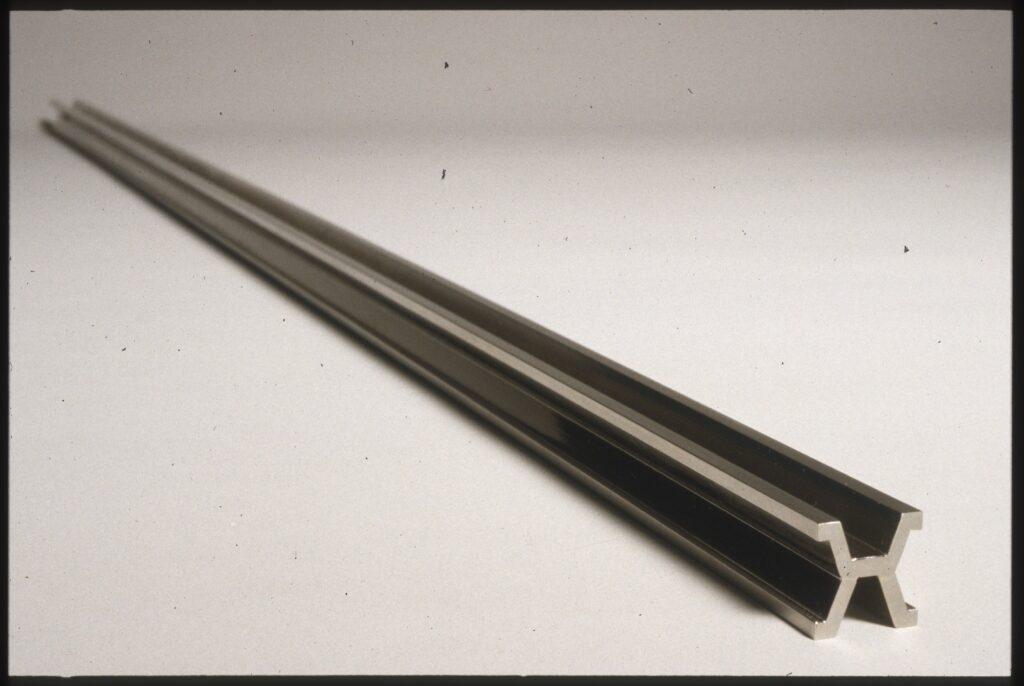
In the 19th century, internationalization was organized. The Metre Convention (1875) created the BIPM and governance bodies (CIPM, CGPM). Platinum-iridium prototypes materialized the meter and the kilogram; nations received traceable copies. This was the first global measurement infrastructure, a pivot between science, industry, and commerce. See the BIPM documentation on the Metre Convention.

From prototype to constants: the modern SI
A material standard wears out, oxidizes, warps, or loses atoms. To eliminate these drifts, the metrology community switched to definitions based on natural constants. Key dates:
- 1960: the meter was no longer “the length of a bar,” but a length derived from a krypton-86 radiation, then from the speed of light (1983).
- 2019: the kilogram ceased to be “the mass of a cylinder” and was anchored to the Planck constant h. The ampere, kelvin, and mole were also redefined via constants (e, k, NA).
Since May 20, 2019, all SI units are defined by constants. This is an invisible change for the user, but crucial for industry, health, and science: long-term stability, global comparability, quantifiable measurements at the highest level. References: The SI according to BIPM and defining constants.

Liquids and volume: converting ml to cl without error
The liter is a special name for the cubic decimeter (1 L = 1 dm³). Thanks to the SI decimal prefixes, its submultiples are simple: 1 cL = 0.01 L = 10 mL and 1 mL = 0.001 L. This decimal grid makes conversions immediate:
- ml ➜ cl: divide by 10. E.g., 250 mL ➜ 25 cL.
- cl ➜ ml: multiply by 10. E.g., 3.5 cL ➜ 35 mL.
Common errors: confusing the decimal comma (3.5 cL ≠ 3.5 mL), using uncalibrated cups or spoons, or mixing L/mL and “imperial” units (fl oz, pint) without conversion. For official tables of prefixes and equivalences, see the NIST resources on volume.
Mnemonic rule: “centi” means 10−2, “milli” means 10−3. Between cL and mL, there is a step of 10: only one decimal place to move.
Advantages and limitations of unit systems
Strengths of the SI
- Decimal: conversions by moving the decimal point (ml ⇄ cl in one step).
- Traceability: national laboratories link your instruments to constants via calibration chains.
- Interoperability: international trade, clinical records, industrial recipes, and research all use the same base.
Limitations or points of attention
- Non-SI units still used: fl oz, pint, cup are encountered in recipes or countries. Conversion is necessary before any dosing.
- Practical measurements: a “household” glass is not a standard. Use graduated cups or scales.
Concrete examples: cooking, pharmacy, industry
Cooking
Syrup: 150 mL of water + 50 mL of syrup = 200 mL, or 20 cL. To dose 75 mL, take 7.5 cL on a glass graduated in centiliters.
Pharmacy/care
A rinse requires 30 mL of solution: that is 3 cL. Using cL sometimes makes reading easier on certain measuring cups.
Industry/quality
In a beverage line, a specification may require 250 mL ±1%. The control tool can display in cL for readability: 25.0 cL ±0.25 cL. The conversion ml to cl prevents threshold errors.
Tools, best practices, and common pitfalls
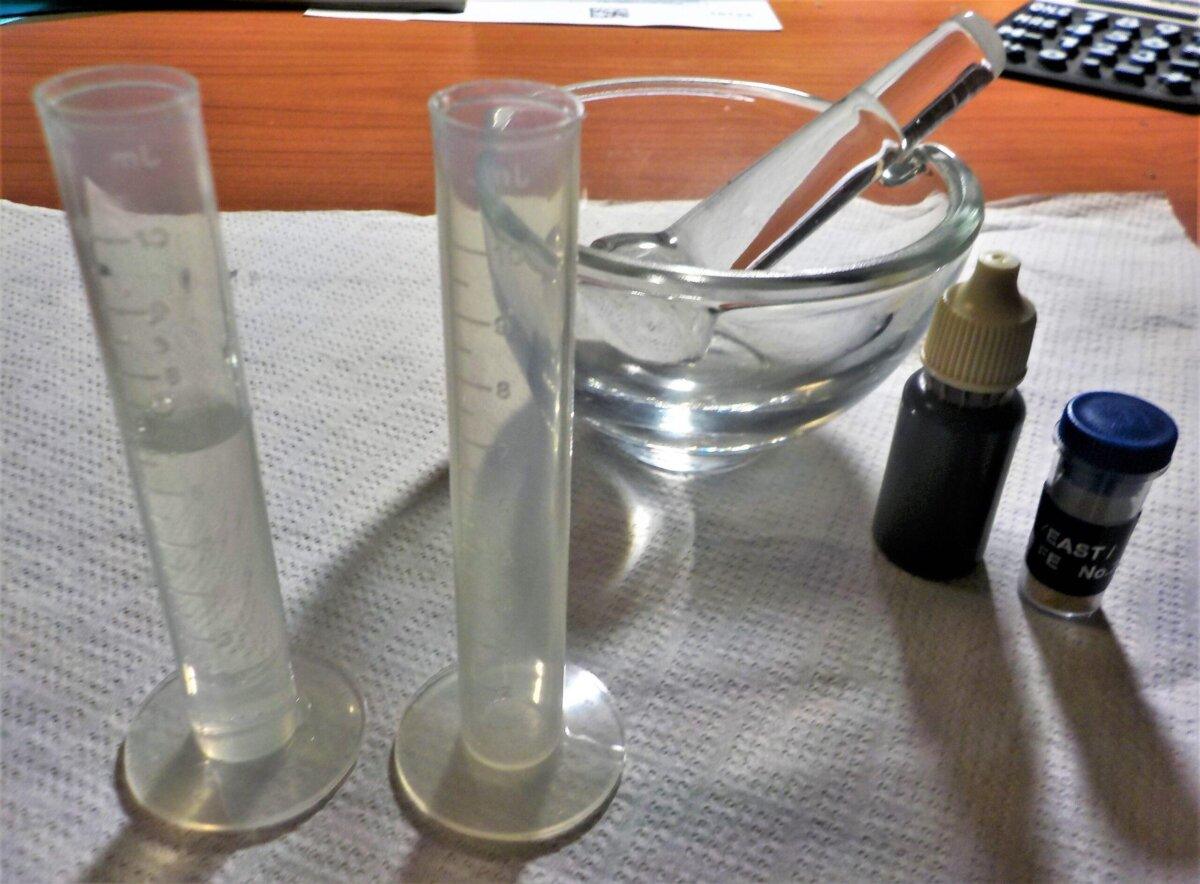
- Graduated glass/cup with double mL/cL scale: compare visually and build the habit 10 mL = 1 cL.
- Kitchen scale: for water and syrups close to 1 g/mL, 1 mL ≈ 1 g. Weigh 250 g ≈ 250 mL = 25 cL.
- Applications: check that they use the SI. If the interface switches to fl oz, convert before acting.
- Reading by eye: place the meniscus at eye level and read the graduation at the lowest point of the meniscus.
Official reminder: the structure of SI prefixes and equivalences are published by national metrology organizations. See for example the NIST Handbook (unit tables).
Trends: sensors, data, and quantum metrology
The “dematerialization” of definitions ushers in the era of quantum metrology: Kibble balances for mass, optical clocks for time, sensors traceable to constants. On the usage side, connected objects and technical datasheets are massively switching to the SI, which reduces risky conversions and strengthens data quality. For the end user, the effect translates into fewer ambiguities and tools that speak the same language: mL, cL, L and unified prefixes.
Conclusion and quick reference points
From medieval markets to modern laboratories, the trajectory is clear: moving from local to global, from object to constant. Result: safe and immediate conversions like ml to cl. Keep three habits: 1) 1 cL = 10 mL; 2) use graduated containers or a scale; 3) favor the SI in your recipes, care, and purchases.
FAQ
How to quickly convert ml to cl?
Divide by 10: 30 mL = 3 cL. Conversely, multiply by 10 to convert from cL to mL.
Is the liter part of the SI?
Yes. The liter is a special name for the cubic decimeter. Its submultiples cL and mL use the decimal prefixes of the SI.
Why were the units redefined in 2019?
To anchor the units to constants of nature. This removes dependence on physical objects and improves global stability.
What is the practical difference between cL and mL?
They are two scales of the same liter. 1 cL equals 10 mL. Choose the scale that makes reading simple and avoids unnecessary zeros.
What to do if a recipe uses “cups” or “fl oz”?
First convert to mL with a reliable table, then switch to cL if needed. Avoid approximations with ungraduated glasses.
{ “@context”: “https://schema.org”, “@graph”: [ { “@type”: “Article”, “headline”: “History of measurement units: from disorder to reliable conversions (focus on “ml to cl”)”, “description”: “From the chaos of old measures to the modern SI. Clear methods to convert ml to cl, official references, practical examples, and reliable tools.”, “inLanguage”: “fr-FR”, “author”: { “@type”: “Person”, “name”: “Editorial Team”}, }, { “@type”: “FAQPage”, “mainEntity”: [ { “@type”: “Question”, “name”: “How to quickly convert ml to cl?”, “acceptedAnswer”: { “@type”: “Answer”, “text”: “Divide by 10: 30 mL = 3 cL. Conversely, multiply by 10 to convert from cL to mL.” } }, { “@type”: “Question”, “name”: “Is the liter part of the SI?”, “acceptedAnswer”: { “@type”: “Answer”, “text”: “Yes. The liter is a special name for the cubic decimeter. Its submultiples cL and mL use the decimal prefixes of the SI.” } }, { “@type”: “Question”, “name”: “Why were the units redefined in 2019?”, “acceptedAnswer”: { “@type”: “Answer”, “text”: “To anchor the units to constants of nature. This removes dependence on physical objects and improves global stability.” } }, { “@type”: “Question”, “name”: “What is the practical difference between cL and mL?”, “acceptedAnswer”: { “@type”: “Answer”, “text”: “They are two scales of the same liter. 1 cL equals 10 mL. Choose the scale that makes reading simple and avoids unnecessary zeros.” } }, { “@type”: “Question”, “name”: “What to do if a recipe uses “cups” or “fl oz”?”, “acceptedAnswer”: { “@type”: “Answer”, “text”: “First convert to mL with a reliable table, then switch to cL if needed. Avoid approximations with ungraduated glasses.” } } ] } ] }