/* Css In Brief */
| Key Points | Details to Remember |
|---|---|
| 🏛️ Definition of the Old Port | First port founded around 600 BC. |
| 🌍 Geographical location | Natural shelter facing the harbor and hills |
| ⚓ Economic role | Key hub of Mediterranean trade |
| 🏙️ Urban impact | Historical heart structuring the city |
| 🎨 Cultural heritage | Monuments and museums to discover |
| 🌿 Contemporary challenges | Modernization facing sustainable challenges |
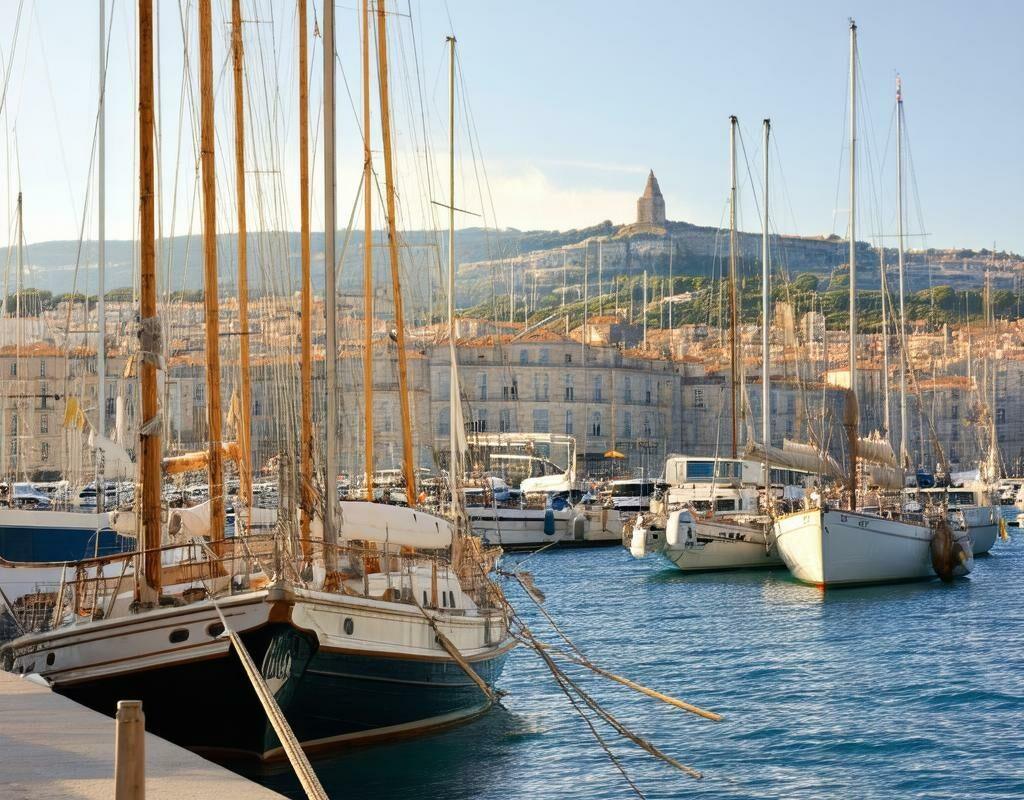
Have you ever wondered why Marseille, over the centuries, built its economic and social life around the Old Port? This welcoming cove, framed by the hills of Le Panier and Fort Saint-Jean, is not just a picturesque setting: it dictated the rise of a world city. To understand the foundations of the oldest French city, let’s dive into the heart of its original port and its multiple challenges.
Sommaire
Origins of Marseille’s Old Port
Ancient foundation and geographical context
Around 600 BC, Greek sailors from Phocaea chose this cove sheltered between two rocky points. They saw it as a haven protected against prevailing winds and storms. Unlike other less secure anchorages in the gulf, this site offers a perfectly aligned coastal cordon. This geographical choice is confirmed by several archaeological studies[1] and demonstrates a very pragmatic selection since Antiquity.
Strategic advantages of the harbor
A port alone is not enough: it needs a harbor, a space where ships can navigate and organize without obstruction. Here, the harbor of Marseille reaches nearly 1,200 hectares, a basin large enough to accommodate a merchant and military fleet. The immediate proximity of hills also allowed the installation of lookouts and watchtowers. In Roman times, the construction of stone quays reinforced this natural setup.
The economic expansion around the Old Port
The Old Port quickly became the engine of a Mediterranean trade network. Cargoes poured in: cereals from North Africa, oils from Italy, ceramics from Ephesus, salt from Camargue. Each of these goods took the “royal road” of Quai Masséna or Quai des Belges, which connected directly to the city.
The role of maritime trades
Pickers, apprentices, boat owners, blacksmiths… more than a hundred trades have specialized around this activity. Pickers, for example, handled barrels and sacks while the master sailmakers repaired rigging and ropes. Viscerally linked to the tides, port life also set the rhythm of the city: markets, fairs, and festivals were organized according to high or low tide.
Mediterranean exchange networks
- Grains from Egypt and Sicily to feed the population.
- Soap from Marseille, made from olive oil, which became an export product.
- Wools and silks from the East, passing through Phoenician emporiums.
Each of these flows was part of alliances and political agreements, sometimes under the aegis of neighboring kingdoms or cities. In the Middle Ages, the coexistence of Genoese, Venetian, and Provençal merchants gave rise to a unique cultural and linguistic richness.
The urban and architectural imprint
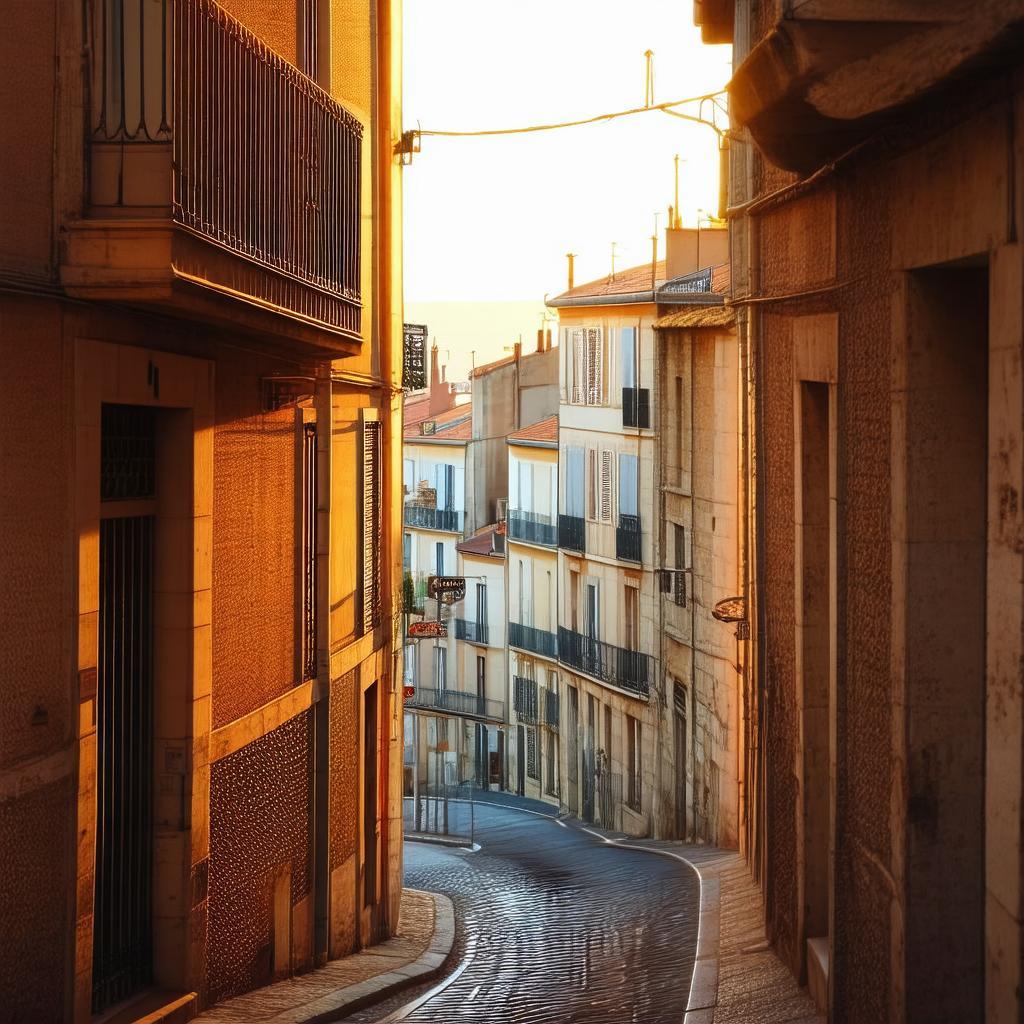
From the 12th century, the city densified around the port. Houses rose along the quay, backed by a maze of winding alleys. These closely packed dwellings fostered an intense community life, paced by trade and continuous exchanges.
Emblematic neighborhoods
The Panier, perched just above, became the popular district of fishermen and artisans. Residents acquired sloping land there to erect small shops and workshops. The City Hall and the Major, for their part, punctuate the landscape with their monumental facades, asserting the power of the merchant city.
Evolution of the port area
Fortifications, such as Fort Saint-Jean, emerged to protect the port against attackers. Later, with the construction of the Joliette basin in the 19th century, the merchant navy gradually moved outward, freeing the Old Port for more urban and tourist use.
Cultural and tourist heritage
Museums and historical routes
Around the Old Port, there is now a concentration of sometimes free museums, such as some free museums of French history to visit with family. These spaces tell the story of the Phocaean epic, the industrialization of the port, and even the genesis of local traditions, from bouillabaisse to the festivals of the Panier.
Walks and viewpoints
A simple stroll along the Quai des Belges offers a panorama of the Canebière, the Bonne Mère, and the Château d’If. At every step, one visualizes the interweaving of eras: ancient docks, 17th-century ships, contemporary yachts. This contrast has become one of the city’s most photogenic assets.
Current challenges and perspectives
The Old Port remains a place of transition between history and modernity. Rehabilitation projects aim to preserve archaeological remains while creating contemporary living spaces. The goal is twofold: to strengthen tourist appeal and ensure a better quality of life for residents.
Rehabilitation Projects
“Enhancing port archaeology without turning public space into a museum,” emphasizes the report from the Urban Planning Agency of the Marseille Agglomeration (2021).
Suspended walkways, mobile pontoons, immersive signage… innovations are multiplying to tell the story without freezing the space. Multidisciplinary teams (historians, archaeologists, urban designers) collaborate for a heritage that is both readable and alive.
Impact on Local Residents
As tourists flock in, local residents question the gentrification of the neighborhood. Public actors, aware of these tensions, promote local consultation mechanisms and integrated social housing. The goal is to find a balance between collective memory and economic development.
FAQ
1. Why is the Old Port of Marseille considered the historic heart of the city?
Because it was the first anchorage point of the Phocaeans and the engine of all commercial and cultural exchanges. Its sheltered location and natural configuration determined the urban growth of Marseille.
2. What are the main monuments to discover around the Old Port?
Don’t miss Fort Saint-Jean, the Major, the City Hall, and the Panier district. Each of these places embodies a key phase of the city’s port and architectural history.
3. How has the Old Port evolved over the centuries?
It has gone through several phases: ancient port, medieval commercial center, main trading site in the modern age, then tourist and cultural hub after the construction of new basins in the 19th century.
4. What are the current rehabilitation projects for the Old Port?
We are talking about contemporary developments (pontoons, footbridges, immersive signage) aimed at making archaeological heritage visible while offering new living spaces.
5. Where can free exhibitions on the history of Marseille be found nearby?
Several museums offer free access to certain permanent collections, and outdoor routes use interactive terminals to tell the port’s evolution.