
The emergence of modern sport in France
Modern sports appeared in France in the 1880s, marking the beginning of a new era for physical activity in the country. This period saw the birth of the Union des Sociétés Françaises de Sports Athlétiques (USFSA) in 1889, a crucial event that laid the foundations for the organization of French sport.
The enactment of the 1901 law on associations played a decisive role in the rise of sport in France. This legislation facilitated the creation of sports clubs, paving the way for a more formal structure of sporting practice. Between 1880 and 1914, sport experienced its heroic age, characterized by unconstrained volunteerism and a practice essentially reserved for the social elite.
This period saw the emergence of disciplines that would become emblematic of the French sporting landscape:
- Athletics
- Gymnastics
- Cycling
- Football
- Rugby
- Tennis
- Swimming
These sports, some imported from England, gradually took root and shaped the French sporting identity. The Stade Bordelais, one of the great multisport clubs of the time, played a crucial role in spreading these practices throughout the country.
Democratization and institutionalization of French sport
The period from 1920 to 1975 marked a long phase of institutionalization and democratization of sport in France. There was a multiplication of clubs and licensees, reflecting the growing enthusiasm of the population for sporting practice. The numbers speak for themselves: the number of licensees rose from 1 million in 1930 to 2 million in 1950, reaching 7.4 million in 1975.
The 1960s and 1970s saw a growing intervention of the State in the organization of sport. This governmental involvement helped structure and professionalize the sector, laying the foundations of the modern French sporting system. At the same time, women’s sport experienced gradual development, with a notable acceleration from the 1970s-1980s onward.
The following table illustrates the evolution of the number of licensees in France:
| Year | Number of licensees |
|---|---|
| 1930 | 1 million |
| 1950 | 2 million |
| 1975 | 7.4 million |
| 2000s | 13 million |
This spectacular growth attests to the democratization of sport and its deep rooting in French society. Volunteerism, a pillar of the development of associative sport throughout the 20th century, played a central role in this expansion.
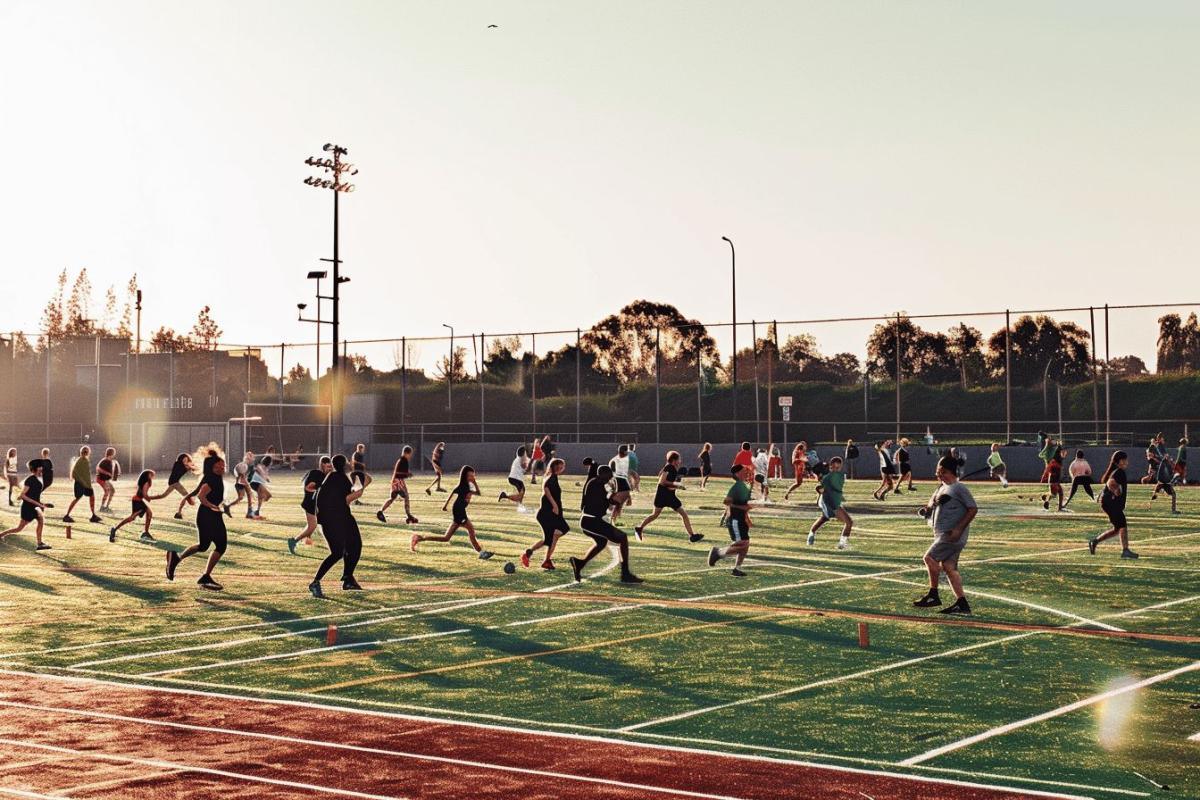
Diversification of practices and new challenges
The 1980s marked a turning point in the history of sport in France with a massification of sporting practice and increased professionalization of coaching. This decade also saw the emergence of new Olympic disciplines such as handball, basketball, and volleyball, enriching the French sporting landscape.
The 1990s and 2000s were characterized by a diversification of practices and a rise in leisure sport. There was a growing trend toward sporting individualism, reflecting broader societal changes. New disciplines appeared and gained popularity:
- Snowboarding
- Surfing
- Climbing
- Skateboarding
These sports, often associated with urban culture or outdoor practices, attracted a young and dynamic audience, helping to renew the image of sport in France. At the same time, there was a progressive professionalization of certain sports such as football and rugby, a process that began in the 1930s but accelerated considerably at the end of the 20th century.
The growing importance of the Olympic Games in the structuring and media coverage of French sport cannot be underestimated. These international events play a crucial role in promoting sports disciplines and in shaping the national sporting identity.
Perspectives and challenges of French sport in the 21st century
As French sport enters the 21st century, it faces new challenges and opportunities. The quest for gender equality in sport continues to progress, although obstacles remain. The governing bodies and administrative authorities of French sport are gradually opening up to women, but efforts are still needed to achieve true parity.
One of the major challenges is to catch up on the media inequality between male and female sports. This disparity in media coverage has repercussions on the funding and popularity of female disciplines, creating a vicious circle that is difficult to break.
French sport must also meet the challenge of technological innovation and virtuality. The rise of electronic sports (e-sports) and the increasing use of virtual reality in training and competition open up new perspectives, while raising questions about the very nature of sport.
Finally, the issue of sustainable development emerges as a central concern in the organization and practice of sport. Major sporting events, infrastructures, and equipment must now incorporate environmental considerations, reflecting a broader societal awareness.
The history of sport in France, rich and varied, continues to be written. From the emergence of modern sports at the end of the 19th century to the contemporary challenges of equality and sustainability, French sport has constantly evolved, reflecting and influencing the society in which it is embedded. This ongoing adaptation to social, cultural, and technological realities ensures that sport will remain a central element of French identity and daily life for generations to come.