In brief
📍 The most convincing destinations to combine deserted beaches, clear water, and photo potential are those where access remains somewhat restrictive: extra boat rides, visitor quotas, or limited accommodation.
⏱️ Logistically, most of these islands require a realistic effort: 30 to 45 minutes by speedboat to Sibuan, 45 to 60 minutes from Agatti to Bangaram, or up to 4 to 5 hours by ferry for some crossings to Karimunjawa.
💡 For images, the difference often comes down to simple details: arriving on the beach before 8 AM, spending a night on site rather than coming on a day trip, and targeting the dry season without choosing the local tourist peak.
🎒 The budget remains very variable, but an independent traveler can often manage between €70 and €180 per day depending on the country, comfort level, private boats, and possible entry permits.
Which secret islands of Asia to choose for deserted beaches and perfect photos?
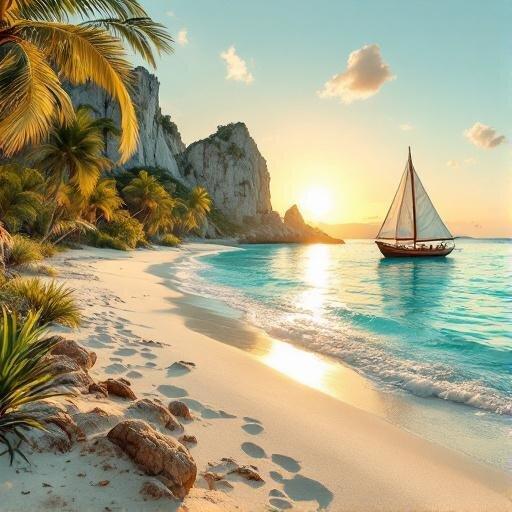
To combine calm, striking landscapes, and beautiful images, the most credible options are Bangaram in India, Karimunjawa in Indonesia, Côn Đảo in Vietnam, Sibuan in Malaysia, and Ditaytayan in the Philippines. They remain more demanding to access than classic beach resorts, which naturally limits crowds.
The term “secret island” should be taken with caution. In 2026, very few Asian islands are completely unknown, especially when they combine white sand, turquoise water, and spectacular images. However, some remain less standardized, less densely built, and quieter than the major stars of beach tourism. This filter guides this top 5: beauty of the beaches, quality of light, possibility to photograph without permanent crowds, and logistics still manageable without heavy expeditions.
1. Bangaram, Lakshadweep, India
Bangaram is one of those places that seem designed for aerial photography and contemplation, with a very clear lagoon, vivid shades of blue, and a shore where the horizon often remains clean, without a string of buildings. In the Lakshadweep archipelago, the island attracts travelers who want a more refined image of the tropics: little visible urbanization, coconut trees, pale sand, and an ambiance noticeably quieter than on the most publicized spots of Southeast Asia.
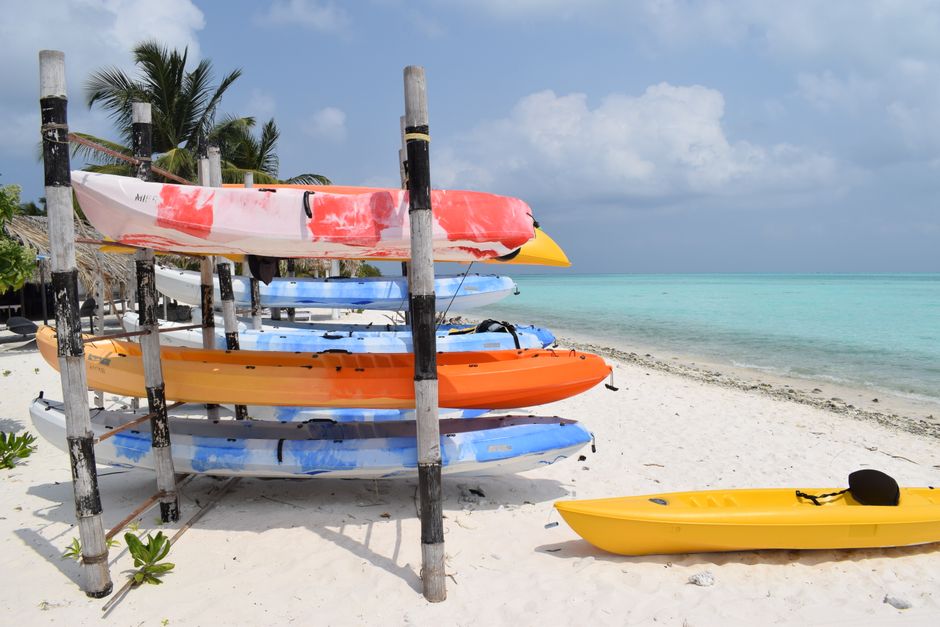
In practice, it is a destination that rewards patient travelers rather than improvisers. Arrival is often via Agatti, then by boat in about 45 to 60 minutes depending on the sea conditions. The downside of this relative exclusivity is a higher cost than in many Indonesian or Philippine islands, with limited accommodation options and sometimes specific procedures depending on the traveler’s profile. To check access conditions and local organization, it is best to consult the official portal of the Lakshadweep administration dedicated to tourism.
2. Karimunjawa, Java Sea, Indonesia
Karimunjawa is no longer unknown, but it remains largely under the radar compared to Bali, Gili, or Nusa Penida. Its real asset is not a single iconic beach: it is a group of islands, sandbanks, mangroves, and viewpoints that allow for varied shots without changing region. For a photo trip, this is valuable, as you can go from an almost empty beach to a very bright sand spit in the same day if the sea allows.
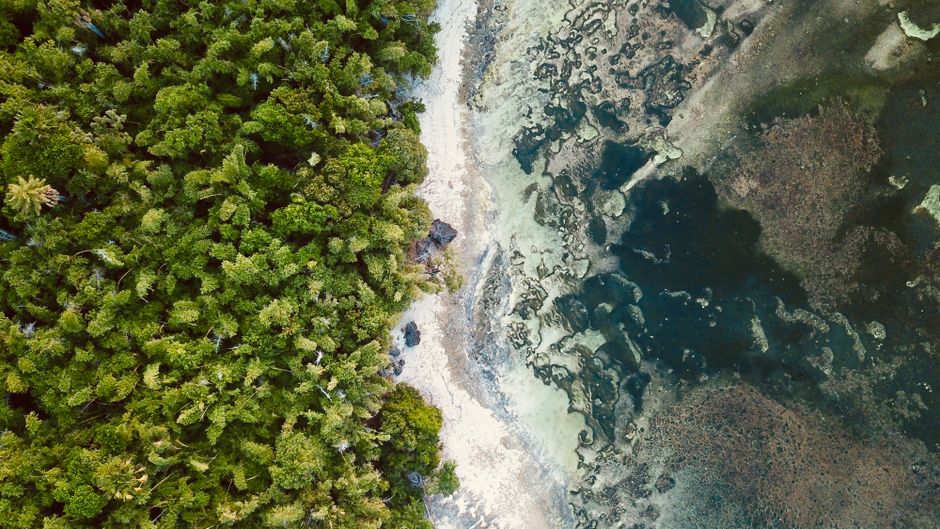
The destination is well suited for stays of 3 to 4 nights, because the best images often come from early morning boat trips rather than a simple day excursion. Depending on the service chosen, the crossing from Jepara often takes 2 to 5 hours. The official site Indonesia Travel dedicated to Karimunjawa allows you to check access principles and the ecological interest of the archipelago, notably its reefs and mangroves. On the ground, it is observed that the most photogenic beaches are rarely those where snorkeling boats stay in the middle of the day; you need to aim for dawn, late afternoon, or stay near an efficient departure point.
A local boatman notes that travelers who book only a standard excursion often come back with the same images as everyone else. Those who leave before the first group departures find almost empty sandbanks and smoother water, therefore much more photogenic.
3. Côn Đảo, Vietnam
Côn Đảo offers a rare contrast: an island known to Vietnamese travelers but still discreet internationally, with very beautiful beaches, elegant coastal roads, and often superb light at sunrise. The archipelago also carries a strong historical density, which adds documentary depth to the stay. If you like tropical images but are looking for something other than a simple “postcard” setting, Côn Đảo has a true extra soul.

For deserted beaches, the key is not to hop from spot to spot but to choose the right moments. Certain stretches of coast remain very empty before 8 a.m. or late in the day, while midday flattens volumes and hardens contrasts. The aerial access, often about 1 hour from Ho Chi Minh City, makes the island simpler than its image suggests. However, the sea and weather truly dictate the quality of trips to some secondary beaches; you need to keep some flexibility in your schedule.
4. Sibuan, off Semporna, Malaysia
Sibuan is a small island of sand and light vegetation, set in the waters of Sabah, which easily gives the impression of being at the “end of the world” in photos, especially when framed low and wide. Technically, it is more of an excursion island than a place for a long stay, but its visual potential is remarkable: very clear water, beach curves, island reliefs in the background depending on the angles, and very readable marine hues when the sky remains clear.
From Semporna, it usually takes 30 to 45 minutes by speedboat, making it one of the most accessible options in this selection once you arrive in Sabah. That said, the relative accessibility also attracts organized tours. The photo strategy is therefore to leave early, choose a calm sea day, and if possible, combine the excursion with another less frequented island in the area. For conservation rules in the region, the Sabah Parks website provides a useful framework, even though Sibuan does not exactly follow the same logic as a strictly regulated diving site like Sipadan.
5. Ditaytayan, Palawan, Philippines
Ditaytayan, often associated with routes between Coron and Culion, captivates with a very simple and visually powerful element: a long bank of light sand that immediately structures the image. It is the typical place where a failed photo rarely comes from the landscape itself, but from the wrong timing, a harsh sky, or too short a pause. With good light and few people, the place is one of the most photogenic on this list.
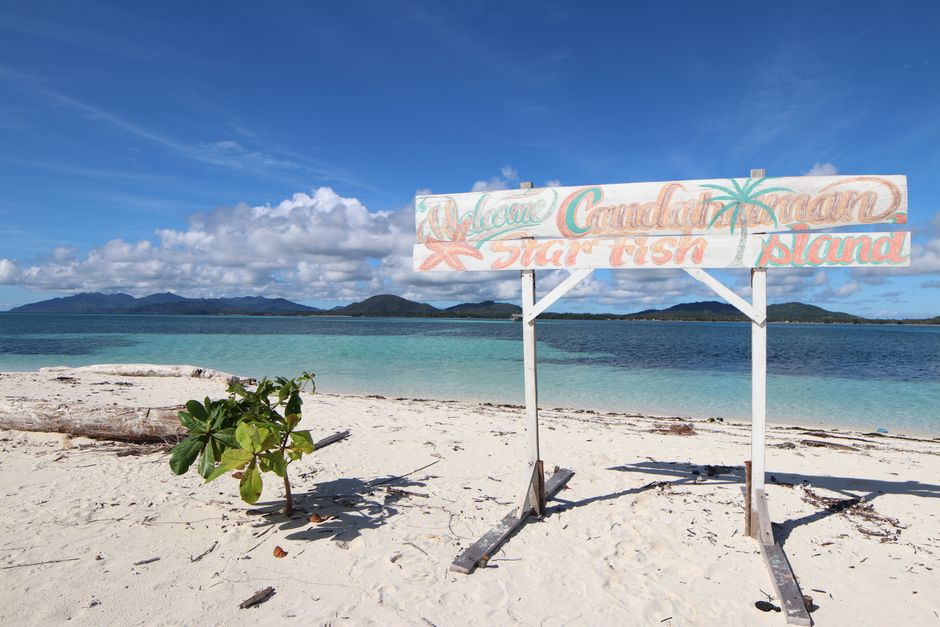
The main risk here is discovering the island as part of a rushed tour. Many travelers spend less than an hour on site, which is enough to see but not to really photograph. Under good conditions, the interest instead comes from variations: tide, water transparency, silhouettes of boats in the distance, or total absence of vessels. A family returning from island hopping in the area often tells the same story: Ditaytayan is even more beautiful than expected, but you have to accept that the weather decides a large part of the outcome.
The most “secret” beaches are not necessarily the most remote; they are often those you reach at the right moment, with enough time to wait for the right light.
How to recognize a still preserved island before booking?
A still preserved island can be identified by four concrete signs: limited accommodation capacity, two-step access (flight or train then boat), low commercial offer on the waterfront, and decisive weather windows. The simpler the access and the more abundant the offer, the less the feeling of isolation lasts.
The first indicator is logistical friction. When you have to combine a land journey, a transit night, then a boat dependent on the sea, attendance mechanically decreases. This is exactly what still distinguishes Bangaram from many easier Indian beaches, or Karimunjawa from Bali. This does not guarantee an empty beach, but reduces passing tourism that crowds the most Instagrammed spots.
The second sign is the low density of visible services on the shore. An island can remain accessible while being relatively preserved if its waterfront is not saturated with bars, jet skis, private docks, and constant music. In practice, the best places for photography are often those where a bit less immediate comfort is accepted: fewer signs, fewer payment options, sometimes a more irregular network, but a much cleaner horizon.
Finally, one must examine the daily rhythms. An island may seem crowded on social media and yet offer long calm beaches early in the morning. Côn Đảo and Ditaytayan illustrate this well: in the middle of the day, the visual sensation decreases; before the arrival of excursions or after their departure, the same scene changes completely. For those seeking perfect photos, the question is therefore not only “where to go?” but “when to be there?”.
When to go to have deserted beaches and the best light?
The best compromise is often to travel at the beginning or end of the dry season, rather than at the tourist peak. You gain a more stable sea, clean light, and fewer people. On site, the most profitable time slots remain sunrise and the two hours before sunset.
In tropical Asia, the perfect season is never exactly the same from one area to another. Between the Java Sea, the Vietnamese coast, Sabah, or Palawan, rain and wind patterns change. The useful rule is therefore to think by region and not by continent. In central Indonesia, many travelers aim for the dry period around May to September. In Palawan, many photo trips are planned between November and May. In East Malaysia, visibility and sea conditions are often better in the local dry season, while certain monsoon periods clearly complicate outings.
For photography, the best light remains surprisingly not very “spectacular” in the tourist sense. The most beautiful images often come from low, lateral, soft light, which reveals the texture of the sand and the gradients of the water. In much of these islands, this means being ready to walk as early as 5:30 to 6:30 AM depending on the season. The other solid window is about 2 hours before sunset, provided you identify in advance the side of the island that best catches the light.
What field reports confirm is that “acceptable” weather is not always enough. A slightly overcast sky can be excellent for portraits and details, but mediocre for marine contrasts. Conversely, too harsh midday sun whitens the sand and flattens the relief. For this reason, a stay of at least 3 nights is often more profitable photographically than a simple 24-hour stop, even if the island seems small on the map.
Real budget, access, and mistakes to avoid for these secret Asian islands
The budget depends less on the country than on the last maritime kilometer. Once in the big city or regional hub, it is the ferries, speedboats, permits, island-hotels, or private excursions that vary the bill. For an independent traveler, one can retain an order of magnitude of about €70 to €110 per day in the most modest options of Indonesia or the Philippines, and rather €120 to €180, or more, in more regulated or exclusive island destinations like Bangaram.
| Island | Main access | Final time | Budget level |
|---|---|---|---|
| Bangaram | Flight to Agatti + boat | 45 to 60 min | High |
| Karimunjawa | Jepara + ferry | 2 to 5 h | Medium |
| Côn Đảo | Domestic flight | About 1 h flight | Medium to high |
| Sibuan | Semporna + speedboat | 30 to 45 min | Medium |
| Ditaytayan | Coron/Culion + boat | 1 h 30 to 2 h 30 | Medium |
The most common mistakes are very predictable. First, underestimating sea conditions: a crossing announced as 30 minutes can be delayed, canceled, or made uncomfortable by the swell. Next, booking only to “see” the island instead of spending a night there or arriving first. Finally, carrying only a small amount of cash in areas where ATMs are rare or unreliable. In Sibuan as in Ditaytayan, the cost of shared or private boats can also vary greatly depending on the number of passengers.
It is also necessary to check official frameworks before departure: local schedules, temporary closures, environmental restrictions, or entry conditions on certain islands. For travel to the Philippines, the official portal Philippines Travel can serve as a base, even though final details are then confirmed with local operators. In any case, the best approach is to keep half a day’s margin in the itinerary if the island is essential to your photo trip.
FAQ
Can you visit these islands without knowing how to drive a scooter?
Yes, in several cases. In Côn Đảo, taxis or private drivers can suffice for the main points; in Sibuan and Ditaytayan, the experience is mainly by boat. However, on Karimunjawa, the scooter often remains the simplest way to be autonomous on the main island.
Is it necessary to bring a drone to get beautiful photos?
Not necessarily. A good ground angle at low tide or during the golden hour can produce stronger images than a standard drone flight. Above all, check local rules: in some island areas or near protected zones, drone use may be limited or even prohibited.
Are these islands suitable for a family trip?
Yes, but not all to the same degree. Côn Đảo and certain parts of Karimunjawa are easier for a stay of several nights, while Sibuan or Ditaytayan are more suited to excursions. With children, favor islands where boat times can be reduced to less than 1 hour.
Is there network coverage and card payments everywhere?
No. In these destinations, mobile network coverage can be uneven and card payments sometimes limited to the most structured accommodations. Having the equivalent of 1 to 2 days of expenses in cash remains a very practical precaution, especially for boat transfers.
What photo mistake happens most often on this type of island?
Arriving too late on the beach. Between 10 a.m. and 2 p.m., the light often becomes harsh, colors lose subtlety, and crowds increase. The real aesthetic gain more often comes from an early wake-up than from more expensive equipment.
Is it better to book boats in advance or on site?
For structured connections, booking in advance remains prudent, especially in the dry season. For more flexible photo outings, booking on site sometimes allows adjustment according to the next day’s weather. The good compromise is to lock in the major trips and keep secondary excursions adaptable.