The most useful answer lies in a simple idea: don’t try to see everything all at once. Martinique is better discovered by choosing a logical base, then moving forward with coherent half-day segments between beaches, gardens, Creole villages, scenic routes, and gourmet stops. The south reassures with its clear waters and seaside villages, the center facilitates back-and-forth trips, the north adds relief to the stay with a greener, more volcanic, more heritage-rich atmosphere. For a first trip, the right balance often consists of mixing Caribbean coast, Atlantic tip, and cultural stops, without rushing after an impossible schedule.

Sommaire
Verdict for organizing an independent stay
Martinique is among the most pleasant destinations to explore when you like alternating swimming, nature, and heritage without changing country or administrative language. It is recommended for a first trip to the French Antilles, for couples who want to experience several atmospheres, for families looking for flexible days, and for travelers who prefer to compose their own pace. The real luxury here is not to fill every hour; it is to be able to choose in the morning between a cove, a tropical garden, a coastal road, or a heritage visit.
The decisive point is the geographical readability of the island. You quickly move from one setting to another: colorful villages, dense forests, quiet coves, Atlantic cliffs, plantations, Creole houses, sea viewpoints. This variety gives a feeling of a dense journey, even on a short stay. In four or five days, you can already build a balanced itinerary. In one week, the trip becomes noticeably more comfortable.
The downside exists: overloaded days tire quickly. The roads are beautiful, but they require accepting marked relief, some curves, travel times that seem short on a map but lengthen in reality. This is why the good strategy is to think in zones rather than by a list of attractions.
- Strong point: clear landscape contrasts on a small surface.
- Strong point: successful mix between sea, villages, gentle hiking, and Creole culture.
- Strong point: stay adjustable in 4, 7, or 10 days without excessive frustration.
- Strong point: pleasant climate most of the year.
- Weak point: slower traffic than expected during peak hours.
- Weak point: some stops are best seen early in the morning.
- Weak point: wanting to do north, south, and Atlantic on the same day hardly makes sense.
A good Martinique trip is not measured by the number of places checked off. It is judged by the quality of the sequences: an early beach, a village lunch, a beautiful stress-free road, then a short visit or a viewpoint before late afternoon. It is this balance that gives the sought-after feeling of freedom.Field marker — editorial guide
Choosing your base without making a mistake
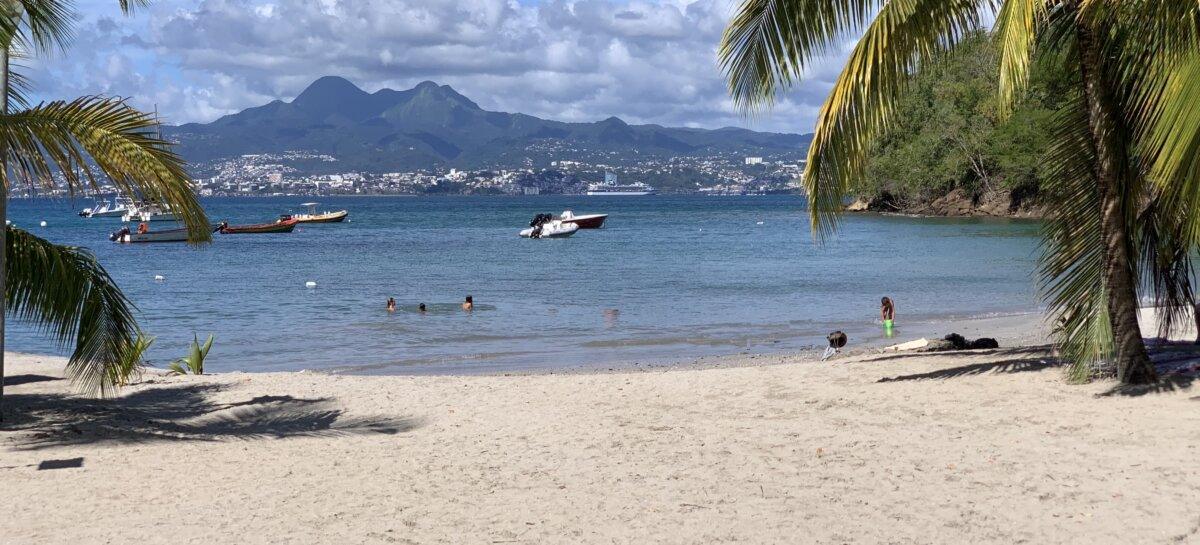
The first choice concerns your base camp. The south suits travelers who first imagine Martinique as an island of beaches, swimming, and sunsets. There is a simple sequence between Sainte-Anne, Le Diamant, Sainte-Luce, Les Anses-d’Arlet, or Trois-Îlets. The atmosphere is more seaside, more immediate, easier to live with when you want to start gently.
The center, around Fort-de-France, Schœlcher, or Lamentin, mainly serves to optimize travel. It is not always the most postcard-like place to sleep, but it is a real asset when you want to radiate in several directions. To maintain this flexibility, renting a car in Martinique remains the most practical option: you are not dependent on tight schedules or connections, and you can adapt the day to the weather or fatigue.
The north appeals to another profile: travelers who like reliefs, panoramic roads, less seaside villages, traces of the history of Saint-Pierre, and the more vegetal atmosphere of the heights. You lose a bit in ease of daily swimming, but gain in character and depth of travel.
| Zone | Atmosphere | For whom | Recommended pace |
|---|---|---|---|
| South | Beaches, villages, simple outings | First stay, couples, families | 2 to 4 stops per day |
| Center | Easy radiance | Mobile travelers, short stay | 1 large daily loop |
| North | Volcano, forest, memory, relief | Curious, hikers, heritage lovers | More targeted days |
| Atlantic East | Wild coasts, wind, great panoramas | Photographers, walkers, travelers on a second stay | Dedicated half-days |
For a first stay of five to seven nights, the most straightforward duo often remains 3 or 4 nights in the south then 2 or 3 nights more in the center or north. This distribution avoids the “constant back-and-forth” effect. It also gives more room for useful surprises: an unplanned swimming stop, a terrace break, a market, a road you want to take more slowly.
Building a realistic itinerary according to the duration
Over 4 days, it is best to accept a partial program. Take a base in the south or center, keep two days oriented towards the sea and villages, add a green day with a garden or panoramic road, then reserve a last day in the north or Atlantic depending on your desires. The classic mistake would be to try to include Montagne Pelée, Salines, Caravelle, and Trois-Îlets in the same sequence. You would see everything superficially.
Over 7 days, Martinique becomes much more fluid. You can then distinguish a block Caribbean coast and coves, a block volcanic north, a block wilder Atlantic, and one or two slots for cultural visits. This format offers the best balance between variety and fatigue.
From 10 days, you do not necessarily change method; you slow down. You better enjoy off-peak hours, return to a loved place, reserve a morning for a market, a rum house, a garden, or a secondary road. Martinique rewards this tempo: a less spectacular trip on paper, but more memorable once back home.
| Duration | Ideal base | Priorities | Outcome |
|---|---|---|---|
| 4 days | South or center | Beaches + 1 day nature + 1 day road trip | Solid first impression |
| 7 days | South then center/north | Caribbean, Atlantic, heritage, garden | Balanced trip |
| 10 days | At least two bases | Slow down, return, deepen | Extensive discovery of the island |
Now, if you like very concrete itineraries, remember this simple logic: day 1 and 2 to get a sense of the island, day 3 and 4 to head towards the grand landscapes, last third of the stay to choose your favorites. This progression works well because it avoids starting right away with the longest days.
The best week in Martinique rarely feels like a marathon. It follows a natural rhythm: you start with places easy to love, get used to the distances, then expand your range towards wilder areas. This build-up reduces fatigue and significantly improves the feeling of freedom. Practical reading of the territory — editorial guide

Getting around the island easily
Traffic is not a constant problem; it mainly requires choosing your times well. Leaving early in the morning for major sites, returning before the busiest late afternoons, having lunch in the area visited rather than while traveling: these three habits change everything. Distances seem modest, but the topography, urban crossings, and tempting stops often lengthen the day.
For those arriving by plane and wanting to save time from the first half-day, car rental at Martinique airport greatly simplifies organization. You regain your autonomy immediately, avoid chaining taxi then a second vehicle, and can head to your stay area without losing an evening to logistics.
Budget-wise, a compact vehicle is very often enough for a couple, an urban and beach stay, or a program without heavy luggage volume. Travelers wanting to keep their budget can rent a cheap car in Martinique while maintaining the essential freedom of the trip: leaving early, changing your mind, staying longer in a cove, returning after dinner without depending on a fixed schedule.
Here is the good filter to choose before booking: group size, amount of luggage, number of accommodation changes, portion of the stay in the mountains, and tolerance for tight parking. On an island where days move fast, better a vehicle easy to live with than an oversized model.
- Two people: compact or economy, the most flexible use.
- Family with suitcases: trunk space is a priority above all.
- Itinerant stay: maneuverability and low consumption useful.
- North and relief: driving comfort to be prioritized.
- Village and beach: reasonable size, easier parking.

Detours That Are Truly Worth the Time
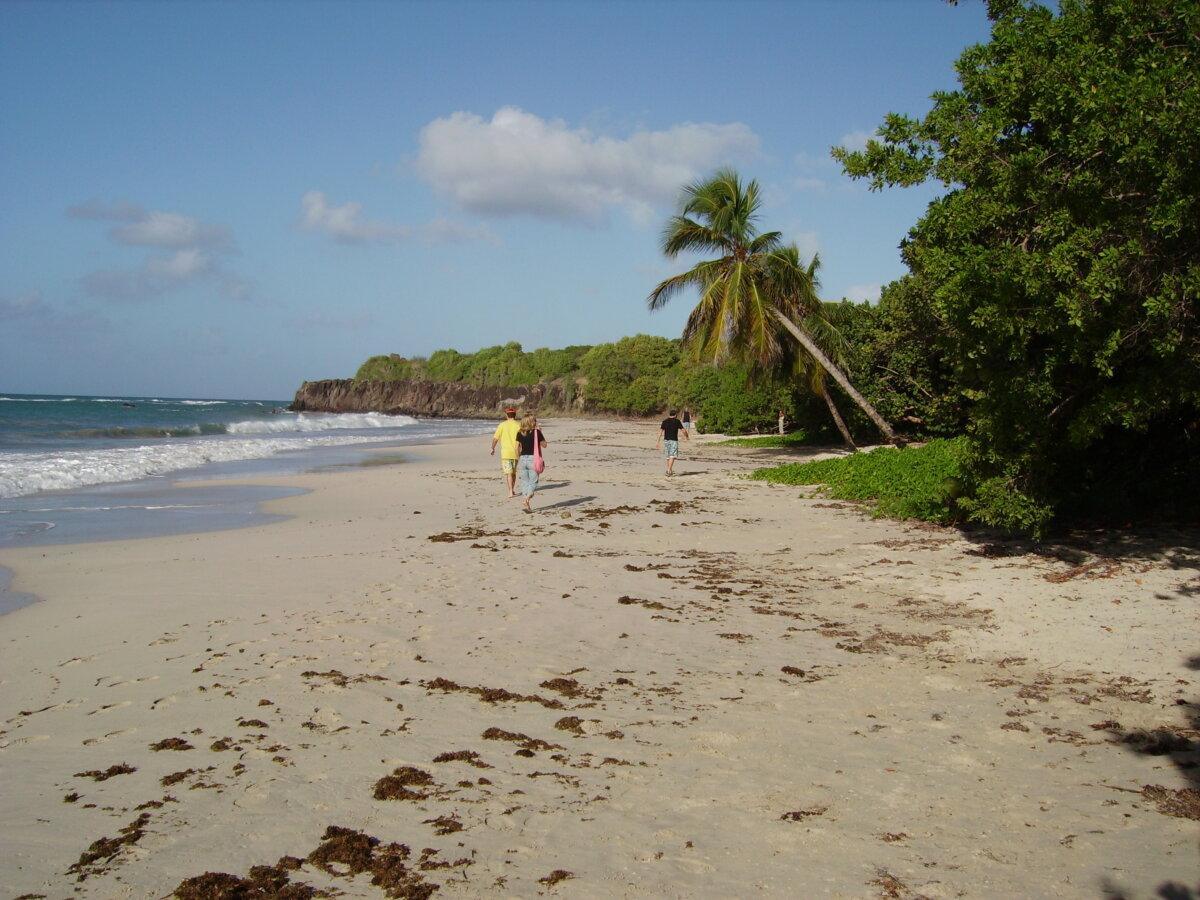
The south concentrates the easiest recommendations: Grande Anse des Salines for the scenery, Sainte-Anne for the atmosphere, Les Anses-d’Arlet for the charm of seaside villages, Le Diamant for the coastal road and viewpoints. This is the part of the island best suited for travelers who want to quickly feel the pleasure of the destination.
The center opens another door, more vegetal. The Jardin de Balata is a strong stop because it changes the perspective on the island: you leave behind the solely beach-focused imagination to rediscover tropical density, textures, heights, and views over the bay. This breath of fresh air works very well after two days at the beach.
The north, meanwhile, brings a rare depth. The silhouette of the Montagne Pelée, the memory of Saint-Pierre, the more wooded roads and the more rugged panoramas give a different tone to the trip. You feel the island’s telluric, historical, sometimes dramatic side more strongly, far from a simple vacation backdrop. It is often here that the stay gains personality.
On the Atlantic coast, the Caravelle Peninsula is worth the detour for its wilder character. There you find less immediate softness, more wind, relief, and horizon. The beauty there is more raw. For travelers who like to walk a bit, photograph, and feel a less tamed landscape, it is a very nice counterpart to the calm beaches of the Caribbean coast.
Finally, always save room for a heritage stop: creole house, distillery, ruins, old village, historic garden. These short visits play an essential role. They prevent the trip from being reduced to a sequence of swims, and they give substance to the memory.


What truly distinguishes Martinique from a simple beach holiday is its ability to make landscapes converse. In just a few kilometers, you go from an easy cove to a lush garden, from a coastal road to a village steeped in history, from calm sea to a promontory battered by the wind. The trip then seems much larger than the island. — Editorial guide reading marker
Our Method and the Guide’s Limitations
This guide was created to answer a specific question: how to organize a first or second stay in Martinique without getting scattered? To answer this, we selected 18 points of interest or transit zones, divided between south, center, north, and Atlantic. We then compared these options according to 6 criteria: ease of access, scenic interest, variety of activities, comfort for a short stay, heritage value, and coherence with a mobile trip.
The result is not intended to provide an exhaustive list. It assumes a clear bias: favoring realistic routes, those that remain pleasant on-site, on the road, and on the return, rather than perfect programs on paper. We also included a simple limit: travel times, crowds, and weather can change the ideal order of a day. On an island like Martinique, good planning remains flexible.
Another point to keep in mind: sporty travelers, lovers of long hikes, or island experts will likely compose a more specialized program. Here, the goal is different. It is to help a reader choose where to sleep, which areas to prioritize, and how to maintain real freedom of movement without exhausting themselves.

FAQ about an independent trip in Martinique
Which area to choose for a first stay in Martinique?
The south remains the simplest choice to start with: accessible beaches, pleasant villages, clear roads, and an immediately exotic atmosphere. For a more balanced stay, combine south and center, or south and north if you want to add a real nature and heritage dimension.
How many days are needed to enjoy the island?
Four days are enough for a nice overview, seven days provide the best balance, ten days allow slowing down and deepening. Under four days, it is better to concentrate the stay on a single large area rather than trying to cross the whole island.
Can you visit Martinique without a car?
It is possible by targeting very few sectors, especially around the most frequented areas. To explore several atmospheres, the car remains the most flexible solution. It allows avoiding days fragmented by waiting and enjoying spontaneous stops.
Should you stay in several places?
For a week, two bases work very well: a first more seaside, a second more central or more northern. For a short stay, a single base may suffice, provided not to stack long daily loops.
Which area to choose for the most beautiful beaches?
The south concentrates the most obvious references, notably around Sainte-Anne, Sainte-Luce, Diamant, and Anses-d’Arlet. The Caribbean coast suits very well those looking for often calmer waters and easy days to improvise.
Where to go to see another Martinique, greener and more striking?
Heading Saint-Pierre, the northern heights, the Mount Pelée, then the Caravelle Peninsula on the Atlantic coast. This combination breaks away from the postcard cliché and shows a more contrasted, more historical, more spectacular island.
What is the most comfortable time to travel?
Martinique can be visited all year round, with a frequent preference for the period from December to May, often considered more pleasant for combining outings, driving, and beach time. Outside this window, you can also travel very well, provided you keep a more adaptable schedule.
Which mistake avoids the most fatigue?
Wanting to change coast several times in the same day. It is better to choose a main area, accept one or two coherent detours, then keep time to enjoy the place instead of rushing through it.
The itinerary that will really suit you
If you are traveling for the first time, aim for a simple, mobile, and progressive stay: base in the south, a vegetal breath in the center, a full day in the north, then an Atlantic detour if time allows. This plan suits the majority of travelers because it shows several faces of the island without turning the vacation into a logistical race.
For couples who like to drive, families who want to keep some leeway, and travelers who prefer to decide day by day, the next step is clear: set your base, book a suitable vehicle, then only lock in the main axes of the stay. The rest can breathe. This is often how Martinique leaves its best memory: not as a list of places, but as an island that you really had time to inhabit for a few days.