In brief
🚗 Liability insurance generally covers carpool passengers, as long as it is a cost-sharing arrangement and not disguised profit.
🛡️ The coverages to look at closely are driver protection, assistance, vehicle damage, and clauses on loaning the steering wheel.
⚠️ As soon as carpooling becomes regular, involves the commute, or the vehicle is professional, the contract deserves a serious review.
💶 Some platforms offer low-cost insurance supplements, but they complement the car insurance contract: they do not replace it.
Is standard car insurance enough for carpooling?
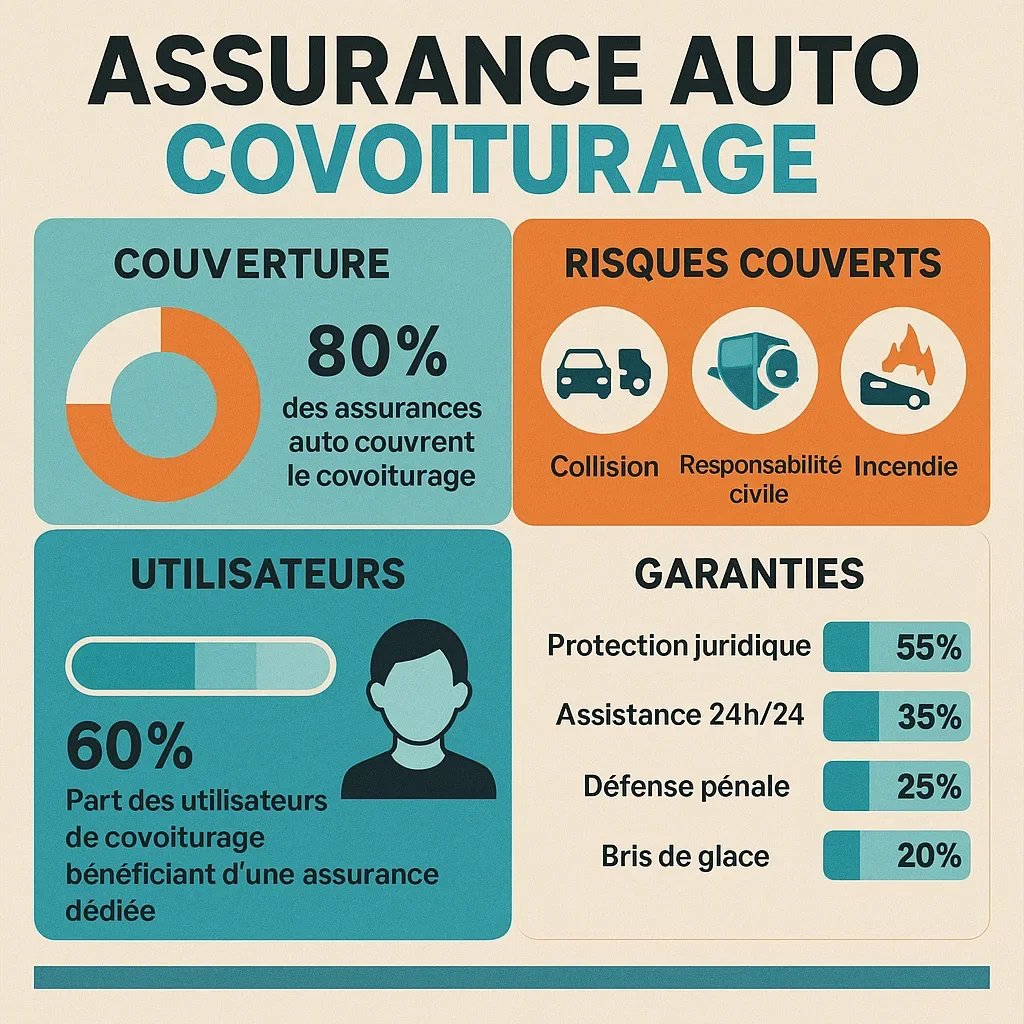
Yes, in the vast majority of cases, standard car insurance is sufficient for legal carpooling. The key condition is cost sharing, without profit. Liability insurance then covers passengers, but not necessarily all driver repairs or improperly declared situations.
The legal basis is simple, and the Service-Public fact sheet dedicated to carpooling clearly reminds us: a shared trip is not paid transport as long as everyone only contributes to actual expenses. In other words, this means fuel, tolls, reasonable wear and tear, no hidden margin.
This point is essential because most car insurance contracts are based on a logic of declared use. If your contract covers a personal vehicle used in the usual way, it often also covers occasional carpooling trips. However, if the vehicle is very often used to transport other people, or if the organization becomes quasi-professional, you need to look closely at the exclusions.
In other words, the word that changes everything is use. The same vehicle can be covered today and poorly covered tomorrow if the driver does not respect the initial declaration. That is why it is necessary to distinguish “between individuals” carpooling from transport that starts to resemble a commercial activity.
Which coverages should you really look at?
The most useful coverages are liability insurance, driver protection, assistance, and vehicle damage. If you carpool often or lend the steering wheel, also check exclusions and deductibles. That is where unpleasant surprises hide.
When we talk about carpooling car insurance, the reflex is not to look for a “special insurance” at all costs, but to check if the contract fits your use. Liability insurance remains the base, since it compensates third parties and passengers in case of an accident. But for the driver, the story is less automatic.
Driver protection is often underestimated. Yet, it is what can compensate the driver’s injuries when they are responsible for the accident. Without this coverage, the driver may be much less protected than their passengers, which can hurt both the wallet and the morale.
Assistance also matters, especially if carpooling takes you outside your usual area. Breakdown service, towing, replacement vehicle: these services sometimes make all the difference when a morning trip turns into a hassle. The driver lending clause also deserves careful reading, as it can trigger a higher deductible or special conditions.
In practice, an insurance broker based on the outskirts of Toulouse notes that cases rarely get complicated because of the trip itself, but mainly due to habits formed over time. A one-off round trip between friends often goes smoothly. The same trip, every day, with frequent driver changes, immediately raises the level of vigilance.
Should you notify your insurer before carpooling?
Not necessarily for occasional carpooling, but yes as soon as the use becomes regular, when you often transport colleagues, or if the contract specifies a very strict primary driver. Notifying your insurer helps secure the risk declaration and avoid disputes after a claim.
France Assureurs also emphasizes a point often misunderstood: lending the wheel can affect the deductible, the no-claims bonus, or indemnification conditions. For more details, their practical page on insurance and carpooling is useful because it details the effects of occasional drivers.
The good reflex, in case of doubt, is to ask explicitly if the contract allows:
- occasional carpooling without additional declaration;
- regular home-to-work trips;
- lending the wheel to a passenger;
- use of the vehicle with a platform or an app;
- secondary or occasional drivers.
Carpooling via platform, company car, or lending the wheel: what changes?
The problematic cases are not always the most obvious. The real trap is the boundary between occasional carpooling and an almost professional organization. This is where you need to compare the auto contract, the platform rules, and sometimes the employer’s agreement.
Here is a simple table to clarify:
| Situation | Usual coverage | Useful reflex |
|---|---|---|
| Occasional carpooling with personal car | Often covered by liability insurance and the standard auto contract | Check declared use and exclusions |
| Regular home-to-work carpooling | Possible coverage, but contract should be carefully reviewed | Notify the insurer if the frequency becomes usual |
| Lending the wheel to a passenger | Depending on contracts, deductible or restrictions possible | Check authorized driver and deductible amount |
| Company vehicle | Often regulated by the employer and sometimes limited by the insurance policy | Request written authorization before any shared trip |
The case of the company car deserves a real detour. If the vehicle belongs to the company, it is not only the insurer who decides: the fleet contract, internal policy, and authorized use come into play. The same logic applies to carpooling organized via an app: some services add guarantees or assistance, but they do not “fix” a poorly adapted contract.
And as soon as there is a profit, we move out of the usual framework of carpooling. Here, we are no longer talking about a simple cost-sharing but about an activity that may fall under paid transport. This change of category is far from trivial because it can lead to a denial of coverage if the contract does not provide for this use.
How to choose your coverage without overpaying?
The right choice is not necessarily the broadest contract, but the one that fits your reality. If you carpool three times a year, there is no need to buy full coverage for intensive use. On the other hand, if you share the road every week, reading the contract becomes truly worthwhile.
The right contract is not necessarily the most expensive. It is the one that matches your actual use, especially when carpooling becomes a habit.
Here is a simple method, without having to read the entire manual by hand:
- Reread the declared use: private vehicle, home-work trips, professional or mixed use.
- Check the lending of the wheel: some contracts allow it, others restrict it significantly.
- Control the driver protection: it is decisive if you are injured in a responsible accident.
- Compare the deductibles: a “carpooling” option may seem cheap but cost more in the event of a claim.
- Request written proof: a confirmation email is better than a “yes, yes, no problem”.
In many cases, the additional cost of better coverage remains modest compared to the real risk. An extension of assistance or driver protection can cost less than a single towing or an increased deductible after lending the wheel. The icing on the cake: a clear contract also avoids endless discussions with the insurer after an accident.
FAQ: car insurance and carpooling
Is the passenger covered if the accident is my fault?
Yes, within the framework of classic carpooling, the passenger is generally covered by the vehicle’s civil liability. This is precisely one of the pillars of mandatory car insurance in France. However, your own repair will depend on the coverage subscribed to in your contract.
Does daily carpooling really change anything?
Yes, because a repeated trip is no longer seen as a small exception. The insurer may consider that the actual use of the vehicle has evolved, especially if you always make the same journey at the same times. This is where a simple declaration can avoid a big misunderstanding.
Does a carpooling platform replace my car insurance?
No. A platform can offer assistance, additional coverage, or deductible reimbursement, but it does not replace the vehicle’s insurance. The auto contract remains the basis, and it is what determines the main level of coverage.
What if I take a novice driver to finish the trip?
Lending the wheel to a novice driver is a case to watch closely. Some contracts accept it, but with a higher deductible or special conditions. Before handing over the wheel, it is better to check if the “occasional driver” clause is properly provided.
Is carpooling with a company car prohibited?
Not necessarily, but it is never automatic. You must first have the employer’s agreement, then verify that the fleet contract and internal policy authorize this use. Without explicit validation, the risk of blockage in case of a claim is real.
Should I change insurance if I only carpool during vacations?
Generally, no, if carpooling remains occasional and you only share costs. The right reflex is rather to reread the contract before departure, especially if you take the highway, often lend the wheel, or if the trip becomes longer than usual.