Étretat with family: the best itinerary
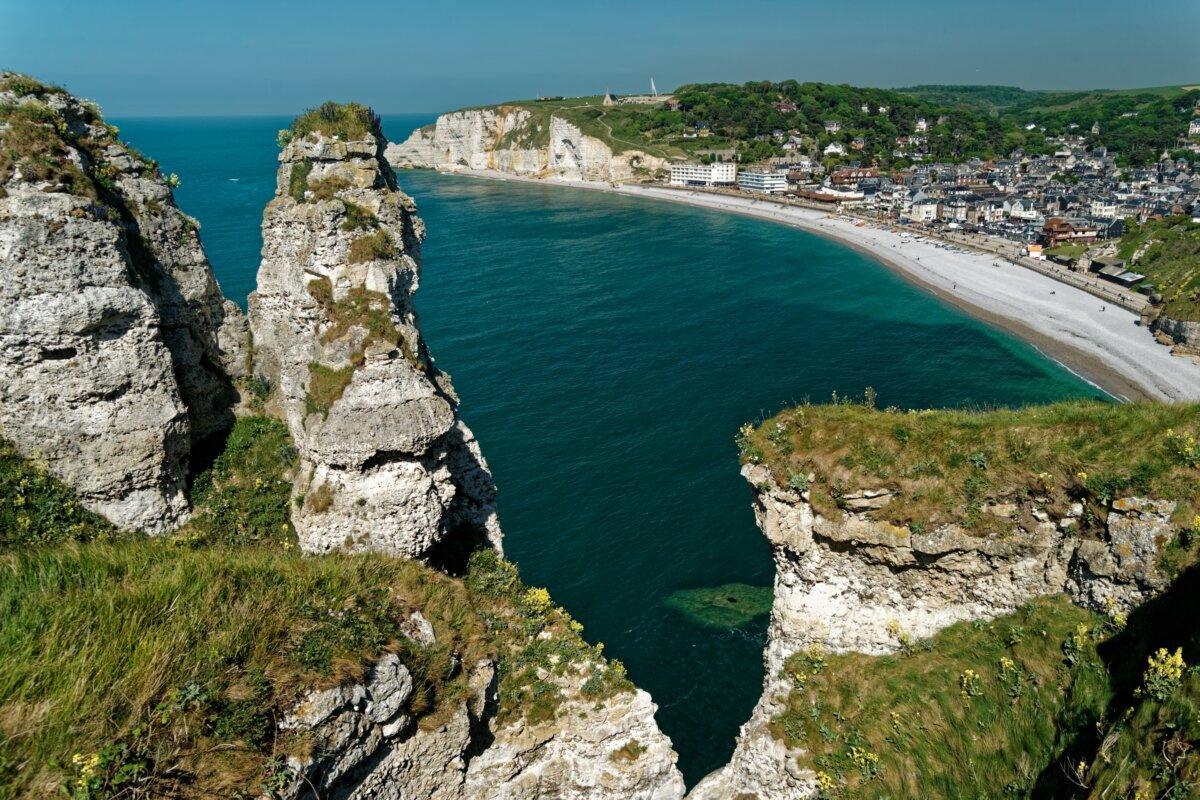
For a first day, start with the Amont cliff. From the village, the climb requires a little effort, but the reward comes quickly: the Notre-Dame-de-la-Garde chapel, the Nungesser and Coli monument, then a very clear view of the beach, the Porte d’Aval, and the Needle. With children, plan closed shoes, a water bottle, and frequent breaks. The paths can be windy, sometimes slippery after rain, and the cliff edges do not forgive inattention.
Then go down towards the Étretat beach. It is not a typical sandy beach: the pebbles are part of the landscape and play a real role in protecting against the swell. The tourist office reminds that they slow down the waves and limit the risk of flooding; you look at them, settle there with water shoes, but do not collect them. It is also a good time to observe the arches from sea level, especially when the tide reveals the foreshore. Source: Le Havre Étretat Tourist Office.
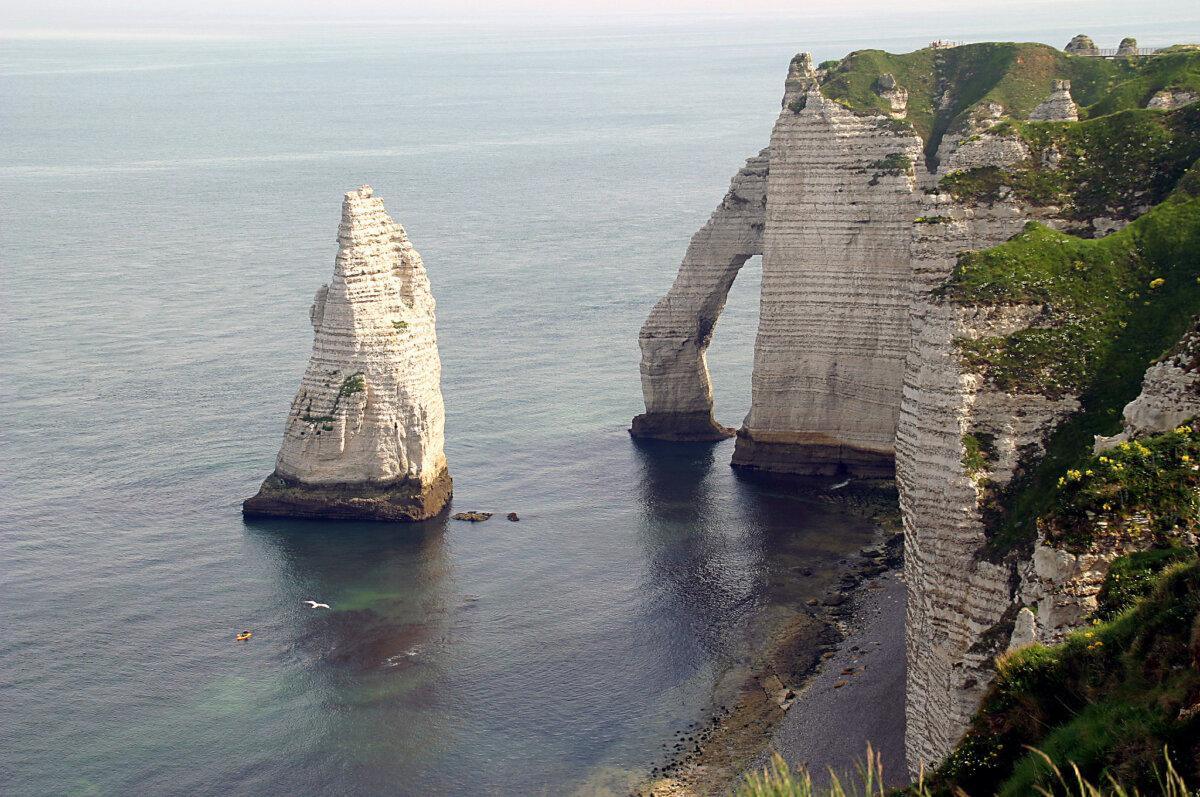
In the afternoon, head up to the Aval cliff if the weather is clear. It is the most spectacular angle on the Porte d’Aval, the Needle, and the Manneporte. For a family walk, there is no need to go too far: a calm round trip to the first viewpoints is already enough to fill the camera. More experienced walkers can continue on the coastal path, but you need to save energy for the return.

| Time | Activity idea | Family tip |
|---|---|---|
| Morning | Amont cliff and chapel | Leave early to walk in peace. |
| Noon | Break on the pebble beach | Bring a thick blanket and water shoes. |
| Afternoon | Aval cliff and viewpoints | Stay away from the edge, even for a photo. |
| Evening | Return to the campsite | Local shopping, swimming pool, simple dinner. |
Cliffs, GR21 and easy walks
The GR21 is the main thread of tourism near Étretat. The Le Havre Étretat tourist office indicates that the trail crosses Seine-Maritime over approximately 190 km, while the departmental hiking federation presents a route of about 195 km depending on the chosen segmentation. In both cases, the interest for a family is not to cover it all: it is enough to choose a short, well-marked section with a clear objective. Source: Le Havre Étretat Tourist Office and FFRandonnée Seine-Maritime.
Around Les Loges, Yport, Vattetot-sur-Mer, or Fécamp, several sections allow alternating between chalk cliffs, meadows, valleuses, and views of the English Channel. The good reflex is to prepare a loop rather than a monotonous round trip. For families with young children, keep a real walking duration between 1 hour and 2 hours 30 minutes; beyond that, wind, elevation changes, and photo breaks greatly extend the outing.
Tourism near Étretat also requires a bit of humility. The cliffs are magnificent because they are alive: the chalk erodes, the soils can crack, and some accesses change depending on conditions. One never passes under a cliff at rising tide, does not cross barriers, and does not approach the edge to “see better.” This caution does not detract from the beauty of the place; it simply allows enjoying it for a long time.
“A good stay on the Alabaster Coast is not one where you run from one viewpoint to another. It is one where you look at the weather, the tides, and the children’s rhythm before choosing the walk of the day.”
La Plume Cartographe, tourism editorial, 2025
Beach, tides, and water activities
The beach of Étretat is as much a place for contemplation as a place for swimming. In summer, swimming may be supervised, but conditions vary according to the weather, schedules, and local instructions. Before settling the children, check the signs, the color of the flag, and the tide times with the tourist office. The pebbles roll underfoot: for playing at the water’s edge, water shoes really improve comfort.
When the sea is calm, several providers offer guided outings by kayak, paddleboard, or boat around the arches. The tourist office notably mentions discovering the cliffs from the sea, guided walks, and water activities at the foot of the arches. For a family, the simplest option remains the accompanied outing: it avoids managing currents, tide schedules, and access zones alone. Source: Le Havre Étretat Tourist Office.
On rainy or windy days, there is no need to insist on being on the water. The charm of tourism near Étretat is precisely the diversity of plan Bs: Norman tasting, visit to Fécamp, a small road to Yport, local market, or a return to calm in a accessible mobile home when traveling with a person needing more accessible accommodation. This flexibility avoids “ruined” days and makes holidays much more relaxing.
- To bring: windbreaker, cap, water, closed shoes.
- To check: weather, tides, swimming flags.
- To avoid: collected pebbles, approached cliffs, forbidden trails.
- To favor: calm mornings, late afternoons, off-season.
Yport, Fécamp, and nearby villages
Yport deserves half a day. This small coastal village offers a gentler atmosphere than Étretat, with its enclosed beach, fishermen’s houses, and simple restaurants. For a family, it is a nice break: less crowd, a typical setting, and the possibility to walk without aiming for performance. Children quickly understand the logic of the valleuses, these natural openings that allow reaching the sea between two plateaus.
Fécamp, about ten kilometers from the l’Aiguille Creuse campsite according to the official tourist brochure, adds a heritage dimension to the stay. The port, the cliffs of Cap Fagnet, the museums, and the Palais Bénédictine offer a variety of pleasures when you have already walked a lot in Étretat. It is also a good town for shopping, having lunch indoors, or planning a more cultural outing with teenagers. Source: Le Havre Étretat Tourist Office.
From the Loges area, the pedal-rail is another idea appreciated by families. The tourist office mentions it as a way to discover new views around Étretat. The activity is enjoyable because it turns the journey into a game: you pedal together, move slowly, cross the countryside, then return with the feeling of having done something a bit different from the classic hike. Source: Le Havre Étretat Tourist Office.

Where to stay near Étretat
Staying directly in Étretat can be appealing for one night, but the option quickly becomes more crowded in high season: tight parking, busy streets, fewer accommodations. Sleeping slightly outside, in a family campsite between sea and countryside, allows you to keep access to the cliffs while regaining space in the evening. The tourist office’s brochure describes the l’Aiguille Creuse campsite as a quiet campsite, with a heated indoor pool, playground, bike welcome, and electric bike rental. Source: Le Havre Étretat Tourist Office.
This type of accommodation meets the practical needs of holidays well: cooking a simple meal, drying clothes after the beach, letting children play, leaving early without crossing a congested town center. Families traveling with their tent, van, or caravan can also choose campsite pitches to keep the outdoor spirit while staying close to major sites.
| Traveler profile | Recommended option | Why |
|---|---|---|
| Family with children | Mobile home | Comfort, kitchen, flexible pace. |
| Hikers | Tent pitch | Budget control, early departures. |
| Motorhome travelers | Suitable area or pitch | Easier parking than in the center. |
| Active seniors | Equipped rental | Rest, car access, short visits. |
“Étretat concentrates visitors on a few very famous spots. By staying nearby, you can shift your schedule, return several times, and turn a dense visit into a true coastal stay.”
Field observation, tourism writing, 2025
Practical tips to avoid crowds
The first tip is summed up in one sentence: do not come to Étretat in the middle of the day in the height of summer without a parking plan. The Le Havre Étretat office recommends favoring the Grand Val, Fréfossé, and train station car parks, with off-site parking in season at the entrance on the Criquetot-l’Esneval road. For a family, this means it is better to arrive early, accept to walk a bit, then organize the day on foot. Source: Le Havre Étretat Tourist Office.
The second tip concerns the season. April, May, June, September, and the autumn holidays often offer a better balance between light, temperature, and attendance. The tourist office also promotes “the other season” to discover the chapel, the Étretat Gardens, the Aiguille, the Portes d’Aval and d’Amont in a more peaceful atmosphere. For families who dislike crowds, this is probably the best choice. Source: Le Havre Étretat Tourist Office.
The third tip concerns the Étretat Gardens. Their official 2025 calendar provides staggered openings from March to November, with longer hours in summer. Since the gardens are paid and very popular, it is better to check the hours before departure and book when relevant. The visit complements the Amont cliff well: it offers a more artistic reading of the landscape, with topiaries, sculptures, and views of the sea. Source: Étretat Gardens.

Ideal itinerary for 2 to 5 days
In two days, focus on the essentials: Amont and Aval cliffs, beach, village, then Yport or a short hike. In three days, add Fécamp and Cap Fagnet. In four or five days, the stay becomes truly comfortable: one day can be reserved for water activities, another for rail biking or countryside villages, without sacrificing rest time at the campsite.
This pace is particularly suited to families, as it avoids the tunnel effect of overly packed vacations. A child will better remember the picnic facing the sea, the sound of pebbles, and the return to the pool than a succession of sites visited too quickly. Adults benefit as well: less driving, less logistics, more simple moments. This is why tourism near Étretat works better as a stay rather than a quick stop.
- Day 1: Étretat, beach, cliffs, and sunset.
- Day 2: Yport, short walk, and Norman dinner.
- Day 3: Fécamp, port, heritage, and Cap Fagnet.
- Day 4: kayaking, paddleboarding, or guided sea outing.
- Day 5: Étretat Gardens, rail biking, or local market.

Tourism FAQ near Étretat
How many days should be planned near Étretat?
Two days are enough to see the main cliffs and the beach. For more comfortable family holidays, plan 4 to 5 days to add Yport, Fécamp, a hike, and a water activity without rushing.
What is the best time to visit Étretat?
Spring, June, September, and autumn are the most pleasant periods. The light remains beautiful, trails are passable, and attendance is often gentler than in the heart of summer.
Can Étretat be visited with young children?
Yes, provided distances are adapted. Favor nearby viewpoints, frequent breaks, closed shoes, and constant vigilance at the cliff tops.
Should tides be checked?
Yes. Tides influence access to certain low areas and safety at the foot of the cliffs. Always check the times before a walk on the foreshore.
Where to park in Étretat?
The Grand Val, Fréfossé, and train station car parks are generally recommended by the tourist office. In season, remote parking may complement the offer.
Can Étretat pebbles be collected?
No, they must be left in place. The pebbles help protect the coastline naturally against swell and storms.
What to do around Étretat when it rains?
Fécamp, restaurants, markets, museums, the Bénédictine Palace, or a break at the campsite are good options. The stay benefits from remaining flexible.
Is the GR21 suitable for families?
Yes, for short and well-chosen sections. Avoid long stages with young children and always keep a margin for wind, elevation, and breaks.
Why stay near Étretat rather than in the town center?
Staying nearby offers more calm, easy access to neighboring villages, and less parking pressure. It is often more comfortable for a family stay.
Which sources should be checked before departure?
Consult the Le Havre Étretat tourist office, Normandy Tourism, the official hours of the Étretat Gardens, and local information on parking or tides.
Verified sources: Le Havre Étretat tourist office, Normandy Tourism, Seine-Maritime Tourism, FFRandonnée Seine-Maritime, official ticketing for the Étretat Gardens, and Sunêlia l’Aiguille Creuse tourist sheet. Hours, prices, swimming conditions, and trail access may change depending on the season, weather, or local decisions.
{“@context”:”https://schema.org”,”@type”:”WebPage”,”about”:{“@type”:”Thing”,”name”:”Tourism near Étretat”},”keywords”:[“tourism near Étretat”,”Étretat cliffs”,”Étretat camping”,”Alabaster Coast”,”family holidays Normandy”]}
{“@context”:”https://schema.org”,”@type”:”Article”,”headline”:”Tourism near Étretat: what to see and do with family around the cliffs?”,”description”:”Family guide to organizing a stay near Étretat: cliffs, beach, hikes, Yport, Fécamp, camping and practical tips 2025.”,”keywords”:[“tourism near Étretat”,”Étretat cliffs”,”family holidays Normandy”],”mainEntity”:{“@type”:”FAQPage”,”mainEntity”:[{“@type”:”Question”,”name”:”How many days should be planned near Étretat?”,”acceptedAnswer”:{“@type”:”Answer”,”text”:”Two days are enough to see the main cliffs and the beach. For more comfortable family holidays, plan 4 to 5 days to include Yport, Fécamp, a hike, and a water activity.”}},{“@type”:”Question”,”name”:”What is the best time to visit Étretat?”,”acceptedAnswer”:{“@type”:”Answer”,”text”:”Spring, June, September, and autumn are the most pleasant periods. The light remains beautiful, the trails are passable, and the attendance is often gentler than in the heart of summer.”}},{“@type”:”Question”,”name”:”Can Étretat be visited with young children?”,”acceptedAnswer”:{“@type”:”Answer”,”text”:”Yes, provided distances are adapted, staying on marked trails, wearing closed shoes, and constantly supervising children near the cliffs.”}},{“@type”:”Question”,”name”:”Should tides be checked?”,”acceptedAnswer”:{“@type”:”Answer”,”text”:”Yes. Tides influence access to certain low areas and safety at the foot of the cliffs. Always check the schedules before a walk on the foreshore.”}},{“@type”:”Question”,”name”:”Where to park in Étretat?”,”acceptedAnswer”:{“@type”:”Answer”,”text”:”The Grand Val, Fréfossé, and train station car parks are generally recommended. In season, remote parking can complement the offer.”}},{“@type”:”Question”,”name”:”Can Étretat pebbles be collected?”,”acceptedAnswer”:{“@type”:”Answer”,”text”:”No. The pebbles contribute to the natural protection of the coastline against swell and storms; they must be left in place.”}},{“@type”:”Question”,”name”:”What to do around Étretat when it rains?”,”acceptedAnswer”:{“@type”:”Answer”,”text”:”Fécamp, restaurants, markets, museums, the Bénédictine Palace, or a break at the campsite are good options to keep the stay enjoyable.”}},{“@type”:”Question”,”name”:”Is the GR21 suitable for families?”,”acceptedAnswer”:{“@type”:”Answer”,”text”:”Yes, for short and well-chosen sections. Avoid long stages with young children and keep a margin for wind, elevation, and breaks.”}}]}}