
Verdict for a house in Caen
To secure a project, many homeowners start by comparing the quality of the diagnosis, the seriousness of the sizing, and the mastery of aid procedures offered by a best plumber-heating engineer in Caen rather than by the shortest quote. This is often the right approach: a well-designed air-to-water heat pump integrates very well into a renovation around Caen, especially when it replaces old heating and the home has already taken a first step in insulation.
The heat pump is recommended for year-round occupied houses, homes heated by old oil or gas systems, owners who want to improve their energy performance diagnosis (DPE), and condominiums seeking a more efficient system. It is less relevant when the building is very poorly insulated, when radiators require water that is too hot, or when the project neglects acoustics, defrosting, and maintenance.
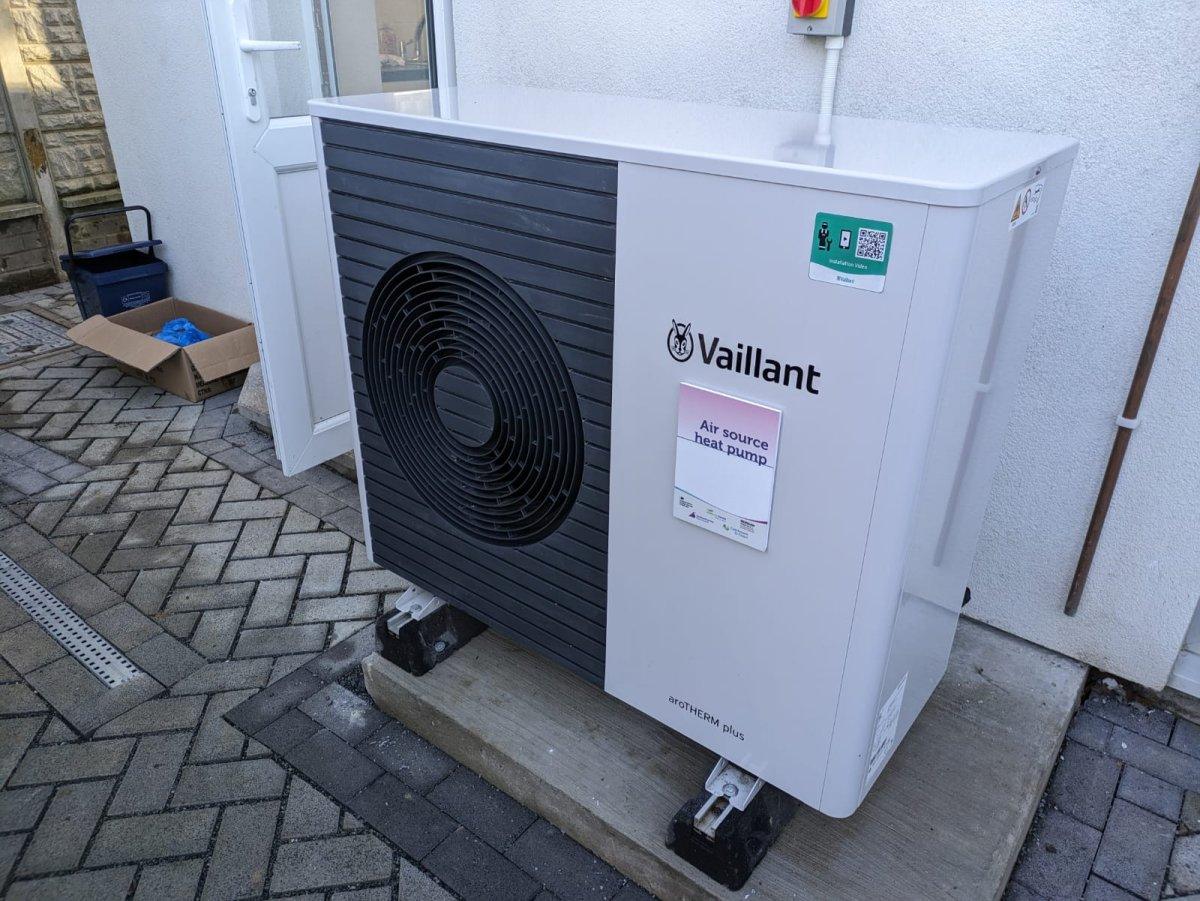
The right reflex is to think of the heat pump as a system and not just as a simple “box-for-box” replacement. An air-to-water heat pump captures calories present in the outside air to transfer them to a water heating circuit. A geothermal heat pump, on the other hand, relies on energy from the ground. In both cases, the actual efficiency depends on the quality of the installation, adjustments, and the coherence between the equipment and the home.
Why Normandy changes the project
Humidity, wind, and defrosting
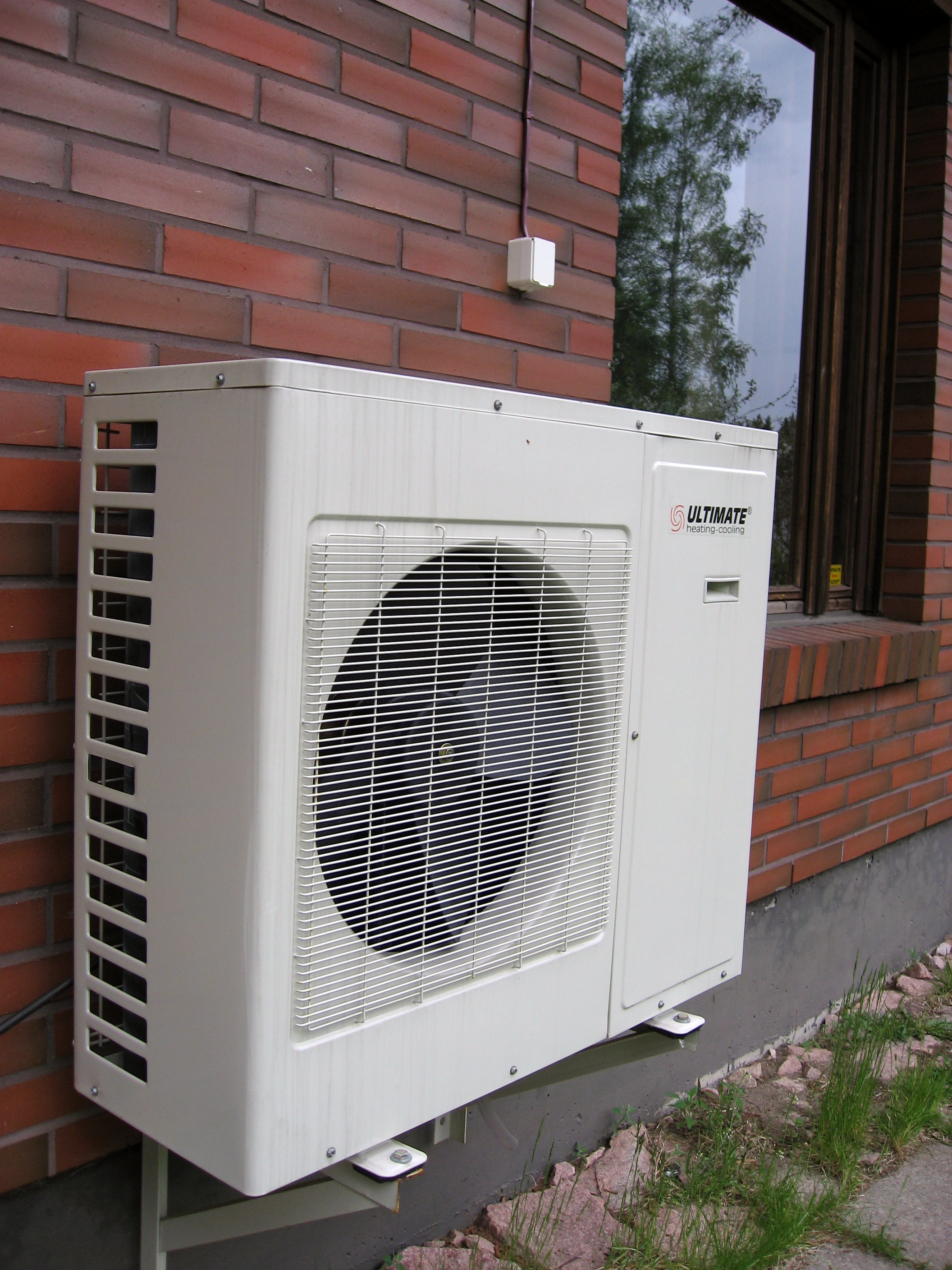
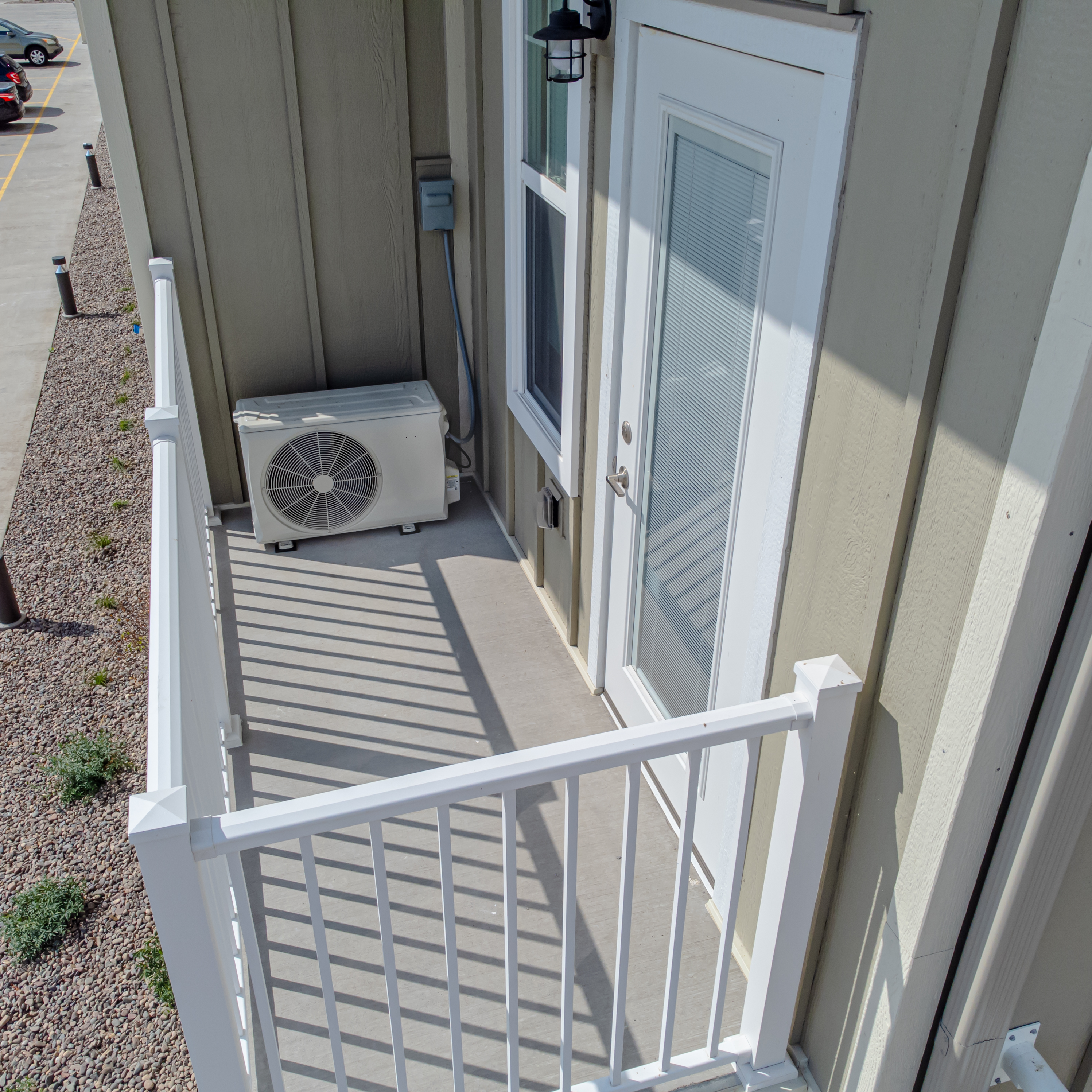
The Normandy climate is not extreme, but it requires a precise reading of the site. Humid air, windy episodes, and cool winter temperatures affect the defrosting cycles of the outdoor unit. Result: a poorly placed heat pump loses regularity, makes more perceived noise, and wears out faster. It is necessary to provide sufficient clearances, a stable base, proper condensate drainage, and a placement that limits echo against walls or in a narrow courtyard.
Existing radiators or underfloor heating
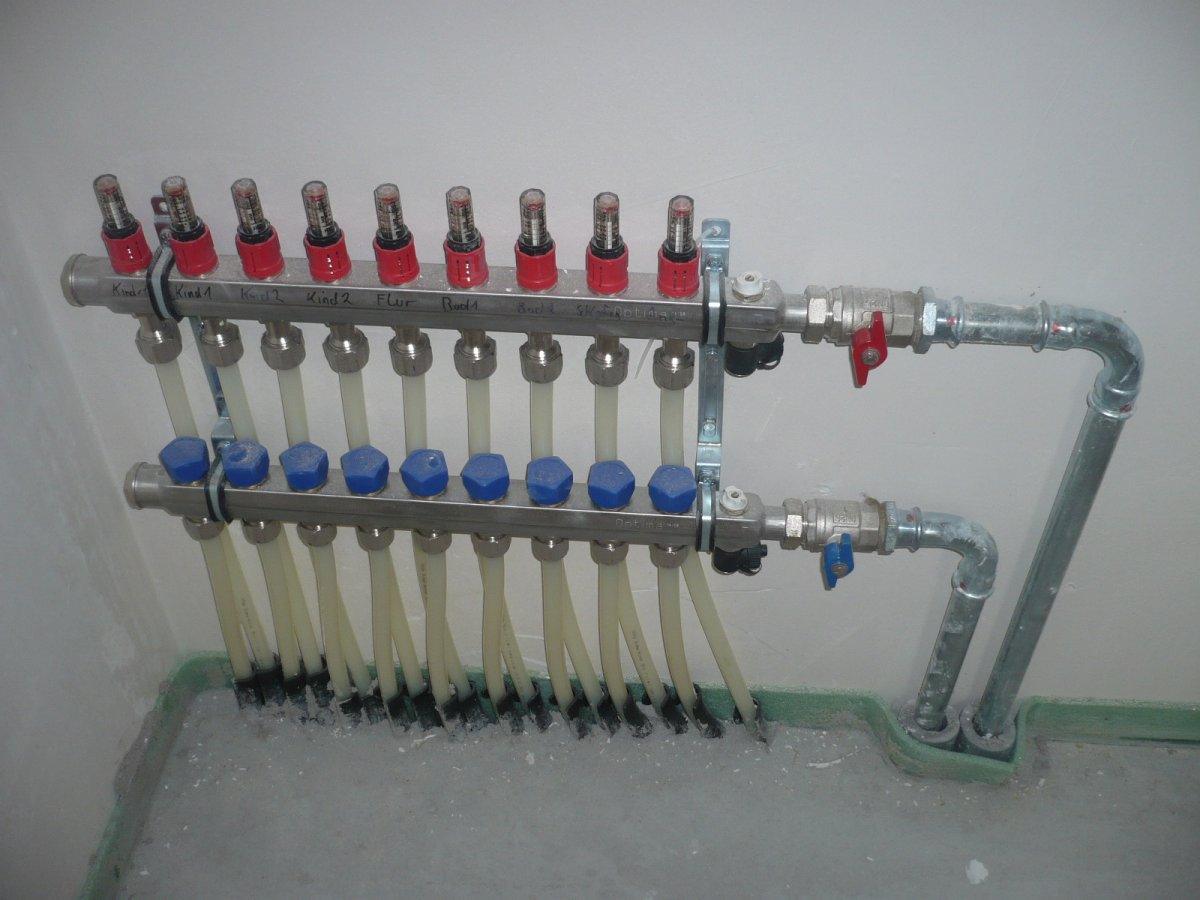
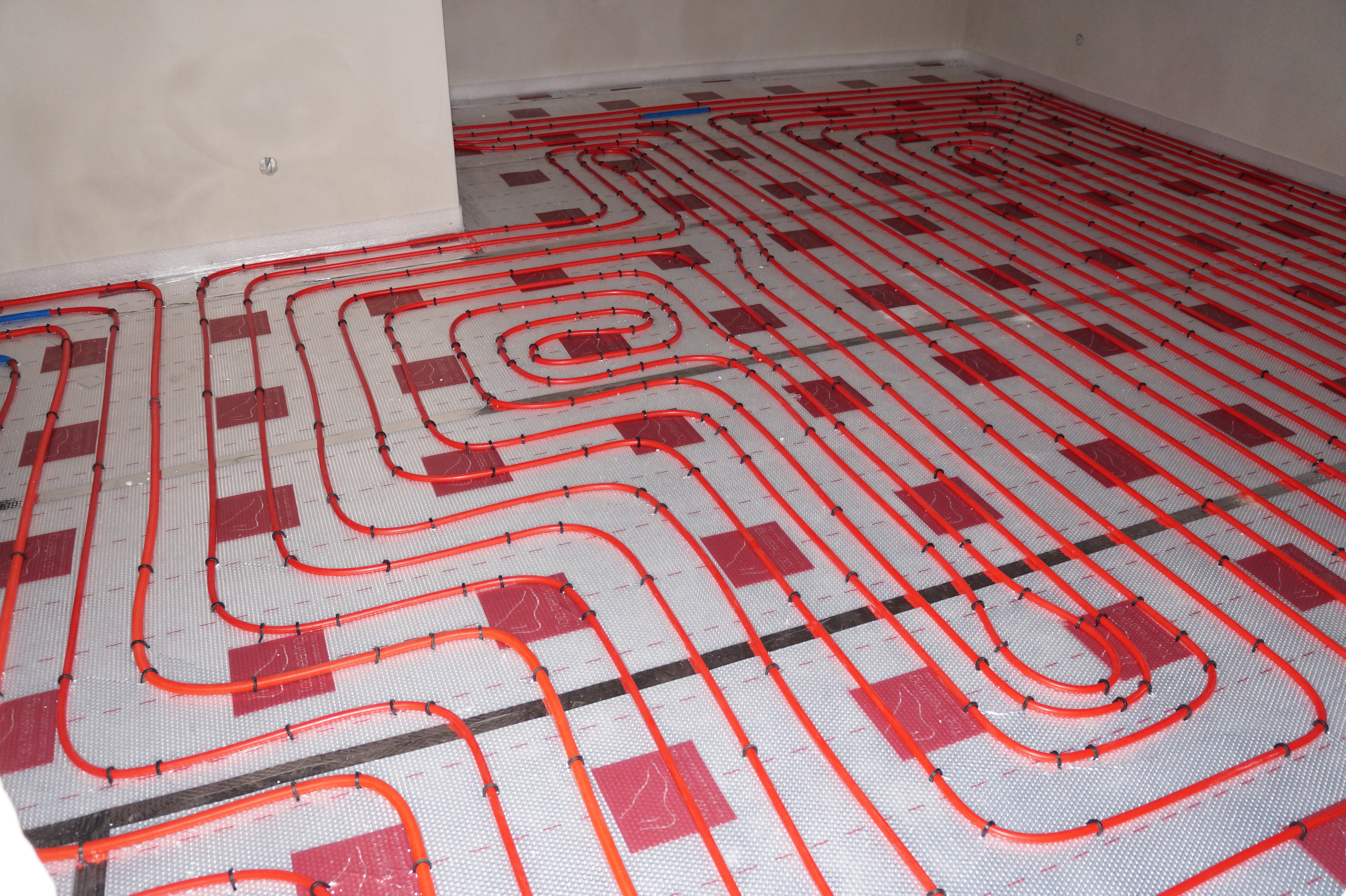
Around Caen, many renovated houses keep a network of water radiators. This is compatible with a heat pump, provided the actual supply temperature needed in winter is considered. The lower it is, the more favorable the SCOP — the seasonal coefficient of performance — is. With underfloor heating, the heat pump generally works within an ideal comfort zone. With old undersized radiators, the study must be more cautious.
The DPE remains a useful benchmark to prioritize work. Its value is not to summarize a home in a letter but to help understand where losses occur, which energy weighs most in the bill, and which work will have the most effect on consumption and winter comfort.
Practical tip: when a house is still penalized by high heat losses, the heat pump is not “bad,” it just works under poor conditions. Treating the envelope, adjusting the emitters, and checking the water curve often yield better results than increasing the machine’s power.
Source: summary of usual energy renovation recommendations
Which heat pump to choose
Air-air, air-water, geothermal
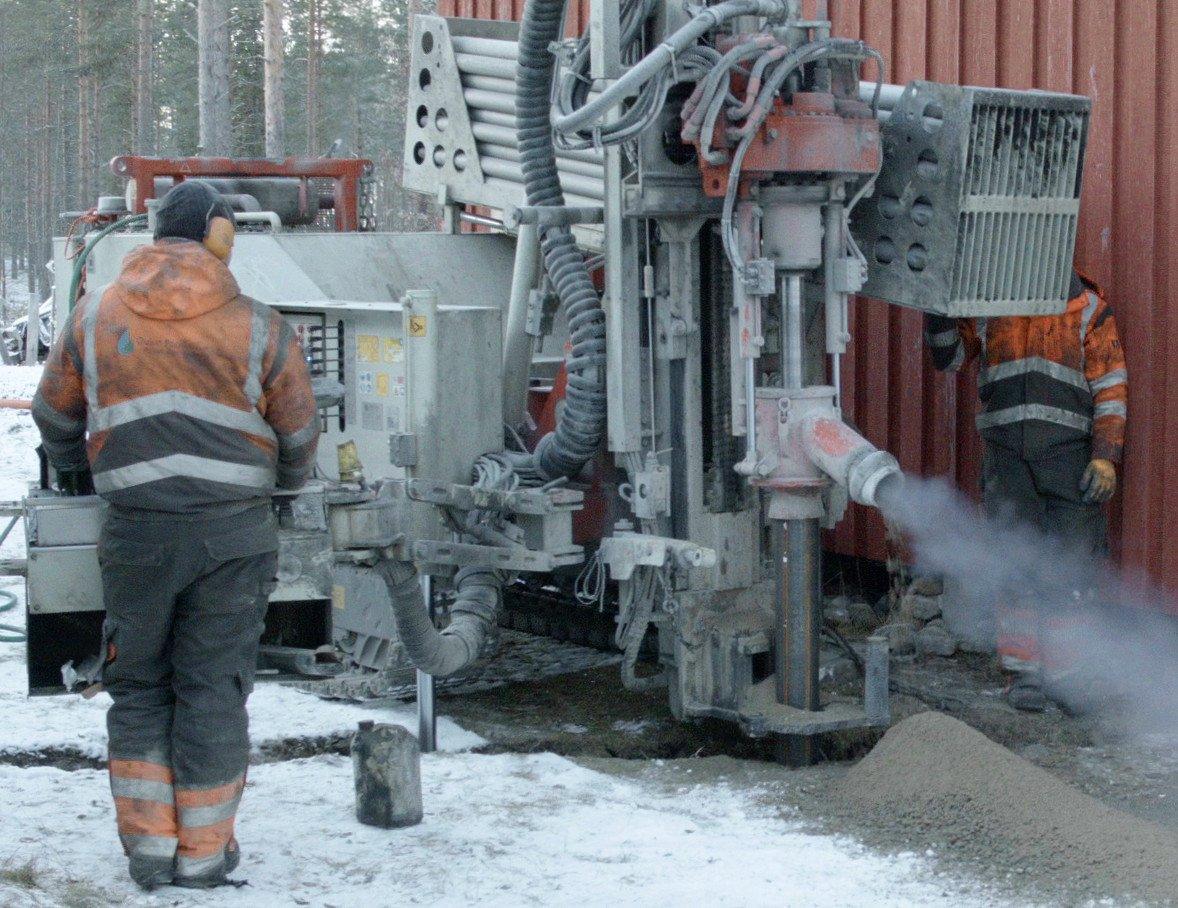
The choice between air-air heat pump, air-water heat pump, and geothermal heat pump is not just a matter of budget. The air-air heat pump heats indoor air via indoor units; it suits certain comfort projects room by room but does not replace a hydraulic network. The air-water heat pump is for homes equipped with radiators or underfloor heating. Geothermal, more demanding to install, aims for great operational stability and very good seasonal comfort.
In a renovation around Caen, the air-water heat pump often remains the balance point between feasibility, comfort, and efficiency. A monobloc version integrates the refrigeration circuit into a single unit. A split version separates the outdoor unit and the indoor module. The choice depends on the installation plan, maintenance, hydraulic constraints, and the level of technicality needed on site.
| Type of heat pump | Ideal use | Main advantage | Warning |
|---|---|---|---|
| Air-air | Quick room-by-room comfort | Responsiveness | No water heating network |
| Air-water | House with radiators or underfloor heating | Versatility in renovation | Very sensitive sizing |
| Geothermal | Very structured long-term project | Seasonal stability | Heavier capture works |
The right model is not necessarily the most powerful. What matters is the coherence between the announced COP, realistic SCOP, acoustics, type of refrigerant, existing emitters, and the project’s reference outdoor temperature.
Aids 2026 and out-of-pocket costs
The aid landscape has evolved, but three levers remain central for an owner: MaPrimeRénov’, Energy Savings Certificates (CEE), and the eco-interest-free loan (éco-PTZ). For a heating project, the real difficulty is not identifying the names of the schemes; it is understanding what can be combined, when to sign, and which documents will be required in the application.
MaPrimeRénov’ can support the installation of a heat pump as part of a step-by-step approach or a more ambitious renovation, depending on the household profile and the nature of the work. The CEE rely on standardized sheets and very precise technical criteria. As for the eco-PTZ, it remains the most useful tool to finance the remaining costs when the subsidy does not cover the entire project.
To follow up-to-date rules, it is better to rely on authoritative sites such as France Rénov’, Service-Public.fr, or ADEME. For in-depth reading, an internal file on energy renovation aids also explains out-of-pocket costs and the logical order of procedures.
| Aid | What it provides | Point of vigilance | Combination |
|---|---|---|---|
| MaPrimeRénov’ | Subsidy based on income and pathway | Conditions vary by project | Yes |
| CEE | Bonus linked to a technical sheet | Precise administrative setup | Yes |
| Eco-PTZ | Interest-free loan for remaining costs | Bank file and forms | Yes |
File tip: aids never fix a bad technical project. They improve an already coherent project. It is better to validate the thermal study, the targeted water temperature, and the chosen emitter before calculating the expected subsidy.
Source: common logic of energy renovation schemes
Methodology for a reliable project
To evaluate a heat pump in renovation, at least six criteria must be crossed: envelope quality, type of emitters, necessary water temperature, available space for the outdoor unit, perceived noise level, and aid application preparation. This reading grid applies to a 1970s house, a town house, a suburban home, or a small condominium.
The proper work sequence looks like this: first the thermal assessment, then the system choice, then verification of the existing network, and finally the administrative setup. Reversing this order often leads to buying power “for safety,” which degrades regulation and actual efficiency.
- Heat losses: walls, attic, joinery, ventilation.
- Emitters: existing radiators or underfloor heating.
- Water curve: temperature actually needed in winter.
- Acoustics: neighbors, reverberation, base, and distance.
- Hydraulics: water volume, balancing, possible backup.
- Aids: order of procedures and supporting documents.
Method limits are known. Without a serious visit, it is difficult to estimate the real SCOP, the relevance of a backup, or the effect of future insulation on sizing. This is why a credible quote mentions assumptions, not just a product reference.
How to read an RGE quote
What a serious craftsman documents
A solid quote details the power, the type of heat pump, the hydraulic diagram, backup management, noise level, commissioning, maintenance, and sizing assumptions. It also specifies whether the installation is based on a monobloc or split architecture, and what role the refrigerant plays in the operating cycle.
The RGE label is not just an administrative decoration. For a heat pump, the appropriate qualification remains a concrete signal of professional competence, especially when the project includes commissioning, adjustments, and preparation of documents necessary for aid applications. Locally, the real difference often lies in the craftsman’s ability to follow the project before, during, and after installation.
Maintenance and control
A heat pump is a living technical system. It must be maintained, checked, and adjusted over time. The frequency depends on power, type of installation, and regulatory obligations related to the thermodynamic system. In practice, serious maintenance allows monitoring of heat exchange, operating parameters, the refrigeration circuit, the condition of the outdoor unit, and the coherence of temperature settings.
In other words, choosing an RGE craftsman around Caen is not just about checking a logo. You must ask who commissions, who maintains, who manages the aid file, and who returns in case of adjustment drift. This follow-up changes the daily experience.
Strengths and real limits
The heat pump remains truly relevant in the energy transition of housing. It reduces direct use of fossil fuels, improves comfort in a well-controlled home, and supports a broader renovation strategy when it fits into a coherent work order.
- Stable comfort: regular heat when regulation is well thought out.
- Less fossil energy: useful switch when replacing oil or old gas.
- Good DPE lever: often improves the rating if the envelope follows.
- Combinable aids: MaPrimeRénov’, CEE, and eco-PTZ can complement each other.
- Sensitive project: poor sizing degrades the entire result.
- Acoustics: placement and neighbors must be anticipated.
- Existing network: old radiators sometimes insufficient without adjustment.
- Maintenance: settings, defrosting, and monitoring are not delegated to chance.
The honest discourse is therefore neither euphoric nor anxiety-inducing. A heat pump is neither a miracle solution nor a bad bet by nature. It is an excellent tool for a home progressing in the right order: envelope, emitters, sizing, installation, then adjustments.
What decision to make now
For an owner in Caen or Calvados, the first question is not “which brand?” but “what water temperature do I really need in the middle of winter?” If the answer is reasonable and the home is no longer a thermal sieve, the air-water heat pump often becomes the most coherent option. If the house is still rated low on the DPE, going through insulation and ventilation will provide a better overall return on investment.
The most favorable profile is clear: a home occupied long-term, an old boiler to replace, a goal of comfort and consumption control, plus the willingness to properly prepare aid files. To refine the work sequence, a useful complement is to link the heat pump choice to a broader file on the DPE and energy renovation.
A successful renovation rarely looks like a “flash” offer. It looks more like a calm, documented, measured site, carried by a local craftsman capable of reading the building, installing according to standards, and following up after commissioning.
FAQ on heat pumps in Normandy
Does a heat pump work well in Normandy?
Yes, provided the sizing, placement, and regulation are coherent with the home. The Normandy climate does not prevent the heat pump; it mainly requires good management of humidity, defrosting, and acoustics.
Are low-temperature radiators always necessary?
Not necessarily. Some existing radiators may be suitable, but the actual supply temperature needed must be checked. The lower it is, the better the seasonal efficiency.
What is the difference between COP and SCOP?
The COP describes efficiency at a given moment, under test conditions. The SCOP reflects performance over the entire heating season, thus a more useful indicator for a homeowner.
Does MaPrimeRénov’ still finance a heat pump?
Yes, depending on the type of work, income, and chosen pathway. Rules may evolve; it is therefore necessary to check the file on the official France Rénov’ pages before signing.
Can CEE and eco-PTZ be combined?
Yes. In many cases, the eco-PTZ can finance the remaining costs after aids, making it a very useful tool to smooth the project cost.
Is RGE mandatory?
For many aids, going through an RGE company is a determining condition. For a heat pump, the appropriate qualification remains an important signal of professional competence.
Is heat pump maintenance necessary?
Yes. Periodic maintenance and adjustment monitoring remain essential for performance, safety, and longevity. A well-monitored heat pump maintains better operational stability over time.
Is geothermal worth it in renovation?
Yes, for some well-prepared projects. It requires more capture work but often provides very good operational stability and high seasonal comfort.