Why do some waterfalls fascinate so much?
A spectacular waterfall acts like a condensed landscape: the water plunges, the relief guides it, the rock stages it, and the light finishes the job. Beauty often comes from the meeting of a clear drop, a generous watershed, and an environment that amplifies the noise, spray, and sense of scale.
In other words, a fall doesn’t need to be the tallest to be the most memorable. The most famous spectacular waterfalls often combine several effects: a continuous curtain of water, mist floating in the air, an open panorama, or conversely a rocky gorge that concentrates all the site’s power. That’s where the magic happens.
“A waterfall is not only seen with the eyes: it is felt in the noise, humidity, and scale of the landscape.”
It is also worth noting that this type of content works very well when traveling because it answers two desires at once: to dream and to prepare. The reader wants to see a grand spectacle, but also wants to know when to go, how to access the viewpoint, and how much time to plan. That’s why a useful ranking must be concrete, not just lyrical.
How did we rank the most beautiful waterfalls in the world?
The ranking below is subjective, but it’s not pulled out of a hat. We combined visual power, geological originality, panorama quality, accessibility, and the richness of the on-site experience. In short: a waterfall moves up the list if it truly impresses, if it’s easy to visit, and if it leaves a strong memory, not just a decent photo.
| Criterion | What we look at | Why it matters |
|---|---|---|
| Visual power | Height, width, flow rate, mist | The first impact when facing the waterfall |
| Natural setting | Forest, canyon, glacier, savannah, rock | The environment changes everything in perception |
| Access | Trail, boat, viewpoint, plane, permit | A fabulous view loses its appeal if it is inaccessible |
| Visiting experience | Time on site, crowd, safety, atmosphere | A waterfall is experienced as much as it is photographed |
| Heritage interest | UNESCO, national park, geology | The context enriches the visit and gives it meaning |
“The best waterfall is not necessarily the tallest; it is often the one that makes you feel like you are entering the scenery.”
One must also keep one thing in mind: the flow rate varies with the rainy season, snowmelt, or current weather. A waterfall can therefore seem more or less spectacular depending on the period, which explains the differences between catalog photos and the reality on site. No unnecessary surprise: this is normal.
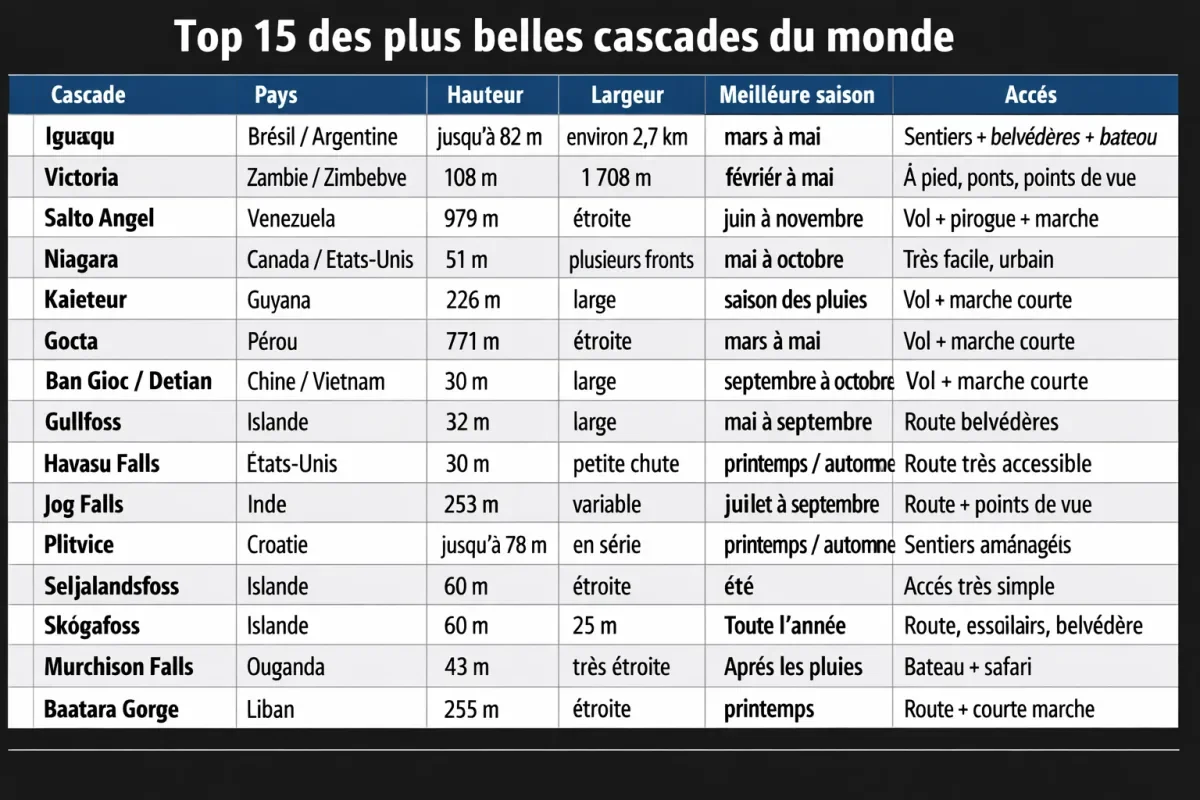
Top 15 Most Beautiful Waterfalls in the World
- Iguaçu Falls — the visual monster between Brazil and Argentina.
- Victoria Falls — a monumental water front in Southern Africa.
- Angel Falls — the tallest waterfall in the world, in Venezuela.
- Niagara Falls — the global icon, ultra accessible and always impressive.
- Kaieteur Falls — immense, wild, almost timeless.
- Gocta Falls — a Peruvian gem still less crowded.
- Ban Gioc / Detian — the most elegant border waterfall in Asia.
- Gullfoss — Iceland in power and relief mode.
- Havasu Falls — turquoise, highly desired, and strictly regulated.
- Jog Falls — spectacular in monsoon, raw and dramatic.
- Plitvice — a festival of series waterfalls and emerald lakes.
- Seljalandsfoss — the waterfall you can walk around.
- Skógafoss — a massive curtain of water, photogenic as can be.
- Murchison Falls — the power of the Nile concentrated in a narrow passage.
- Baatara Gorge Waterfall — Lebanon’s surprise, dizzying and rare.
| Waterfall | Country | Height | Width | Best season | Access |
|---|---|---|---|---|---|
| Iguaçu | Brazil / Argentina | up to 82 m | about 2.7 km | March to May | trails + viewpoints + boat |
| Victoria | Zambia / Zimbabwe | 108 m | 1,708 m | February to May | on foot, bridges, viewpoints |
| Salto Ángel | Venezuela | 979 m | narrow | June to November | flight + canoe + hike |
| Niagara | Canada / United States | 51 m | several fronts | May to October | very easy, urban |
| Kaieteur | Guyana | 226 m | wide | rainy season | flight + short hike |
| Gocta | Peru | 771 m | narrow | March to May | hiking or horseback |
| Ban Gioc / Detian | China / Vietnam | 30 m | wide | September to October | road + viewpoints |
| Gullfoss | Iceland | 32 m | wide | May to September | very accessible road |
| Havasu Falls | United States | 30 m | small fall | spring / autumn | permit + hike |
| Jog Falls | India | 253 m | variable | July to September | road + viewpoints |
| Plitvice | Croatia | up to 78 m | in series | spring / autumn | developed trails |
| Seljalandsfoss | Iceland | 60 m | narrow | summer | very easy access |
| Skógafoss | Iceland | 60 m | 25 m | all year | road, stairs, viewpoint |
| Murchison Falls | Uganda | 43 m | very narrow | after the rains | boat + safari |
| Baatara Gorge | Lebanon | 255 m | narrow | spring | road + short walk |
1. Iguaçu Falls, Brazil and Argentina
Iguaçu ticks almost all the boxes of a “wow” waterfall: a gigantic front, dozens of secondary falls, and a power that increases even more when the flow rises. The best viewpoint is often on the walkways of the park on the Argentine side, but the Brazilian side offers the clearest panoramic framing.
Listed as a UNESCO World Heritage Site, the falls can be visited very well in half a day, but a full day allows you to take your time, enjoy the walkways, and feel the mist up close. In the wetter season, the atmosphere becomes truly theatrical: it’s the kind of setting that leaves a lasting impression.
2. Victoria Falls, Zambia and Zimbabwe
Victoria Falls gives the impression that an entire continent starts to breathe in water vapor. Their spectacular width, combined with a huge mist visible from afar, creates a very recognizable liquid wall. The most impressive viewpoint depends on the water level, but the walkways on the Zimbabwe side often offer a very complete view.
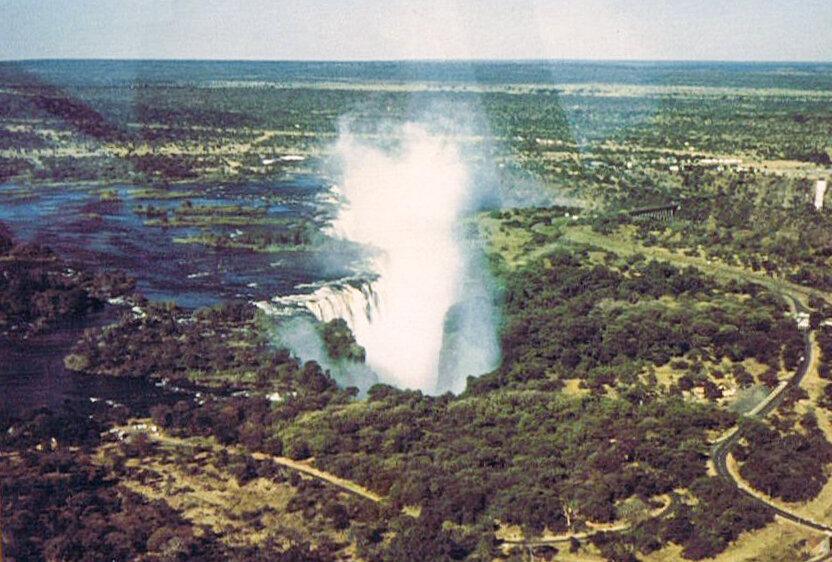
For photography, the morning hour is often the most pleasant, as the light catches the mist without crushing the contrast too much. The noise is massive, the trails are sometimes damp, and you have to accept ending up a little wet. Honestly, that’s also part of the site’s charm.
3. Angel Falls, Venezuela
Angel Falls plays in another category: that of absolute verticality. With nearly 979 m of total height, it is the highest waterfall in the world, even though the water often breaks into a veil before reaching the bottom. Seen from afar, it seems almost unreal, planted on the edge of a steep relief in Canaima Park.
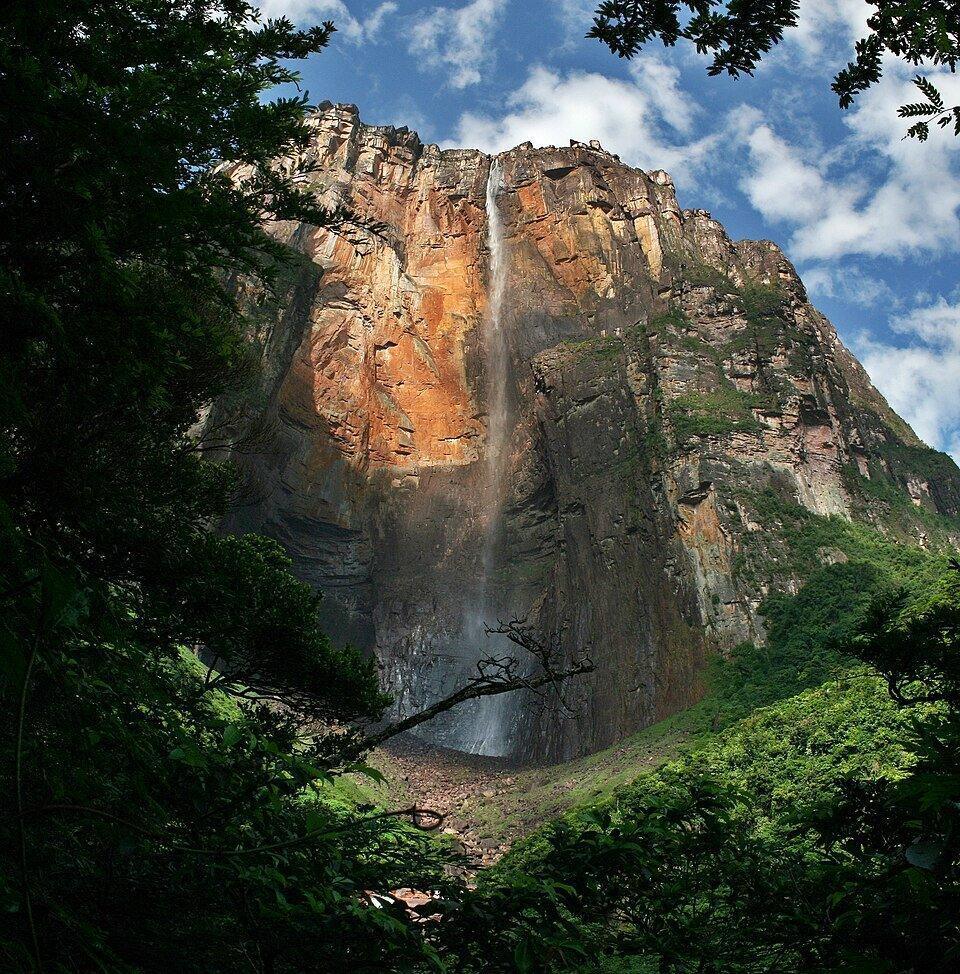
The downside is access: light plane, canoe, sometimes walking, and logistics that often require an organized tour. In return, you gain a real sense of adventure. For photography, sunrise and wetter periods are often the most generous in mist and atmospheric relief.
4. Niagara Falls, Canada and United States
Niagara remains the most famous waterfall in the world, and it’s no coincidence. It’s not the tallest, but the volume of water, the proximity to the city, and the ease of access create an almost immediate spectacle effect. The viewpoints vary between the frontal experience, the walkways, and boat approaches.
If you fear crowds, aim early in the morning or late in the day, when visitor buses are less frequent. Niagara’s appeal also lies in its very readable nature: a spectacular waterfall without heavy logistics, perfect for a first major trip focused on waterfalls around the world.
5. Kaieteur Falls, Guyana
Kaieteur is the perfect example of a waterfall that impresses without trying to please everyone. About 226 m high, isolated in the heart of the Guyanese forest, it strikes by its raw power and untouched environment. No urban setting, no overcrowded park: just a vast emptiness, water, and jungle.
The main viewpoint is often enough to justify the trip. The visit is generally done by plane with a short walk, which limits the crowd and enhances the expedition feeling. For travelers who love rare places, it’s a real gem.
6. Gocta Falls, Peru
Long remained confidential, Gocta has earned its place among the must-see waterfalls thanks to its impressive height and very photogenic Andean setting. It is ideal for those who want to step away from the big classics without sacrificing the spectacular side. The valley, the vegetated cliffs, and the mass of water create a very cinematic scene.
The hike to the main viewpoint requires some effort, but it remains accessible to a traveler used to walking. If you like waterfalls that are less “postcard” but more authentic, Gocta ticks a nice box.
7. Ban Gioc / Detian, China and Vietnam
Ban Gioc, called Detian on the Chinese side, is a particularly elegant border waterfall. It doesn’t have the gigantism of Iguaçu nor the fame of Niagara, but its visual composition is very balanced: several parallel falls, a wide river, and a karst backdrop that gives depth to the image.
The best period is often at the end of the rainy season, when the flow remains strong without completely turning the scene into an opaque mass. It’s a nice option for a more discreet itinerary in Southeast Asia.
8. Gullfoss, Iceland
Gullfoss proves that a waterfall doesn’t need to be gigantic to be unforgettable. Its two-tiered shape and the milky color typical of glacial waters create a very strong visual tension. The site is also located on an easy itinerary, which explains its popularity in short stays in Iceland.
The main viewpoint already offers a good reading of the relief, but the different angles allow you to feel the power of the waterfall. In clear weather, the low light and rainbows often put on a show.
9. Havasu Falls, United States
Havasu Falls is the quintessential “postcard” waterfall: turquoise water, red rock, an almost unreal contrast. Its appeal comes as much from the colorful pool as from the waterfall itself. But beware, this is not a spontaneous outing: access is regulated, with permits and serious organization.
The best time for photos is often in soft light, in the morning or late afternoon, when the blue of the water and the ochre of the cliffs respond to each other without being burned by the sun. It is one of the most desired, simply because it almost looks drawn.
10. Jog Falls, India
Jog Falls literally transforms with the monsoon. When the flow rises, the waterfall becomes a huge segmented curtain that rushes down the cliff with spectacular vigor. Outside the wet season, it loses volume, which proves how much the visiting period changes everything.
To truly appreciate it, you need to look at the different viewpoints and be willing to play with the weather. It is a waterfall of contrasts: sometimes nervous and messy, sometimes finer, but always marked by the relief.
11. Plitvice, Croatia
Plitvice is not a single waterfall, but a sequence of lakes, thresholds, and falls that compose a landscape of rare softness. The interest of the site lies in this series progression, very different from a large vertical fall. The developed trails allow a very smooth reading of the scenery.
For photography enthusiasts, spring and autumn often offer the best compromise between water, light, and attendance. Since the site is very well known, it is better to arrive early to enjoy a calmer atmosphere.
12. Seljalandsfoss, Iceland
Seljalandsfoss is famous because you can walk behind the curtain of water. This simple detail changes everything: you no longer just look at the waterfall, you visually pass through it. The fall is modest in height compared to the giants in the ranking, but the visiting experience is extremely effective.
Bringing waterproof clothing is not a comfort tip, it is almost a requirement. The ground is slippery, the spray is constant, and the main interest lies in the immersive sensation.
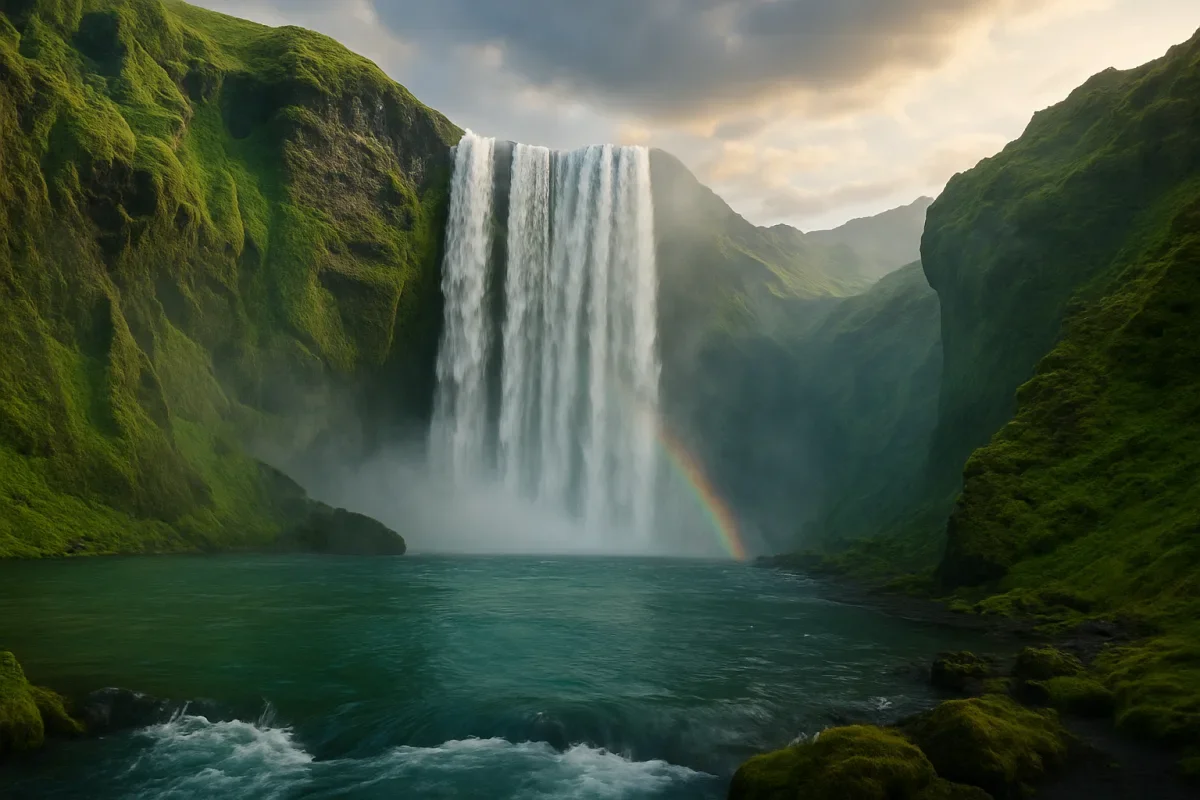
13. Skógafoss, Iceland
Skógafoss is one of the most photogenic waterfalls in Iceland thanks to its vertical, wide, and powerful curtain of water. The site fully plays on the contrast between the dark cliff, the water column, and the spray that rises at the slightest ray of sunshine. As a bonus, access is simple and the site remains easy to understand.
If you climb the stairs to the top point, you gain a plunging view very useful for understanding the shape of the fall and the layout of the valley. It’s a short stop, but very worthwhile.
14. Murchison Falls, Uganda
Here is a waterfall that tells geology better than a long speech. The Nile rushes into a narrow passage before crossing a powerful, concentrated, almost nervous fall. The site is interesting both for its hydraulic force and for the safari and cruise that surround it.
The best angle is often the one that allows you to understand the constraint of the channel before the fall. You then realize how much the landscape channels the water, and that is precisely what makes the scene so spectacular.
15. Baatara Gorge Waterfall, Lebanon
Baatara Gorge is the perfect example of an unusual waterfall that deserves its place in a world top list. The water falls into a spectacular chasm, with a rocky geometry that immediately attracts the eye. It is less “mainstream” than Niagara, but much more surprising than you might imagine.
Its interest lies in the originality of the site, the verticality, and the sensation of depth. In photos, the cavity effect can be striking, especially when the light penetrates sufficiently into the gorge.
Which waterfall to choose according to your trip?
The right choice depends less on the “ranking” than on your way of traveling. If you like easy-to-access sites, favor waterfalls close to roads and viewpoints. If you seek adventure, aim for places that require permits, boats, domestic flights, or hiking. In short, the best waterfall is the one that matches your pace.
For an easy and accessible trip
Niagara, Gullfoss, Skógafoss, Seljalandsfoss and, to a lesser extent, Victoria on the infrastructure side, are very good choices. You save time, limit logistics, and maximize the effort/spectacle ratio. Perfect for a road trip, a city break, or a family itinerary.
For Adventure Lovers
Salto Ángel, Kaieteur, Havasu, Gocta, and Murchison Falls require more planning. People often go there for the feeling of isolation, raw beauty, and the sense of a “real destination.” These are waterfalls that must be earned, which enhances their appeal.
For Photography Enthusiasts
Iguaçu, Victoria, Havasu, Seljalandsfoss, and Skógafoss offer strong compositions, sharp lines, and interesting lighting atmospheres. Look for morning light, slightly damp days, and allow some margin for spray. The icing on the cake: rainbows appear more often than one might think.
For a Family Trip
Waterfalls that are easy to access are generally the most comfortable: Niagara, Gullfoss, Skógafoss, or certain areas of Victoria. For children, the real issue is not pure beauty, but safety, barriers, walking duration, and the possibility to visit without excessive fatigue.
When to Go to See Waterfalls in the Best Conditions?
The best time depends on what you are looking for: more water, better visibility, fewer crowds, or passable trails. Generally, the rainy season increases flow and power, while the dry season sometimes improves landscape visibility and trail safety. Good timing is often an intelligent compromise.
Rainy Season versus Dry Season
In the rainy season, waterfalls often appear more massive, louder, and more shrouded in mist. In the dry season, some lose volume but gain in clarity and viewing comfort. Waterfalls highly dependent on their watershed, like Jog Falls or Victoria, change significantly from one period to another.
“A waterfall sometimes photographs better when it allows the surrounding landscape to breathe a little.”
Crowds, Weather, and Safety
To avoid crowds, arrive early, especially at famous sites. Also check microclimates: a mountain waterfall may be clear in the morning but engulfed in clouds by noon. And never underestimate wet ground, slippery steps, and spray: a good shot is not worth an unnecessary fall.
Practical Tips for Organizing Your Visit
A successful waterfall visit starts with good preparation. Major sites sometimes require a ticket, a permit, a shuttle, or a guided tour. Wilder sites demand flexibility, extra time, and a minimum level of fitness. Nothing extraordinary, but a bit of method really avoids spoiling the experience.
- Check access: some sites are freely visitable, others require a permit or time slots.
- Anticipate the weather: fog, rain, and flow can change the site’s appearance within hours.
- Bring the right equipment: non-slip shoes, waterproof cover, spare clothes if needed.
- Calculate useful time: a visit can last 45 minutes or a whole day depending on the waterfall.
- Respect closed areas: they exist for safety but also to preserve banks and vegetation.
Access and Transport
The winning trio is road, shuttle, and viewpoint for easy sites; boat or canoe for wet access; plane or trek for remote waterfalls. The more complex the access, the more memorable the experience often is. But it’s not automatic: the final viewpoint must also be worthwhile.
Budget and Duration
Sometimes count only parking or park entry, but also sometimes a permit, transfer, or guide. Very well-known waterfalls are often easy to fit into an itinerary, while isolated sites can become a trip within the trip. A good habit: allow extra time, never a “to-the-minute” visit.
Safety and Responsible Tourism
The surroundings of waterfalls are often slippery, unstable, and exposed to spray. Stay on paths, do not cross barriers, and keep your devices well protected. Regarding respect for the place, the rule is simple: observe, photograph, leave. No need to leave a trace to make a good memory.
FAQ on the Most Beautiful Waterfalls in the World
What is the most beautiful waterfall in the world?
The answer depends on your criteria, but Iguaçu often comes out on top thanks to its vastness, subtropical setting, and very clear visual reading. If you like very powerful falls, Victoria and Niagara can also stand out depending on your sensitivity.
What is the tallest waterfall in the world?
Salto Ángel, in Venezuela, is generally recognized as the tallest waterfall in the world, with a total height close to 979 meters. This record does not automatically mean “most beautiful,” but it explains why it impresses so much in photos and on site.
Which waterfalls are the most accessible?
Niagara, Gullfoss, Skógafoss, and Seljalandsfoss are among the easiest to visit. They are well suited for travelers who want a big visual impact without getting into complicated logistics. This is often the best choice for a short stay or a road trip.
Should you visit these falls during the rainy season?
Not necessarily, but it can really make a difference. In the wet season, the flow increases and some waterfalls become more spectacular. However, visibility, safety, and trail usability can deteriorate. You must therefore choose according to the site and your tolerance for weather conditions.
Which waterfalls are the most photogenic?
Havasu Falls, Seljalandsfoss, Skógafoss, Iguaçu, and Victoria offer very strong visual scenes. The two parameters that often make the difference are light and mist. If you have the choice, favor early in the day or slightly humid weather.
If you must keep only a few for a first world tour of waterfalls, remember Iguaçu for the visual shock, Victoria for the mist and width, Salto Ángel for the vertigo, Niagara for accessibility, and Havasu for the almost unreal beauty. The rest of the ranking then becomes an excellent base for building a more ambitious, wilder, or more photographic nature itinerary.