Why Canada remains the must-see destination for the northern lights
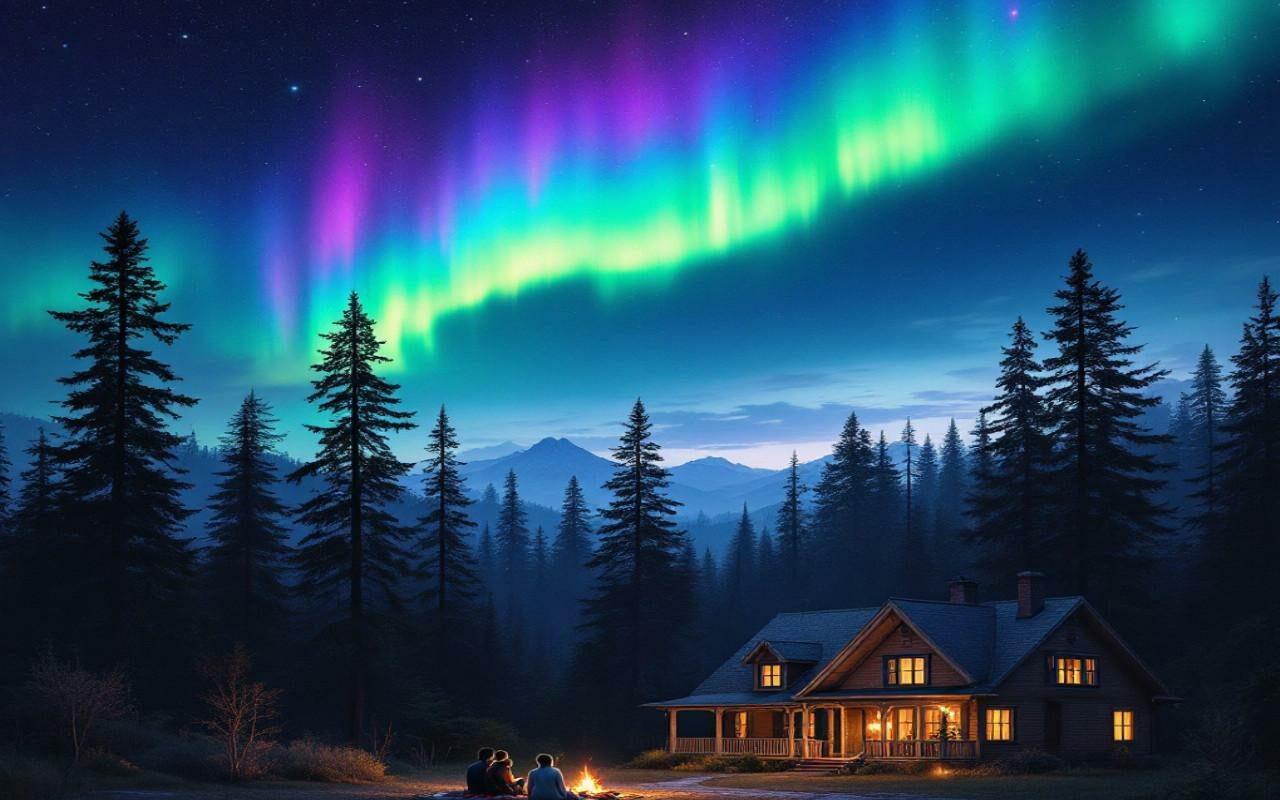
When it comes to northern lights, few places can rival the Canadian archipelago. Between Yukon, the Northwest Territories, and Nunavut, the vast untouched expanses offer an ideal setting: almost total absence of light pollution, often clear skies, and freezing temperatures which, surprisingly, enhance visibility. In the south, national parks like Jasper or Churchill (in Manitoba) offer more accessible panoramas while retaining that polar magic.
The icing on the cake is the indigenous culture and wilderness lodges that enrich the experience. It’s not just about looking up at the sky: you immerse yourself in a world where the night becomes a living spectacle. You might even hear ancestral stories from the First Nations, who see the northern lights as spirits dancing among the stars.
When to go to Canada to observe the northern lights?
Choosing the ideal period means anticipating long nights, clear skies, and sufficient solar activity. The northern lights rarely appear in the middle of summer: daylight blankets the horizon 24 hours a day. Conversely, winter, autumn, and early spring offer the winning combination. Below is a month-by-month overview to fine-tune your calendar.
Autumn (September to November)
September often plays the lead role: still mild temperatures, lengthening nights, and already significant chances of northern lights. The colorful forests of Quebec or Yukon dress in glowing hues, creating a striking contrast between foliage and phosphorescent skies. In November, temperatures can drop below -20 °C, but it is precisely this dry cold that clears the atmosphere and offers crisp nights.
Winter (December to February)
This is the prime period for those who are fearless: endless nights, nearly 24% chance of seeing northern lights when within the polar circle. Ideal for night photography enthusiasts, as low humidity and crystalline air enhance image sharpness. Expect short days (barely 6 hours of sunlight), but it’s worth it: every night can turn into an impromptu show.
Spring (March to April)
In March, there is an appealing balance between day length and frequency of northern lights. Temperatures gradually rise, reducing discomfort from the severe cold. April, on the other hand, sees evenings lengthen and chances of northern lights slowly decrease. It’s the perfect end for one last adventure before the arrival of the “white light” of spring.
Summer months: a false friend
June, July, and August are disappointing for sky watching. The midnight sun phenomenon literally erases the night, leaving only continuous twilight. One can certainly admire pastel skies, but little more. In other words, it’s better to postpone your road trip until after mid-August.
| Month | Probability | Comment |
|---|---|---|
| September | 70% | Mild temperatures, colorful foliage |
| October | 75% | Longer nights, moderate cold |
| November | 80% | Crystalline atmosphere |
| December – February | 85% | Peak nocturnal activity |
| March | 78% | Longer days, increased comfort |
| April | 60% | End of season |
| May – August | 10% | Almost no nights |
Key Regions to Admire the Show
Canada is vast: over 9 million km2. To help you target the safest spots, we have listed some must-see locations.
- Yukon: Whitehorse and Dawson City, true northern fortresses, combine frontier charm with easy access to polar skies.
- Northwest Territories: Yellowknife is nicknamed the “aurora capital of the world.” With its “aurora dome” tents, you might even wake up under a green veil.
- Nunavut: more isolated, less frequented; a guarantee of privacy, provided you face a very basic road network.
- Manitoba: Churchill, on the edge of Hudson Bay, combines marine observation (polar bears) and blazing skies.
- Alberta: Jasper National Park, classified as an “International Dark Sky Preserve,” is an excellent south-north compromise with quality hotel infrastructure.
Practical Tips to Optimize Your Expedition
Watching auroras is not just about pointing a lens at the sky; it’s an adventure that requires preparation. Here are some tips to keep in mind:
- Plan a stay of at least 5 to 7 nights: this allows time for fickle weather to give you optimal visibility.
- Monitor the KP index: this indicator (ranging from 0 to 9) measures geomagnetic activity. A KP above 3 often signals beautiful polar dances.
- Bring a tripod and a wide-angle lens: to capture the celestial vault, better to have suitable equipment rather than just a smartphone.
- Think about the warm layer: thermal underwear, thin gloves + thick gloves, a hat covering the ears… Don’t mess around with dry cold!
- Read local weather reports daily: often more reliable than mainstream apps.
“The first time I saw a northern light, I thought the sky was cracking. It looked like an electrified curtain waving. It’s a suspended moment I relive every winter, a waking dream…” – Marie, passionate about the Far North
FAQ – Your Questions About Northern Lights Observation
What is the optimal length of stay?
To make it count and not come back empty-handed, aim for at least a week. This maximizes your chances, especially if the weather is unpredictable.
Can you see northern lights in summer in Canada?
Technically yes, but the effect is reduced. Nights are so short that it never really gets dark. To hope for some sort of show, it’s better to aim for September or October.
Is it absolutely necessary to book a guide?
A local guide increases your chances of being in the right place at the right time. They know the lesser-known “finds,” monitor KP indices live, and give you access to camps away from crowds.
What budget should be planned?
Count on an average of €2000 per person for a 7-day stay (flights, lodge accommodation, activities), not including the “temptation” of handcrafted souvenirs and optional experiences (sled rides, snowmobiling).
Can children come along?
Absolutely, as long as they can handle the cold and the harshness of polar nights. Prefer lodges equipped for families, with daytime activities to alternate.
Which mobile apps to monitor the auroras?
Several apps like AuroraWatch, My Aurora Forecast, or SpaceWeatherLive offer real-time KP forecasts and personalized notifications. Pair them with a good satellite map to escape light pollution.
Finally, keep in mind that every expedition is unique: a sky full of clouds one evening can give way to the greatest show the next night. Patience, perseverance, and respect for the place (polar zen attitude) are your best allies to admire the phenomenon at its best. So, ready to charge your batteries and fly north?