TL;DR — In brief: Haguenau, sub-prefecture of the Bas-Rhin located 30 km north of Strasbourg, combines an imperial historic core (Barbarossa, Décapole) and one of the largest lowland forests in France.
A gentle destination (museums, churches, half-timbered houses) and an active city (industry, services), it appeals through its quality of life, its popular festivals (Hop Festival), and its moderate real estate prices on the Alsace scale.
Key codes: INSEE 67180 • Postal code 67500 • Area ≈ 182.6 km² • Altitude ≈ 120–174 m • Demonym: Haguenoviens.
Sommaire
Geography and Location
North of the Alsace plain, Haguenau thrives between the Rhine and the Vosges foothills, on the Strasbourg–Wissembourg axis leading towards Germany and the Palatinate. The municipality covers about 182.6 km², an exceptional perimeter due to the presence of the famous undivided forest of Haguenau which covers a significant part of the municipal territory.
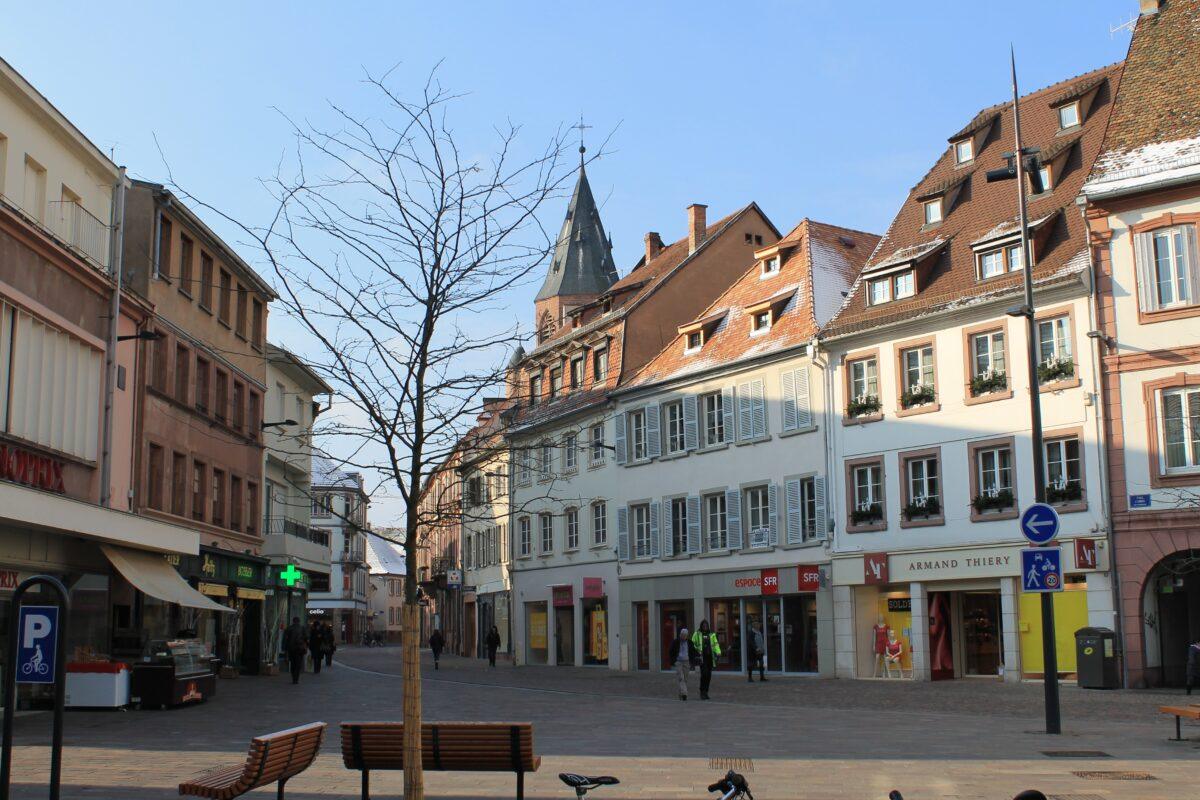
The city center, organized around the Place d’Armes and Place de la République, unfolds along a network of shopping alleys and half-timbered blocks. Residential neighborhoods stretch towards the west and south, while to the east the business areas line the main roads towards Bischwiller and the Rhine.Administrative references — Region: Grand Est • Department: Bas-Rhin (67) • District: Haguenau-Wissembourg (sub-prefecture) • Intercommunality: Haguenau Agglomeration Community.
History and Heritage
Haguenau owes its medieval fortune to the Empire: Frederick I Barbarossa established an imperial palace (Kaiserpfalz) there in the 12th century and granted the city privileges. Soon a member and sometimes leader of the Alsace Décapole, a league of ten imperial cities, the city enjoyed relative autonomy, developed its markets and defenses, and attracted craftsmen and merchants.
The modern era marks the gradual integration of Alsace into France (17th century), without losing legal and cultural particularities. The Industrial Revolution anchored weaving, metallurgy, and breweries here; the city experienced the upheavals of 1870, 1914–1918, and 1939–1945, before reconstruction and modernization during the Trente Glorieuses.
The heritage is visible in the open air: Saint George’s Church (mainly Gothic) and Saint Nicholas (remodeled Romanesque), Chancellery House (Renaissance), museums, fountains, and ancient gates. The half-timbered facades converse with more contemporary architecture in the central squares.
Not to be missed — The Hop Festival (end of August), a major folkloric and musical event that brings together artists from around the world and recalls the influence of hop and brewing cultures in Northern Alsace.
Population and Demographics
Dynamic medium-sized town, Haguenau has nearly 35,000 inhabitants (legal populations INSEE 2022), at the heart of an attraction area exceeding 100,000 inhabitants. The demographics are overall stable to slightly increasing over the decade, supported by local employment, residential attractiveness, and the quality of public services.
| Indicator | Value | Note |
|---|---|---|
| Municipal population | ≈ 35,000 inhabitants (2022) | Source: INSEE — legal populations |
| Area | ≈ 182.6 km² | Includes the large undivided forest |
| Density | ≈ 190 inhabitants/km² | Editorial calculation |
| Altitudes | approx. 120–174 m | Alsace plain |
| INSEE / Postal Code | 67180 / 67500 | Reference codes |
| Demonym | Haguenoviens / Haguenoviennes | Local usage |
Interpretation — The presence of a vast forest on the municipal territory explains a moderate “arithmetic” density despite a well-established and lively urban core.
Economy and employment
Haguenau relies on a diversified industrial and tertiary fabric: mechanics and equipment, electronics and sensors, agri-food, logistics, construction, commerce, and public services. Peripheral business parks host SMEs/ETIs and warehouses, while the city center concentrates shops, restaurants, and services for the population.
- Industry & technologies: mechanical subcontracting, plastics, electronics, industrial maintenance — skills supported by a technical employment basin (vocational high schools, IUT).
- Agro-brewing & short circuits: hop cultivation in the nearby countryside, craft breweries, food processing.
- Logistics: position on the Rhine axis and proximity to the A4/A35 highways, TER train stations, and regional platforms.
- Public functions & health: sub-prefecture, hospital, administrative and medico-social services structuring local employment.
Key figures — The Haguenau-Wissembourg basin is one of the significant industrial hubs of the Grand Est, with an industrial employment rate above the national average and an export base oriented towards neighboring Germany.
Tourism and culture — our 5 must-sees
Between imperial memory, Alsatian charm, and XXL nature, Haguenau offers a range of visits easy to do on foot or by bike. Here are five stops for a complete first discovery.
1) Place d’Armes & historic center
Ideal starting point: terrace cafés, typical façades, and seasonal events (markets, concerts, Christmas). From there, you can explore the shopping streets, churches, and museums.
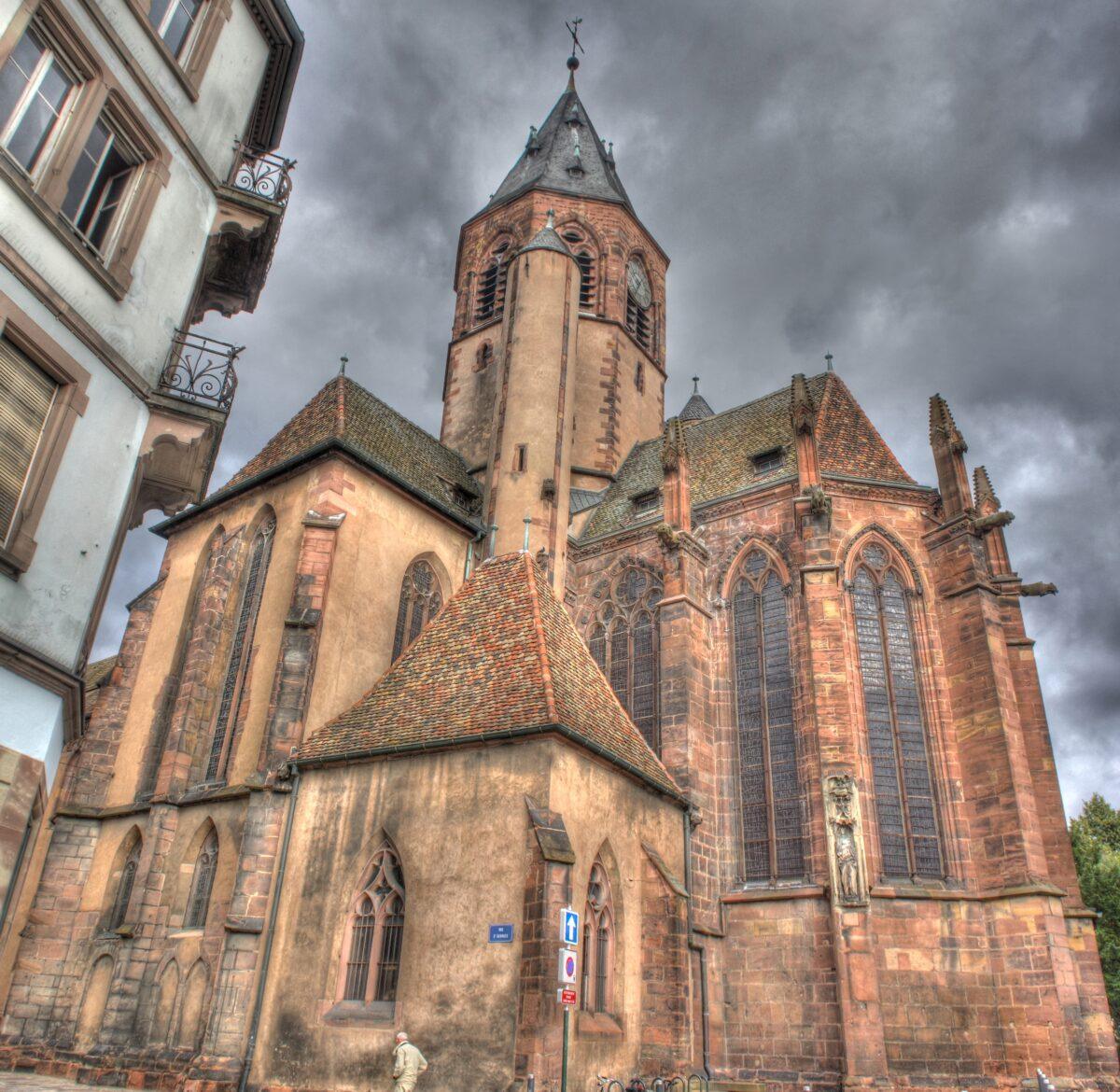
2) Saint George’s Church
Gothic masterpiece in pink sandstone, fine stained glass and remarkable furniture. Climb the nearby streets for views over the rooftops.
3) Saint Nicholas Church
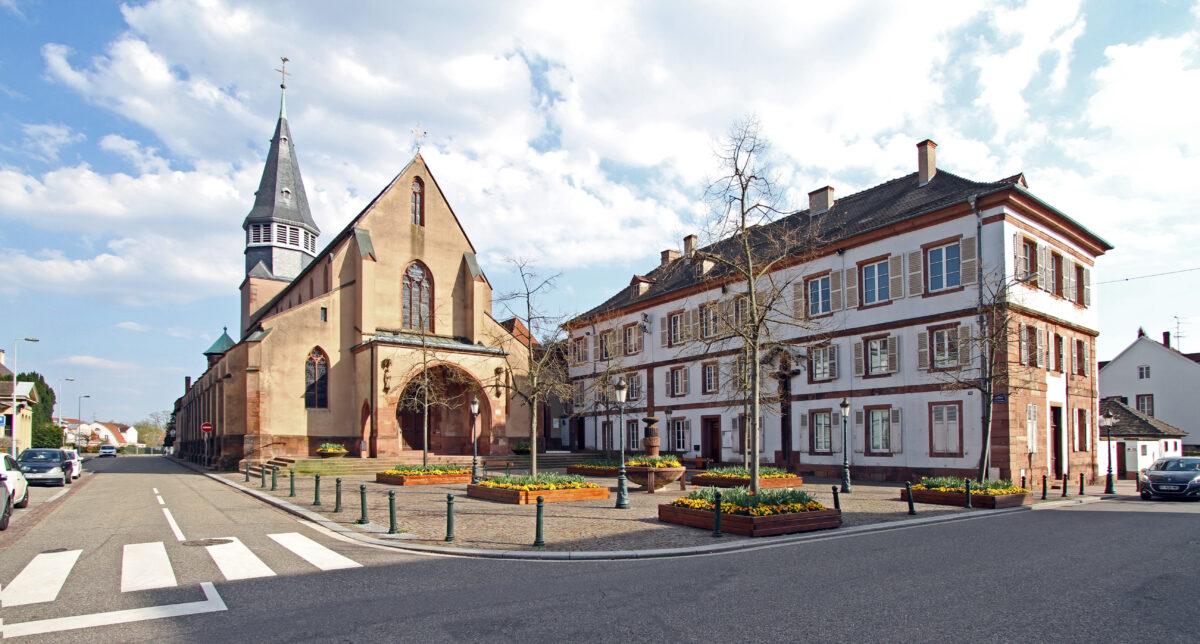
Romanesque atmosphere, sober nave and massive bell tower: a precious witness to the religious origins of the city.
4) Museums of Haguenau
The historical museum displays medieval, Décapole and contemporary collections; the Alsatian museum presents regional arts and traditions (costumes, household objects, trades).
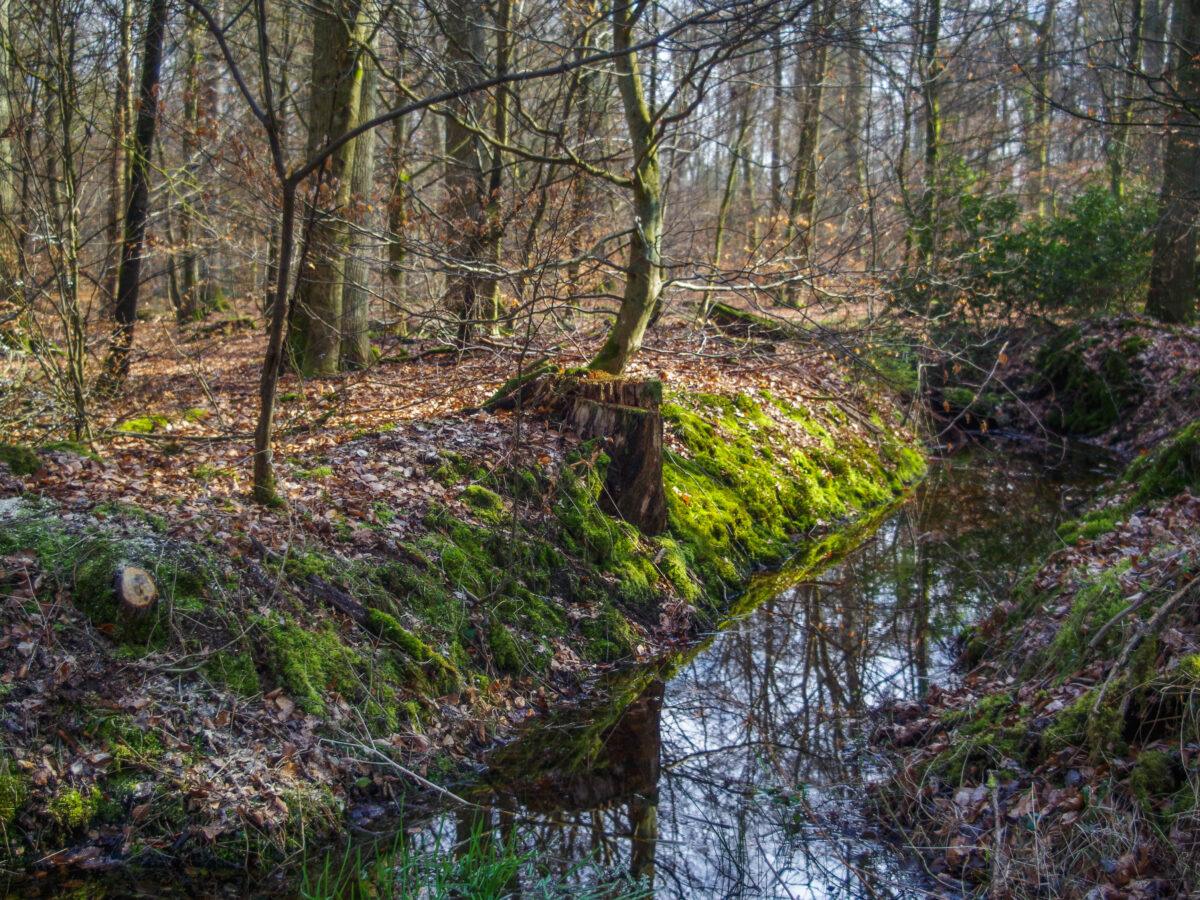
5) Haguenau Forest
More than 20,000 ha of forest atmospheres within cycling distance, marked trails, clearings and ponds. Ideal for Nordic walking, mountain biking, birdwatching — in every season.
Weekend idea — Mix one day in the heart of the city (churches, museums, gourmet shopping) and one day in nature (bike loops in the forest, stops by the ponds). In summer, watch out for the evenings of the Hop Festival!
Transport and access
Getting here
- Road: A35/A4 via Strasbourg and Saverne; D263 and D1062 towards Bischwiller/Wissembourg; secondary network towards Brumath and Reichshoffen.
- Train: TER Grand Est (Strasbourg ↔ Haguenau line) in approx. 25 min; connections to Wissembourg, Niederbronn-les-Bains and Saverne (transfers).
- Air: Strasbourg-Entzheim airport (SXB) about 45 min by road/TER+tram; Karlsruhe/Baden-Baden airport (FKB) is also an option.
Getting around
RITMO is the urban bus network of the Haguenau agglomeration: frequent connections between stations, city center, business areas and neighborhoods, contactless ticketing, real-time info and bicycle shelters at major hubs. Bike lanes are expanding, with continuity towards the forest and nearby towns.
Tip — From the station, a 10–15 minute walking radius is enough to reach most monuments, shops and cultural facilities.
Local life: education, sports, associations, events
Education & Training
The city has a comprehensive network of schools, middle schools, and high schools (general, technological, and vocational). The university/IUT site (University of Strasbourg) offers short and professional training courses (electrical/industrial engineering, quality/logistics, commerce, computer science), in synergy with local businesses (internships, work-study programs).
Sport & Facilities
Stadiums, gymnasiums, courts, and a swimming pool make up a complete sports complex. The FCSR Haguenau energizes the football scene; handball, table tennis, and combat sports are also present. The forest serves as a “large field” for running, mountain biking, and Nordic walking.
Culture & Events
- Hop Festival (end of August): world cultures, music, dances, and gastronomy — an international event.
- Museum Seasons: local history exhibitions, arts and traditions, family trails.
- Christmas in Northern Alsace: warm Christmas market, crafts, and illuminations.
On the gourmet side — pretzels, flammekueche, baeckeoffe, kougelhopf, beers, and brandies: Alsatian classics are celebrated in the winstubs and breweries downtown.
Real Estate and Urban Planning
On the Alsace scale, Haguenau offers a softer entry price than Strasbourg, while providing a full city life. Intra-urban disparities exist between the city center, residential suburban neighborhoods, and areas undergoing renewal.
Price Ranges (2025)
- Old apartments: ≈ €2,200–2,600/m² (median depending on neighborhood/condition).
- Houses: ≈ €2,300–2,800/m² (high variability depending on land and features).
- New builds: ≈ €3,600–3,900/m² for well-located programs (elevator, outdoor spaces, parking).
Trends 2024–2025: volumes adjusting, buyer’s market more selective; attractiveness of the renovated city center and energy-efficient properties; family demand for 4–5 room houses near schools/shops.
Urban Planning & Transitions
The city works on the rehabilitation of old buildings, the greening of public spaces, the extension of soft mobility options, and land use sobriety (ZAN). The forest, a true “lung,” plays a key role in local adaptation to climate change (cooling islands, biodiversity, recreation). Reasoned densification projects are emerging near transport hubs and services to limit sprawl while meeting housing needs.
Also read on our network: explore the regional capital Strasbourg and the unmissable gem of Alsace wines Colmar to complete your visit.
FAQ — Haguenau
What to visit in Haguenau in 1 day?
Start at Place d’Armes, visit the Saint-Georges and Saint-Nicolas churches, stop by the historical museum, have lunch in a winstub, then loop through the forest before enjoying a drink on a terrace.
What is the population of Haguenau?
In 2022 (legal populations INSEE), the municipality has about 35,000 inhabitants.
How to get to Haguenau?
Via the A35/A4 through Strasbourg/Saverne, by TER Grand Est train (≈ 25 min from Strasbourg), and by plane via Strasbourg-Entzheim (SXB). From the station, everything is easily accessible on foot or by RITMO bus.
What are the pleasant neighborhoods?
The city center for pedestrian life; the residential areas near schools and forest for families; the suburban detached house areas for space and parking.
What is the price of real estate in Haguenau?
Approximate 2025 figures: old apartments ≈ €2,200–2,600/m², houses ≈ €2,300–2,800/m², new developments ≈ €3,600–3,900/m², depending on neighborhood and features.
Sources and useful links
- INSEE — Complete file Haguenau (67180)
- City of Haguenau — official site
- Tourism — Haguenau Country Tourist Office
- Transport — TER Grand Est (Fluo) • RITMO (urban buses)
- Wikipedia FR — Haguenau (heritage, history, Décapole)
The images on this page use raw URLs from Wikimedia (upload.wikimedia.org) that are verified and unique (no URL is reused).
Conclusion — At the crossroads of Northern Alsace and the Rhine, Haguenau combines imperial heritage, quality of life, and green lungs. Its human scale, facilities, associative dynamism, and quick access to Strasbourg make it an attractive compromise for visiting, studying, working… or settling. The coming years will see intensified transitions in mobility, energy, and renovation, with the forest as an ally.