In brief
- The center is suitable if you are looking for walking, shops, and a dense urban life.
- Areas close to the tram simplify daily commutes and limit dependence on the car.
- The installation budget mainly depends on the security deposit, the first month’s rent, and furnishing.
- The procedures should be started before arrival to avoid pressure during the first week.
- The right trade-off often consists of paying a bit more for a better connected and easier to live neighborhood.
Why choose Dijon to live and work?
Dijon attracts because it combines a compact center, good quality services, and a real estate market even more affordable than in some large metropolitan areas. For those who want to live in Dijon without suffering long commutes, the city offers an interesting compromise between urban dynamism and reasonable size.
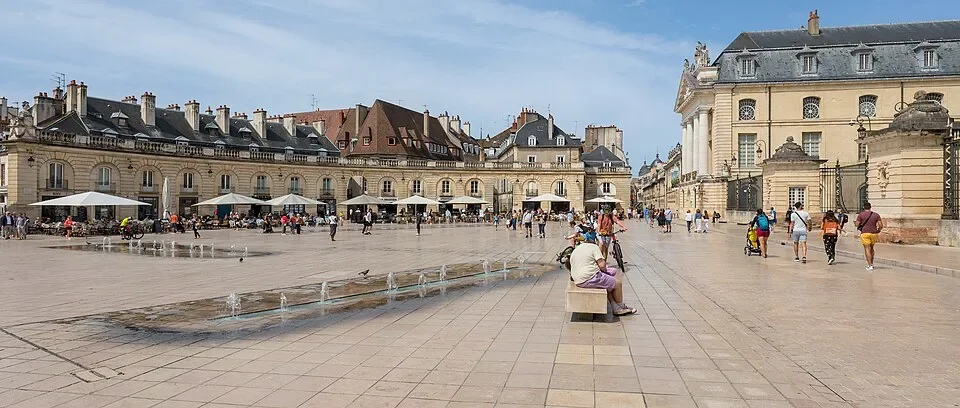
The city has nearly 160,000 inhabitants, and the metropolitan area concentrates many tertiary, administrative, health, education, and service jobs. To settle in Burgundy, Dijon also has the advantage of offering a clear daily life: neighborhoods are identifiable, transport routes are simple, and public services remain accessible.
The first useful reflex is to think in terms of lifestyle rather than just a rent map. In Dijon, a well-served neighborhood can give you more comfort than a slightly cheaper but poorly connected housing. This is often where the success of the move is decided.
In Dijon, the real gain does not always come from the lowest rent, but from the neighborhood that spares you complicated daily commutes.
Which neighborhood to choose according to your profile?
The right neighborhood in Dijon mainly depends on your daily use: distance to work, need for quiet, budget, parking, school, and access to transport. Whether you are a student, a mobile worker, a couple, or a family, your criteria will not be the same, and it is better to decide on these bases before calling agencies.
| Neighborhood / Area | Atmosphere | Approximate Rent | Recommended Profile |
|---|---|---|---|
| Historic Center / République | Very lively, pedestrian, shops, heritage | Higher | Urban professionals, couples, people without cars |
| Montchapet / Darcy | Residential, quiet, close to the center | Medium to high | Couples, families, professionals seeking comfort |
| Universities / Maladière | Convenient, student-oriented, well served | More affordable | Students, young professionals, shared housing |
| Toison d’Or / Valmy | Modern, commercial, easier parking | Variable, often medium | Motorized families, professionals, mixed mobility |
| Port du Canal / Arsenal | Developing, more mixed, good potential | Often more affordable | Moderate budgets, flexible profiles |
| Fontaine d’Ouche | Residential, large housing estates, softer rents | Lower | Families, tight budgets, looking for space |
For a student, areas close to the universities and tram lines limit hidden expenses. For a couple, Montchapet, Darcy, or certain parts of the center offer a good balance between quiet and quick access to outings. For a family, the key issue becomes space, the presence of schools, and ease of parking. For a professional on the move, the priority remains connection to the urban network and the train station.
A neighborhood is also judged at 8 a.m., at 7 p.m., on a Sunday, and on a rainy day. It is at these moments that real comfort appears.
Before signing, if possible, do a visit during the day and in the evening. Differences exist from one street to another, sometimes from one building to another. The feeling of security, noise, traffic, and parking availability can significantly affect the appeal of the same area.
How much does moving to Dijon cost?
The moving budget for Dijon depends on your situation, the level of equipment in the accommodation, and the targeted neighborhood. For a successful move, you need to think in terms of entry cost and then monthly budget, because the first month often weighs more than expected, especially if you arrive without furniture.
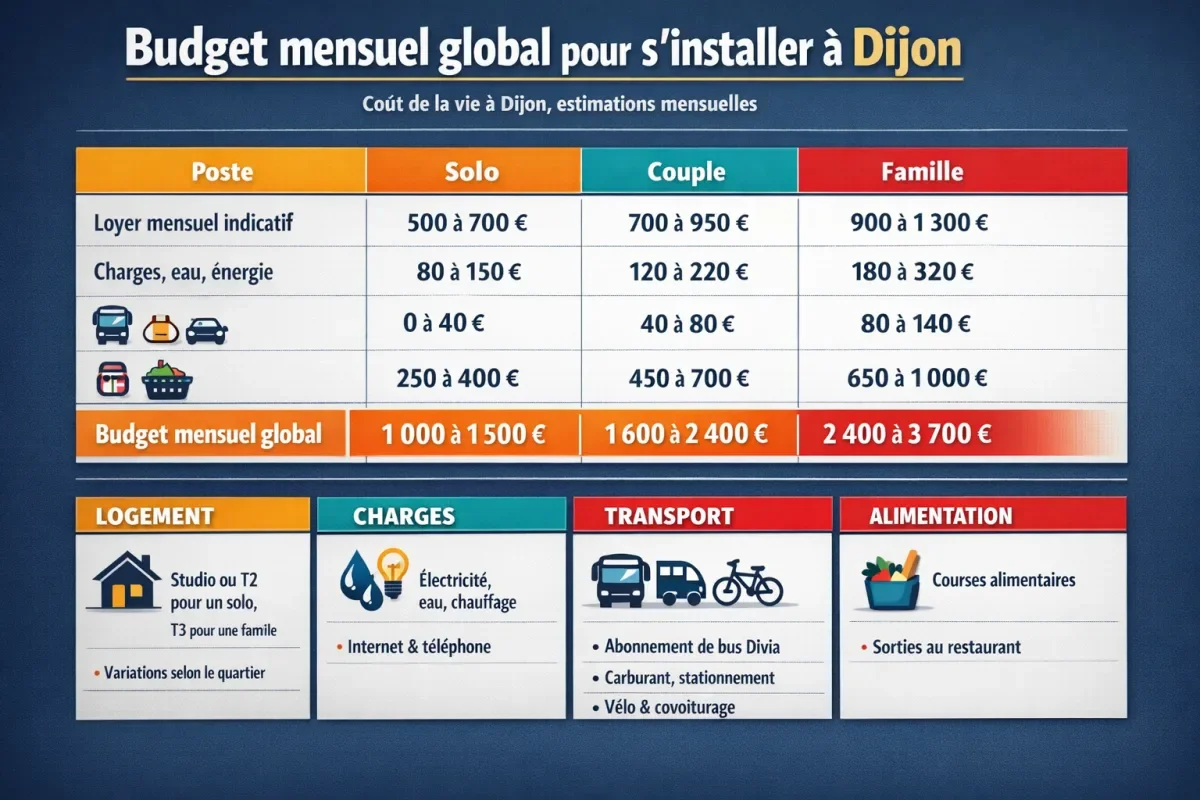
| Item | Solo | Couple | Family |
|---|---|---|---|
| Indicative monthly rent | €500 to €700 | €700 to €950 | €900 to €1,300 |
| Charges, water, energy | €80 to €150 | €120 to €220 | €180 to €320 |
| Transport | €0 to €40 | €40 to €80 | €80 to €140 |
| Food | €250 to €400 | €450 to €700 | €650 to €1,000 |
| Total monthly budget | €1,000 to €1,500 | €1,600 to €2,400 | €2,400 to €3,700 |
These figures are rough estimates observed on the local rental market and should be read with caution. The rent in Dijon varies depending on the condition of the accommodation, the floor, the building, insulation, parking, and proximity to the tram. Updated in April 2026, they remain useful ranges for making decisions before visits.
The cost of moving is never limited to the security deposit: the first month, home insurance, subscriptions, and some basic purchases quickly change the equation.
For the entry cost, practically plan for:
- 1 to 2 months’ security deposit depending on the lease.
- The first month’s rent and sometimes agency fees.
- €150 to €800 for basic furnishing if the accommodation is empty.
- €50 to €200 for initial subscriptions, depending on your setup.
- A safety cushion if you are also changing jobs or lifestyle.
Practically speaking, a student arriving with little furniture can manage with a contained starting budget if the accommodation is furnished. A couple moving into an empty one-bedroom apartment should anticipate a heavier installation cost. For a family, the question of moving and furnishing quickly becomes central.
How to find accommodation in Dijon?
To find accommodation in Dijon, you need to act quickly, prepare a clean application file, and filter out ads that don’t match your profile from the start. The market is active enough that a good file makes a difference, especially in the most sought-after areas and well-located small spaces.
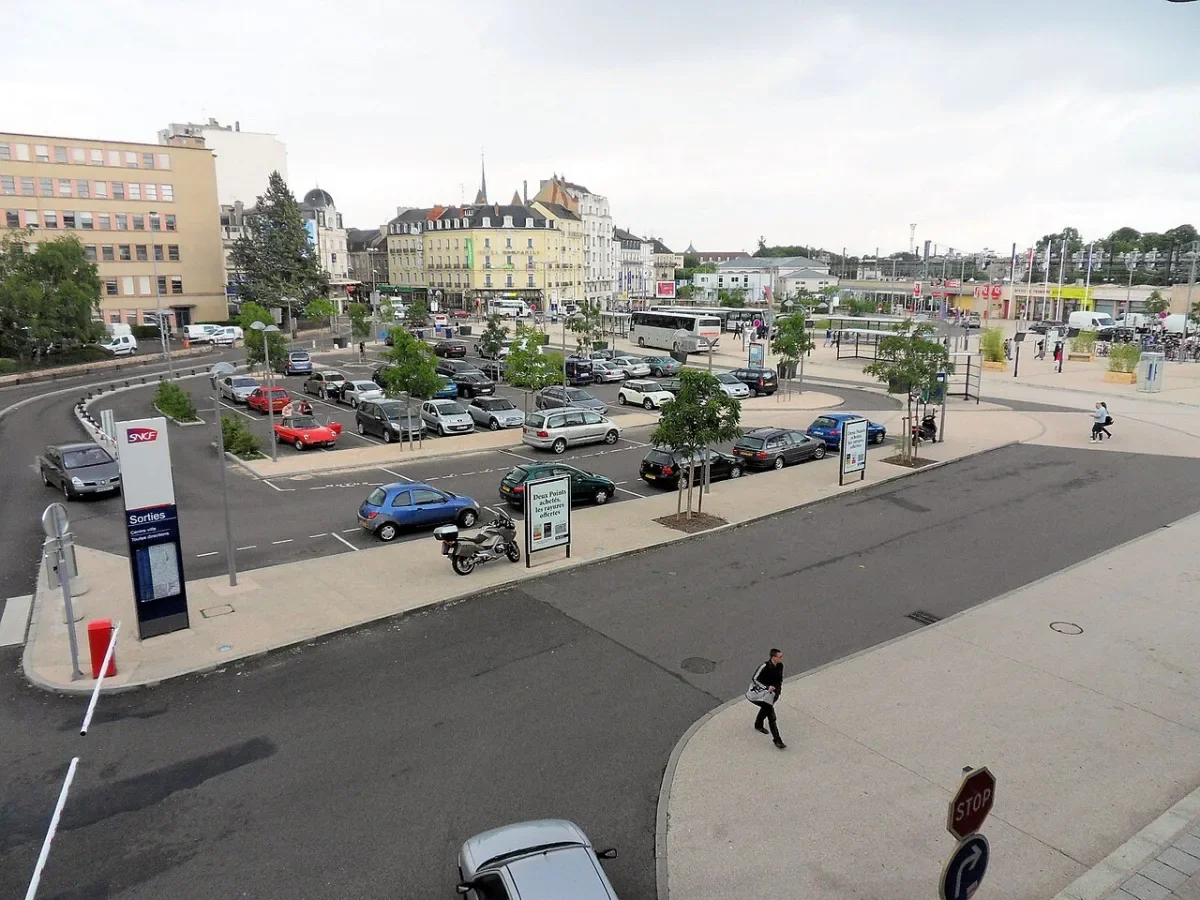
Start by defining three non-negotiable criteria: your maximum budget, acceptable travel time, and the type of accommodation sought. Then, look at ads with this hierarchy in mind. It is better to eliminate ten places that are too far or too expensive than to visit without filtering and waste time on site.
- Prepare a complete file: ID, proof of income, employment contract or study certificate, tax notice if requested.
- Check the charges: heating, water, maintenance of common areas, household waste, elevator, parking.
- Look at the transport links: tram, bus, station, bike paths, and real-time home-work travel time.
- Ask concrete questions: insulation, orientation, neighborhood, recent work, heating mode.
- Compare furnished and unfurnished properties according to the planned length of stay.
If you are a student, residences, shared housing, and accommodations near campuses often simplify the first year. If you come on a permanent contract, a slightly outlying but well-served T2 may be more rational than a small studio very central. If you have children, also check schools, daycare, and parking before signing.
The first useful references can be checked on Dijon Métropole, the Dijon town hall, and reference sites on tenant rights. For population, income, and local structure data, the tables from INSEE provide a solid base.
What steps to take before and after arrival?
The procedures in Dijon are not different from the rest of France in substance, but their timing matters a lot. To avoid disorganization, you must start insurance, energy, address, and necessary registrations in a logical order, keeping all proof of accommodation and your situation at hand.
Before arrival, secure the accommodation, home insurance, deposit budget, and furniture transport. The first week, start electricity, water if necessary, Internet, then change your address with administrations and your employer. The first month, stabilize family routines, commutes, and social procedures.
- Sign and check the lease: area, charges, deposit, inventory of fixtures.
- Activate contracts: electricity, gas if needed, internet, home insurance.
- Declare the address: taxes, bank, employer, health insurance, CAF according to your situation.
- Organize practical life: general practitioner, pharmacy, school, daycare, parking.
- Handle emergencies: badge, keys, trash bins, subscriptions, furniture, linens, small appliances.
If you have children, get ahead on school registration and documents requested by the community. If you arrive for work, also anticipate a test commute from the accommodation to your workplace. A good neighborhood in Dijon is often one that facilitates the entire week, not just weekends.
How to get around easily in Dijon?
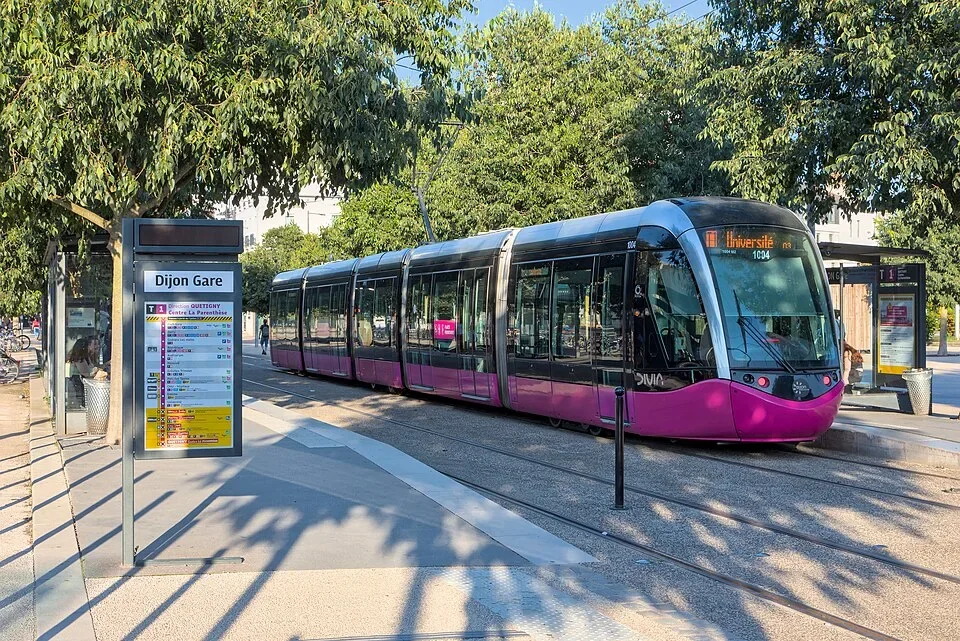
Getting around Dijon is quite simple if you rely on the tram and main bus lines. The city lends itself well to combined trips: walking for the center, tram for main axes, bike for short distances, and car especially if you live or work on the outskirts.
| Mode | For whom? | Main advantage | Limit |
|---|---|---|---|
| Tram | Working people, students, families without a car | Clear, fast, regular | Less well served certain outskirts |
| Bus | Complement to the tram | Covers more neighborhoods | Variable frequency depending on the route |
| Bike | Short and flexible trips | Economical and practical | Weather, parking, bike security |
| Car | Families, peripheral areas, off-peak hours | Total flexibility | Parking, cost, traffic |
The official Divia network makes it easy to structure daily trips. For a newcomer, the monthly subscription generally ranges around thirty euros to a bit more depending on the fare profile, with possible discounts for young people, students, or specific subscribers. Always check the current rates before signing a lease, as a poorly served housing can cost you more in total than a slightly higher rent.
The right reflex is not to choose a “cheap” housing, but a housing that reduces the complexity of your trips week after week.
In practice, travel times remain reasonable on most central routes. From a well-located neighborhood, you often reach the station, the center, or university areas in less than 20 to 25 minutes. This is a strong argument if you come without a car or if you want to use it as little as possible.
Working in Dijon: what opportunities?
Working in Dijon means aiming for a metropolis where employment relies on several pillars: administration, health, education, services, commerce, agri-food, and activities related to the region. For a mobile worker, the city offers interesting opportunities, especially if you combine local presence and regional professional network.
The Dijon job market is viewed on two levels. On one side, positions related to support functions, teaching, care, and public service. On the other, more technical or commercial jobs, often spread between the center, business parks, and the metropolitan municipalities. Good opportunities exist, but quick responses remain important.
- France Travail for job offers, support, and job search services: France Travail.
- Dijon Métropole for economic life, attractiveness, and some local information: Dijon Métropole.
- Dijon Bourgogne Invest if you come for a project of establishment or business development.
If you work off-hours, the choice of neighborhood must take into account the constraints of late return, parking, and transport frequency. If you are partially teleworking, prioritize more the comfort of the housing, brightness, and immediate environment. If you also change your sector of activity, anticipate a longer adaptation phase than expected.
Living daily in Dijon: services, family, and leisure
Daily life in Dijon is easily built if you choose a neighborhood compatible with your habits. To live in Dijon over the long term, you need to look at the proximity of schools, shops, doctors, green spaces, and cultural facilities, not forgetting the ease of managing regular trips.
The student city of Dijon works well for young adults, but it also remains interesting for families and working people seeking a practical life. Markets, parks, libraries, cultural establishments, and sports facilities provide real quality of life. The important thing is to check the actual availability in your area, not just the overall offer of the city.
For outings and neighborhood landmarks, the Tourist Office helps identify useful places for the first weekends. On the family life side, also locate nurseries, schools, conservatories, sports complexes, and community centers. A successful move often depends more on this mapping of daily life than on the price per square meter alone.
- Scout out shops within a 10-minute walk.
- Identify a primary care doctor and nearby pharmacies.
- Test the school-to-work commute before committing.
- Plan a bike or tram solution if you do not keep the car.
- Locate green spaces if you have children or often work from home.
A comfortable move does not depend solely on the housing: it also depends on the ease of living everyday life.
Practical tips for a successful move to Dijon
The best advice for settling in Dijon is to treat your arrival as a small project, with clear priorities and step-by-step decisions. This way, you reduce unpleasant surprises, unnecessary expenses, and choices forced by urgency. The market, neighborhoods, and procedures then become much clearer.
- Visit several neighborhoods at different times, not just during the day.
- Do not underestimate the entry cost if the housing is empty.
- Choose your lifestyle first, then the area, then the type of housing.
- Keep a safety margin for the first few weeks.
- Check actual travel times between the housing, work, and useful services.
Before arrival: define the budget, prepare the file, target three neighborhoods, confirm the housing, and organize the transport of belongings. Week 1: inventory, contracts, address, scouting shops, test commute. Month 1: establish routines, decide on transport/car, possible registrations, adjust the actual budget.
FAQ: Moving to Dijon
What budget should be planned to move to Dijon?
For a single person, a starting budget of €1,500 to €3,000 is often more realistic than just a “first rent.” You need to include the security deposit, first month, insurance, small equipment, and possibly moving costs. A family should aim higher, especially if the housing is empty.
What is the best neighborhood to live without a car?
The historic center, République, Darcy, or certain areas close to the tram are the most convenient if you want to live without a car. The right choice, however, depends on your daily destination. Always check the actual frequency of transport and walking distance to stops.
Is Dijon an interesting city for students?
Yes, Dijon remains a solid student city thanks to its campuses, simple transport, and fairly varied housing offer. Areas close to universities, tram lines, and shops are the most sought after. Shared housing can also help manage the budget without sacrificing location too much.
What are the first services to activate after moving in?
Start with electricity, home insurance, Internet, and change of address. Then think about the primary care doctor, schools if you have children, and transport subscriptions. Administrative procedures can be done gradually, but the housing must be functional from the first week.
Can affordable housing be found in Dijon?
Yes, especially if you accept a neighborhood a little less central, a smaller housing unit, or an older residence. Fontaine d’Ouche, Port du Canal, or certain peripheral areas can offer softer rents. The real issue remains the compromise between price, accessibility, and daily comfort.
Key Points to Remember
Conclusion
Succeeding in your arrival in Dijon is based on a simple logic: choose a neighborhood compatible with your rhythm, set the budget with safety margins, and handle the procedures without waiting until the last minute. Once these three levers are aligned, the city becomes much easier to tame, whether you come to study, work, or settle your family.