In brief:
Perpignan (INSEE 66136) is the prefecture of the Pyrénées-Orientales, at the heart of Roussillon.
120,996 inhabitants (INSEE 2022), postal codes 66000 and 66100, demonym: Perpignanais·es.
Medieval heritage (Palace of the Kings of Majorca, Castillet), agro-logistics hub, festivals (Visa pour l’Image).
Sommaire
Geography and location 🗺️
Perpignan is located in the center of the Roussillon plain, 13 km from the Mediterranean (Canet-en-Roussillon) and about 30 km from the Spanish border. Crossed by the Têt and the Basse rivers, the municipality occupies a strategic position between the Albères and the Corbières, with the Canigou as a backdrop on clear days. Its altitude ranges from about 8 to 100 m and its area reaches 68.07 km². The Mediterranean climate offers more than 300 days of sunshine per year, punctuated by the tramontane wind which dries the air and clears the horizon.
The urban fabric is organized around an old town center surrounded by ancient ramparts, extended by 19th-century suburbs and contemporary expansions. The southern districts (Porte d’Espagne, Mas Palégry) run along the A9/E15, while Moulin-à-Vent and La Lunette structure student life near sports and university facilities. The Perpignan–Barcelona axis places the city in a major cross-border corridor.
History and heritage 🏛️
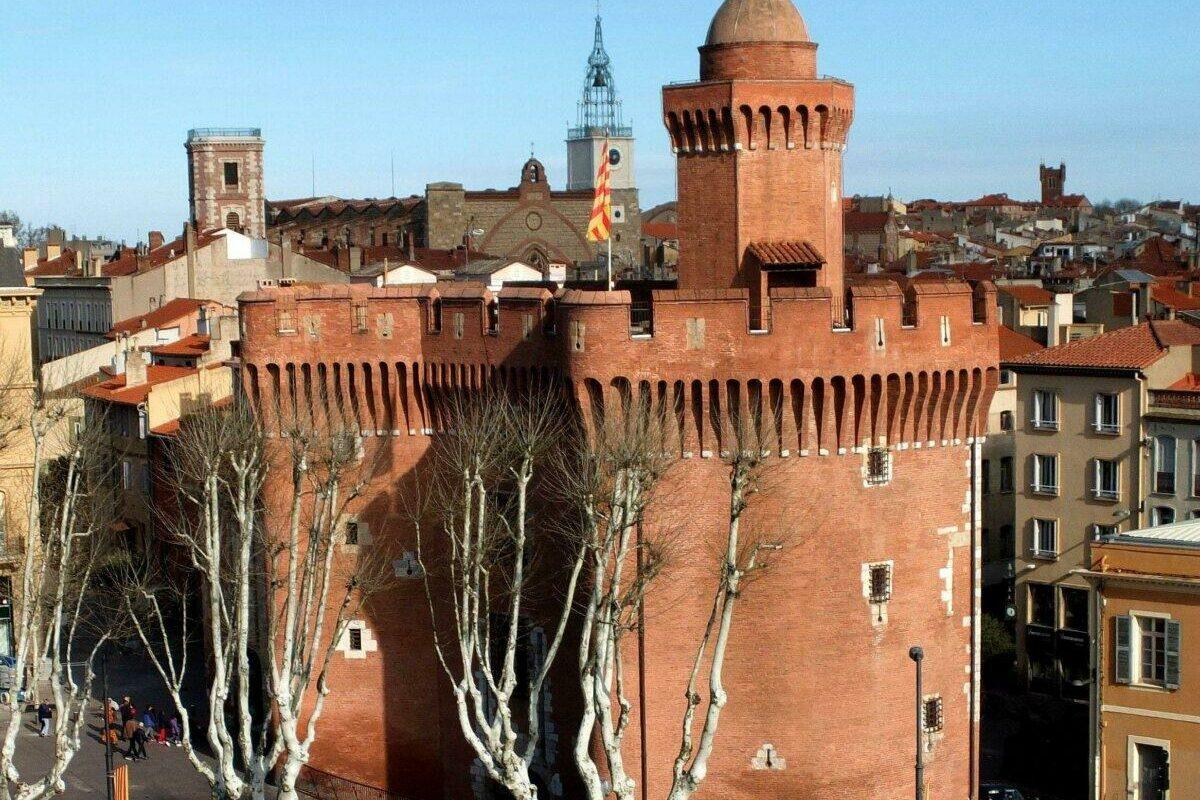
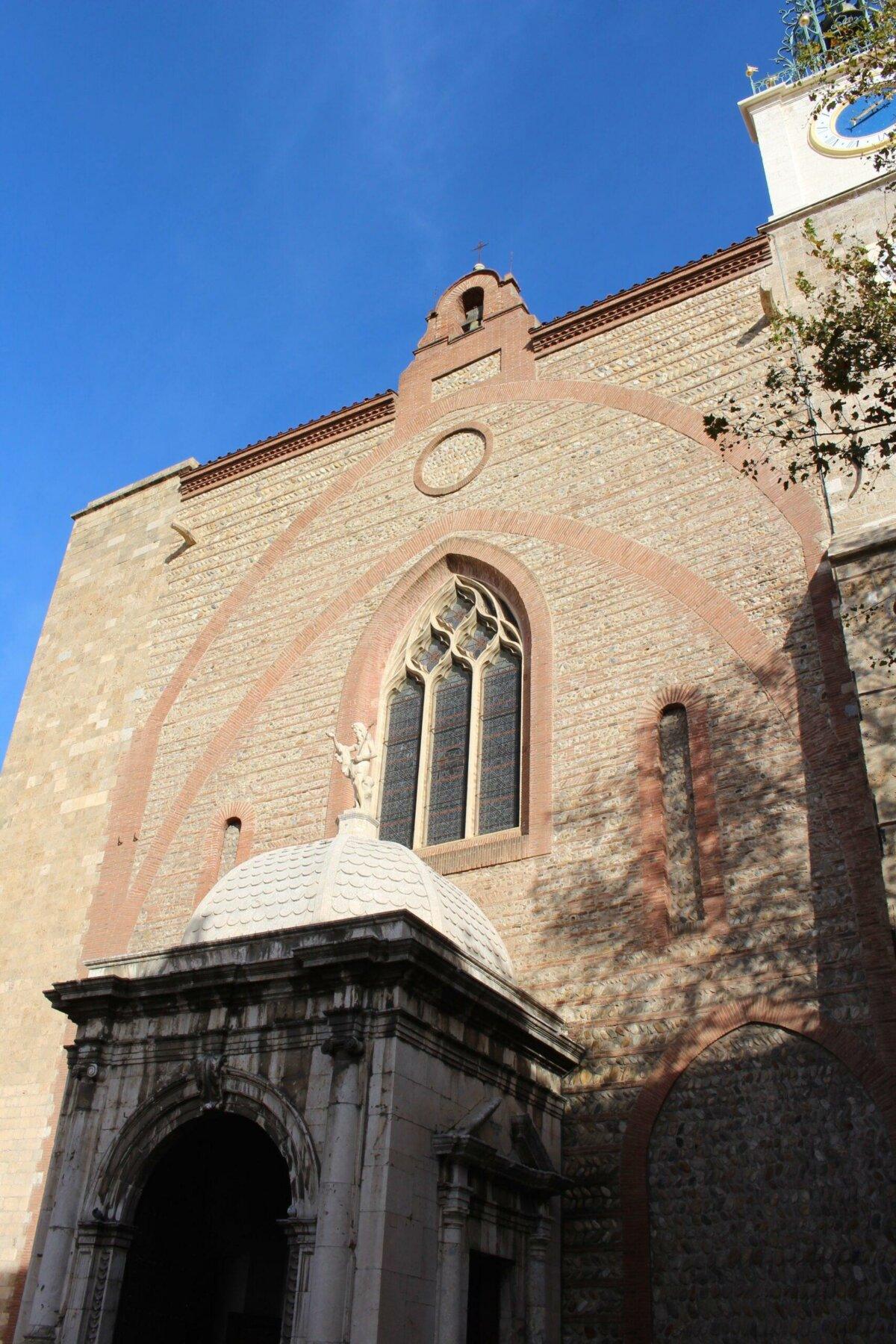
The origins date back to the site of Ruscino (Château-Roussillon), occupied by the Romans. In the Middle Ages, Perpignan became one of the capitals of the Kingdom of Majorca (13th–14th centuries), a period that left a monumental legacy: the Palace of the Kings of Majorca, a fortress-palace perched on a hill, a true acropolis dominating the plain. An urban symbol, the Castillet — a fortified brick gate — commands the entrance to the historic city. The Saint-Jean-Baptiste Cathedral (Southern Gothic) and the Campo Santo, a cloister-cemetery unique in France, give the old town its distinctive identity.
The Treaty of the Pyrenees (1659) definitively attached Roussillon to France and reinforced Perpignan as a military stronghold and commercial crossroads. In the 19th century, the arrival of the railway and the growth of agriculture (vineyards, early produce) stimulated trade. The interwar period left Art Deco signatures on several facades and facilities. Today, the city fully embraces its Catalan culture — language, place names, traditions (procession of the Sanch) — while reinventing itself through its image and innovation hubs.
Population and demographics 👥
Perpignan remains a large municipality of Occitanie with a relatively young profile, a high proportion of tenant households, and a significant old housing stock in the city center. Reference figures (INSEE, 2022 vintage) indicate 120,996 inhabitants for the municipality. The metropolis (Perpignan Méditerranée, 37 municipalities) groups nearly 278,000 inhabitants.
| Indicator | Value | Year |
|---|---|---|
| Municipal population | 120,996 | 2022 |
| Area | 68.07 km² | — |
| Density | ~1,780 inhabitants/km² | 2022 |
| Postal codes | 66000, 66100 | — |
| Demonym | Perpignanais / Perpignanaises | — |
Economy and Employment 💼
Two pillars dominate: agri-food logistics and services (health, higher education, administration, commerce). To the south of the city unfolds Saint-Charles International, Europe’s leading fruit and vegetable platform: several hundred companies, refrigerated warehouses, and road/rail connections structure this hub which redistributes massive volumes towards Northern Europe. The presence of a rail terminal and the proximity of Port-Vendres (fruit traffic) complete the setup.
The University of Perpignan Via Domitia (UPVD) offers diverse programs (law-economics-management, sciences & engineering, STAPS, languages & literature) and nourishes the local ecosystem (laboratories, incubators, third places). The Perpignan Hospital Center serves the entire department, while the city center commerce (Place de la République, Rue Paratilla, Clémenceau) ensures daily vibrancy.
Tourism combines heritage (Castillet, cathedral, Campo Santo, Loge de mer), sea (beaches 15–20 min away), and events: Visa pour l’Image (photojournalism) attracts thousands of visitors and professionals every late summer.
Tourism & Culture: The Top 5 Must-Sees 🎒
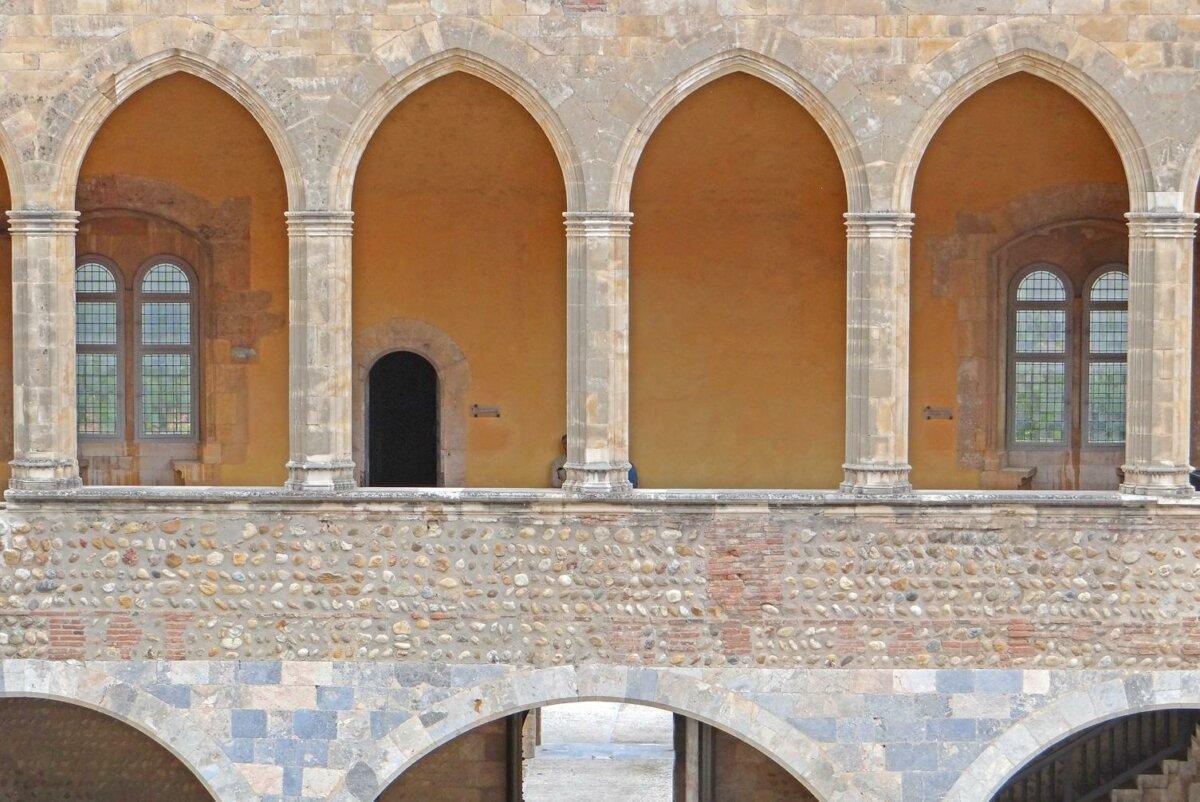
1) Palace of the Kings of Majorca
Fortress palace of the Kings of Majorca, it offers Gothic arcaded courtyards and a wonderful viewpoint over the plain. A key visit to understand the Catalan past of the city.
2) Saint John the Baptist Cathedral & Campo Santo
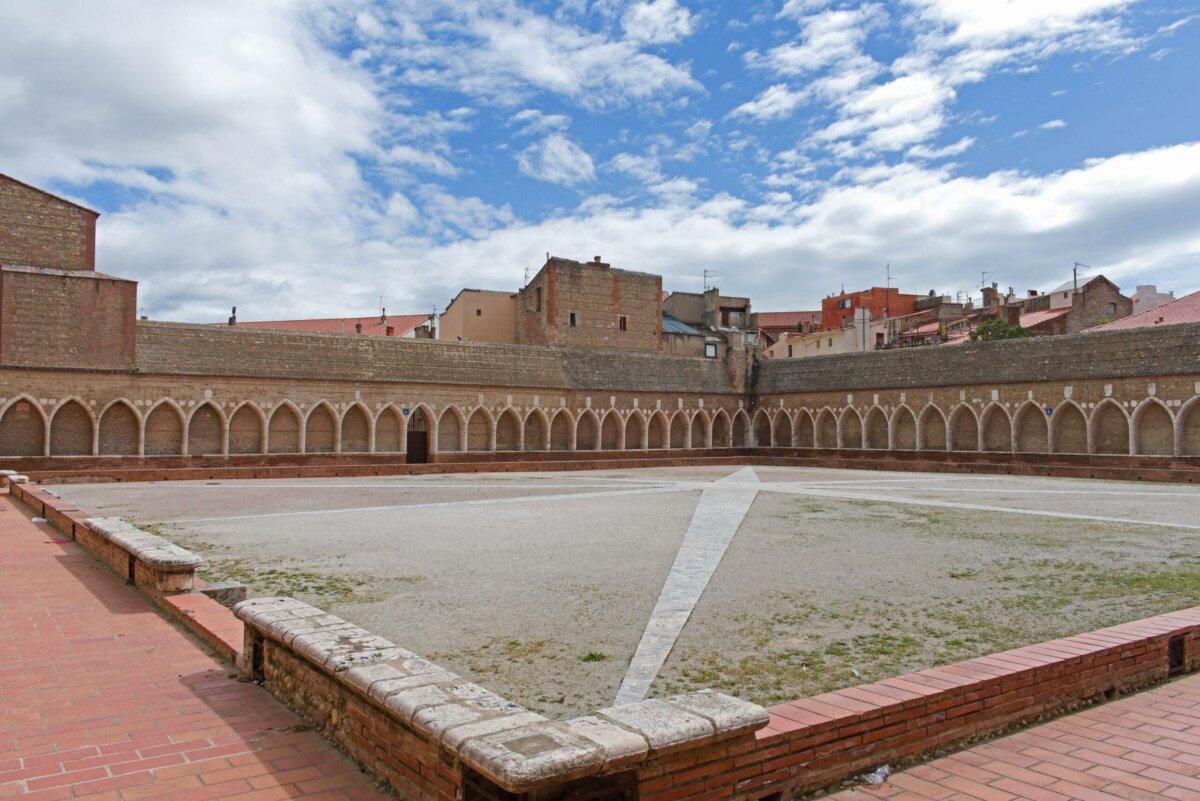
The cathedral (14th–17th centuries) embodies southern Gothic. At its feet, the Campo Santo, an arcaded cloister-cemetery, is unique in France — a place of reflection and urban history.
3) The Castillet
Fortified red brick gate, emblematic bastion and appreciated viewpoint. Its silhouette defends the entrance to the historic center and hosts exhibitions.
4) Loge de mer & Place de la Loge
Former center of maritime and commercial exchanges, the Loge de mer tells the story of Perpignan’s Mediterranean openness. Just steps away, facades and arcades extend the medieval market atmosphere.
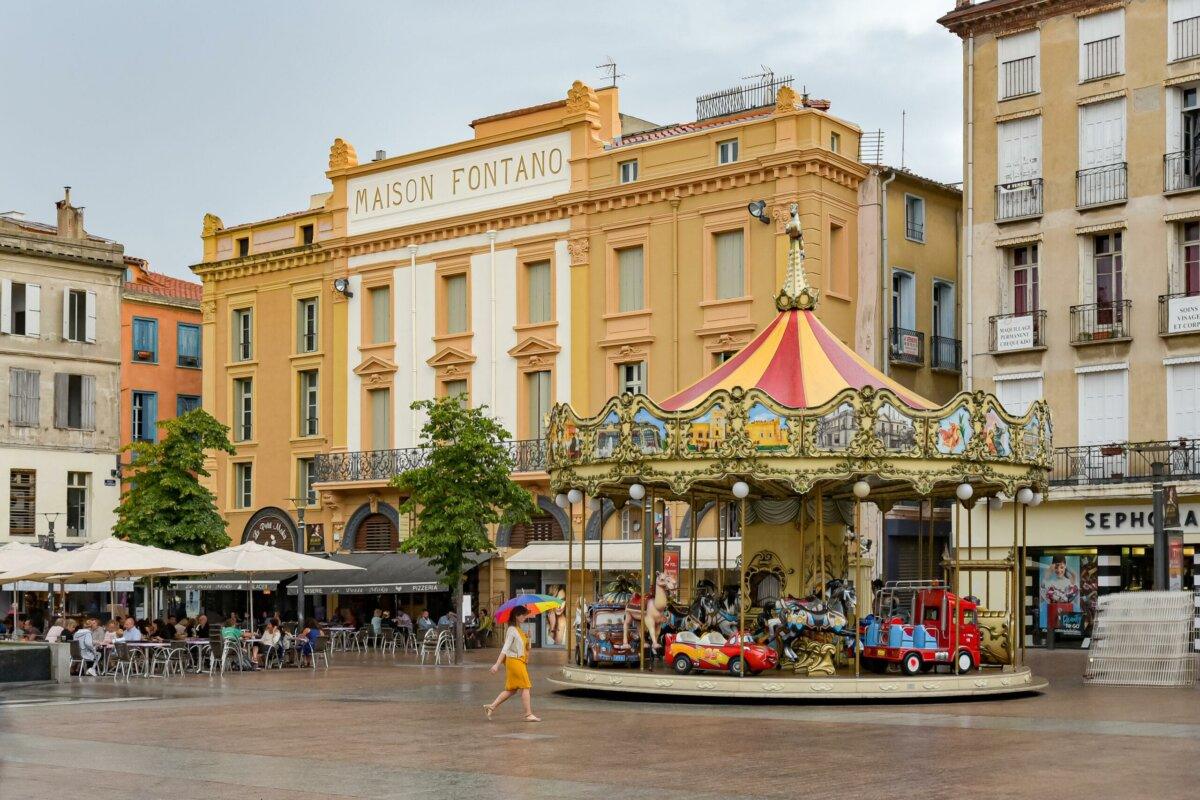
5) Place de la République
Large urban lounge: terraces, plane trees, events — ideal to breathe in the Catalan spirit and explore the center on foot.
Transport and Access 🚄✈️🛣️
- Train: TGV INOUI connections from Paris-Gare-de-Lyon (fastest trips ~5h15–6h depending on periods); fast connections with Barcelona via high-speed cross-border rail.
- Road: A9 / E15 motorway (Mediterranean–Catalonia axis); RN116 towards Conflent and Cerdagne.
- Airplane: Perpignan-Rivesaltes Airport (PGF), seasonal and year-round service to several French and European cities depending on schedule.
- Local mobility: Sankéo bus network (lines A–D and 1–26, exchange hubs at stations & high schools), bike lanes developing along main routes.
Local Life: Education, Sports, Events 🎓🏉🎭
Education & Campus: the UPVD gathers about 9,500 students, with hubs in Perpignan and coastal/mountain branches. Student life centers around Moulin-à-Vent, La Lunette, and STAPS facilities.
Sports: rugby reigns — USAP (XV) at Stade Aimé-Giral, Dragons Catalans (XIII) at Stade Gilbert-Brutus — shaping a strong local identity. Numerous clubs and facilities (swimming, athletics, urban sports) complement the offer.
Culture: the Visa pour l’Image festival makes Perpignan the world capital of photojournalism every late summer. Year-round, museums and exhibition venues (Hyacinthe-Rigaud, Casa Xanxo, convents) enliven the center.
Real Estate & Urban Planning 🏗️💶
The Perpignan market remains one of the most affordable on the French Mediterranean coast, with strong intra-urban disparities. In 2025, old apartments often trade around €1,750–1,990/m² depending on neighborhoods, while houses hover near €2,100–2,200/m². New builds are priced higher (often ~€3,200–3,300/m²). For rentals, expect ~€11–12/m²/month (varies by furnished status, condition, location).
Trends: relative stabilization after 2020–2023 increases, renewed selectivity (energy performance, parking, outdoor spaces). Urban challenges focus on renovation of the old center, cooling islands, and active mobility.
Neighborhoods Under the Microscope
- Historic Center (Saint-Jean, Saint-Jacques): heritage charm, vigilance on building conditions.
- La Lunette / Moulin-à-Vent: student/family life, services and facilities.
- Clodion-Torcatis / Catalonia: proximity to station-center, mixed housing.
- Porte d’Espagne: A9 access, shops, business zones.
Practical Information ℹ️
- Postal codes: 66000, 66100
- INSEE: 66136
- Area: 68.07 km² • Altitude: approx. 8–100 m
- Demonym: Perpignanais / Perpignanaises
Reliable sources
- INSEE — Reference populations 2022 — Perpignan
- Wikipedia — Perpignan
- Perpignan Méditerranée Métropole — EPCI figures (INSEE)
- Saint-Charles International — Presentation & key figures
- UPVD — Key figures
- Transport — SNCF Connect • Sankéo Network • PGF Airport
- Real estate — Price per m² (Figaro Immo) • MeilleursAgents
FAQ — Perpignan
What to visit in Perpignan over a weekend?
Palace of the Kings of Majorca, Castillet, cathedral & Campo Santo, Loge de mer and Place de la République. In summer, add an exhibition from Visa pour l’Image.
What is the population of Perpignan?
120,996 inhabitants (INSEE 2022). The metropolitan area gathers ~278,000 inhabitants.
How to get to Perpignan?
By TGV from Paris-Gare-de-Lyon (~5h15–6h depending on trains), fast connections with Barcelona; via the A9/E15; through Perpignan-Rivesaltes airport depending on seasons.
Which neighborhoods are pleasant?
Historic center (character), La Lunette & Moulin-à-Vent (student/family life), Clodion-Torcatis/Catalonia (near station), Porte d’Espagne (motorway access, shops).
What is the price of real estate?
2025 benchmarks: old apartments ~€1,750–1,990/m²; houses ~€2,100–2,200/m²; new ~€3,200–3,300/m²; rents ~€11–12/m²/month.
Conclusion — a Catalan capital on the move 🚀
Perpignan combines Catalan identity, medieval heritage, and cross-border position. Between an agro-logistics hub, university, and major events, the city continues its transformations: redevelopment of the center, more sustainable mobility, enhancement of shaded public spaces and the banks of the Têt. To study, start a business, or settle near the sea, the “blood and gold” city offers a rare balance between controlled prices and Mediterranean setting.