Why prepare your visit ?
Project yourself without surprises
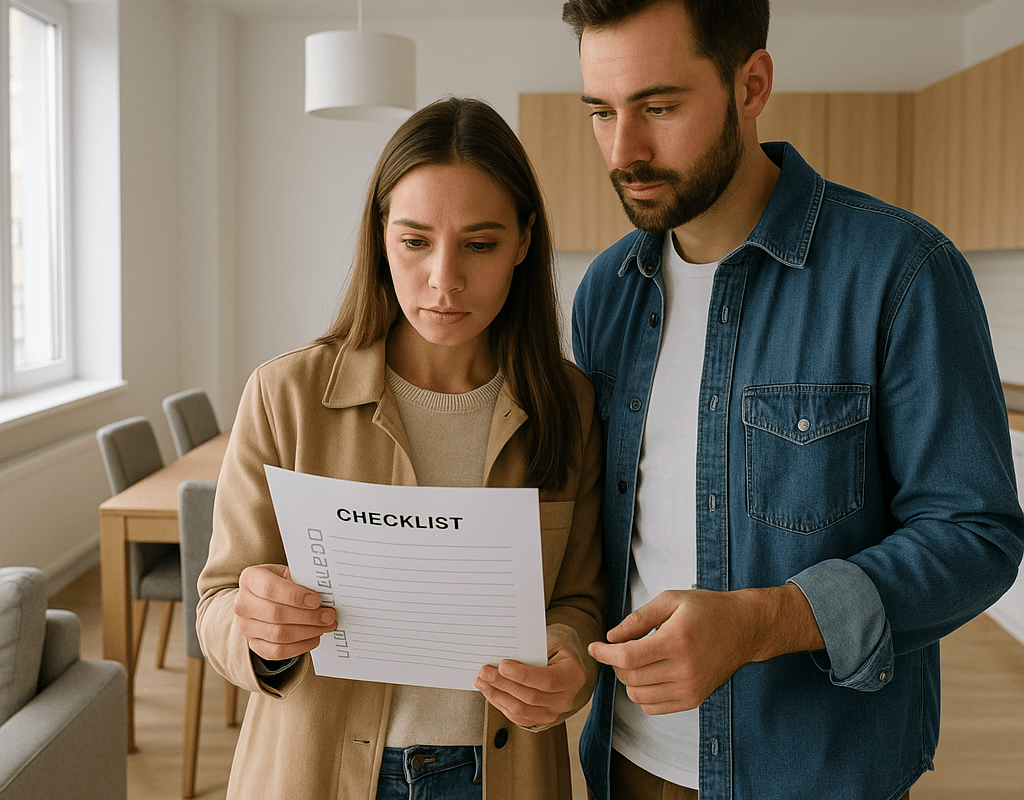
First of all, a checklist helps you keep in mind the criteria that really matter to you. By methodically observing each room, you perceive the layout, the brightness, and hidden defects. This approach avoids hasty crushes that you later realize are based on a mere staging effect.
Gain efficiency
Multiplying visits can become time-consuming. With your roadmap, you save time: you immediately target the housing that meets your requirements while eliminating those whose condition or location is unsuitable.
Strengthen your credibility
Approaching a real estate agent or a private owner with a serious list of questions shows your motivation and professionalism. You often obtain additional information, sometimes unprecedented, that enlightens your decision.
The 15 points to check before the visit
1. The neighborhood and amenities
Start by exploring the surrounding streets: shops, transportation, schools, potential noises. Note the proximity of a bus or tram stop, the happy balance between urban life and tranquility. A dynamic neighborhood by day can transform at night – it’s better to realize this on site.
2. Exposure and natural light
A south or southeast orientation often floods the interior with light until sunset. Conversely, a north-facing home can remain cool but often dark. Adapt your choice to your habits (houseplant, teleworking, energy saving).
3. Condition of walls and floors
Spot cracks, mold, or damp stains. A slight crack is not always worrying, but several signs of water appearance can hide a serious defect. Touch, tap, listen – a poorly laid tile or a creaking floor says a lot about the quality of the finishes.
4. Electrical installations
Check the age and condition of the electrical panel, the number of available outlets, and the presence of compliant outlets (possibly plan a test with a small device). Exposed wires or a rudimentary circuit breaker often indicate that an upgrade is necessary.
5. Plumbing and water network
Open all faucets to assess pressure and flow. Look for signs of corrosion under the sink or around the fittings. A defective or old water heater can generate a surprising energy bill.
6. Thermal and acoustic insulation
Tap on double-glazed windows to test their thickness. Listen to street noises and those from the neighbor opposite. Insufficient insulation will later be reflected in heating bills and your daily comfort.
7. Storage and usable space
Built-in wardrobe, closet under the stairs, mezzanine… Every storage space counts. Check the depth of closets and ceiling height to avoid discovering, after moving in, that a shelf cannot accommodate your suitcases.
8. Condition of the woodwork
Front door, roller shutters, sliding windows: each opening is a point of security and waterproofing. A rusty lock or a shutter struggling to close means repairs are to be expected.
9. Co-ownership and charges
Request the latest general assembly minutes to detect any upcoming work. A facade needing renovation or an elevator to modernize will directly affect your annual charges.
10. Technical diagnostics
Asbestos, lead, energy performance, termites… Demand to see all mandatory diagnostics. An energy performance certificate rated D or E will help you estimate future energy costs.
11. Building security
Check the condition of the intercom, the quality of the locks, and the possible presence of a caretaker or a keypad. A neighborhood perceived as safe on paper may show some vulnerabilities at nightfall.
12. Indoor air quality
A too strong scent, a musty or fresh paint smell may indicate insufficient ventilation or a recent renovation that has not yet off-gassed. Remember to check the condition of the mechanical ventilation system (VMC).
13. Heating equipment
Individual boiler, electric radiators, or heat pump: ask for the age of the installation and the date of the last maintenance. An energy-consuming system will weigh on your monthly budget.
14. Development potential
Think about your layout plan: moving a load-bearing wall is not accessible to everyone. Check if the plan can be modified without excessive costs and if the ceiling height allows the addition of a mezzanine.
15. External nuisances
Traffic noise, neighboring construction site, presence of a noisy café… Every detail counts. Take the time to return in the late afternoon or evening to experience the place outside office hours.
Tools and tips to keep a record
Equip yourself with a notebook or a dedicated app on your smartphone to note every remark. A simple Excel spreadsheet may suffice: paste your photos there and tick off each point during the visit. Colored labels (green, orange, red) will help you quickly prioritize strengths and risks.
After the visit: how to summarize your impressions ?
Go over your checklist as soon as you leave the property, ideally before starting another visit. Note your initial feelings: the seller’s welcome, the consistency between the photos and reality, the clarity of the explanations provided. This will allow you to create a preliminary ranking before consulting your banker or planning a second visit.
FAQ
- How much time should be allocated for a visit ? Allow at least 45 minutes to thoroughly analyze all the rooms and their surroundings.
- Should I visit alone or accompanied ? An outside eye (friend, concierge, craftsman) can spot technical details that are often overlooked.
- Which application should I use to take notes ? A simple spreadsheet or apps like Trello are sufficient to synchronize your observations.
- Should I compare several properties on the same day ? Limit yourself to two or three visits to stay focused and avoid confusion.
- How to prioritize my 15 points ? Adapt the list to your needs: if you work remotely, sound insulation becomes essential.