Quick verdict: the best way to “do” Marrakech
Rating: 8.9/10. Marrakech rewards travelers who alternate exploration and breaks. An early morning in the souks (before the crowds), a quiet midday in a patio, a late afternoon on a terrace, and the evening at Jemaa el-Fna: this simple pattern is already enough to feel the city. The medina has been a World Heritage site since 1985, which explains the heritage density… and the crowds at certain times.
Recommended for: short stays (48 h), families who love gardens, couples in riads, active seniors (if avoiding the hottest hours), food lovers and craft enthusiasts.
Strengths and weaknesses, without embellishment
- Immediate change of scenery: medina, spice scents, labyrinthine alleys.
- Concentrated heritage: palaces, tombs, madrasas, museums within walking distance.
- Simple logistics: airport nearby, quick transfers to the center.
- “Signature” experiences: hammam, terrace at sunset, souks.
- Solicitations: touts, unsolicited “guides,” variable prices in the souks.
- Heat: some periods require a real plan against heatstroke.
- Orientation: GPS sometimes inaccurate in narrow alleys.
- Crowds: Majorelle Garden and some sites very busy (reservation recommended).
When to go: simple seasonality, no overpromising
To enjoy without suffering, aim for the duo spring / autumn: pleasant days, soft light, more comfortable excursions. Winter is often quite suitable for walking (cool evenings, sweater useful). Summer can be splendid at dawn, then frankly exhausting: in this case, schedule “early visits + nap + late outing.”
| Period | Atmosphere | Winning strategy |
|---|---|---|
| March–May | Very lively city | Morning medina, afternoon gardens/museums |
| June–August | Marked heat | Early departures, long breaks, evenings on rooftops |
| Sept.–Nov. | Very balanced | Ideal 48 h, easy Atlas excursions |
| Dec.–Feb. | Cool evenings | Layered “onion” clothing, hammam at day’s end |
Useful small health reflex (without dramatizing)
When it’s hot, the classic mistake is under-drinking “because you don’t sweat much.” Hydration reviews remind that a dehydration > 2% of body weight is associated with less effective thermoregulation and more fatigue in hot conditions. The practical goal: drink regularly, add breaks in the shade, and avoid long walks at solar peak.
The medina: 6 landmarks to enjoy without exhaustion
The medina is your playground… and your little labyrinth. The best time to discover it: early, when shops open and alleys still breathe. Then, the flow increases. To keep the pleasure, set a clear return point (your riad, a big gate, a square) and make loops rather than random “crossings.”
Jemaa el-Fna: understand the square to better experience it
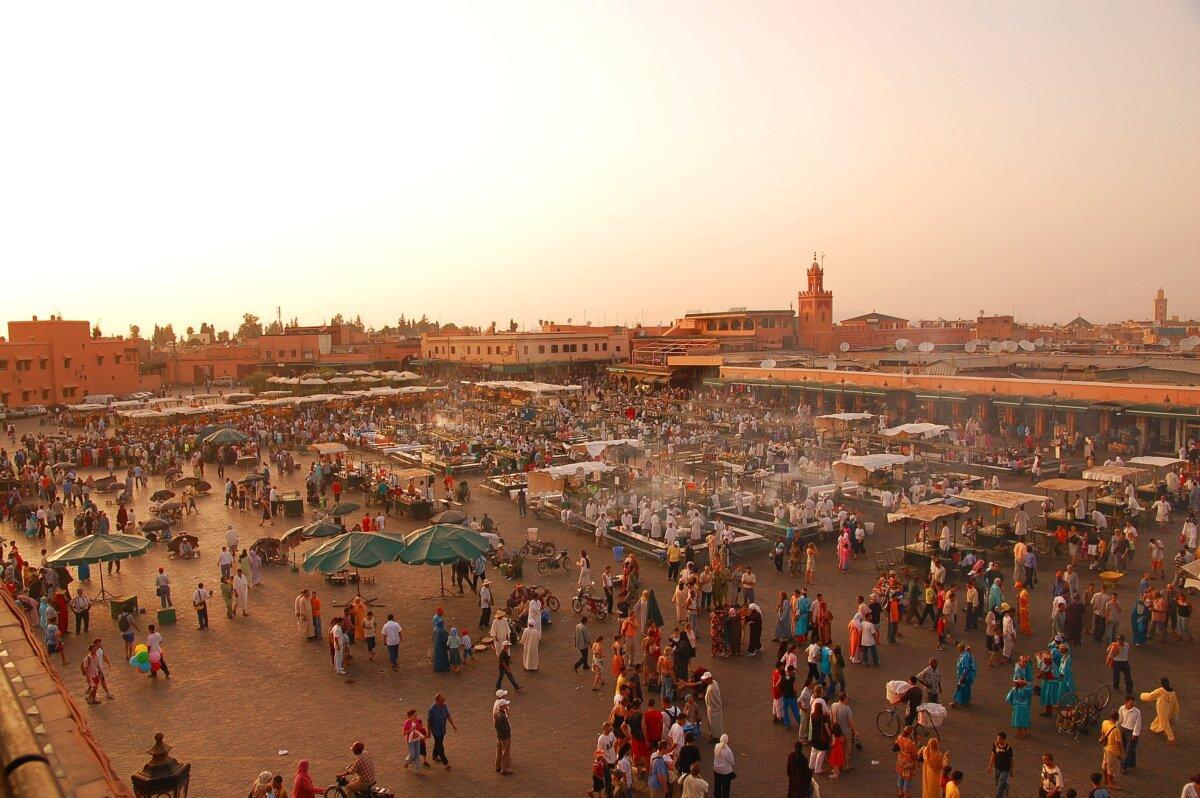
At the end of the day, Jemaa el-Fna changes nature: the square becomes an open-air theater (storytelling, music, acrobatics, small stages). UNESCO describes this space as a major place of cultural exchange, protected in Moroccan artistic heritage since 1922, and inscribed on the intangible cultural heritage list (Representative List).
At Jemaa el-Fna, the interest is not to “tick off” an activity: it is to observe how the square organizes itself, how groups form, how the evening thickens. Half an hour sitting at a corner, with mint tea, often tells more than a rushed round trip. UNESCO – “Cultural space of Jemaa el-Fna Square”, inscription on the Representative List (2008)
Koutoubia: the great visual landmark
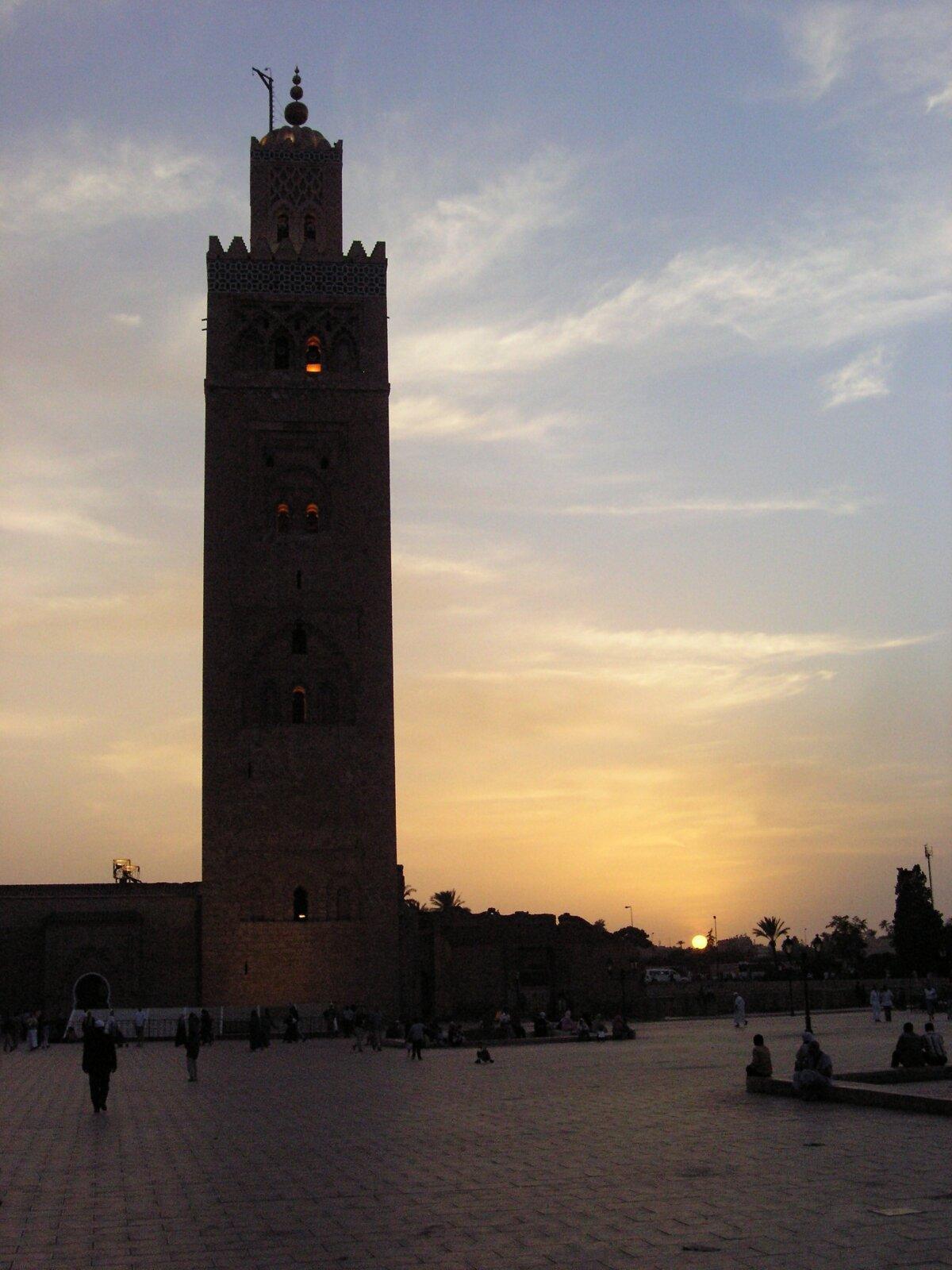
The Koutoubia minaret serves as a compass: as soon as you see it above the roofs, you roughly know where you are. Around it, gardens and main arteries help to “exit” the medina when you need a simple axis.
Souks: buy better, negotiate without theatrics
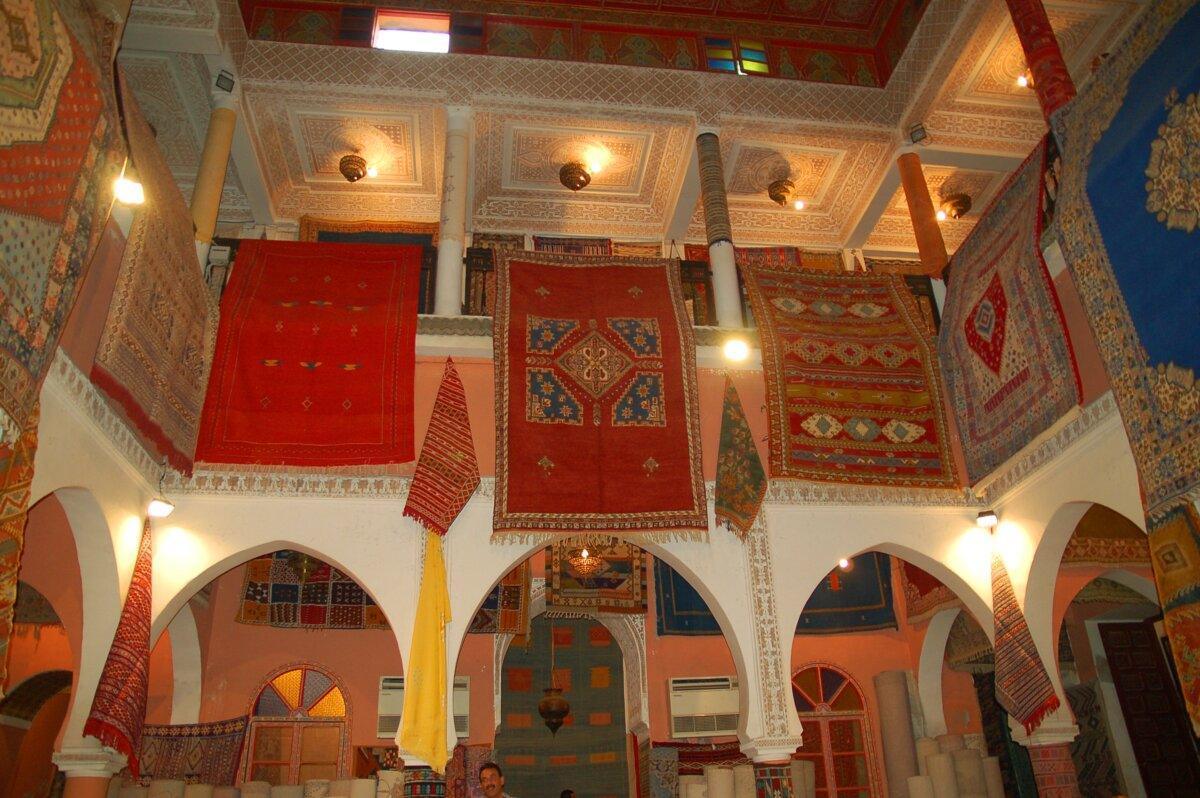
The real luxury in the souks is time. Before talking price, look at quality: regularity of weaving, finishes, smell (leather), weight (metal). Then ask a price, thank, compare 2–3 shops, then come back. Negotiation becomes natural when you have a reference, and you avoid the trap of a too quick “yes.”
Gardens, palaces, madrasas: must-sees worth the detour
Marrakech is understood through its “closed” places: patios, gardens, enclosures, pools. They reveal a way of living with heat: shade, water, vegetation, air circulation. Here, better to choose two major sites per day than to chain the entire heritage axis.
Majorelle Garden: early slot, official ticket
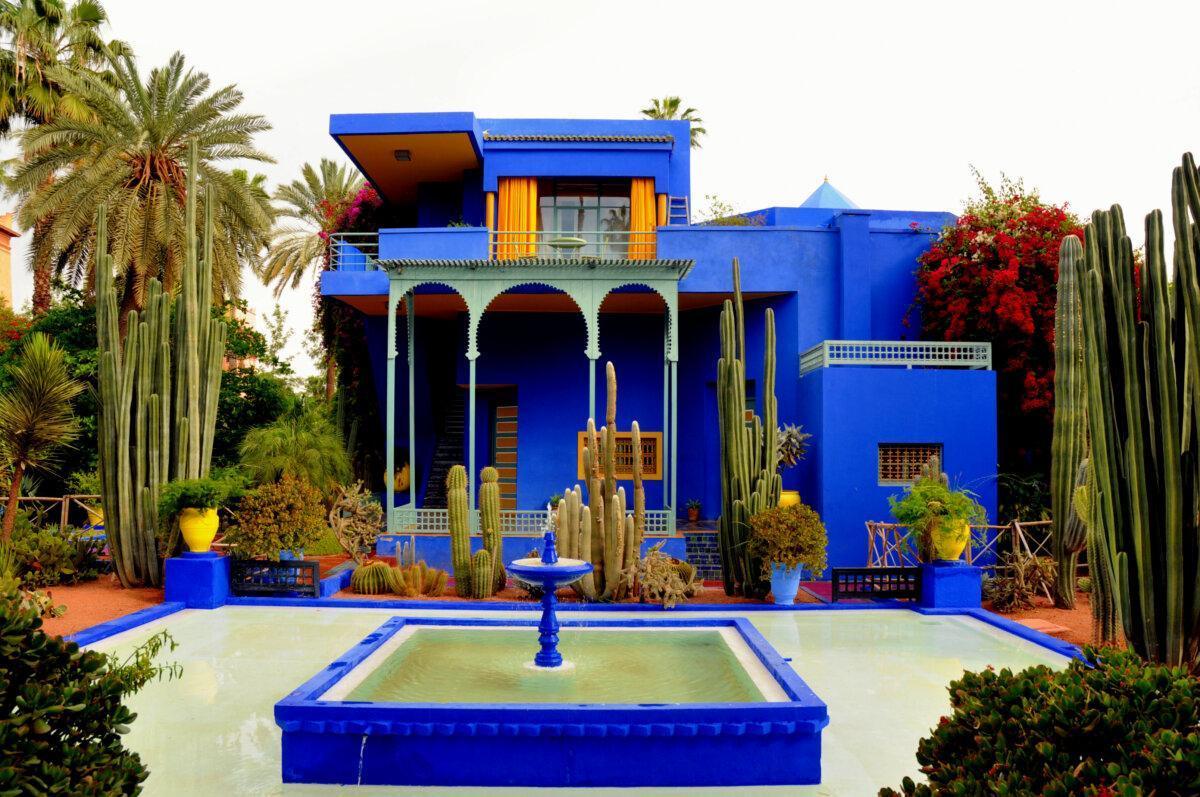
Majorelle Garden is one of the most photogenic places, thus very busy. Practical info (hours, last entry, prices) is published by the official site; at the reference date, access is announced from 8 a.m. to 6:30 p.m. with last entry at 6 p.m., and an entry fee of 170 Dhs (reduced rates possible depending on status). Booking on the official ticketing avoids unpleasant surprises.
Bahia: Morocco of patios and details
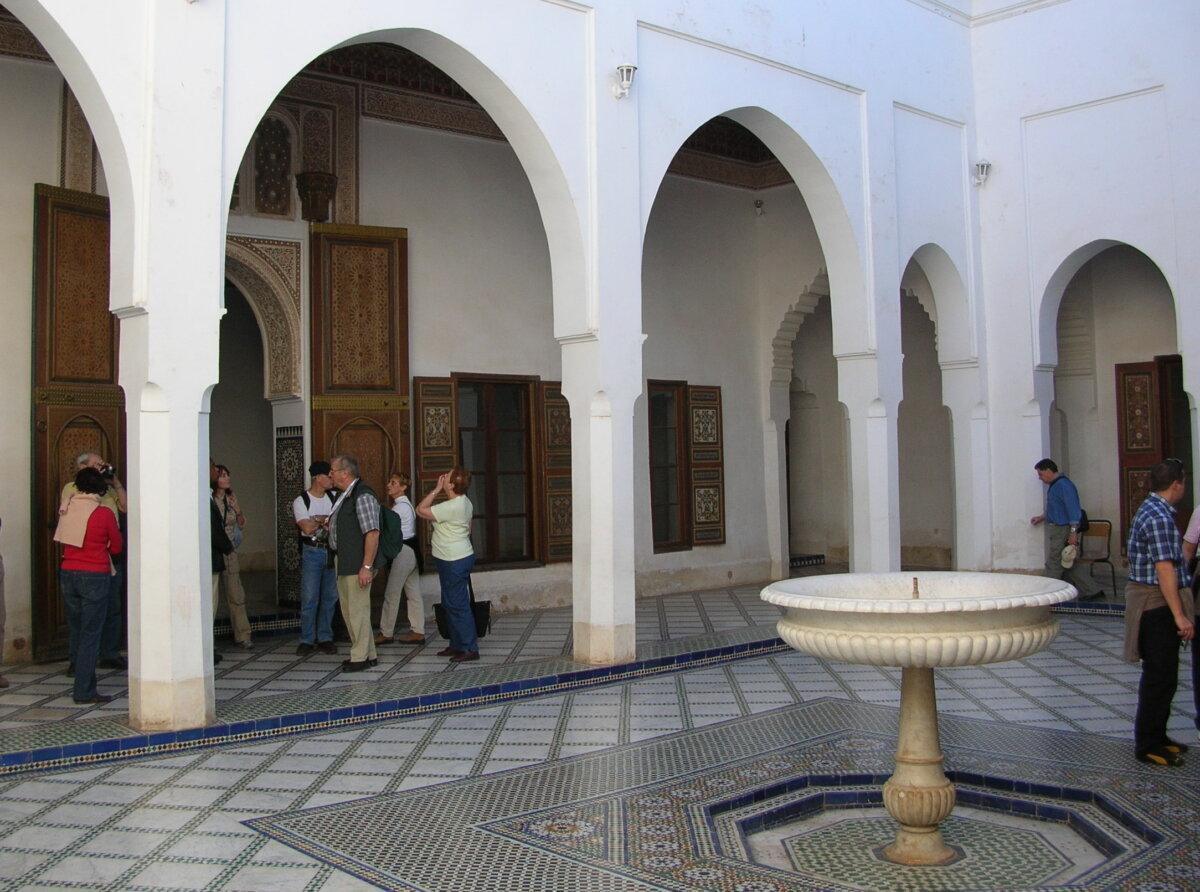
The Bahia Palace is an excellent “crash course” in decoration: woodwork, zelliges, ceilings, shadow plays. Go mid-morning, then take a break away from the flow before heading back to the souks.
Ben Youssef Madrasa: an architectural “wow”
Ben Youssef Madrasa is often cited as one of the city’s most beautiful ensembles. Its official site also publishes useful references: opening announced daily from 9 a.m. to 7 p.m. (hours adapted during Ramadan) and an indicative fee of 50 DH for foreign visitors (other rates depending on profiles). As always, check on site if you are in a special period.
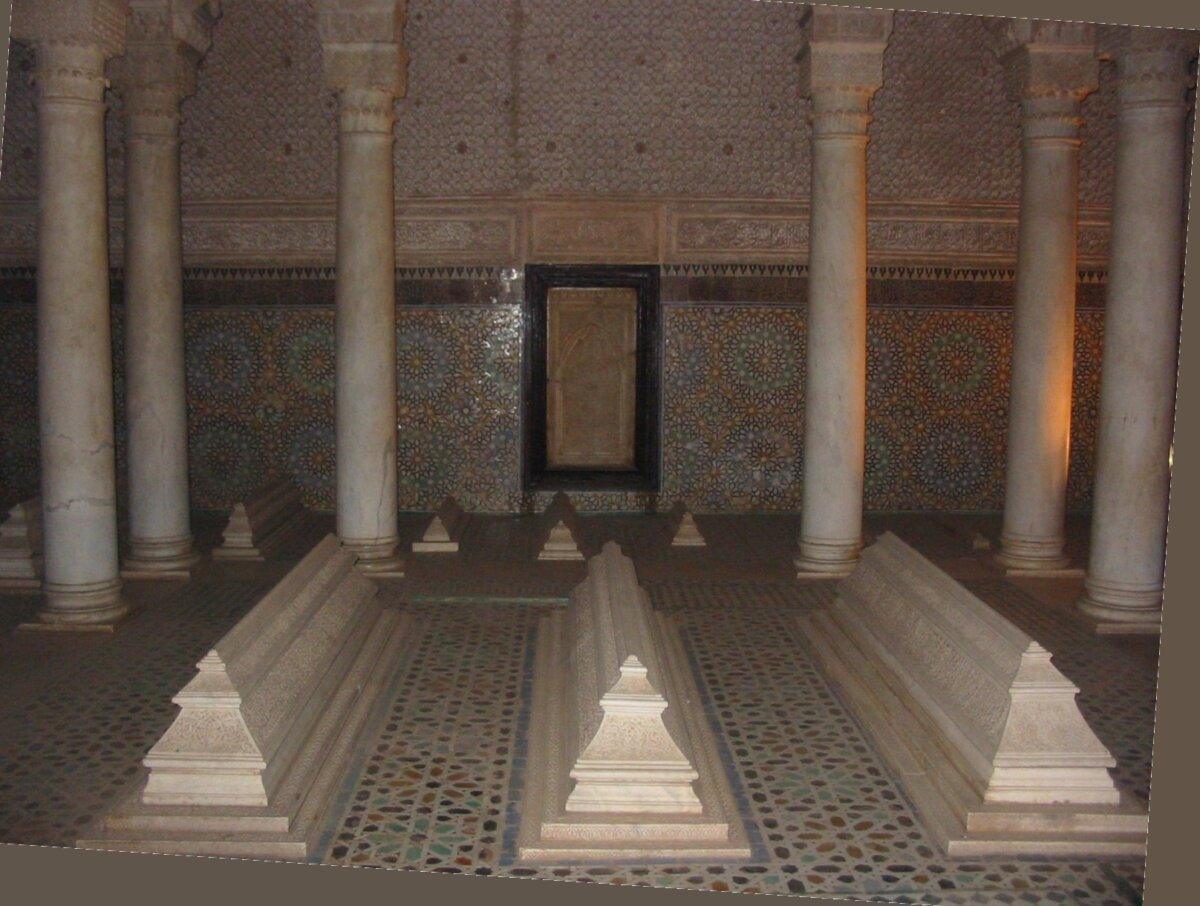
Saadian Tombs: short visit, strong atmosphere
The Saadian Tombs are visited quite quickly, making them a good “bonus” after a major site. Arrive early to avoid the line, then follow with a relaxed lunch: it’s the combo that avoids the feeling of “queue + queue + queue.”
Yves Saint Laurent Museum: window on fashion, timed visit
The Yves Saint Laurent Marrakech museum publishes precise hours: open every day except Wednesday, from 10 a.m. to 6 p.m., with last entry at 5:30 p.m. Convenient for building a “cool” late afternoon when walking becomes less pleasant.
Ready-to-use itineraries: 24 h, 48 h, 3 days
A good itinerary in Marrakech resembles a breath: a dense block, a break, a dense block, an evening. The times below are realistic for a “vacation” pace, with margins for detours.
24 hours: essentials without rushing
Morning (8:30 a.m.–12 p.m.): medina + first souks + Koutoubia spotting. Midday (12 p.m.–3 p.m.): calm lunch + return to riad (short nap or shower). Afternoon (3 p.m.–6 p.m.): Bahia or Ben Youssef Madrasa. Evening (6:30 p.m.–9:30 p.m.): Jemaa el-Fna + terrace (view), then return on foot/taxi depending on fatigue.
48 hours: the perfect balance
Day 1: medina + Bahia + Jemaa el-Fna (evening). Day 2: Majorelle Garden early + museum (YSL if you like fashion / the exhibition) + Guéliz in the afternoon, then sunset at your pace. The 48 h works very well if you keep a half-day “calmer.”
3 days: add a short excursion
Add an easy outing: Ourika Valley (nature), Agafay Desert (mineral landscape), or Essaouira (sea air). To avoid fatigue, block an excursion on day 2, then make day 3 gentler in the city (gardens, museums, targeted shopping).
Getting around, budget, safety: the stress-free kit
Two rules simplify life: 1) keep cash in small bills for taxis, buses, tips; 2) have a clear address (riad name + landmark + neighborhood), because the medina doesn’t always have “street/number” references as simple as elsewhere.
From the airport (RAK): taxi or bus 19
The airport is close to the center, so transfers are quick. The airport bus (line 19) is often cited around 30 MAD one way, with a wide schedule (often given between 6 a.m. and 11:30 p.m.). For taxis, several sources mention a regulated payment system at the airport and an official displayed fare (example cited: 85 dirhams to Jemaa el-Fna), which avoids hot negotiation on flight exit. Check the display on the day: rules evolve.
Indicative daily budget (excluding flight)
Prices vary mainly according to accommodation (riad vs international hotel), restaurant level, and number of paid visits. The “comfort” good plan: a well-located riad, 1–2 paid sites/day, and simple meals at midday.
| Profile | Accommodation | Meals | Visits & transport |
|---|---|---|---|
| Eco | 250–500 MAD | 120–200 MAD | 80–150 MAD |
| Comfort | 600–1200 MAD | 250–450 MAD | 150–300 MAD |
| Premium | 1500+ MAD | 500+ MAD | 300+ MAD |
Solicitations and “small scams”: simple responses
In the medina, the best defense is consistency: a calm “no thanks,” no justification, then keep going. If someone insists on “guiding you,” repeat the same phrase. For photos, ask first: some street artists expect a coin. For city taxis, agree on the price before getting in when there is no meter. It’s not mistrust: it’s just the rule of the game.
- Stay neutral: no debate, no explanation, keep walking.
- Set a point: “I’m going to Koutoubia” rather than “I’m looking for…”.
- Compare: 2 shops before buying an expensive item.
- Small bills: to avoid “I don’t have change.”
Hygiene & heat: 3 very profitable habits
Marrakech is not a “risk zone” daily if you keep simple habits. On traveler health, summaries remind that traveler’s diarrhea can affect 40–60% of travelers depending on destinations and hygiene conditions. Without paranoia: bottled water if sensitive, regular hand washing, and caution with foods very exposed to the sun.
The simplest lever often remains the most effective: hand washing with soap. A systematic review (Curtis & Cairncross, 2003) estimates a reduction in diarrheal disease risk of about 42–47% with soap washing. In travel, this translates to a reflex before eating and after toilets. V. Curtis & T. Cairncross, The Lancet Infectious Diseases (2003)
Another useful figure: in recent reviews, bacterial agents are often reported as responsible for about 80–90% of traveler’s diarrhea cases depending on the context. This explains why “eating very hot, very fresh, very clean” remains a winning strategy.
Finally, on the sun protection side, randomized trials on sunscreen show measurable benefits: a trial on the prevention of skin aging reports a 24% slower progression of aging with daily use compared to “as needed” use. In Marrakech in summer, it’s a simple reminder: hat + breaks in the shade + appropriate protection.
Easy excursions around Marrakech: choose according to your energy
The region offers rapid contrasts: mountains, valleys, mineral desert, Atlantic coast. Choose an excursion that complements your stay, not one that breaks your rhythm. If your stay is short, prefer a “half-day” or “easy day” outing rather than a bus marathon.
Atlas (Ourika): accessible nature
A good option if you want to see something other than the city: landscapes, villages, relative coolness depending on the season. Early departure, return late afternoon, quiet evening afterwards.
Agafay: rocky desert, close and photogenic
Agafay is not the Sahara: it is a mineral desert, very close, perfect for a sunset and dinner if you like “camp” atmospheres without a long trip.
Essaouira: breathe the Atlantic
When Marrakech heats up, Essaouira is a counterpoint: sea air, simpler medina, gentler pace. Count on a full day.
Methodology: how this guide was built
This guide responds to the intention to “discover / plan” with a simple method: cross-referencing official and institutional sources (UNESCO, monument and museum sites, airport transport information), then dating sensitive elements (schedules, prices, conditions). Updated: February 2026. Assumed limitations: in Marrakech, schedules and prices may change (Ramadan, construction, ticketing), so check official sites the day before for highly demanded places.
Actionable conclusion: your next step
If you are leaving for 48 hours, block 1 morning for “medina + souks,” 1 early slot for Majorelle, and 1 late afternoon at Jemaa el-Fna. If you are leaving for 3 days, add a “gentle” excursion and keep a half-day margin. Then, choose your neighborhood: medina if you want everything on foot (and accept a bit of noise), Guéliz if you prioritize easy access and taxis. Marrakech then becomes easy: a clear plan, breaks, and the city does the rest.
FAQ Marrakech
How many days are needed to visit Marrakech?
2 days are enough for the essentials (medina, Bahia or Ben Youssef, Majorelle, Jemaa el-Fna). 3 days allow adding an excursion and slowing down without frustration.
What is the best time to visit Marrakech?
Spring and autumn offer the best comfort/atmosphere compromise. In summer, leave early in the morning, take a long break, go out again in the evening.
Is Jemaa el-Fna square listed by UNESCO?
Yes: UNESCO has inscribed the “cultural space of Jemaa el-Fna square” on the Representative List of the Intangible Cultural Heritage.
Is the Marrakech medina a World Heritage site?
Yes, the Marrakech medina has been listed as a World Heritage site since 1985.
How to get from the airport to downtown?
Two simple options: bus 19 (often cited around 30 MAD one way) or taxi with a posted/framed fare at the airport according to the systems in place. Check the signage on the day.
Should I book the Majorelle Garden?
When attendance is high, booking via the official ticket office is a real time saver. Schedules, prices, and conditions are published on the official site.
What are the opening hours of the Yves Saint Laurent Marrakech museum?
The museum announces it is open every day except Wednesday, from 10 am to 6 pm (last entry 5:30 pm).
Can you visit the Ben Youssef Medersa without an online ticket?
The official site mentions that ticket purchase can be done at the entrance, and publishes indicative schedules and prices (variable depending on periods).
Which neighborhoods to choose for sleeping?
Medina to experience Marrakech on foot (riad, alleys). Guéliz/Hivernage for simple routes, more hotels, and easy taxi rides.
What are good health habits when traveling?
Regular hydration in hot weather, hand washing (documented effect on the risk of diarrheal diseases), and reasonable sun protection according to your sensitivity.