Update: all images below have been replaced with public and stable URLs (Wikimedia Commons), unique and tested.
TL;DR: In 2025, the most profitable path for an individual remains self-consumption with surplus sale (3 to 9 kWc) without battery initially. Price ranges including installation: ~€5,000–7,000 (3 kWc), €9,000–12,000 (6 kWc), €12,000–16,000 (9 kWc). Aids: self-consumption premium (paid over 5 years), surplus buyback, possible eco-PTZ loan and 5.5% VAT for ≤ 9 kWc starting October 1st, 2025.
Sommaire
Definition & Principles
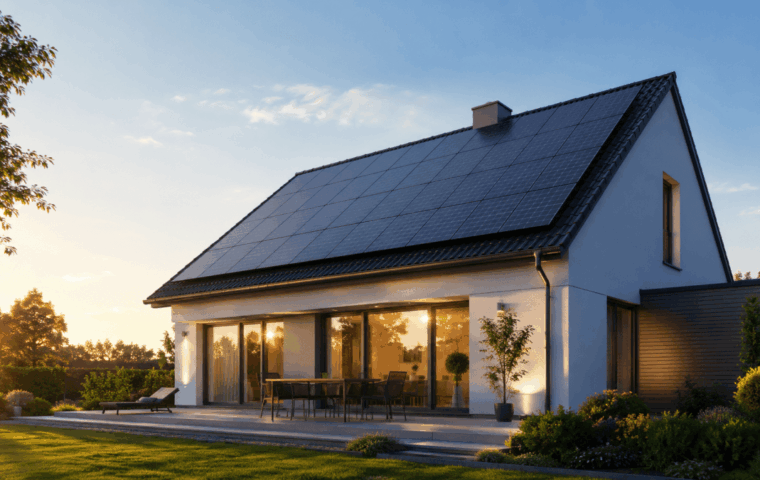
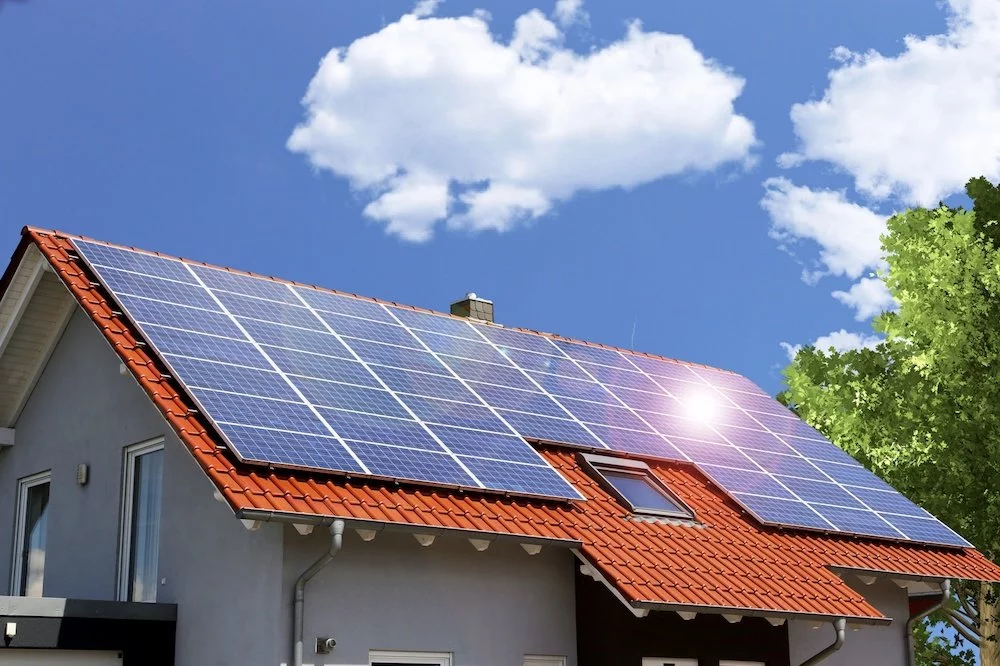
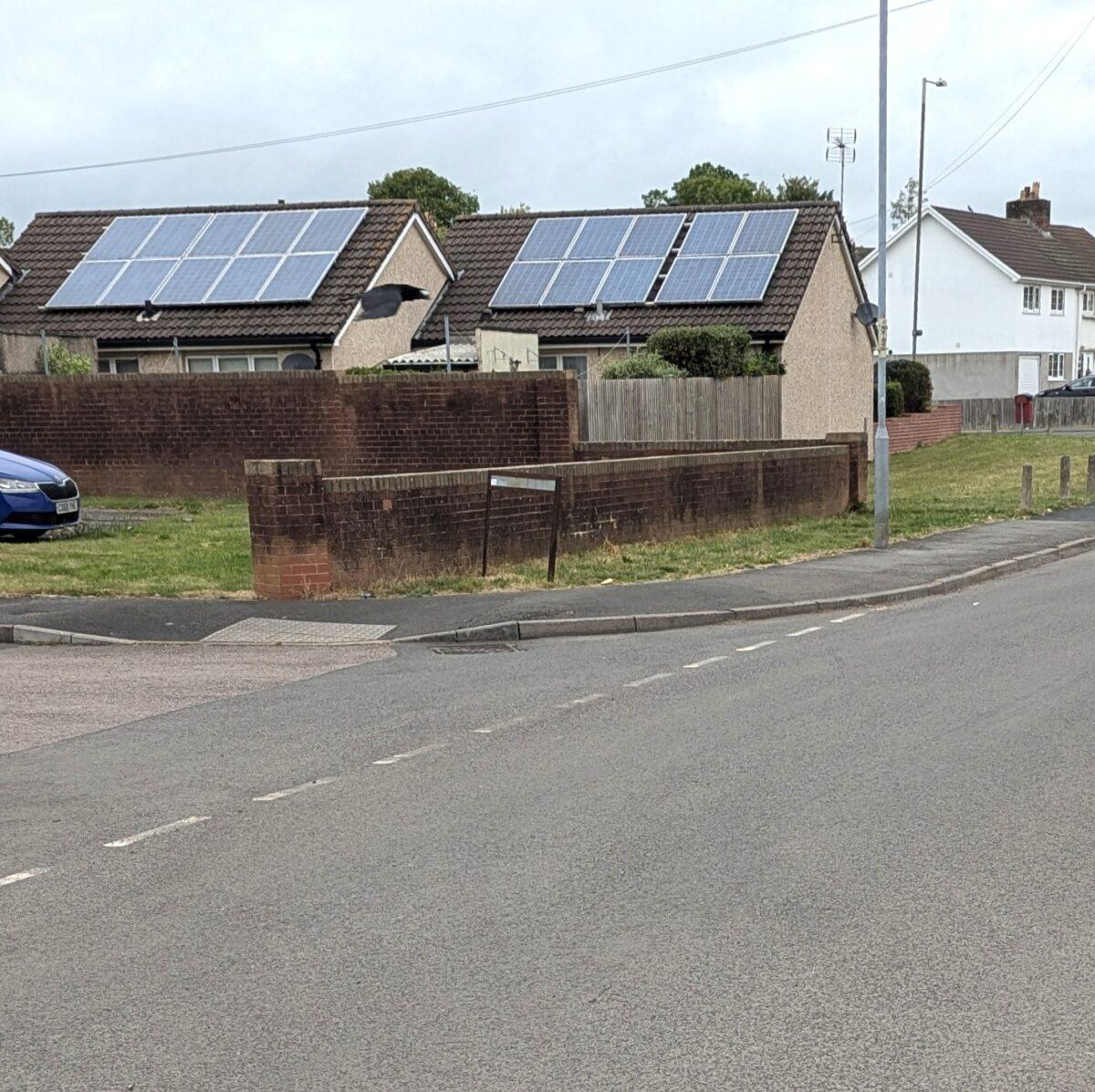
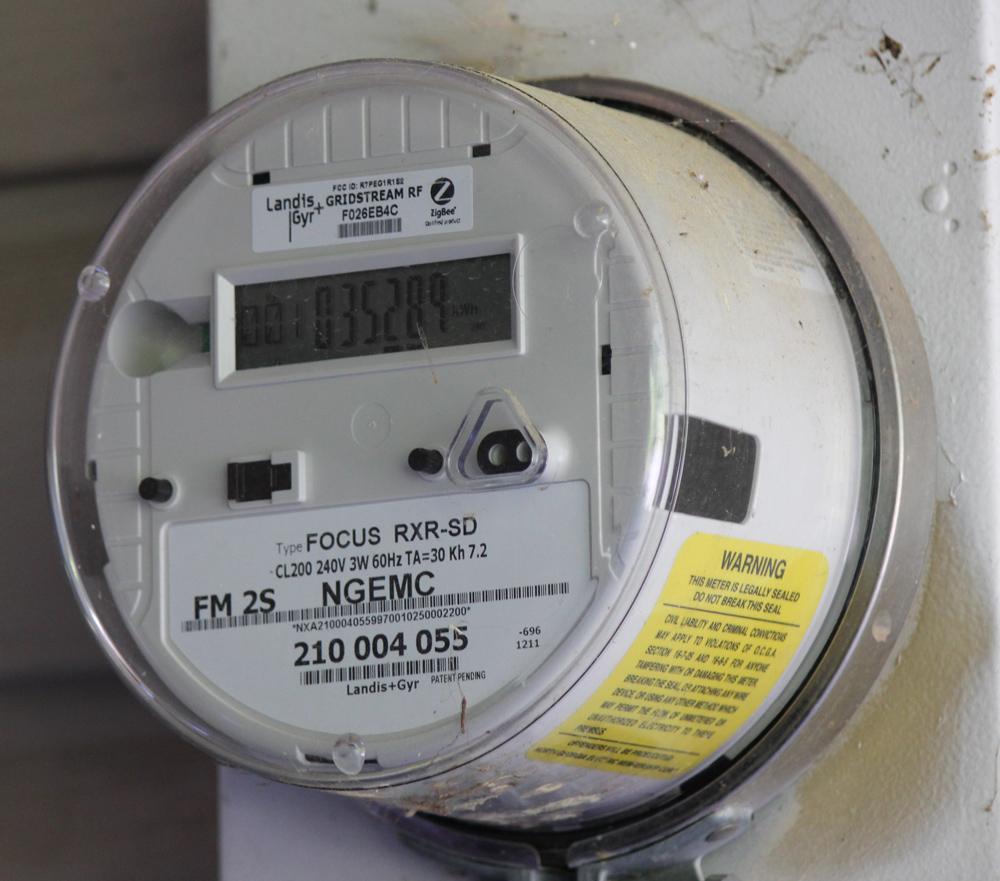
A photovoltaic solar panel (PV) converts light into electricity. A residential installation includes modules, an inverter (or micro-inverters), protections, a mounting structure (overlay or integration), and a meter adapted to the surplus purchase contract. The production is first consumed on-site (self-consumption), with the excess injected and bought back.
Why Switch to Solar in 2025
- Lower bill: every kWh produced and consumed at home is not bought from the supplier.
- Climate: very low carbon electricity in France + local solar kWh.
- Resilience: diversification and less exposure to price increases.
- Green value: an equipped, declared, and compliant property is better valued.
Key Figures & Technical Benchmarks
| Parameter | Order of magnitude (Metropolitan France) | Comment |
|---|---|---|
| Useful irradiation | ≈ 1,000 to 1,400 kWh/kWc/year | North: ~1,000–1,100; South: ~1,200–1,400 (well-oriented roof, 20–35°). |
| Self-consumption without battery | ≈ 25–45% | Depending on daily profile, power and control (DHW, heat pump, EV, etc.). |
| Module lifespan | 25–35 years | Typical performance warranty: 80–90% at 25–30 years. |
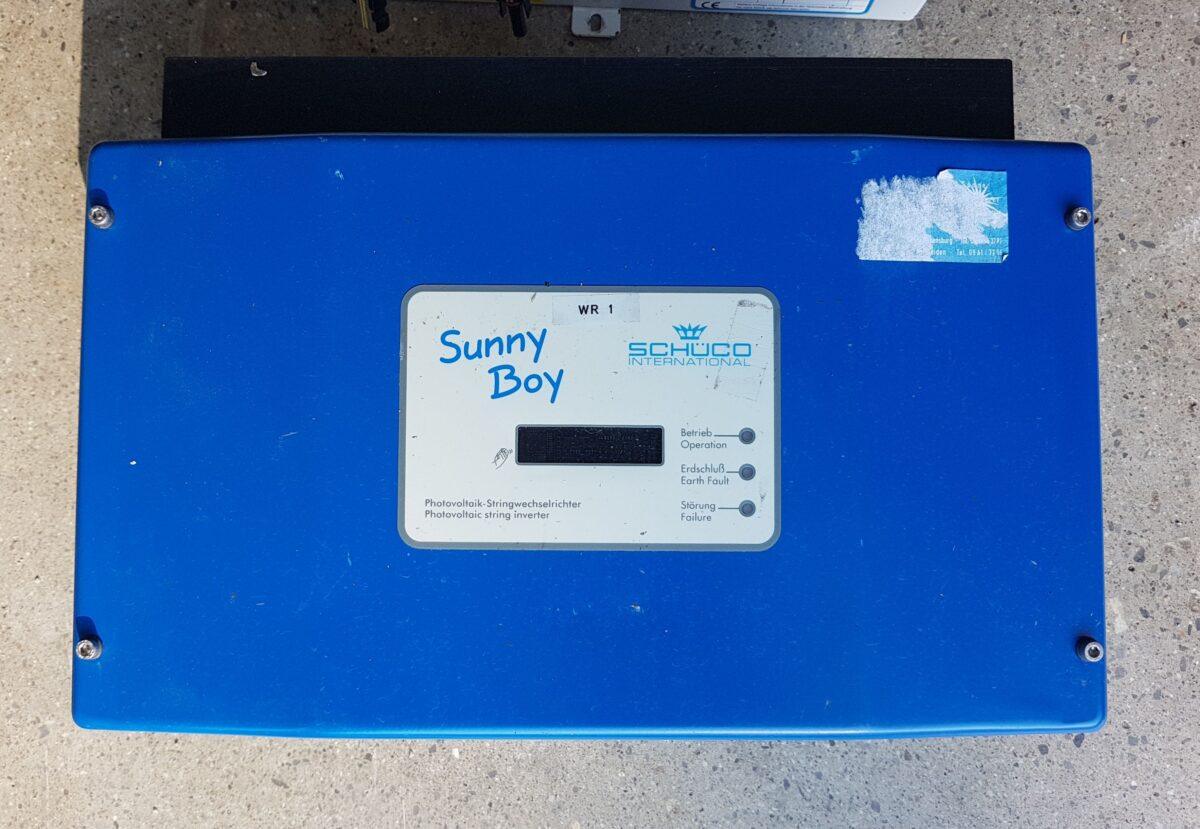
| Central inverter | Warranty 5–12 years | Replacement possible around 10–15 years (warranty extension possible). |
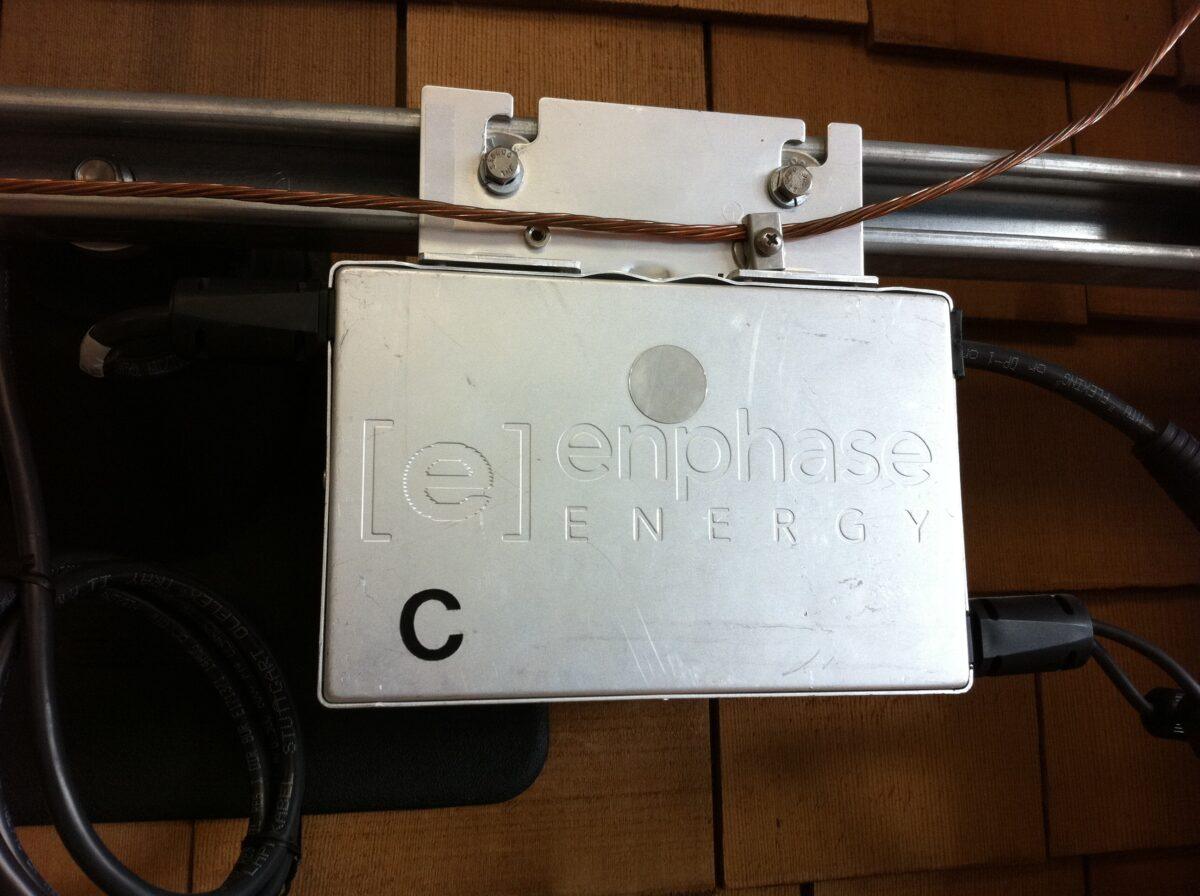
| Micro-inverters | Warranty 10–25 years | Panel-by-panel granularity; higher unit cost. |
Choosing Your Installation Well (Tech & Sizing)
1) Power to Install (kWc)
- 3 kWp (~6–8 modern panels): household of 2–3 people, simplified connection, high self-consumption rate.
- 6 kWp (~10–16 panels): household of 3–5 people, with controllable DHW/heat pump/EV.
- 9 kWp (~16–24 panels): heavy electrical uses (heat pump + EV), required available surface area.
2) Modules: N-type, efficiency & guarantees
In 2025, many residential modules switch to N-type (TOPCon/HJT) with 21–23% efficiency. To check: product warranty (12–25 years), performance warranty (e.g. 88–92% at 25–30 years), IEC certifications, and resistance to micro-cracks (half-cut, multiple busbars).
3) Central inverter vs micro-inverters
- Central inverter: economical, simple; sensitive to shading (except optimizers).
- Micro-inverters: “panel by panel” production, very robust against shading; higher cost.
- Optimizers: intermediate solution that limits shading impact with central inverter.
4) Installation: overlay vs integration
- Overlay (SIT): panels above the roofing. Less risk of leaks, better ventilation → better efficiency.
- Integration (IAB): panels replacing the roofing. Aesthetic but more demanding (waterproofing/ventilation).
5) Battery: useful or not?
For an individual, the battery is not essential to start. It can increase self-consumption (and provide partial backup), but adds significant cost. Start without one, optimize usage (DHW/heat pump/EV during the day), then add a battery if the profile suits.
Costs, aids & taxation
1) How much does a PV installation cost in 2025?
- 3 kWp: ~€5,000–7,000 (installation included).
- 6 kWp: ~€9,000–12,000.
- 9 kWp: ~€12,000–16,000.
Adjustments apply depending on roof complexity, access, structure, optimizers/micro-inverters, etc.
2) Financial aids (France, 2025)
- Self-consumption bonus (≤ 100 kWc, paid over 5 years) : scale revised quarterly.
- Surplus buyback (OA contract) : guaranteed rate for the duration of the contract, quarterly scale.
- VAT : 5.5 % for ≤ 9 kWc from 01/10/2025 (instead of 10 %).
- Eco-PTZ : up to €50,000 to smooth out the remaining cost (subject to conditions).
- Local aids (regions/communities) : possible, check compatibility with national aids.
3) Operating costs
- Insurance : often covered by home insurance (declare the installation).
- Inverter : budget €1,000–2,000 at 10–15 years (if central inverter).
- Maintenance : annual visual inspection, gentle cleaning if significant deposits.
Profitability: typical scenarios
Profitability depends on production (kWh/kWc/year), self-consumption rate, avoided kWh price, and surplus buyback rate.
Common assumptions (to adapt)
- Production: ≈ 1,150 kWh/kWc/year (SE/SO roof ~25° in temperate zone).
- Electricity purchase price: ≈ €0.25/kWh (order of magnitude 2025).
- Bonus & buyback tariff: scales of the eligibility quarter.
Example A — 3 kWc (2–3 people)
- Annual production: ≈ 3,450 kWh.
- Self-consumption 35% → ≈ 1,210 kWh consumed on-site (savings ≈ €300/year at €0.25/kWh).
- Surplus sold: ≈ 2,240 kWh (OA revenue according to scale).
- Investment: €5,000–7,000 → typical payback ~8–12 years.
Example B — 6 kWc (3–5 people + DHW/heat pump/EV)
- Annual production: ≈ 6,900 kWh.
- Self-consumption 45% → ≈ 3,100 kWh (savings ≈ €775/year).
- Surplus sold: ≈ 3,800 kWh (OA revenue).
- Investment: €9,000–12,000 → payback ~7–11 years.
Battery: effect on ROI
A 5–10 kWh battery can raise self-consumption to 65–85% depending on profile, but adds €5,000–10,000. Useful for comfort/backup; IRR remains case-dependent.
Administrative procedures & connection
- RGE visit & quote: compare 2–3 detailed offers (brands, references, warranties, structure, protections, monitoring).
- Prior declaration at town hall (roof).
- Network manager file (e.g. Enedis) for self-consumption with surplus sale.
- CONSUEL as applicable.
- OA purchase contract (quarterly rate).
Warranties, maintenance & monitoring
- Modules: product warranty 12–25 years; performance over 25–30 years (e.g. 90% at 25 years).
- Inverter: 5–12 years (central); micro-inverters up to 20–25 years (depending on brand).
- Structure/waterproofing: check warranties and technical opinions.
- Monitoring: monitoring app (production/self-consumption/injection), alerts, exports.
- Maintenance: annual visual inspection; gentle cleaning if necessary (never high pressure).
10 common mistakes to avoid
- Oversizing without daytime uses → surplus poorly valued.
- Neglecting shading (chimneys, trees, dormers) → hidden losses.
- Choosing integration without necessity → lower efficiency, waterproofing complexity.
- Forgetting surge protector/sections → electrical non-compliances.
- Underestimating the inverter (DC/AC sizing, ventilation, warranty).
- Ignoring paperwork (town hall prior declaration, CONSUEL, OA, VAT certificates).
- Omitting home insurance (production/sale declaration).
- Signing without detailed quote nor schedule/penalties.
- No control system (DHW/heat pump/EV) → low self-consumption.
- Forgetting inverter at 10–15 years → no savings/warranty extension.
Tools, simulators & checklist
- ☑ Sunlight study (shadows) + producible kWh/kWp/year & self-consumption assumptions.
- ☑ Detailed quote (modules, inverter/micro, structure, cables, protections, labor, commissioning, procedures).
- ☑ RGE/insurance compliance, schedule, payment terms (no excessive deposit).
- ☑ Aid scales (bonus, OA) for the considered quarter.
- ☑ Single-line diagram, calculations, NFC 15-100 & DTU 40.x compliance.
For a global view of your house: energy installation 2025 and cost of a 100 m² house.
Trends 2025-2027
- Generalized N-type (TOPCon/HJT), increasing efficiencies.
- String + optimizers: cost/shadow compromise compared to micro-inverters.
- VAT 5.5 % for ≤ 9 kWc as of 10/01/2025.
- Control (DHW/heat pump/EV): key to boosting self-consumption.
- Structured recycling sector (aluminum/glass/silicon).
FAQ — Solar Panels 2025
What power should I install at home?
3 to 6 kWc cover most households. Size to maximize self-consumption (daily profile, DHW/heat pump/EV). 9 kWc is justified if you have high usage and the space.
Is a battery necessary?
Not necessarily. Start without one and optimize your daytime usage. The battery is added if your profile justifies it (target self-consumption, comfort, backup).
What aids are available in 2025?
Self-consumption premium (paid over 5 years) and surplus buyback according to the quarterly scale. Eco-PTZ possible. VAT 5.5 % for ≤ 9 kWc from 10/01/2025.
Surplus sale or total sale?
The standard route in 2025 is self-consumption with surplus sale. Total sale is no longer supported for ≤ 9 kWc.
What profitability can be expected?
Typically 6–10 % IRR, payback ~7–12 years depending on region, profile, and quarterly rates.
What administrative procedures?
Declaration at town hall, network operator file (e.g. Enedis), possible CONSUEL, OA purchase contract. The RGE installer generally handles these formalities.
Reference Sources
- Service-Public — Self-consumption premium (2025 updates)
- Économie.gouv — VAT 5.5 % for PV ≤ 9 kWc (as of 10/01/2025)
- EDF OA — Contract S21 (self-consumption & surplus buyback)
- France Rénov’ — simulators & support
- ADEME — Photovoltaics for individuals
- Enedis — Connecting a production installation