What is a condensing boiler?
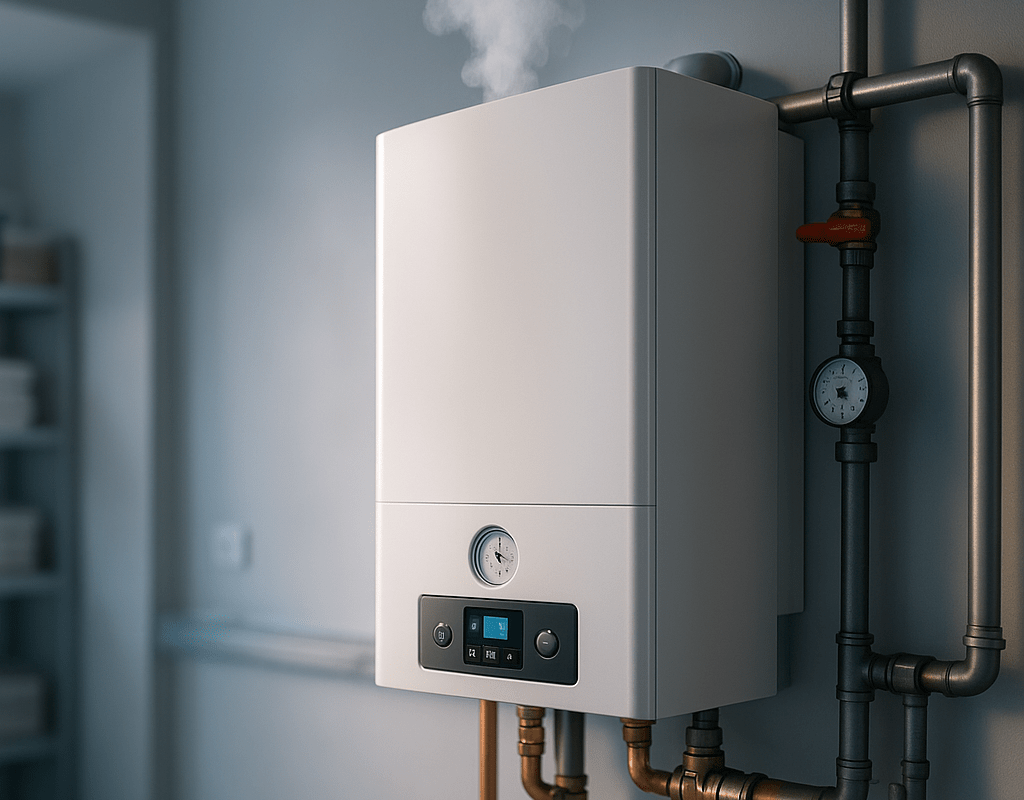
Specifically, the condensing boiler operates like a traditional boiler but with an additional step. It exploits the water vapor contained in the combustion gases, whereas a standard boiler lets this energy escape through the flue. This little “thermal bonus” changes everything.
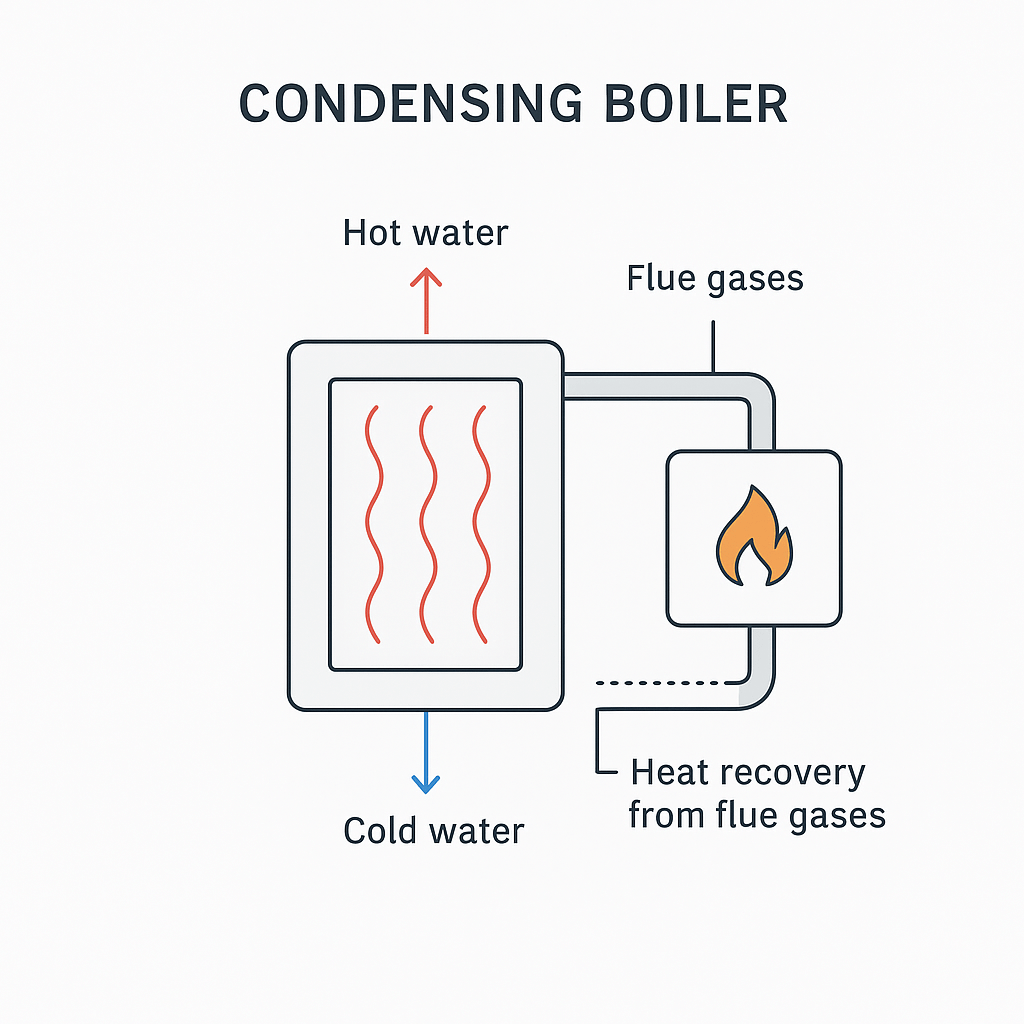
The basic principle
The core of the system is quite easy to understand: combustion heats a heat exchanger, which then transfers energy to the water in the heating circuit. Then, the flue gases pass through a second, more efficient heat exchanger, where they are cooled enough for the water vapor to condense. This condensation releases latent heat, recovered for heating purposes.
In other words, the boiler reuses energy that previously went straight into the air. This is all the more interesting because the water returning from radiators or underfloor heating is cold. In the French housing stock, where many old homes remain, this logic allows for energy savings without necessarily redoing the entire heating system.
- Conventional boiler: heats the water, then releases the flue gases almost as they are.
- Condensing boiler: cools the flue gases to recover part of their energy.
- Result: less fuel consumed for the same comfort, especially in mid-season and at low temperatures.
How does a condensing boiler work?
The operation is based on a simple idea: the lower the return temperature, the more the boiler can condense the water vapor contained in the flue gases. It thus transforms part of the losses into useful heat. This is where efficiency increases, provided that the installation supports this mode of operation.
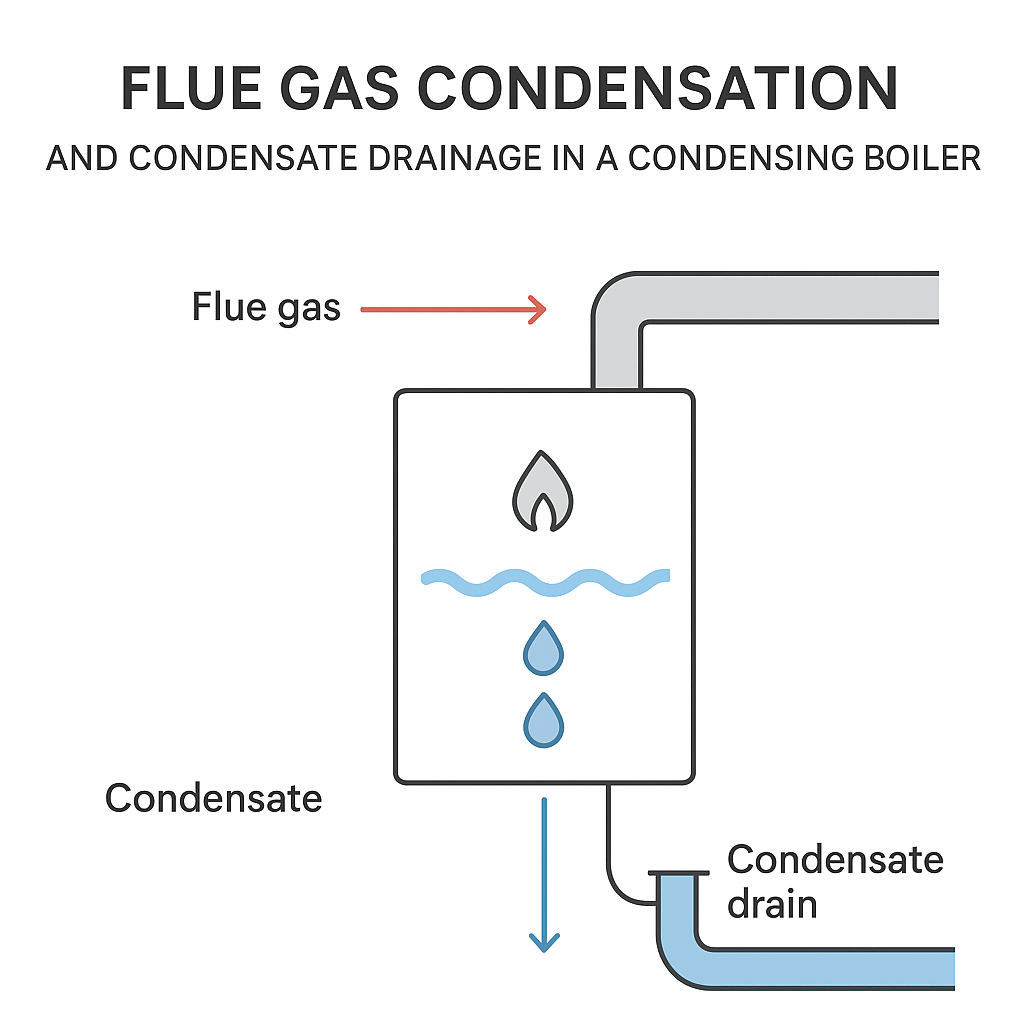
To go further into the principle, remember above all that the boiler does not create calories: it recycles better those it already produces. It is more refined, cleaner in use, and often more cost-effective than a simple “like-for-like” replacement.
Heat recovery
The flue gases pass through a heat exchanger designed to maximize thermal exchanges. When their temperature drops sufficiently, the water vapor condenses and releases heat. This energy is then reinjected into the circuit, often to preheat the return water before it reaches the burner. The key point is therefore the balance between supply temperature, return temperature, and power modulation.
In practice, this recovery is more effective with a low-temperature installation or a well-insulated house. If the return water remains too hot, condensation decreases, and the gains melt away like snow in the sun. This is not a failure, just a physical limit to keep in mind.
Condensate drainage
Condensation produces water, but not just any water: the condensates are slightly acidic. They must therefore be properly drained, often into the wastewater system, sometimes with a neutralizer depending on the case. On a new installation or major renovation, this technical point must be anticipated from the start, not improvised at the last minute.
This is also where the most concrete constraints appear: available connection, drainage slope, proximity to a trap, compliance of the flue duct. If the project is more complex than it seems, it is better to plan for it from the quotation phase.
Can a condensing boiler be installed with old radiators?
Yes, in many cases, but not always with the same level of performance. A condensing boiler can work very well with cast iron or steel radiators, especially if the system is well adjusted. However, the warmer the return water, the less effective the condensation. This is where the real issue lies.
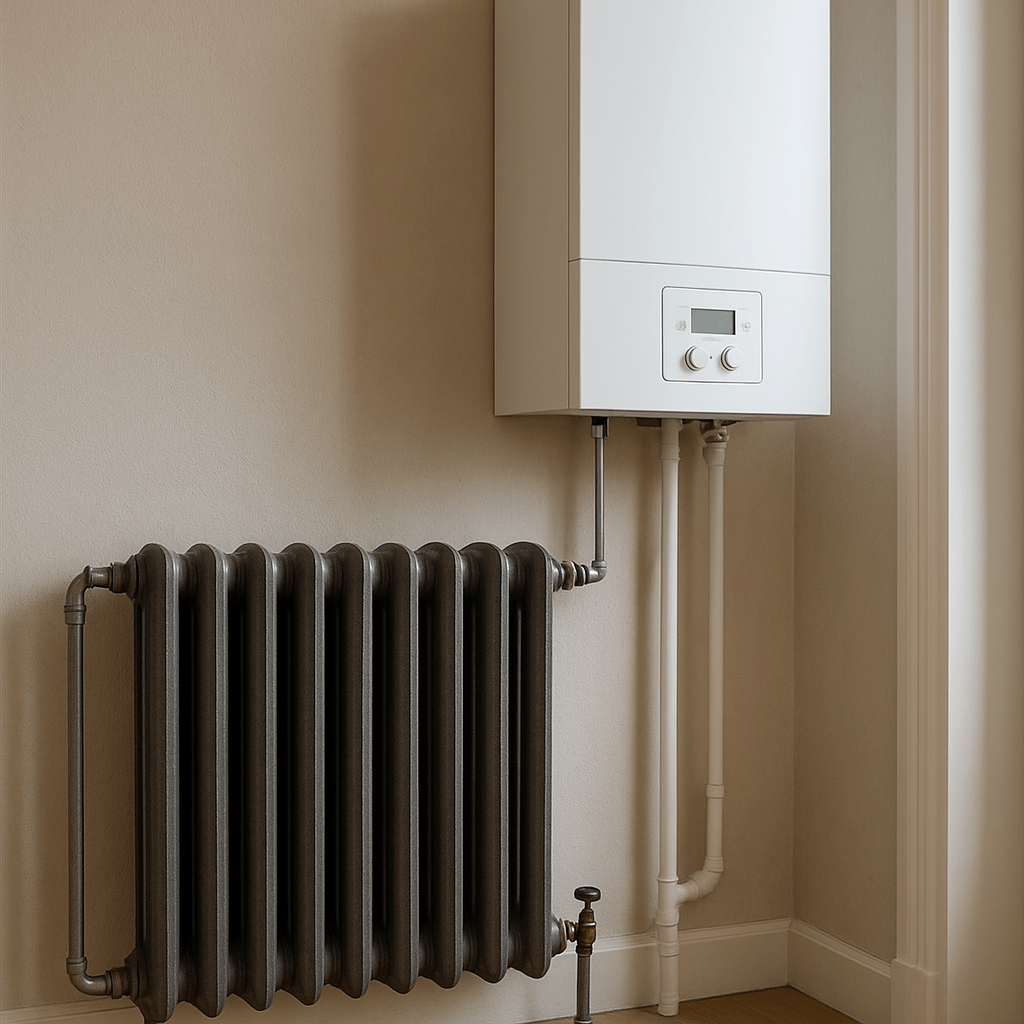
Old radiators, high temperature and low temperature
Old radiators are not necessarily a problem. The real issue is the operating temperature. A condensing boiler performs best with low-temperature emitters, such as underfloor heating or radiators sized to work with cooler water. With oversized old radiators, comfort can remain good, but actual efficiency will be more variable.
In other words, a condensing boiler does not magically transform an old system into a high-performance network. If the building was designed for high temperatures, there is a gain, but it may be partial. Hence the importance of a thorough diagnosis before signing the quote.
Technical points to check before replacement
- Hydraulic condition: circulation, balancing, possible sludge.
- Flue: compatibility with an evacuation adapted to cooled flue gases.
- Condensates: presence of an easy and compliant drainage.
- Regulation: thermostat, water curve, outdoor sensor if necessary.
- Space: access for maintenance and available space in the room.
The right choice is not just a matter of brand: it depends on the existing installation, the type of emitters, and the usage mode of the dwelling.
What efficiency and savings can be expected?
The efficiency of a condensing boiler is higher than that of a standard boiler, but it should be viewed with some perspective. Manufacturers often announce very flattering figures because condensation allows recovering “lost” heat. In real conditions, the gain mainly depends on the return temperature, the settings, and the insulation of the dwelling.
What works well in a renovated apartment will not necessarily yield the same result in a poorly insulated house. Conversely, a very well-adjusted installation can perform better than expected. That is why savings should never be promised as a fixed figure: they are calculated on a case-by-case basis.
Understanding the actual efficiency
On technical data sheets, you will sometimes see efficiencies above 100%. This is not a calculation error, but a matter of reference: it is often expressed on the LHV basis, meaning without including the recovered latent heat. In real life, the useful efficiency remains excellent, but it is nothing magical. It simply reflects a better exploitation of the energy contained in the fuel.
The return temperature here acts as the conductor. The lower it is, the more condensation activates. A well-adjusted water curve, a suitable circulator, and a balanced network help a lot. Without these, the boiler remains efficient but less “condensing” than advertised.
Factors influencing savings
- Dwelling insulation: less heat loss, less energy consumed.
- Heated surface area: a large poorly adjusted dwelling quickly loses the advantage.
- Domestic hot water: DHW needs can weigh heavily depending on usage.
- Maintenance: burner, heat exchanger, settings, and safety must remain optimal.
ADEME also reminds, in its heating guide, that a well-sized and well-regulated system counts as much as the equipment itself. In short: a good boiler poorly controlled rarely works miracles.
What budget should be planned for purchase and installation?
The budget for a condensing boiler depends on the power, fuel, wall-mounted or floor-standing format, and additional work. The price displayed in the store only tells part of the story. Labor, connections, commissioning, and any hydraulic adaptations quickly add up.
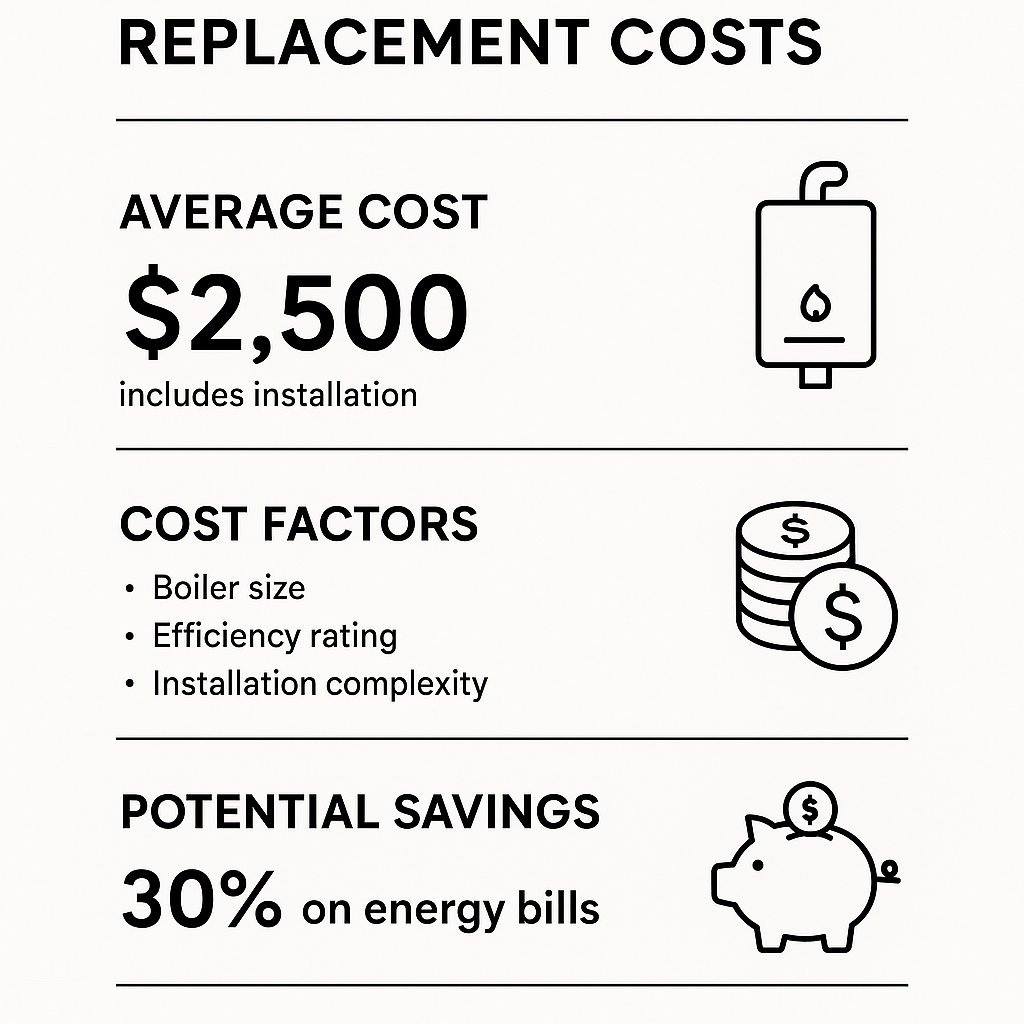
Price according to configuration
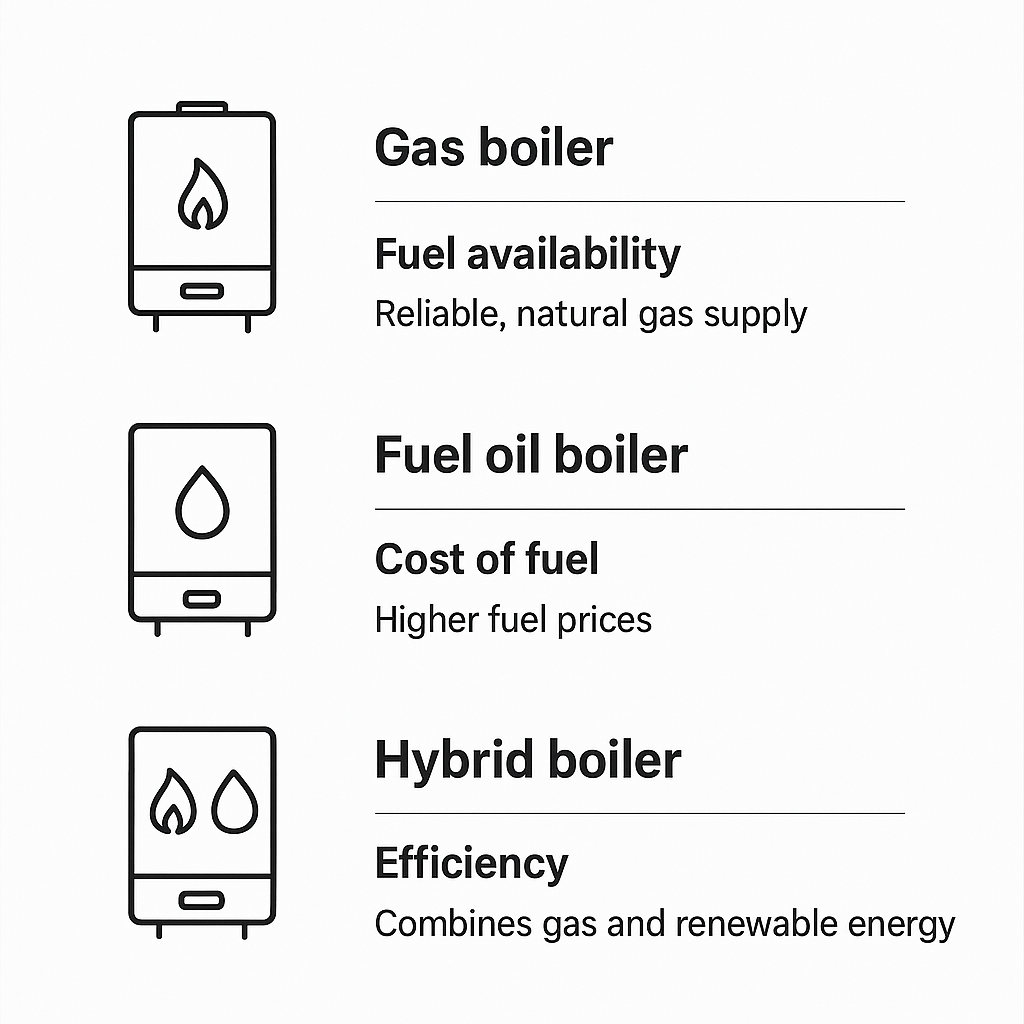
A simple wall-mounted condensing gas boiler is often cheaper than a floor model with an integrated tank. Fuel oil, when it still exists in some projects, may require additional adaptations. As for hybrid models, they combine several technologies and logically increase the initial budget, even if they can smooth consumption over time.
To refine your budget, it is especially important to detail the items not to be forgotten. This is useful because a quote that seems attractive can become much less so once accessories and connections are added.
Cost items to anticipate
- Purchase of the device: power, brand, hot water production, options.
- Installation: removal of the old system, fixing, connections, adjustments.
- Flue and chimney work: lining or adaptation if necessary.
- Condensates: drainage, siphon, possible neutralization.
- Commissioning: initial setup and combustion check.
Operating and maintenance costs
Operating costs are not limited to energy consumption. Annual maintenance, possible minor repairs, and the device’s lifespan must be included in your overall calculation. On this point, Service-Public.fr on boiler maintenance reminds of the importance of regular checks for safety and performance.
If you compare several offers, think in terms of total cost over ten years rather than just the initial price. A boiler that is a bit more expensive to buy but better modulating and easier to maintain may end up costing less. The icing on the cake: it often spares you the little daily annoyances.
How to choose your condensing boiler?
The right model is not necessarily the most powerful or the most “premium.” Above all, it must fit your home, your hot water needs, and your heat emitters. A properly sized boiler is one that modulates correctly, condenses often, and doesn’t wear out from short cycling.
The condensing boiler is not magical: it only becomes truly interesting when the installation is coherent. Without adjustment or hydraulic control, the gain quickly fades.
Priority technical criteria
First look at the useful power, modulation range, type of domestic hot water production, and compatibility with your network. If you have underfloor heating, a smart thermostat, or an outdoor sensor, the boiler can operate under better conditions. Conversely, an oversized unit risks short cycling and faster wear of its components.
It is also useful to compare seasonal efficiency, flame stability, and ease of access to maintenance parts. Noise, often overlooked, also matters if the boiler is installed near a living area. In short, comfort is not just about the displayed temperature.
Practical selection criteria
- Location: technical room, kitchen, pantry, laundry room, condominium.
- Type of housing: apartment, old house, renovated home.
- Energy network: city gas, existing oil, hybrid solution.
- Maintenance: easy access for annual servicing and repairs.
- Overall budget: purchase, installation, accessories, usage over several years.
If your project is still unclear, take the time to compare the real needs of the home, the necessary power, and installation constraints. This is often where the difference lies between a comfortable purchase and a shaky compromise.
Maintenance and technical constraints not to overlook
A condensing boiler requires annual maintenance, and it is not just a cosmetic formality. Combustion must be checked, the heat exchanger cleaned if necessary, condensate drainage controlled, and regulation ensured to be working properly. The boiler maintenance guide reminds of these obligations and their direct impact on the safety and longevity of the appliance.
The best choice is often the one that simplifies maintenance. An accessible, properly installed, and well-adjusted unit will save you from unpleasant surprises. And frankly, that counts as much as the beautiful promises in the catalog.
FAQ about condensing boilers
Does a condensing boiler work with cast iron radiators?
Yes, often. Cast iron radiators can remain compatible, especially if the system is well balanced and the return temperature is not too high. However, condensation will be more effective with low-temperature emitters or a well-insulated home. In an old house, the gain can be real without reaching that of underfloor heating.
Is a specific condensate drainage required?
Yes, in most cases. Condensates must be directed to a wastewater drain, sometimes with a neutralizer if the context requires it. This is a technical point to verify before installation, especially in renovations where connections are limited. When drainage is simple, the work also progresses faster.
Can a condensing boiler be installed in an apartment?
Yes, provided that location, flue, and condensate drainage constraints are respected. Apartments connected to gas are even frequent candidates for this type of replacement. The blocking point often comes from the old flue or lack of space, not the boiler itself. In condominiums, common installation rules must also be checked.
What is the difference with a low-temperature boiler?
A low-temperature boiler heats water to a lower temperature than an older classic model, but it does not recover the latent heat from the flue gases like a condensing boiler. Condensation therefore goes further in energy recovery. This is where the real efficiency difference lies, especially over a full heating season.
Does annual maintenance really change consumption?
Yes, because a dirty burner, a dirty heat exchanger, or poorly adjusted regulation reduce performance. Annual maintenance is not just about ticking a regulatory box: it secures the appliance, stabilizes combustion, and helps maintain actual efficiency. Over several years, the difference is noticeable, including in comfort.
Is a condensing boiler suitable for all homes?
No. It is very relevant in many cases, but not all. If the system is too hot, if condensate drainage is complicated, or if the home is poorly insulated without the possibility of adaptation, the gain can be limited. Hence the importance of a diagnosis before purchase, especially when replacement is urgent.