Useful benchmarks for a good comparison
The right reflex remains simple: compare offers on an identical basis, then read the conditions in detail. A clear offer is quickly recognizable. It presents readable rates, specifies the price evolution, and avoids poorly indicated additional fees. Conversely, a highlighted discount quickly loses its appeal if the subscription increases or if the off-peak hours do not match your habits. This guide is intended for tenants, owners, and households equipped with a water heater. It also helps households who want to lighten their bill without getting lost in technical vocabulary. The goal is simple: to know how to decipher an offer, identify the truly useful points, and avoid the most common traps.
- To prioritize: a readable, dated, and clearly explained price.
- To check: the subscribed power, the tariff option, and the frequency of revisions.
- To watch out for: time-limited discounts and vague comparisons.
- To keep in mind: the cheapest offer over one month is not always the most cost-effective over a year.
The types of offers to know
In France, you encounter two main categories. On one side, there is the regulated tariff for electricity. Its framework is public. On the other, there are market offers. They can propose a fixed price, indexed price, or a more specific operation. To compare properly, the National Energy Ombudsman advises looking at the fixed part and the variable part. Always do this on an identical basis. A fixed price can be reassuring. You better know where you stand during the contract duration. An indexed price follows a benchmark defined in the offer. It can become advantageous at certain times, then less so a few months later. It is neither good nor bad by nature. It all depends on your tolerance for variations and your horizon. Another often recurring topic: green offers. An offer is called green when an equivalent amount of renewable electricity is injected into the grid. This equivalence is ensured by origin guarantees. This is useful, but not all green offers are equal. The VertVolt label from ADEME goes further and helps distinguish the most demanding approaches.
| Type of offer | What you pay | Strong point | Point of caution |
|---|---|---|---|
| Regulated tariff | A price regulated and revised according to public rules | Known benchmark | Not always the cheapest |
| Market fixed price | A kWh stabilized over a given duration | Good visibility | The subscription can vary depending on the contract |
| Market indexed price | A price that follows an index or benchmark | Can be competitive | More sensitive variation |
| Green offer | A contract backed by origin guarantees | Environmental dimension | The level of commitment varies according to the offer |
The regulated tariff remains a benchmark
The CRE proposed a stable average level on February 1, 2026. The announced movement reaches -0.83% including tax. This figure provides a useful benchmark. It does not replace a complete comparison. A market offer can do better on your profile. Another can do worse. Reading the contract remains essential.
Green offers require a real selection
The word green catches the eye. However, it deserves a second look. Check for the presence of origin guarantees, then the existence of a label or more precise commitments. If the environmental aspect matters to you, also read the source of the electricity supported by the offer. This avoids very broad but uninformative promises.
Base or off-peak hours: what to choose
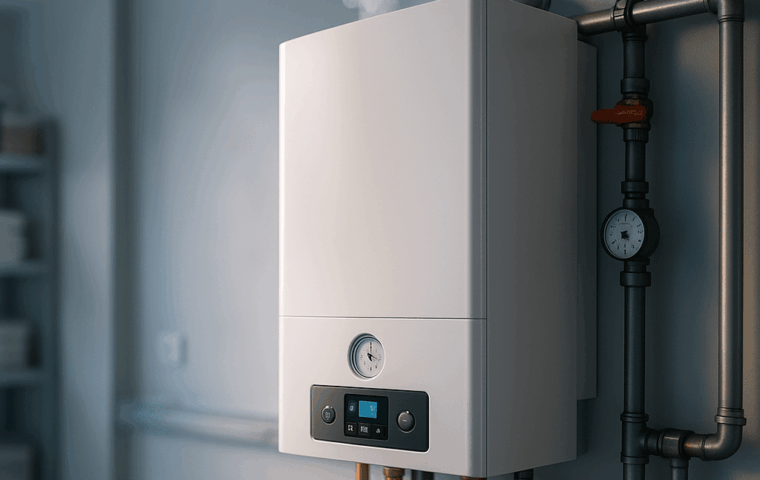
Many households lose money here. The Base option keeps the same kWh price all day. The peak/off-peak hours option lowers the price during certain periods. It increases it the rest of the time. The idea seems simple. In practice, it is only profitable if you can shift a real part of your usage. The National Energy Ombudsman gives a simple benchmark. Off-peak hours often become useful when at least a quarter of consumption shifts there. This is often the case with a programmed water heater. A well-timed washing machine also helps. Charging an electric vehicle at night plays a big role. Since November 1, 2025, the slots have been gradually evolving. Concerned consumers keep 8 off-peak hours per day. They mostly fall at night. A part during the day remains possible depending on local situations. That is why you need to look at your actual schedules, not just the option name.
“Concerned consumers continue to benefit from 8 off-peak hours per day.”
Service-Public.fr, news from October 2, 2025
| Household profile | Often suitable option | Why |
|---|---|---|
| Small, sparsely equipped dwelling | Basic | Simple and hardly shiftable consumption |
| Family with water heater | Off-peak hours | Some usage can be shifted |
| Teleworking all day | Basic or detailed study | Consumption often remains spread out |
| Regular vehicle charging | Off-peak hours | The night becomes a clear lever |
The criteria that really matter
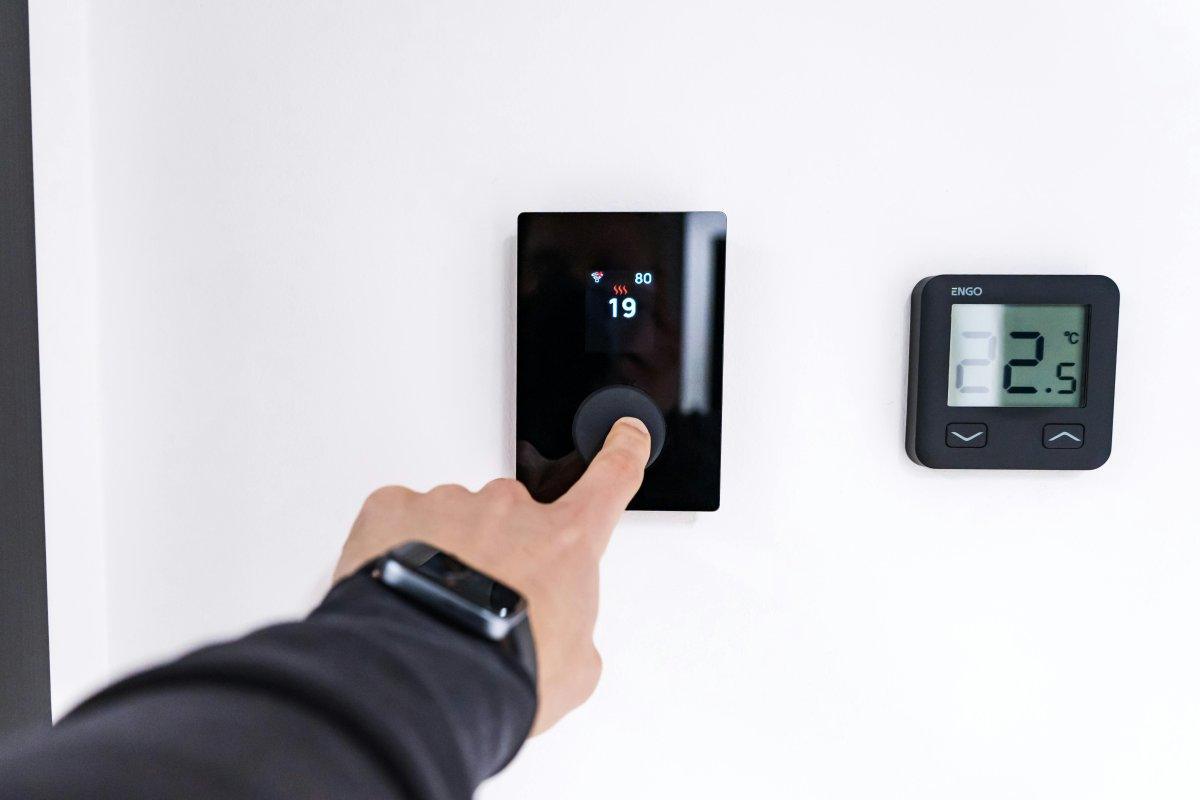
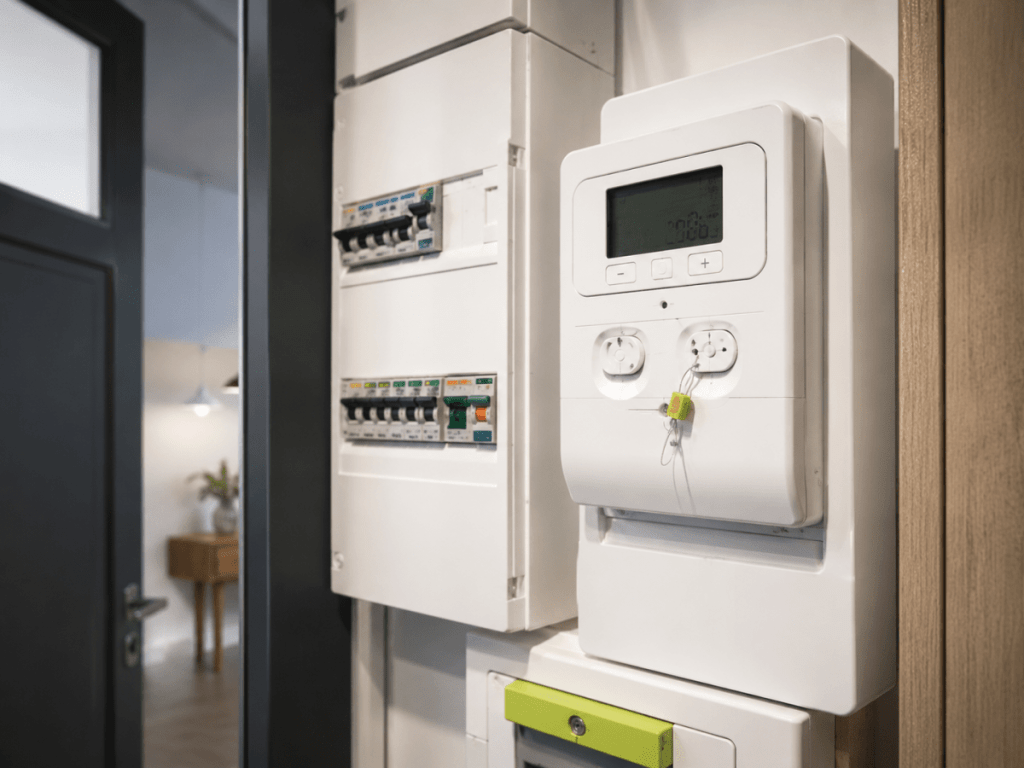
When choosing, start with the duo subscription + kWh price. Many comparisons stop at the kWh. That’s too short. A higher subscription can cancel out an attractive discount. The right method is to estimate your bill over 12 months. Use your annual consumption and your subscribed power. Then, look at the meter power. Between 3, 6, 9, or 12 kVA, the difference directly affects the subscription. If the circuit breaker rarely trips, too high a power can simply cost you too much. If it’s too low, comfort quickly deteriorates. The right level is chosen with your usage, not based on a habit formed during a previous move-in. Another concrete point: the price evolution mode. Look for a clear statement. A serious contract explains what can change. It also says when, and according to what calculation. The National Energy Ombudsman also recommends reading the payment methods, the billing, and the customer service. These details seem secondary. They become very visible at the first problem.
- kWh price: always compare including tax, or always excluding tax, but never mixed.
- Subscription: check its annual amount, not just monthly.
- Power: adjust it to your appliances and habits.
- Tariff evolution: look for a simple, dated, and understandable formula.
- Billing: monthly payments, schedule, self-reading, everything must be clear.
- Customer service: hours, contact channels, and response times really matter.
Changing supplier remains simple
Many households still hesitate for fear of a cut-off. This fear blocks for no reason. For individuals, changing supplier is free. It does not cause a cut-off simply because of changing contracts. This rule facilitates comparison and prevents staying for years on an offer that has become poorly suited.
“Changing supplier is free.”
National Energy Ombudsman, practical sheet 2026
Assistance and contract security
The energy voucher 2026 can be used to pay energy bills. Its amount ranges from 48 to 277 euros. The first automatic mailings start from April 1, 2026, for identified beneficiaries. If you subscribe remotely, also keep in mind the 14-day withdrawal right. It is a useful safeguard when an offer has been signed a bit hastily.
Methodology of this guide
This guide does not rank suppliers. It explains how to read an offer. The method is based on a cross-reference of official sources. They were published or updated between October 2025 and May 2026. The reference points used come from the CRE, Service-Public.fr, and Énergie-Info. The latter is the information service of the National Energy Ombudsman. Six criteria served as a guideline: price per kWh, subscription, tariff evolution, Base or off-peak hours option, pre-contractual information, and available assistance. This framework is already enough to eliminate many misunderstood or poorly adapted offers for the housing. The guide’s limitation is intentional. It does not replace an updated comparator based on your postal code. It does not take into account very short promotions. It also leaves aside secondary residences and unusual power levels. For a fine choice, you must always start from your actual annual consumption.
Which contract for which profile
For a studio or a small apartment, the simplest route often remains a clear offer. The Base option is often suitable. The power must remain consistent. In this case, mainly look for a reasonable subscription. The contractual conditions must also remain easy to review. Savings rarely come from a complicated option. For a family living year-round in an electric home, the thinking changes. Off-peak hours deserve a real calculation if several uses can be shifted. Think of the water heater, washing machine, dryer, or vehicle charging. If the house consumes a lot during the day, a well-priced Base option can remain healthier. For a household wanting a more environmental approach, a green offer can make sense. Then look for a transparent contract. The definition of green supply must be clear. A benchmark like VertVolt helps a lot. This is not a marketing detail. It is a way to better understand what your subscription really finances. The next step is simple. Take out your last bill. Note the annual consumption, the power, the tariff option, and the amount of the subscription. With these four lines, you can already make a smarter selection than with a prominently displayed discount.
FAQ on the electricity offer
What is the difference between subscription and consumption?
The subscription is the fixed part of the bill. Consumption corresponds to the kWh used. An interesting offer must balance both.
Is a fixed-price offer always better?
No. It provides visibility, but not necessarily the lowest total price. It all depends on the starting level and the planned duration.
Are off-peak hours useful without a water heater?
Sometimes, but not always. Without easily shiftable usage, the gain can remain low. You need to look at your habits before choosing.
Can you change supplier without interruption?
Yes. For an individual, changing supplier remains free and does not cause an interruption simply because of the change.
How to know if my power is too high?
If you almost never have a trip, the power may be too high. This is often the case in a home with few high-consumption appliances used simultaneously.
Does a green offer directly supply my home with renewable energy?
The grid remains common. A green offer is based on a certified injected equivalence by guarantees of origin.
Can the energy check be used for electricity?
Yes. It can be used to pay electricity bills, depending on your situation and eligibility.
What should be checked before signing remotely?
Reread the price per kWh, the subscription, and the effective date. Also check the rules for price evolution and the right of withdrawal.
Is a percentage discount enough to judge an offer?
No. A discount only has value if the comparison base is clear. The contract must also remain readable over time.
What first document should be looked at?
The last bill. It gives the annual consumption, power, tariff option, and fixed cost. It is the most useful starting point.