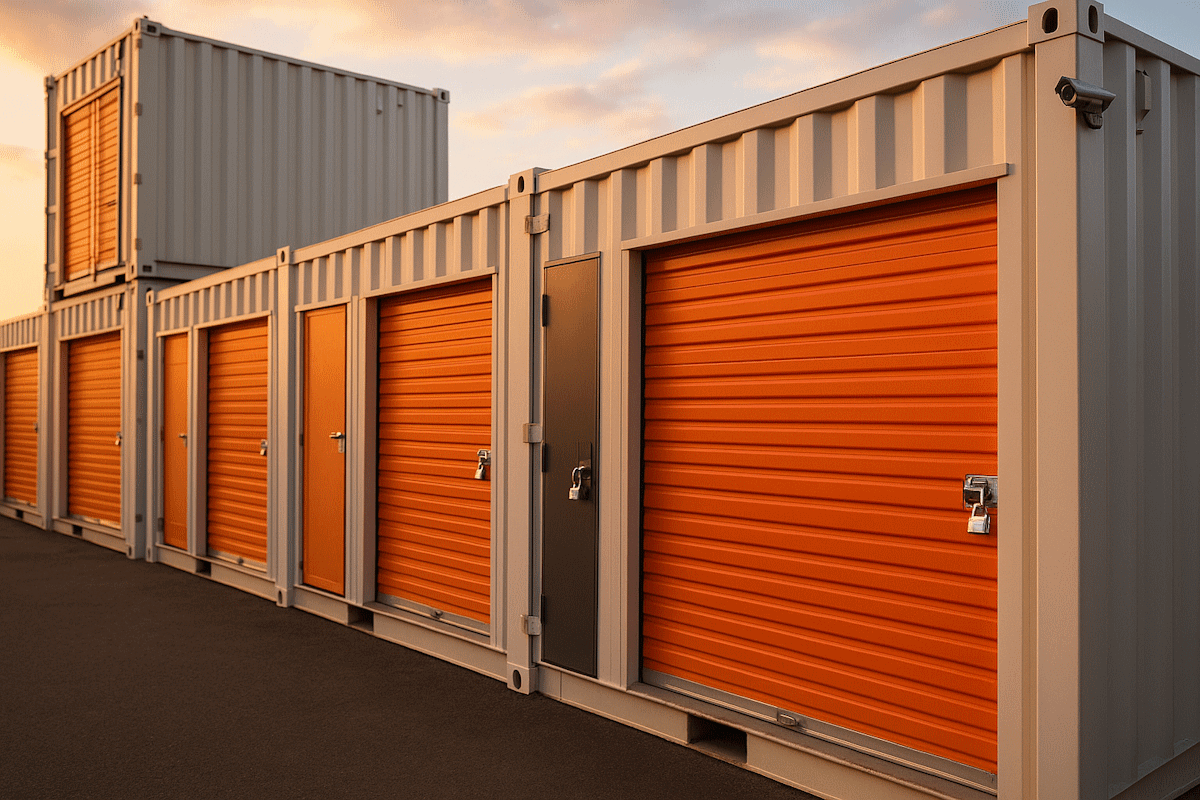
Self-storage is a simple solution: you rent a private, secure unit, accessible almost at any time. The key is to entrust your belongings to a reputable and recognized company. Clear contract. Price without hidden fees. Video surveillance. Access control. Appropriate insurance. Reachable customer service. Verified reviews. This level of requirement limits the risks of loss, incidents, or extra costs. To compare reliable offers and book near you, rely on a reference platform like stockerseul.com to avoid mistakes.
- 🚀 Free up space quickly, without long-term commitment, at a controlled cost.
- 🏠 Individuals: moving, renovations, inheritance, teleworking, seasonal storage.
- 🧑💼 Professionals/SMEs: e-commerce stock, equipment, archives, rent optimization.
- ✅ Choose well: security, accessibility, actual size, total price (insurance included), contract conditions.
Sommaire
Definition and framework in brief
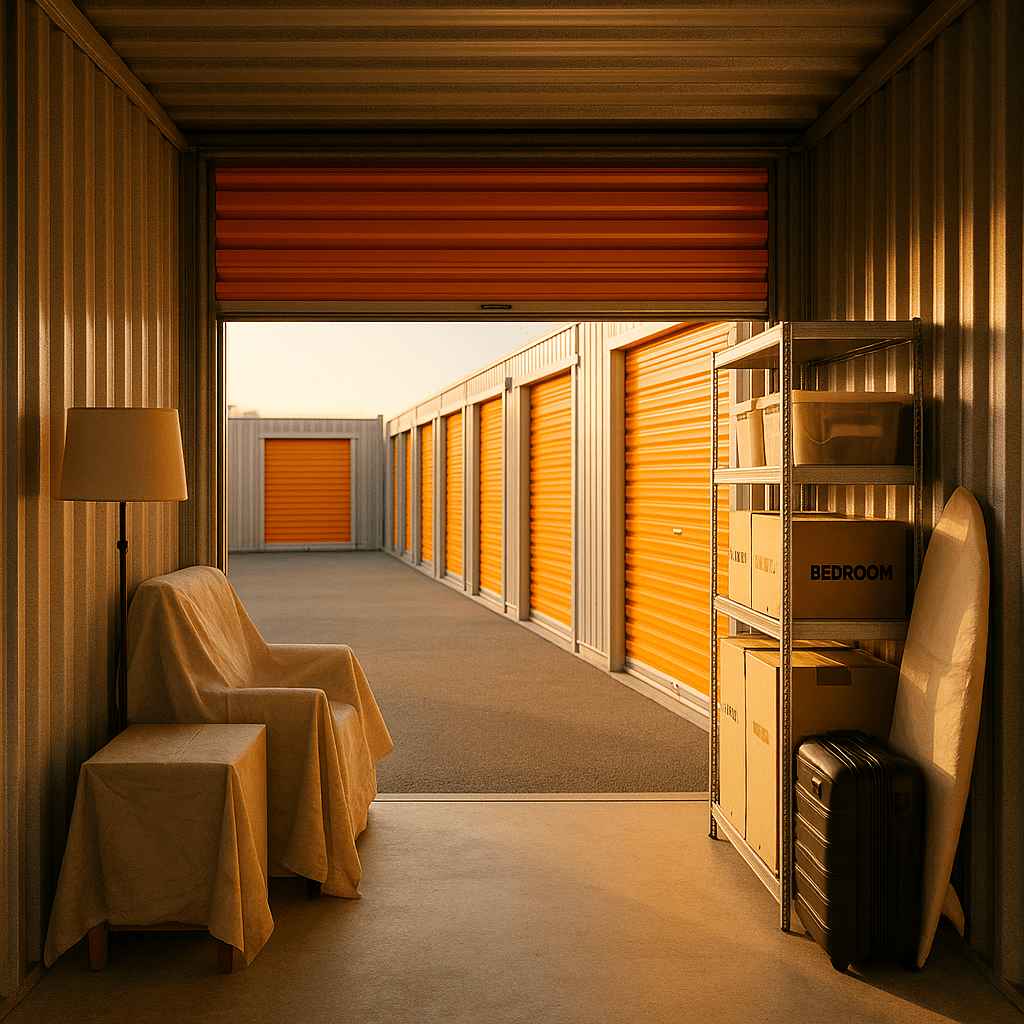
A self-storage center rents private spaces (units) ranging from a few square meters to several dozen square meters. You manage your unit yourself: you pack, transport, lock, and keep the key/combination. The sites are most often accessible 6/7 or 7/7 with access control (badge, unique code), video surveillance, and individual alarms. The contract is monthly or prorated, with a limited deposit and short notice period. This model differs from traditional storage, where access is regulated and handling is managed by the storage provider.
In France, key clauses concern the responsibility for stored goods, insurance of contents, the list of prohibited items (hazardous materials, perishables, cash valuables, animals, etc.), access, and termination. Consumer and pre-contractual information rules apply; careful reading of the contract and internal regulations prevents disputes. Regarding access data and video surveillance, centers must comply with current regulations (public information, retention periods, legitimate reasons).
Origins and Development in France
Born in the United States in the 1960s, the concept was introduced in Europe in the 1990s before experiencing remarkable growth in France. The French market began to structure itself in the 2000s, driven by increasing urbanization and shrinking living spaces.
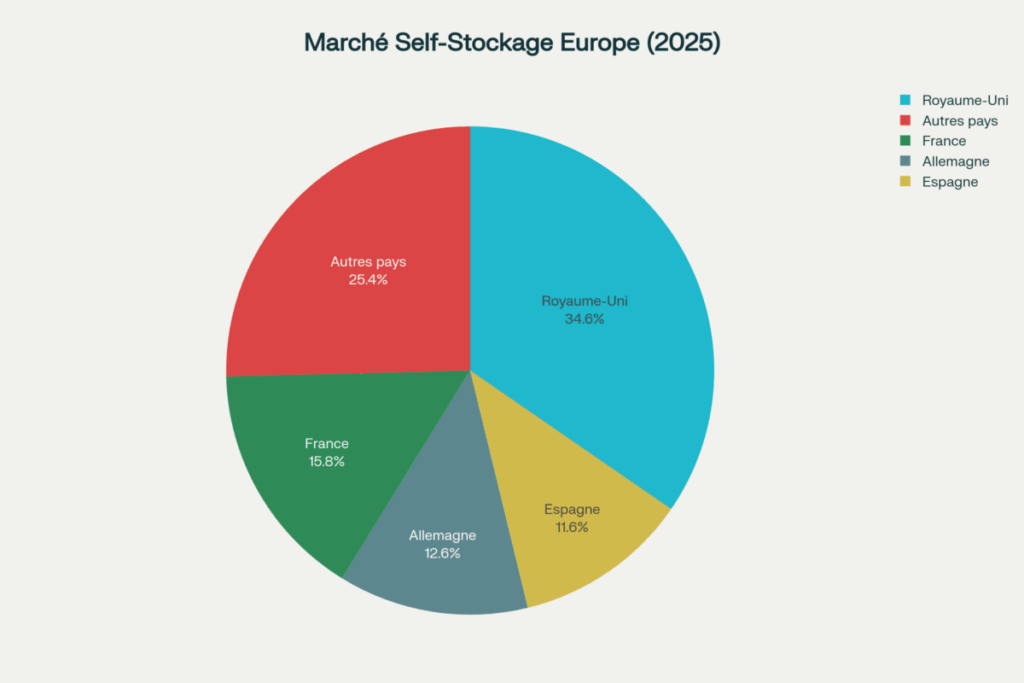
The recent acceleration of the sector is explained by several converging factors: rising real estate prices, the boom in e-commerce, increased professional mobility, and evolving urban lifestyles. These trends have propelled France to the rank of second largest European market for self-storage, representing 15.8% of the continental market.
The French Self-Storage Market in 2025
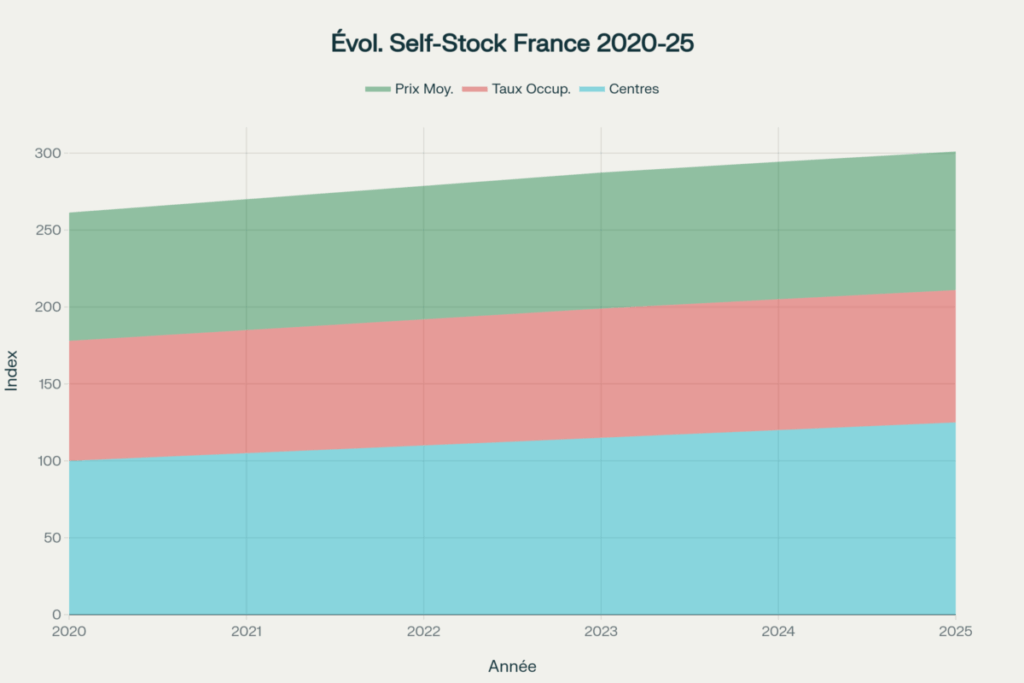
The French self-storage market shows exceptional health in 2025. With more than 1,200 centers spread across the national territory and a total area of 2.6 million square meters, France confirms its position as the European leader.
The average occupancy rate reaches 86%, 8 points higher than the European average of 78.7%. This performance reflects a structurally strong demand, particularly in large metropolitan areas where space becomes a rare and costly resource.
The sector’s turnover ranges between 250 and 300 million euros, with a sustained annual growth of 5.9%. This progress places France among the most dynamic markets in Europe, ahead of Germany and approaching the United Kingdom.
Uses for Individuals
Self-storage addresses life situations where there is too little square footage or a temporary need for space:
- Moving/separating: you free up the old home earlier, then retrieve your belongings when the new one is ready.
- Renovations and home staging: declutter to renovate and better sell/rent.
- Job transfer, expatriation, studies: keep personal effects without paying high rent.
- Growing family: store seasonal furniture, strollers, clothes, sports equipment.
- Inheritance: centralize and secure sorting.
- Bulky hobbies: bikes, skis, boards, personal archives, collections.
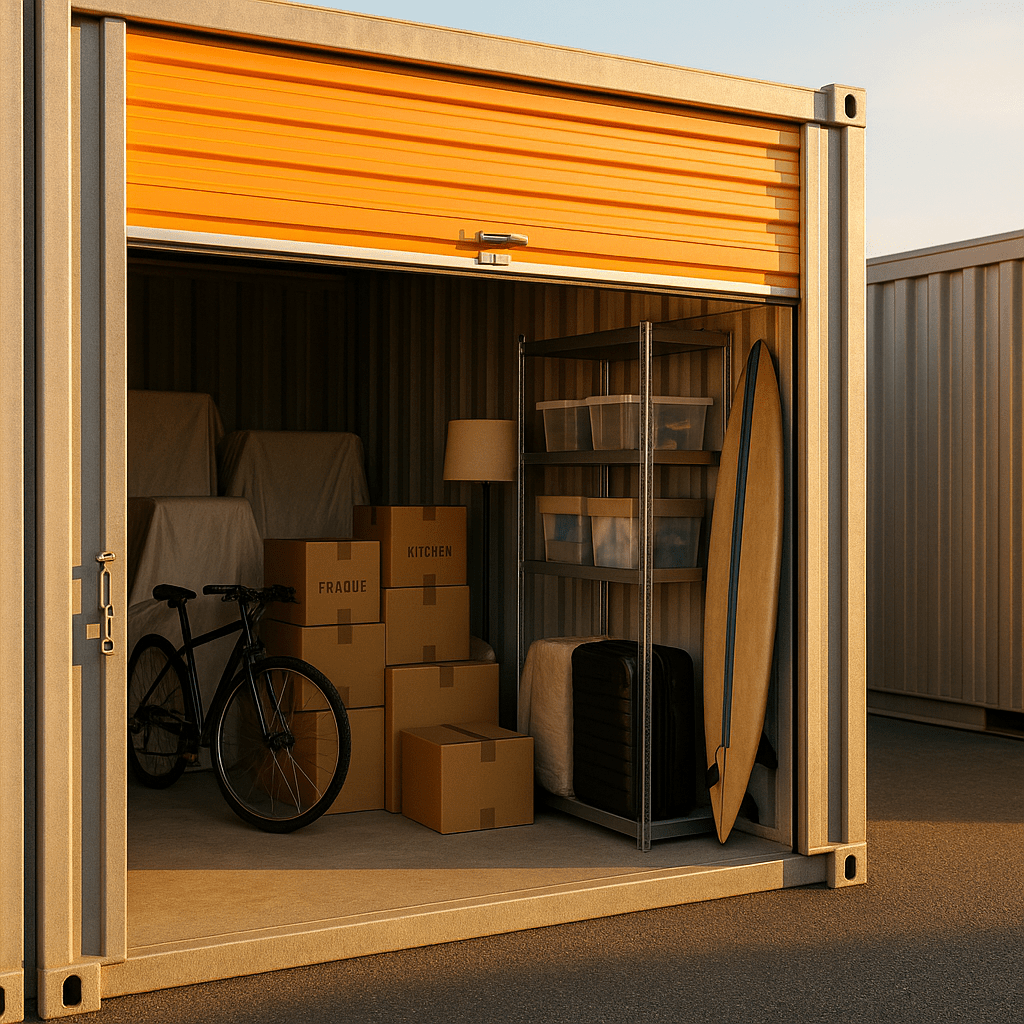
Quantified example: a typical Parisian building cellar is 3 m². Renting a 4 to 5 m² unit with 2.5 m of usable height equals 10–12 m³. With careful stacking (standard boxes 60×40×40 cm, metal shelving), you protect and recover the equivalent of an entire studio excluding large appliances.
Uses for Professionals
SMEs, independents, and e-merchants use self-storage to smooth out peaks and reduce fixed costs:
- E-commerce: buffer stock, returns, packaging. Some centers accept parcel reception.
- Craftsmen: tools, consumables, spare parts. Early morning access, utility vehicle parking, drive-in depending on sites.
- Liberal professions: regulatory archives, sample libraries, event equipment.
- Retail: seasonal overflow, commercial operations, POS furniture.
The key economic lever: no 3-6-9 commercial lease, no property tax or building charges to manage, a surface area adjustable month by month. Most players offer spaces from 1 to 50 m², sometimes more in flexible warehouses. European occupancy rates generally remain at a high level (around 80–90% according to sector reports), an indicator of sustained demand driven by e-commerce and changes in urban housing.
How much does it cost?
The price of a unit depends on 7 factors: location (big cities more expensive), usable surface, height (volume), access (ground floor/drive-in vs upper floor), air conditioning or humidity control, duration and season. Added are insurance for goods and possible services (parcel reception, high-security padlocks, shelving).
Typical ranges observed in France: small unit 1–2 m² ≈ €30–70/month; 3–5 m² ≈ €70–140/month; 6–10 m² ≈ €140–280/month; beyond: quote. Premium urban centers can exceed these ranges. First month promotions are common but you should look at the average cost over 3–6 months and renewal conditions. Also check the included insurance coverage (guaranteed amount, deductibles, exclusions) and whether external insurance is accepted.
Budget tip: it is better to have a slightly larger unit but well verticalized (shelves) than a second unit. Optimizing volume reduces visits and handling time.
Criteria for choosing a center well
To objectively compare several locations:
- Security: individual access control, video, alarms, lighting, fencing, presence or on-call. Ask how lost keys and emergency codes are managed.
- Actual accessibility: 7/7 hours? Ramp/elevator? Circulation width? Covered unloading zones? Utility vehicle access? Carts/dollies on site.
- Building quality: ventilation, controlled humidity, cleanliness, absence of odors or moisture, fire detection, extinguishers.
- Price transparency: price of month 1 vs following months, fees, deposit, notice period, indexing, insurance. Demand a concise written document.
- Flexibility: size change without fees, pro rata, minimum duration, termination terms.
- Useful services: parcel reception, sale of boxes, shelving, parking, outlets, Wi-Fi, inventory room.
Before signing, read the clauses on prohibited items and the video surveillance policy. Centers must provide information about cameras and their purposes, and secure access data. For sensitive archives, ask for the exact location, redundancy (alarms), and fire procedure.
Finding the right box size
Areas are expressed in m², but it is the volume that matters. Typical usable height: 2.4–2.7 m. Some benchmarks:
- 1–2 m² (2.5–5 m³): 10–20 boxes + small appliances/suitcases.
- 3–4 m² (7–10 m³): studio without large sofa; suspended bikes.
- 5–7 m² (12–18 m³): compact T2/T3 apartment.
- 8–10 m² (20–27 m³): complete T3/T4 excluding bulky appliances.
- >10 m²: professional stock, significant furniture, seasonal overflow.
Quick method: count the voluminous furniture (wardrobes, sofas, bedding) + the number of standard boxes. Calculate 0.04 m³ per 60×40×40 cm box. Add 10–15% margin for circulation and to avoid crushing.
Security, insurance, and compliance
Insurance: most centers require coverage on the declared value, either via the offered insurance or through your insurer. Check the limit, exclusions (valuables, jewelry, artworks), covered events (fire, water damage, theft with break-in), and deductible. Contract: keep the descriptive statement, the list of prohibited items, termination terms, and penalty scale. Video surveillance and access control: visible information, right to access images upon legitimate request, limited retention.
Typically prohibited items: explosive/flammable materials, gases, chemicals, perishable goods, animals, plants, weapons, cash or securities. For professional archiving, comply with your legal retention periods and confidentiality obligations.
Good packaging and storage practices
A well-organized box costs less over time and better protects your belongings. Simple principles:
- Standardize boxes (ideal 60×40×40) and label 4 sides + top.
- Verticalize: shelving, wardrobes, bike hooks. Use the height.
- Protect: breathable covers for mattresses and sofas, moving blankets, foam corners.
- Palletize: raise by 5–10 cm to isolate from the floor and facilitate ventilation.
- Pathway: leave 40–60 cm aisle to access without moving everything.
- Inventory: simple file with box references, photos, and estimated value.
- Weight: 15–20 kg/box max to protect the back and the stack.
For professionals: set up addressing by row/shelf/level, number locations, and use stackable bins to speed up preparations. A simple FIFO cycle prevents losses and customer returns related to expired products.
Self-storage trends
Urban and premium: rise of multi-level air-conditioned centers, covered loading zones, and additional services. E-commerce: local micro-logistics, extended access slots, parcel reception. Digitalization: online quotes/contracts, digital signature, temporary codes, remote control. Price management: dynamic pricing based on occupancy by size/floor. ESG: LED, rooftop solar, insulating materials, and consumption reduction.
Quick case studies
Case 1 – Family under renovation for 3 months
Target area: 5 m² (≈ 13 m³). Contents: 45 boxes, bedding for 2 bedrooms, sofas + compact appliances. Target cost: €150–230/month in urban area excluding promotions. Benefit: maintaining the construction site without damage, partially habitable housing.
Case 2 – Textile e-commerce
Target area: 8 m² (≈ 22 m³) with shelving. Contents: 120 bins, foldable packing area. Target cost: €220–320/month depending on location. Benefit: deferral of a commercial lease, ability to double stock during seasonal peaks without immobilizing real estate capital.
FAQ
What is the difference between self-storage and furniture storage?
In self-storage, you rent an individual unit and have free access. In furniture storage, access is supervised and storage is managed by the provider. Self-storage is more flexible and faster.
Is specific insurance required for the unit?
Yes. Either the insurance offered by the center or a certificate from your insurer covering the declared value and listed risks (fire, burglary with forced entry, water damage, etc.).
What is forbidden to store?
Hazardous or flammable products, gas, perishable goods, animals, plants, weapons, cash or securities, waste. The exact list is specified in the contract and internal regulations.
How to estimate the size?
Count your bulky furniture and the number of standard boxes (≈ 0.04 m³ each). Add 10–15% margin for circulation. A one-bedroom apartment often fits within 5–7 m² if well organized.
Can access be shared with a relative or colleague?
Yes, if the contract allows it. The center can generate distinct codes. You remain responsible for the goods and their use.
{ “@context”: “https://schema.org”, “@graph”: [ { “@type”: “Article”, “headline”: “Self-storage: what it is for, for whom, and how to choose your unit well”, “description”: “Complete and up-to-date guide on self-storage: personal and professional uses, price ranges, selection criteria, security, and best practices.”, “inLanguage”: “fr-FR”, “author”: { “@type”: “Organization”, “name”: “La rédaction” }, “publisher”: { “@type”: “Organization”, “name”: “Selfstock”, “logo”: { “@type”: “ImageObject”, “url”: “https://selfstock.com/favicon.ico” } }, “datePublished”: “2025-10-10”, “dateModified”: “2025-10-10”, “mainEntityOfPage”: { “@type”: “WebPage”, “@id”: “https://selfstock.com/” } }, { “@type”: “FAQPage”, “mainEntity”: [ { “@type”: “Question”, “name”: “What is the difference between self-storage and storage unit?”, “acceptedAnswer”: { “@type”: “Answer”, “text”: “In self-storage, you rent an individual unit and have free access. In storage unit, access is regulated and storage is managed by the provider.” } }, { “@type”: “Question”, “name”: “Is specific insurance required for the unit?”, “acceptedAnswer”: { “@type”: “Answer”, “text”: “Yes. Either the insurance offered by the center, or a certificate from your insurer covering the declared value and listed risks.” } }, { “@type”: “Question”, “name”: “What is prohibited from being stored?”, “acceptedAnswer”: { “@type”: “Answer”, “text”: “Hazardous products, gas, perishable goods, animals, plants, weapons, cash or securities. The exact list is in the contract.” } }, { “@type”: “Question”, “name”: “How to estimate the size of the unit?”, “acceptedAnswer”: { “@type”: “Answer”, “text”: “Count bulky furniture and the number of standard boxes (~0.04 m³ each), then add 10–15% margin.” } }, { “@type”: “Question”, “name”: “Can access be shared with a relative or colleague?”, “acceptedAnswer”: { “@type”: “Answer”, “text”: “Yes, if the contract allows it. The center can generate separate codes. You remain responsible for the usage.” } } ] } ] }