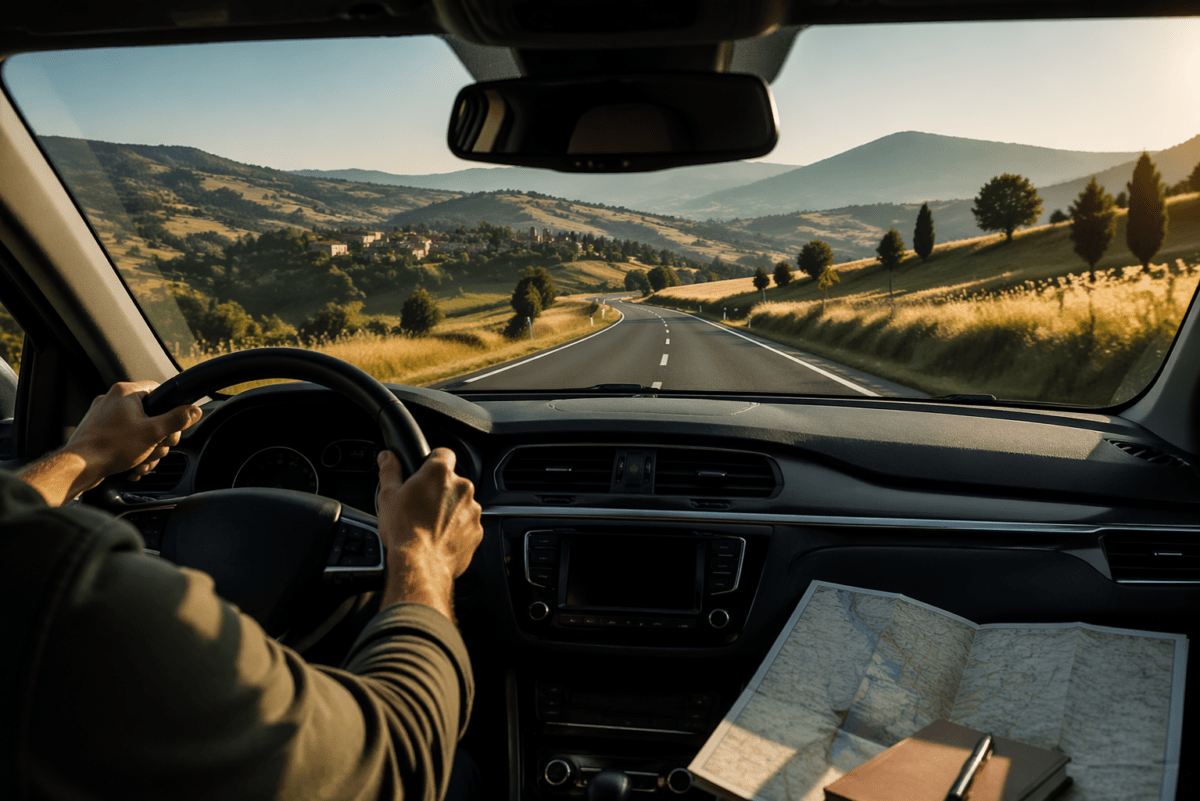
What Changes a Trip from the Preparation Stage
A successful itinerary starts well before getting into the car. Many drivers mainly think about travel time, loading luggage, or the arrival point. The subject of visual comfort often comes too late, even though it influences reading signs, perceiving distances, eye fatigue, and the ability to stay relaxed for several hours. On highways as well as secondary roads, the eyes work constantly: scanning the road, mirrors, signage, surrounding vehicles, weather, and ambient light. A slight visual discomfort, tolerable on a short trip, quickly becomes annoying over a full day.
Preparing your route in France therefore involves coordinating several elements at once: the regions crossed, the probable traffic conditions, the division of stops, the time when the light will be harshest, and the equipment that makes driving more comfortable. The goal is not to complicate the organization. On the contrary, it is to make the trip more readable, more restful, and safer. The driver sees better, anticipates better, and passengers enjoy the trip more.
- Segmented trip: a route divided into stages tires less than a continuous block.
- Anticipated light: low sun, due south, or reflections can cause lasting discomfort.
- Controlled vision: up-to-date correction improves environmental reading.
- Clean windshield: dirt and streaks increase glare.
- Thoughtful breaks: they rest the eyes as much as the rest of the body.
Choosing a Route That Remains Pleasant to Read
A good itinerary is not limited to the shortest route. It must also remain pleasant to drive. A succession of monotonous stretches, heavily congested areas, or poorly readable secondary roads can wear you out faster than a slightly longer but better-balanced trip. For a journey across French regions, it is better to think in sequences: an initial departure phase, a rolling section, a stop, then a lighter resumption towards the day’s destination.
Major departures, crossing urban areas, and changes in light deserve to be anticipated. Arriving at sunset in a hilly area, for example, can be much more tiring than passing through in the middle of the morning. Conversely, some very open routes become more comfortable early in the day, when traffic is still light and heat does not yet blur the visual perception of the asphalt.
Official tools remain valuable to avoid unpleasant surprises. Traffic forecasts from Bison Futé, recommendations from Road Safety, and practical information from Service-Public provide a solid framework to build a realistic route, especially during holiday departures or long summer crossings.
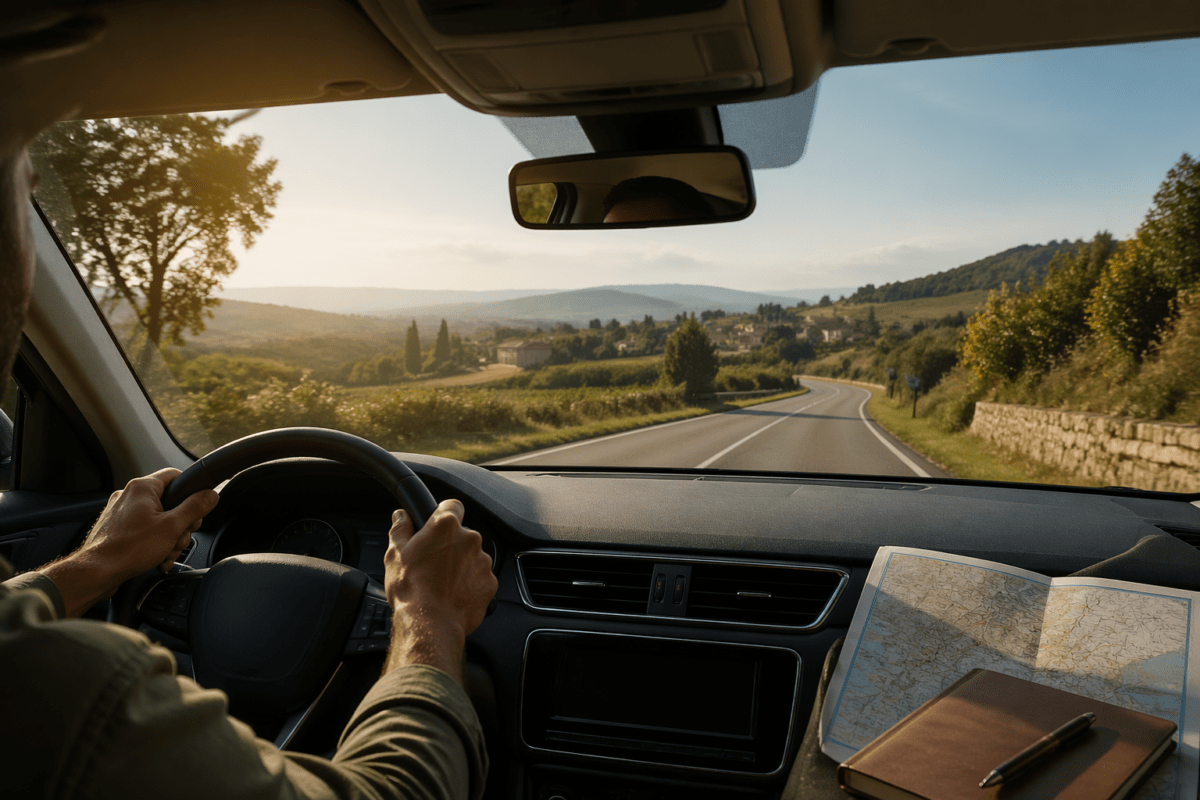
Visual comfort before departure: the truly underestimated issue
To enjoy the landscapes and drive calmly, vision must be clear, stable, and comfortable throughout the entire journey. Imperfect visual correction causes quicker fatigue, especially when you need to see from afar, adjust your gaze to changes in lighting, or chain several hours of driving. This is even more true on a trip across France, where you can go from very bright light on the highway to more shaded country roads, then to city centers where visual attention is more scattered.
Before leaving, having your correction checked remains a practical reflex. The simplest thing is to ensure that your current glasses are still suitable, that the lenses are not too scratched, and that distance reading comfort remains good on road signs. To prepare this step before the trip, going through Visionet can naturally fit into the final preparations for departure: you think about luggage, booking, itinerary, then you also address vision issues to leave under better conditions.
This issue does not only concern those who wear glasses permanently. Many drivers tolerate slight discomfort daily but feel it much more on the road: fatigue at the end of the day, difficulty reading certain signs, need to visually get closer, stronger sensitivity to glare. As soon as there is any doubt, it is better to eliminate it before the trip rather than endure it during the holidays.
“Seeing well also means better anticipation. On a long trip, visual comfort directly impacts driving quality and the fatigue felt upon arrival.”
Source: road safety recommendations and good driving practices
When correction becomes a real travel criterion
A road trip in France is not like a simple home-work round trip. Days get longer, landmarks change, light varies from one region to another, and roads alternate between heavy traffic and scenic routes. Well-adapted correction allows you to keep a more relaxed gaze, less tense, and avoid that feeling of visual strain that often appears at the end of the day.
Sun protection: less of a gimmick than you might think
The sun is not just a heat factor. On the road, it directly affects eye comfort. Reflections on the windshield, very bright asphalt, low afternoon light, glare when exiting tunnels or on a west-facing lane: all this tires the eyes, slows contrast reading, and adds diffuse fatigue. Proper sun protection is therefore part of the trip just like a bottle of water or a well-timed break.
Good protection is not just about “sunglasses.” They must especially be truly comfortable for driving, allowing good reading of the road, relief, and signage. For a long trip, it is better to avoid imprecise or too dark solutions if they reduce perception instead of improving it. The goal is not to darken at all costs but to filter light aggression without losing useful sharpness.
The most sensitive moments are often known in advance: early departure towards the east, late return towards the west, exposed coastal roads, very bright plateaus, dry and bright pavement. Preparing your itinerary with this in mind sometimes allows you to slightly shift the schedule to gain much more comfort.
- Low sun: particularly annoying at sunrise and late afternoon.
- Reflections: dirty windshield, light dashboard, and bright pavement worsen glare.
- Open roads: plateaus, coastline, and large plains expose the eyes more.
- Shaded break: resting the eyes out of direct light really helps.
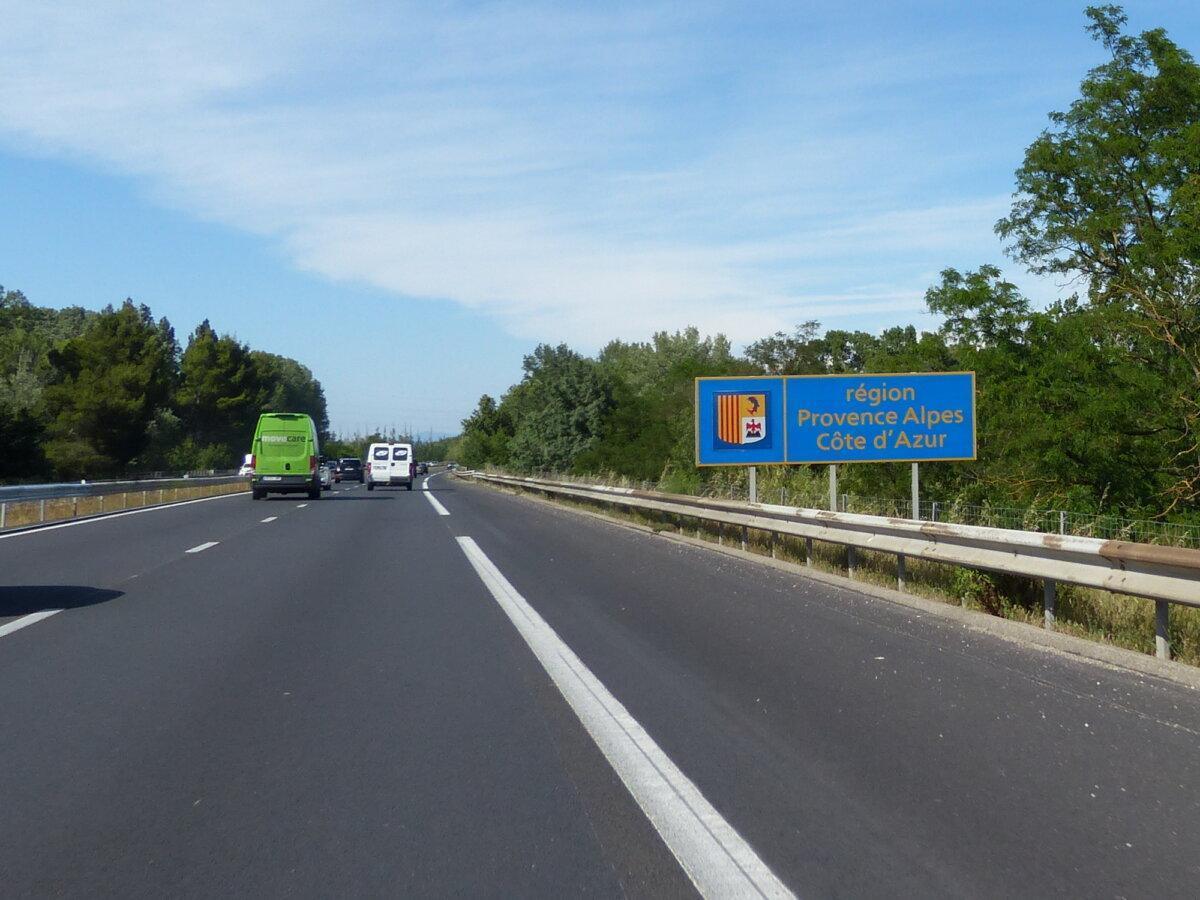
Enjoying the landscapes without losing vigilance
Traveling through the French regions makes you want to look everywhere. It’s normal: the seaside, the vineyards, the perched villages, the mountain passes, the cliffs, or the vast agricultural spaces are part of the pleasure. However, the road requires balance. You need to see the landscape without letting your gaze wander. The best way to achieve this is to organize real breaks in areas that deserve a stop, rather than trying to do too much while driving.
A well-planned trip alternates between functional sections and contemplative sections. On fast segments, keep driving simple, steady, without unnecessary visual overload. In more beautiful areas, plan a stop. This division changes everything: the eyes work better, driving remains calmer, and the journey becomes more enjoyable for everyone in the vehicle.
This logic is especially true for mixed routes. A crossing between Alsace and Provence, an Atlantic-Massif Central trip, or a coastal then mountain route combine very different visual environments. The eyes need to breathe between two driving sequences. It’s a matter of comfort, but also vigilance.

Stops that truly rest the eyes
We often talk about breaks to fight general fatigue. The eyes also need real breaks. A useful stop is not just about getting out of the vehicle for a few minutes. It allows changing the depth of vision, leaving the road environment, walking a bit, and releasing the continuous concentration imposed by driving.
When preparing the itinerary, it’s better to identify in advance quality breaks: viewpoint, quiet area, passing village, lookout point, riverside, green stop. This type of stop rests the eyes more effectively than a simple station without visual breathing. For a driver, the difference is quickly felt when resuming the journey.
The best rhythm depends on the driving duration, the weather, the age of passengers, and traffic density. A very bright or very hot day tires the eyes faster. Breaks should then be more frequent and more distinct.
| Type of section | Probable visual fatigue | Recommended break |
|---|---|---|
| Monotonous highway | Prolonged fixation, repetitive contrast | Short but frequent stops |
| Scenic road | Gaze solicited by the scenery | Dedicated photo break |
| Urban crossing | Multiplication of information | Relaxation after the dense area |
| Driving under strong sun | Glare and tension | Shaded break |

What to check in the car before leaving
Visual comfort also depends on the vehicle. A marked windshield, greasy smudges, worn wipers, poorly adjusted mirrors, or a too dusty interior disrupt reading the road. In strong light, the slightest defect becomes more annoying. This is especially true when the sun is low or when the road reflects many glares.
Before departure, a few simple checks provide a real benefit:
- Windshield: clean inside and out.
- Windshield wipers: no streaks or poorly wiped areas.
- Seat adjustment: eyes well aligned with the road and mirrors.
- Mirrors: angles checked before fully loading the vehicle.
- Dashboard: limit reflective objects.
These points may seem modest. Yet on a long route, they contribute to clearer and less tiring driving. Visual comfort never comes from a single element. It arises from a coherent whole: readable route, appropriate correction, controlled sunlight, well-timed breaks, and prepared vehicle.
“A comfortable journey is not just a matter of schedules or kilometers. It is also the ability to keep a fresh, precise, and relaxed gaze until arrival.”
Common sense driving applied to long trips in France
Methodology of this guide
This guide follows an informational and practical logic. It was created to answer a simple question: how to prepare a trip in France to maintain good road readability and true visual comfort? The answer is based on 5 criteria: quality of the route, visual stability while driving, protection against light, break rhythm, and vehicle preparation. Everything has been designed for practical uses: holiday departure, crossing several regions, long summer trip, and driving on highways as well as secondary roads.
The limitation of the subject lies in the fact that the same trip can be experienced very differently depending on the driver’s age, light sensitivity, visual correction worn, weather, or fatigue level at departure. That is why the above advice remains flexible: it provides a reliable framework without imposing a single model.
FAQ: preparing a route in France with better visual comfort
Why does vision matter so much on a long trip?
Because it conditions the reading of signs, distances, contrasts, and the ability to stay comfortable for several hours.
When should you check your visual correction before leaving?
Ideally a few days before departure, especially in case of recent visual fatigue, discomfort on the road, or aging glasses.
Are sunglasses enough for comfortable driving?
They help, provided they are suitable for driving and do not hinder reading the road and signage.
What is the best time to drive in summer?
Early in the morning or after the most aggressive hours of light and heat, depending on your route.
Do breaks really rest the eyes?
Yes, especially if you leave the road environment for a few minutes and change your focal point.
Does the windshield affect visual comfort?
Yes. Streaks, dust, and scratches increase discomfort from the sun and reflections.
How to enjoy the scenery without losing vigilance?
By planning dedicated stops on beautiful sections rather than trying to look at everything while driving.
What is the next step before departure?
Validate the route, check your distance vision, prepare your sun protection, clean glass surfaces, and place breaks on the map before loading the car.
{“@context”:”https://schema.org”,”@type”:”WebPage”,”about”:{“@type”:”Thing”,”name”:”preparing your route in France with optimal visual comfort”},”keywords”:[“route France”,”visual comfort driving”,”car trip France”,”sun protection driving”,”visual correction road”]}
{“@context”:”https://schema.org”,”@type”:”Article”,”headline”:”Preparing Your Itinerary in France: Essentials for Optimal Visual Comfort on the Road”,”description”:”Practical advice for planning a trip in France with better road vision, appropriate correction, consistent sun protection, and useful breaks.”,”keywords”:[“itinerary France”,”visual comfort driving”,”car trip France”],”mainEntity”:{“@type”:”FAQPage”,”mainEntity”:[{“@type”:”Question”,”name”:”Why does vision matter so much on a long trip?”,”acceptedAnswer”:{“@type”:”Answer”,”text”:”Because it determines the reading of signs, distances, contrasts, and the ability to remain comfortable for several hours.”}},{“@type”:”Question”,”name”:”When should you check your visual correction before leaving?”,”acceptedAnswer”:{“@type”:”Answer”,”text”:”Ideally a few days before departure, especially in case of recent visual fatigue, discomfort on the road, or aging glasses.”}},{“@type”:”Question”,”name”:”Are sunglasses enough for comfortable driving?”,”acceptedAnswer”:{“@type”:”Answer”,”text”:”They help, provided they are suitable for driving and do not hinder reading the road and signage.”}},{“@type”:”Question”,”name”:”Do breaks really rest the eyes?”,”acceptedAnswer”:{“@type”:”Answer”,”text”:”Yes, especially if you leave the road environment for a few minutes and change your focal point.”}}]}}