TL;DR : Dijon, historical capital of the Dukes of Burgundy, captivates with its heritage center (Owl trail, Palace of the Dukes), its gastronomy (mustard, wines, blackcurrant) and its art of living. Here is a dense and practical guide: must-sees, itineraries, key figures, good addresses, verified photos (no 404 errors), FAQ and reliable sources.
Sommaire
Search intent & how to use this guide
This page addresses an informational + inspirational intent: “What to do in Dijon?”, “What to see/eat?”, “How to organize a weekend or 3 days?”. The guide combines practical advice, culture, gastronomy, walks and useful figures to decide, book and optimize your time.Keywords & long tails:
visit Dijonwhat to do in DijonDijon gastronomyOwl trailweekend BurgundyBurgundy wines from DijonMuseum of Fine Arts Dijon
Dijon: definition & context
Dijon is the prefecture of the Côte-d’Or and the capital of Bourgogne-Franche-Comté. Former residence of the Dukes of Burgundy, the city preserves a remarkably well-maintained historic center: medieval houses, mansions, classical facades and polychrome roofs. It is an ideal gateway to the “climats” of the Burgundy vineyard (UNESCO), just minutes from the Route des Grands Crus.

Why go to Dijon in 2025?
- Unique heritage: Palace of the Dukes, Notre-Dame church, Owl trail, accessible museums (including a renowned Museum of Fine Arts).
- Capital of flavors: mustard, blackcurrant, classic dishes (escargots, beef bourguignon) and proximity to legendary wines (Gevrey-Chambertin, Vosne-Romanée, Meursault…).
- Easy city: direct TGV, compact walkable center, modern tram, many accommodations.
- Reasonable budget: a more affordable destination than Paris/Lyon for mid-range dining and hotels.
Statistics & key figures
| Indicator | Indicative value | To know |
|---|---|---|
| Population (municipality) | ≈ 160,000 inhabitants | Core city of an urban area of about 380–400k |
| TGV access | Paris ↔ Dijon ≈ 1h30–1h40 | Several round trips daily |
| Weather | Mild summer, cold winter | Ideal shoulder seasons (May-June, Sept-Oct.) |
| Major museums/sites | Museum of Fine Arts, Consortium, etc. | Permanent collections often free |
| UNESCO | “Climats” of Burgundy | Wine landscapes and know-how |
These orders of magnitude guide the planning of a stay. Check schedules/travel times the week of your visit.
Top 10 must-sees (with itineraries)
1) Palace of the Dukes & Philippe the Good Tower
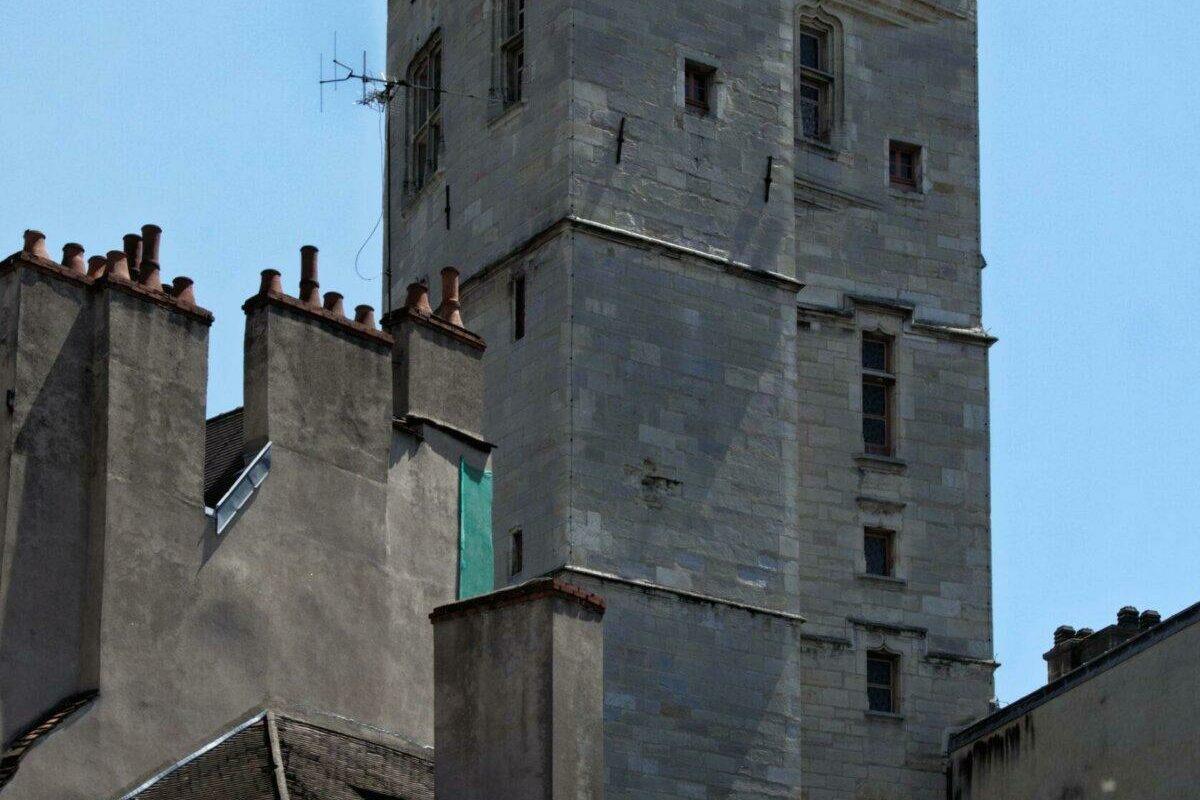
The Palace of the Dukes complex encompasses eight centuries of history. Climb the Philippe the Good Tower (15th century) for a panoramic view of the colorful rooftops. Ideal at the start of your stay to get your bearings.

2) Place de la Libération
A classical arc of architecture forming the forecourt of the Palace, the Place de la Libération charms with its lines, fountains, and terraces. In the evening, the warm light enhances the façades.
3) Museum of Fine Arts
Rich in collections from the Middle Ages to the 20th century (tombs of the Dukes of Burgundy, Italian and Flemish schools, modern art…), the MBA Dijon is one of the oldest museums in France and a must-do visit.
4) Notre-Dame Church & the Owl
A Burgundian Gothic masterpiece (13th century), the church features a façade adorned with gargoyles. On a buttress, the famous little owl which is touched with the left hand for luck.
5) The Owl Trail
A route marked on the ground by “owl” plaques to follow on foot. Available at the tourist office, a booklet (and an app) offer 3 thematic loops to understand Dijon step by step.
6) Dijon Market Halls
Designed by the Gustave Eiffel workshop, the Market Halls bring together local artisans and producers. You can picnic there, compose a local produce basket, or book convivial tables.

7) Darcy Garden & Pompon Bear
Dijon’s first public garden (1880), it houses the Darcy fountain and the Pompon bear (replica), a local mascot. A green haven near Place Darcy and Porte Guillaume.
8) Place François-Rude (“Bareuzai”)
A pretty cobbled square with its belfry, old houses, and the statue of the grape treader (bareuzai in dialect). A postcard atmosphere guaranteed.
9) Polychrome Roofs
The glazed tiles with geometric patterns (yellow, green, brown) are a hallmark of Burgundian architecture. The easiest way to admire them: look up while strolling or treat yourself to a lookout from the tower.
10) Lake Kir
A body of water to the west of the city, a spot for joggers and swimmers in summer. Perfect to unwind between visits, with a supervised beach in season.
Gastronomy & wines: what to taste, where to book
- Dijon Mustard: brown seeds, verjuice/vinegar — spicy texture and fragrant. To bring back in jars, available in various recipes (old style, tarragon…).
- Crème de cassis & kir: the local aperitif par excellence (blackcurrant + Burgundy aligoté).
- Classics: snails, œufs en meurette, parsleyed ham, beef bourguignon, pears in wine.
- Cheeses: Époisses, Ami du Chambertin, Soumaintrain…
- Wines: in the north Côte de Nuits (elegant pinot noir), in the south Côte de Beaune (tight and rich chardonnays). Tastings by reservation in the cellars along the Route des Grands Crus.

Tip: for a weekend, alternate a market lunch at Les Halles, a bistronomic table in the evening, and plan a cellar/vineyard visit the next day (train, bike, or car).
Advantages & disadvantages of a stay in Dijon
Advantages
- Compact historic center, pedestrian-friendly, perfect for 2–3 days.
- Excellent gateway to a legendary vineyard (short distances).
- Good value for money often on the restaurant/hotel side outside of peak season.
- Quality museums and exceptional heritage richness.
Points to note
- High season very busy (spring, harvest, long weekends) → book in advance.
- Opening hours to check (museums, cellars); some places close on Sundays/Mondays.
- Winter sometimes chilly: bring appropriate clothing.
Useful tools, passes & resources
- Dijon Tourist Office: Chouette trail (booklet/app), thematic guided tours.
- Maps & transport: Divia tram/bus network, bike-sharing; SNCF stations (TGV).
- Vineyard reservations: estates on the Route des Grands Crus (often by appointment).
- Guides: Routard, Michelin, official museum websites.
2025 trends & excursion ideas
Dijon tourism is moving towards sustainable experiences: soft mobility (walking/biking), short supply chains, highlighting the climats (vineyard parcels with strong identity). Ideas include:
- Route des Grands Crus (Dijon → Beaune → Santenay), by car, bike or train + bike.
- Beaune & its Hospices (30–40 min): heritage, cellars, restaurants.
- Vougeot, Gevrey-Chambertin, Nuits-Saint-Georges: tastings and walks in the vineyards.
- Urban walks: focus on Art Deco, street art, parks and canals.

FAQ
How many days are needed to visit Dijon?
2 to 3 days are enough to cover the historic center, 1–2 museums, a gourmet stop at the Halles, and a getaway to the nearby vineyard.
When to go to Dijon?
The shoulder seasons (May-June and September-October) offer pleasant weather and harvest atmospheres. Winter is quieter (good deals on hotels/restaurants).
Can everything be done on foot?
Yes. The center is compact; supplement with tram/bus for Lake Kir or certain neighborhoods.
Where to buy authentic mustard?
From artisans and historic shops in the city center or at the Halles market. Ask about the origin of the seeds (brown) and taste the different varieties.
How to organize a wine tasting?
Book in advance with the estates (many only take appointments). Some cellars in town offer an introductory tasting.
Is the Museum of Fine Arts free?
The permanent collections are generally free (check opening hours and any temporary paid exhibitions).
Are there events not to be missed?
The International and Gastronomic Fair in autumn, music festivals, and exhibitions at the Consortium/MBA depending on the annual program.
Sources
- Wikipedia — Dijon
- Dijon Tourist Office
- UNESCO — Climats of Burgundy Vineyards
- Bourgogne-Franche-Comté Tourism — Dijon
- SNCF — regional & TGV connections
- Museum of Fine Arts of Dijon (official site)
- Burgundy Wine Interprofessional Bureau (BIVB)
Conclusion
Dijon ticks all the boxes for a successful weekend: dense and readable heritage, warm dining spots, prestigious vineyards at the city gates, and a center conducive to strolling. For a content strategy on urban tourism, combine practical guides, reliable photos, sourced addresses, and a useful FAQ — that’s what users are looking for.