Dunkirk – city guide, history & tourism
TL;DR — At a glance: Dunkirk, a large maritime commune in the Hauts-de-France region, combines the Malo-les-Bains beach, a UNESCO belfry, the memory of Operation Dynamo, and one of the largest industrial ports in the country. 100% free buses, economic dynamism around the port, and still affordable real estate prices make it a surprising city to live in and visit.
Sommaire
Geography and location
Capital of the French coastal Flanders, Dunkirk (demonym: Dunkerquois and Dunkerquoises) is a coastal commune in the Nord department (region Hauts-de-France), situated on the North Sea. The city covers 43.89 km² and rises modestly to 17 m above sea level — the urban center is almost at sea level, between canals, polders, and dunes. It is located about 10 km from the Belgian border, 80 km from Lille, and 40 km from Calais.
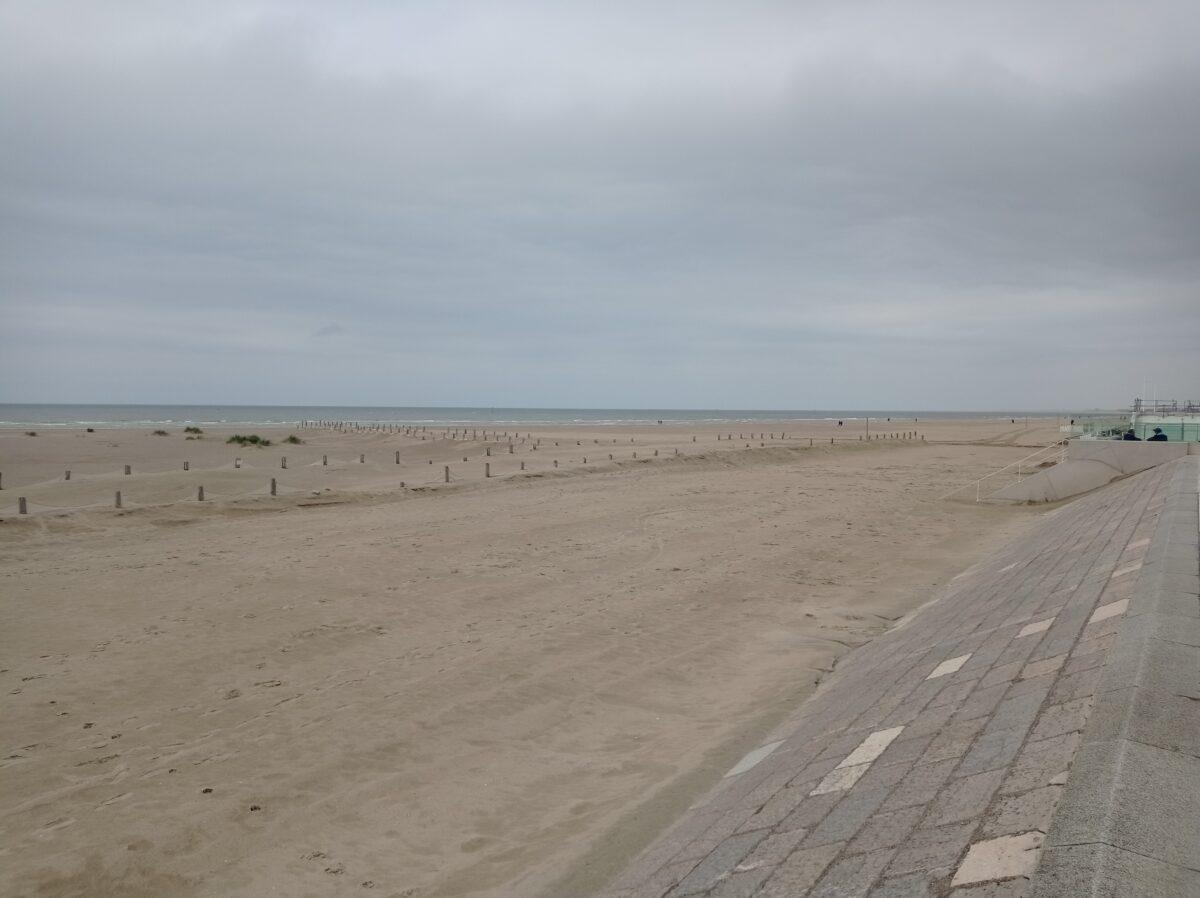
The landscapes mix a long fine sandy beach (Malo-les-Bains), wateringues (drainage canal network), wetlands, dunes, and a vast port area. This unique setting has shaped the economy, urban planning, and history: Dunkirk is simultaneously a seaside resort, port city, and industrial town.
Administrative references — INSEE: 59183 • Postal codes: 59140, 59240, 59430, 59640, 59279 • Altitudes: 0–17 m • Area: 43.89 km² (sources: INSEE & Wikipedia).
History and heritage
The toponym Dunkirk (from Flemish “church of the dunes”) already expresses the city’s intimate relationship with the sea and its dunes. Since the Middle Ages, the port has fostered fishing vocations (Iceland) and ship outfitting. In the 16th–17th centuries, the city became a major strategic stake, passing successively under Spanish, English, and finally French rule in the 17th century (Treaty of Aix-la-Chapelle and episodes involving Turenne, Condé, etc.). The legend of Jean Bart, a Dunkirk privateer turned national hero, still permeates the local imagination (statue in the eponymous square).
The city suffered heavy damage in the 20th century, especially during World War II with Operation Dynamo (May–June 1940), the spectacular evacuation of hundreds of thousands of Allied soldiers from the beach and piers. This dramatic chapter has left deep marks on urban planning (reconstructions) and memory (museums, memorials, ceremonies).

In the heritage register, the Dunkirk belfry is listed as a UNESCO World Heritage Site in the series “Belfries of Belgium and France” — it interacts with the neo-Flemish style town hall, the seaside villas of Malo-les-Bains, the lighthouse, and several buildings recognized as Historic Monuments. The architecture blends red bricks, stepped gables, Art Deco from the reconstruction period, and industrial silhouettes.
Not to be missed: the rigodon of the Dunkirk Carnival, a centuries-old popular tradition that enlivens the city from January to March, between daytime bands and nighttime balls. A moment of collective energy absolutely unique in France.
Population and Demographics
The municipality has 87,013 inhabitants (legal populations INSEE 2022). It is the 2nd largest city in Hauts-de-France outside the Lille metropolitan area (after Amiens) and the center of an attraction area of more than 250,000 inhabitants. Like many coastal industrial cities, Dunkirk has experienced cycles: post-war growth, industrial changes, recent stabilization thanks to attractiveness policies and port projects.
| Indicator | Value | Source |
|---|---|---|
| Municipal population | 87,013 (2022) | INSEE — Legal populations 2022 |
| Area | 43.89 km² | INSEE / Wikipedia |
| Density | ≈ 1,984 inhabitants/km² | Editorial calculation |
| Altitude | 0–17 m (avg. ≈ 5 m) | Wikipedia |
| Postal codes | 59140, 59240, 59430, 59640, 59279 | Wikipedia |
| Demonym | Dunkerquois / Dunkerquoises | Wikipedia |
Economy and Employment
Gateway port of northern France, Dunkirk is organized around the Grand Port Maritime de Dunkerque (GPMD), the 3rd largest freight port in the country. Containers, bulk goods (ore, coal), liquid bulk (energy), roll-on/roll-off and cross-Channel traffic structure a powerful logistics and industrial ecosystem. The port announced a traffic increase to ~46 Mt in 2024, confirming its rebound after successive crises and the strong dynamics of LNG and container flows.
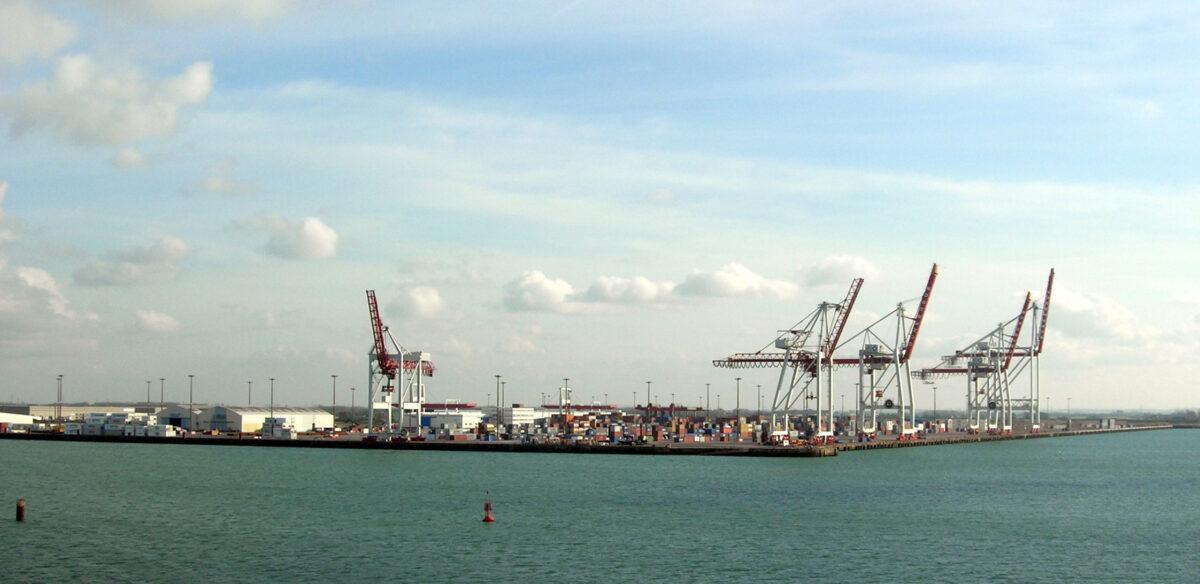
Around the port, major industrial names: ArcelorMittal (steel industry), Aluminium Dunkerque (metallurgy), Air Liquide (industrial gases), chemical-petrochemical, agri-food, energy (proximity to the Gravelines power plant, methane terminal, DK6 power plant). The port and its industrial-port zones generate tens of thousands of direct and indirect jobs, with a value added of several billion euros each year. At the same time, the city encourages decarbonized sectors (hydrogen, carbon capture, rail-port) and rail logistics (project for a rail freight terminal).
Key figures (order of magnitude) — Port traffic: ~46 Mt in 2024 (JMM) • Jobs related to GPMD: ≈ 29–31,000 (port & partners) • Containers (2022): ~745,000 TEU (GPMD). Volumes vary according to economic conditions and sectors.
Tourism and Culture
Between beach, memory, and architecture, Dunkirk’s tourist DNA is diverse. The Malo-les-Bains waterfront offers a long and very open promenade, lined with “Malouine” villas and terraces. A few steps away, the city recalls its maritime and military history: belfry, port museums, memories of 1940, museum ships… Not to mention the popular traditions (carnival) and an inventive cultural scene (exhibitions, street art, contemporary music).
Top 5 places to see
- Malo-les-Bains Beach — Vast ribbon of sand, colorful cabins, and lively seawall. Spectacular sunset with westerly wind. (Tourist Office)
- Belfry and City Hall — Belfry listed as a World Heritage Site (UNESCO, Belfries series) and neo-Flemish city hall, an emblematic duo of the city.
- Memorial & Museum “Dunkirk 1940 – Operation Dynamo” (Bastion 32) — Immersive journey on the 1940 evacuation, objects, films, and views of the seawall.
- Port Museum — Maritime collections and heritage fleet (including the three-masted Duchesse Anne) tell the story of the port city.
- FRAC Grand Large – Hauts-de-France — Contemporary art facing the sea, in a bold building at the heart of the Grand Large district.
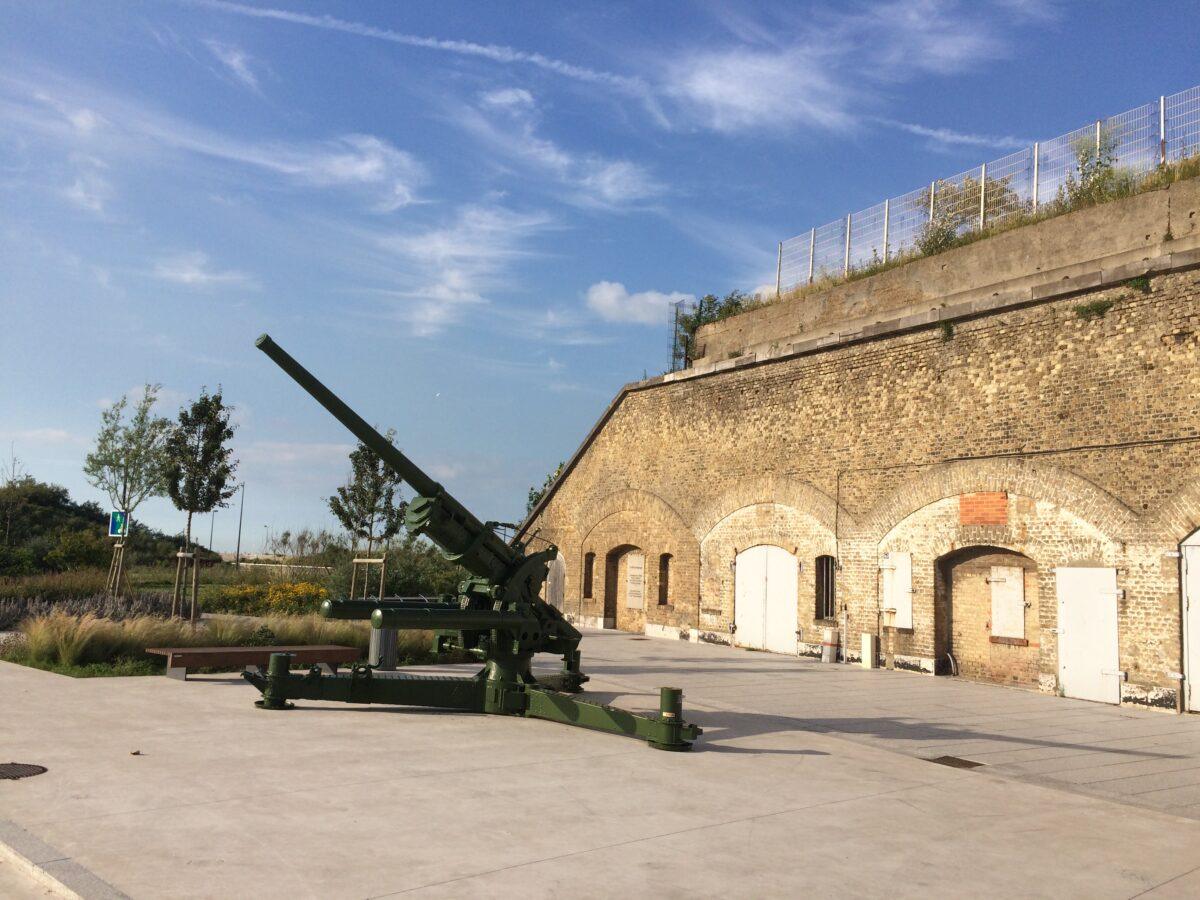
Stroll ideas: the Malo seawall up to the Vent park and the Flanders dunes; a detour through the Malouine neighborhoods and their villas; guided tour of the belfry; circuit of the giants (Reuze & family) and port street art. In summer, paddleboarding, land sailing, and kite surfing on a vast and safe body of water.
Transport and access
By road: Dunkirk is served by the A16/E40 (Boulogne–Calais–Belgium) and by the A25 (Lille axis). The RN 225 connects the port and industrial areas. In Belgium, the E40 continues towards Furnes, Bruges, and Ghent, linking the city to the Northern Range.
By rail: the Dunkirk station (TER Hauts-de-France) offers frequent connections to Lille (≈30–60 min depending on stops), Calais, Arras, and Lens. Fast connections provide access to Paris and Brussels.
Urban mobility: a major local feature, the DK’Bus network is 100% free throughout the urban community territory (16 lines and 2 Noctibus). A first in a metropolitan area of this size, often cited as an example for social accessibility and reduction of solo car use.
Did you know? Dunkirk is one of the few large French metropolitan areas to offer full free bus service, every day, for everyone. Result: increased ridership, new audiences, and an image of an “accessible city.”
Local life (education, sports, events)
Education: public/private schools, middle schools, and high schools are spread throughout the municipality. The University of Littoral Côte d’Opale (ULCO) offers higher education (science and technology, economics-management, humanities and languages…) at the coastal level, with laboratories focused on the sea and industry.
Sport: basketball (USD), handball, football, water sports, and land yachting on the beach. The flagship cycling event remains the “4 Days of Dunkirk”, a historic professional race in Hauts-de-France. Community facilities (swimming pools, ice rink, stadiums, sailing base) serve the neighborhoods.
Culture: busy schedules at the FRAC, the Bateau-Feu, in contemporary music venues and during festivals (cinema, comics, visual arts). The Carnival remains the festive DNA, with its bands, drum majors, and herring tosses from the town hall balcony — all nods to the maritime vocation.
Real Estate and Urban Planning
Real estate market: in 2025, Dunkirk shows price per m² still moderate on the scale of the northern coastline, with a clear differential between neighborhoods and property types. Reference data indicate about €2,000–2,200/m² for older properties (median) and around €3,600–3,700/m² for new builds (median), with higher peaks on the seafront side (Malo) and more affordable values in some areas of Saint-Pol-sur-Mer or Petite-Synthe. Family houses with 3–4 bedrooms remain sought after, as do apartments with balconies near the seawall.
- Older properties (median): ≈ €2,050–2,100/m²
- New builds (median): ≈ €3,700/m²
- Houses (median): ≈ €2,100/m²
- Apartments (median): ≈ €1,900–2,100/m²
Trends: the redevelopment of brownfields, the rise of projects linked to the port (rail-port, decarbonization), the appeal of the seaside, and free buses support residential attractiveness. Investors target small units in the city center and near the seawall; families favor houses and schools in residential neighborhoods.
FAQ — Dunkirk
What to visit in Dunkirk in 1 day?
Belfry & town hall, walk along the Malo-les-Bains seawall, Dunkirk 1940 museum at Bastion 32, and a visit to the Port Museum. If the wind is favorable, end with a sunset on the beach.
What is the population of Dunkirk?
87,013 inhabitants (legal INSEE population 2022) over 43.89 km², at the heart of an attraction area exceeding 250,000 inhabitants.
How to get to Dunkirk?
Via the A16/E40 from Calais/Boulogne or Belgium, via the A25 from Lille. By train (TER) via Lille (≈30–60 min) with connections to Paris/Brussels. In the city, DK’Bus is 100% free.
Which neighborhoods are pleasant in Dunkirk?
For the seaside: Malo-les-Bains (seawall, villas), Grand Large. For neighborhood life: Rosendaël, Leughenaer, former Petite-Synthe (residential areas), center around Place Jean-Bart. Each area has its personality and price levels.
What is the price of real estate in Dunkirk?
Orders of magnitude 2025: ≈ €2,050/m² (old, median), ≈ €3,700/m² (new, median) with higher values on the Malo dike side and more affordable in Saint-Pol-sur-Mer or in the inner city. Refer to the barometers (Notaires de France, SeLoger/Le Figaro) for ranges by property type.
Sources and useful links
- INSEE — Complete file Dunkirk (59183) (legal population 2022, indicators)
- Wikipédia (FR) — Dunkirk (history, geography, UNESCO belfry, economy)
- Grand Port Maritime de Dunkerque — Official site • Activity report (container data, LNG) • JMM: 2024 traffic ≈ 46 Mt
- DK’Bus — 100% free network (16 lines + Noctibus)
- Tourist Office — Dunkirk Tourism
- Real Estate — Notaires de France (price per m²) • Le Figaro Immobilier / SeLoger (2025 barometer)
- UNESCO — Series “Belfries of Belgium and France” (Dunkirk belfry): summary map