Reducing Cannes to its red carpet would miss half the picture. Yes, every spring the film world shines its spotlight on the Palais des Festivals. But the rest of the year, the city unfolds a daily life made of coastal walks, Provençal markets, preserved islands, hillside neighborhoods, and an astonishing culture of urban innovation. The 19.6 km² municipality embraces a curved coastline, between the rocks of the Estérel massif and the Capes of Antibes, within shuttle distance of the Lérins Islands. This guide offers a comprehensive reading — geography, history, demographics, economy, visit ideas, and local behind-the-scenes — with the eye of a field observer: mixing “big names” and useful details, icons and everyday life. Cannes is a postcard that knows how to live beyond the lens.
Department
Alpes-Maritimes (06)
Intercommunality
Cannes Pays de Lérins
Population 2022
≈ 74,040 inhabitants (INSEE)
Area
19.6 km² – coastline & hills
Sommaire
Geography and Location: Two Gulfs, a Bay, and an Archipelago
Set on the French Riviera, Cannes occupies the southern edge of an amphitheater of hills (La Californie, La Croix-des-Gardes, Oxford, Montfleury, La Bocca). Offshore, the Lérins Islands archipelago protects the bay: Sainte-Marguerite — the largest — and Saint-Honorat, monastic and viticultural, separate the Gulf of La Napoule from the Gulf of Juan. This geography explains many things: the milder microclimate compared to the hinterland, the clear horizon that attracted 19th-century resorts, and the logic of the neighborhoods, from Le Suquet (the “old Cannes”) to Palm Beach, the sandy terminus of the Croisette. To the west, La Bocca stretches its beaches toward Mandelieu; to the east, the Croisette runs toward the cape and its seaside establishments. Together they form a city both maritime and residential, where buildings alternate between Belle Époque hotels, modern residences, and hillside villas. The islands, meanwhile, offer a natural breath of fresh air just ten minutes by boat: Aleppo pines, eucalyptus, fortified monastery, coves, and silence — a discreet luxury accessible with a shuttle ticket.
History and Heritage: From Fishing Village to Cultural Symbol

Long before the palaces, Cannes was a Ligurian then Roman anchorage point. The medieval toponym “Canua” (probably linked to reeds) appears in the 10th century on the hill of Le Suquet, where an 11th-century tower and the Notre-Dame-d’Espérance church stand. However, Cannes’ history is also written offshore: on Saint-Honorat, a community of monks has been documented since the 5th century, a radiant center of Western monasticism. On Sainte-Marguerite, the Fort Royal still holds the memory of the mysterious “Man in the Iron Mask.” In the 19th century, aristocratic resort life — encouraged by Lord Brougham and the climate — transformed the village into an elegant resort: prestigious hotels (Carlton, Majestic, Martinez) and villas followed one another, and the seaside promenade gained prestige. After the war, the municipal intuition of a major international film festival crystallized Cannes’ image. The Palais des Festivals became a global landmark, but the city remains a port, a hill, markets, islands, and neighborhoods lived daily by the inhabitants of Cannes.
Population and Demographics: a Coastal City with a Mature Structure
In 2022, Cannes has around 74,000 inhabitants, with a density of approximately 3,770 inhabitants/km² (INSEE). The age structure is typical of a residential and tourist coastal city: a notable proportion of people aged 60 and over, a significant active population in services (hotel and restaurant industry, commerce, events, personal services), and a marked seasonal presence during the warmer months. The municipality attracts varied profiles: workers linked to tourism and conferences, French and European retirees attracted by the climate, students and creatives around the Cannes-University campus (La Bocca district) and the “Cannes On Air” sectors dedicated to creative industries. This mosaic shapes a contrasted city: tourist hyper-center (Croisette, Banane); historic hill (Suquet); neighborhoods with dense daily life (Carnot, Prado-République, Riou, Ranguin); popular and sporty coastal facade at La Bocca. This mix, sometimes called a “seasonal ecosystem,” forces public authorities to manage irregular pedestrian and road flows, diverse housing needs, and a strong demand for quality public space near the sea.
Economy, Conferences and Employment: Tourism, Yachting and “Cannes On Air”
Cannes thrives on tourism — both seaside and heritage — but its unique engine is conferences. All year round, the Palais des Festivals et des Congrès hosts major trade shows: MIPIM (real estate), MIPTV (audiovisual), Cannes Lions (creativity), TFWA (duty free), ILTM (luxury tourism), NRJ Music Awards, not to mention the Cannes Film Festival in May. The economic impact of these events flows through hotels, restaurants, commerce, transport, and technical services. Another pillar is yachting (Old Port, Port Canto) with shipyards, brokers, and events such as the Cannes Yachting Festival. On the innovation side, the City and the Agglomeration have invested in the creative campus of La Bocca (the “Cannes On Air” hub, studios, incubators, Méliès campus, CINEUM cinema) to structure an image and content sector. Finally, the local economy relies on local commerce (Forville, Gambetta markets), health, education, crafts, and an expanded service offering for a demanding permanent population. The combination “sea + conferences + visual culture” gives Cannes a unique profile on the French Riviera: a long season, an international calendar, and a cultivated art of hospitality.
Tourism & Culture: Top 5 Places Not to Miss

1) Le Suquet and the Museum of World Explorations
The founding hill of Cannes, with its steep alleys, the medieval tower and the Notre-Dame-d’Espérance church, offers the most beautiful balcony view over the bay. The museum (formerly “de la Castre”) gathers arts and instruments from around the world and recalls that Cannes, originally a stopover port, has always lived to the rhythm of crossings. In the evening, climbing the stone stairs and then descending through quiet lanes gives a good glimpse of “old Cannes,” far from the shop windows.
2) La Croisette, Between Architecture and Contemporary Art
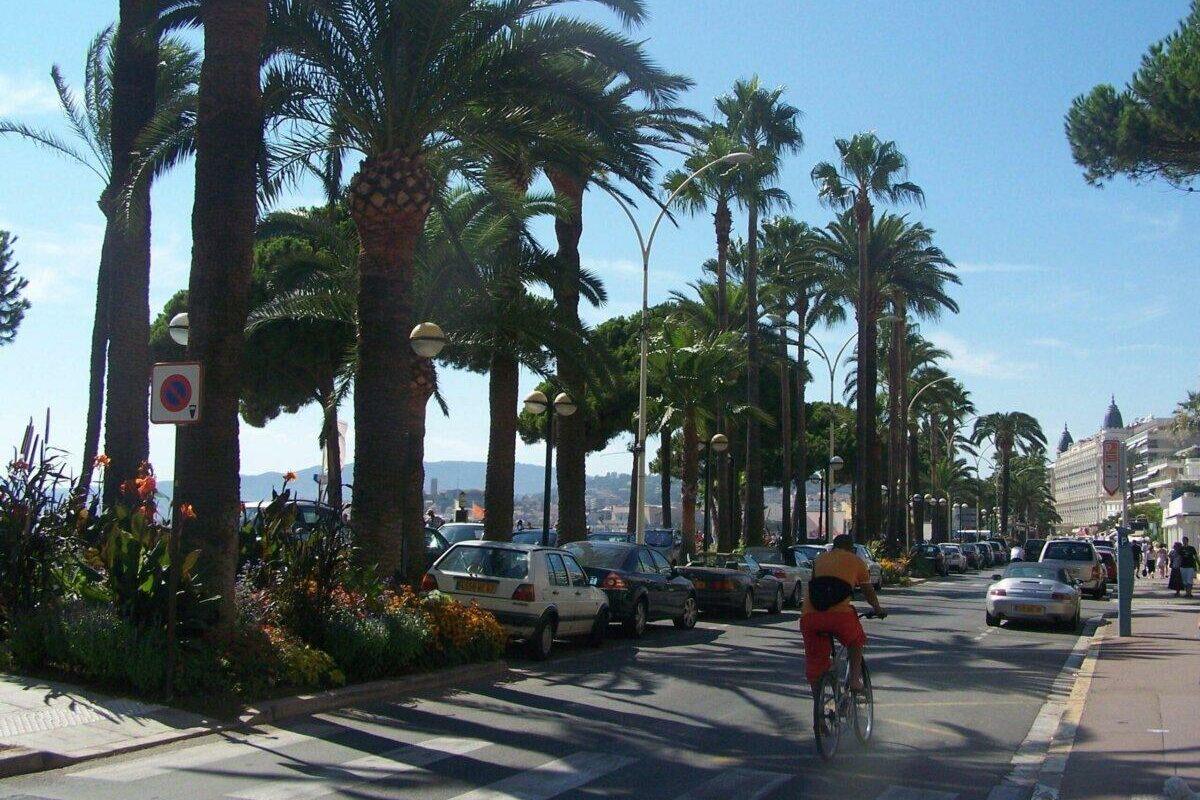
People come here to walk facing the sea, observe the discreet comings and goings of the palaces (Carlton, Martinez, Majestic), spot Belle Époque or modernist details, and now, to push open the door of La Malmaison, the municipal contemporary art center reopened in 2025 after renovation. It is the perfect cultural counterpart to shopping, an exhibition space that places the stroll in the present.
3) The Lérins Islands: Sainte-Marguerite & Saint-Honorat
Ten minutes by boat from the Laubeuf quay: state forest, museums and fortifications on Sainte-Marguerite (Fort Royal, cell of the “Man in the Iron Mask”); silence, vineyards and Cistercian monks on Saint-Honorat (Lérins Abbey, medieval monastery tower). Two twin islands, two atmospheres. Between coves and chapels, the archipelago tells of another time, perfectly compatible with a late afternoon picnic.
4) Forville Market and Surrounding Alleys
Temple of seafood, local vegetables and Provençal scents, Forville is the place to understand the city through taste. People come early, chat with the fishermen, leave with heirloom tomatoes, anchovy paste, zucchini flowers and cracked olives. The terraces around extend the visit, between neighborhood cafés and bistros that focus on quality products.
5) The Coastline of La Bocca
To the west of the town, the Midi beaches open onto the Estérel. Here, the atmosphere is more family-oriented and sporty: wide sidewalks for walking and cycling, playgrounds, reasonable beach clubs, and a sun that slowly sets behind the red rocks. The perfect place to end the day watching boats return to the harbor.

Local Specialties: Market Cuisine, Provençal Scents and Monastic Wines
Cannes cuisine draws most of its identity from the markets (Forville, Gambetta) and Provençal DNA: well-cooked ratatouille, small stuffed vegetables, orange daube, Friday aioli, pissaladière or socca from the neighboring Nice tradition, line-caught fish (bass, sea bream), baby squid and sea urchins depending on the season. On the sweets side, orange blossom navettes, candied fruits from nearby Antibes and citrus ice creams mark the summer. A unique trait: on Saint-Honorat, monks have cultivated vineyards for centuries and produce confidential (and sought-after) vintages — wines served even at major summits hosted in Cannes. At the table as on a stroll, the city cultivates a Mediterranean art of living: clean products, fresh herbs, olive oil and mastered simplicity. Local tip: go early to the market, order “à la plancha” on the go, then head to picnic on Sainte-Marguerite — with, on the way back, an ice cream in old Cannes.
Transport and Access: Coming, Getting Around, Breathing
By rail, Cannes station is on the Marseille–Ventimiglia line (TGV InOui, Intercités, TER Sud). By road, the A8 motorway connects the town via nearby exits. Air travel mainly relies on Nice-Côte d’Azur airport (international flights, about thirty kilometers away), complemented by Cannes-Mandelieu airport (business and leisure aviation). On site, the Palm Bus network (Cannes Pays de Lérins) offers a robust service: regular lines, high-level service connections (Palm Express A and B), night buses Palm Night and “Palm on Demand” for less dense areas. Crossings to the islands depart from the Laubeuf quay at the Old Port. Convenient: everything is easily done on foot along the seafront, and cycling is gaining ground, especially in La Bocca and on the Croisette, as facilities develop. In high season and during major trade shows, plan ahead: park-and-ride lots, dedicated buses, gentle walking — the experience will be all the more serene.
Local Life: Schools, Sports, Associations — a City That Organizes Itself
On a daily basis, Cannes hosts schools, middle schools, high schools (including Lycée Carnot), a university campus in La Bocca, and art and image schools linked to the “Cannes On Air” sector. On the sports side, the city is a recognized land for volleyball (Racing Club de Cannes for women, AS Cannes Volley-Ball for men), football (AS Cannes), and water sports, with a very active network of associations (sailing, rowing, diving, tennis, martial arts). Cultural structures are being renewed: downtown, La Malmaison gives a contemporary face to the Croisette; on the hill, the Explorations of the World Museum sheds new light on the identity of the Suquet; in the agglomeration, the Bonnard Museum in Le Cannet complements the offer. Markets, the Noailles media library (Villa Rothschild), gardens, and renovated squares make up a daily agenda that does not depend on the glitz. This is the strength of well-managed coastal cities: a rare level of equipment for the permanent population, useful all year round.
Recurring events: a calendar that builds the reputation
May sees the Cannes Festival, a major cultural moment whose media echo is unparalleled. Around it, the city unfolds a sustained professional season: MIPIM (March), MIPTV (spring), Cannes Lions (June), Yachting Festival (September), TFWA (October), ILTM (December) — not to mention the pyrotechnic summer that lights up the bay. This calendar explains the high hotel occupancy beyond school holidays, the vitality of shops, and a sharp logistical culture (security, flows, mobility). For the visitor, two simple options: embrace the buzz by coming “with” an event (unique atmosphere, higher prices) or prefer the off-season (September-October / April), when the sea is mild and the sidewalks breathe. Both Cannes exist, you just have to choose the soundtrack.
Real estate & urban planning: Croisette, hills, La Bocca — the city reinvents itself
The Cannes real estate market is read by sectors: prestigious addresses on the Croisette and Palm Beach side (sea views, vacation pied-à-terre), city apartments in the commercial heart (Banane, Carnot, Prado-République), houses and views in the hill neighborhoods (Californie, Croix-des-Gardes), more affordable budgets to the west (La Bocca, Ranguin) where public space is quickly transforming. On the development side, recent major projects focus on quality of use: ambitious requalification of the Croisette (landscape sequence, mobility, waterfront), revitalization of the Forville market and its surroundings, transformation of the Bocca coastline with BoccaCabana (promenade, paths, plantations, rest stops). The angle is clear: soothe, green, make local life fluid while maintaining the requirement of an event city. Cannes progresses in touches, with an assumed coastal bias and a concern for urban stitching between the center, hills, and western facade.
Neighborhood landmarks — For investing or renting, think about the logic of use: Croisette (prestige and season), Banane (everything on foot), Suquet (old charm), Bocca (spaces and beaches, controlled budget). And don’t forget the shadow cast by major congresses on calendars and yields.
Practical FAQ
When to go to Cannes?
Spring (April-June) and off-season (September-October) combine mild weather and reasonable attendance. July-August: warm sea, full beaches. In May, during the Festival, the energy is unique… and so are the prices. Can you attend the Cannes Festival without accreditation?
Official screenings require accreditation, but the city organizes free sessions at the “Cinema de la Plage.” Parallel meetings, animations, and screenings also exist. The atmosphere in town is already worth the visit. How to get to the Lérins Islands?
Day shuttles from Quai Laubeuf (Old Port). In high season, book early and aim for morning slots. On Saint-Honorat, respectful attire near the abbey; on Sainte-Marguerite, shoes for the trails and the Batéguier pond. Are there public beaches?
Yes. Besides the private establishments on the Croisette, several public beaches exist on the Croisette, at Midi (La Bocca) and Palm Beach. The lifeguard stations indicate the monitored zones. Is it realistic to get around without a car?
Yes: train for the coastal axis, Palm Bus locally (including Palm Express A and B), cycling on the rise, and comfortable walking along the seafront. From Nice Airport, direct connections by regional bus or train via Nice-Ville.
Official sources and resources
- INSEE — Population & territory, commune 06029 (2022 data): https://www.insee.fr/fr/statistiques/1405599?geo=COM-06029 ; https://www.insee.fr/en/statistiques/6457611?geo=COM-06029
- Cannes Festival (dates & info): https://www.festival-cannes.com
- Palais des Festivals & des Congrès / Events (NRJ, Lions, MIPIM, etc.): https://www.palaisdesfestivals.com/
- Lérins Abbey (Saint-Honorat): https://www.abbayedelerins.com/ ; https://www.cannes-ilesdelerins.com/
- City of Cannes — Mobility & development (Croisette, Forville, BoccaCabana): https://www.cannes.com/
- Palm Bus Network (maps, offers): https://palmdeplacements.fr/
- Tourist Office — Getting around: https://www.cannes-france.com/sejourner/infos-pratiques/se-deplacer/
Local writing and practical guide updated to reflect the uses, development projects, and cultural calendar of Cannes. If you are exploring the city for the first time: start early at the Forville market, walk the Croisette to Palm Beach, take a shuttle to Saint-Honorat, then finish the day at Midi, facing the Estérel. Cannes does the rest.