
/* Css En-Bref */
| Key points | Details to remember |
|---|---|
| 🌷 Definition | Identify flax, wood, and clay as environmentally friendly materials. |
| 💧 Benefits | Improve air quality, thermal and acoustic comfort naturally. |
| ⚙️ Implementation | Adapt treatments and finishes according to use. |
| 🛠️ Maintenance | Maintain regularly to preserve durability and patina. |
| 🎒 Aesthetics | Harmonize textures and colors for a warm atmosphere. |
| 📐 Applications | Integrate in textiles, furniture, coverings, and decorative objects. |
| 🌱 Sustainability | Choose local, organic, or certified sources for reduced impact. |
The combination of flax, wood, and clay redefines our approach to daily life, blending authenticity and functionality. Each of these materials offers a palette of textures, shades, and virtues that transcend their simple raw appearance. This guide explores their origin, properties, and ways to enhance them at home, without sacrificing modern comfort.
Sommaire
Flax: ancient fiber serving well-being
Flax is often imagined as a light, delicate summer textile. However, its uses go far beyond sheets or tablecloths. Cultivated since Antiquity, flax has established itself for its strength and ability to regulate humidity. The fibers, long and naturally grayish, bring a touch of discreet elegance, while their hypoallergenic properties reduce skin irritations.
Origins and processing
Flax grows in temperate regions and requires few chemical inputs. After harvest, the plant undergoes several stages of retting and scutching to separate the long fibers from the residues. These fibers are spun and woven, producing a fabric that is both strong and breathable. In comparison, other textiles require more polluting treatments. Flax, on the other hand, only needs water and sun.
Domestic uses
Beyond household linen, flax finds its place in wall decoration and even insulation. In the form of composite panels, it contributes to thermal inertia and acoustic absorption. Designers also use it to create molded objects, where the fiber is combined with bio-sourced resin. The result: a resistant, lightweight piece imbued with naturalness.

Wood: warmth, character, and versatility
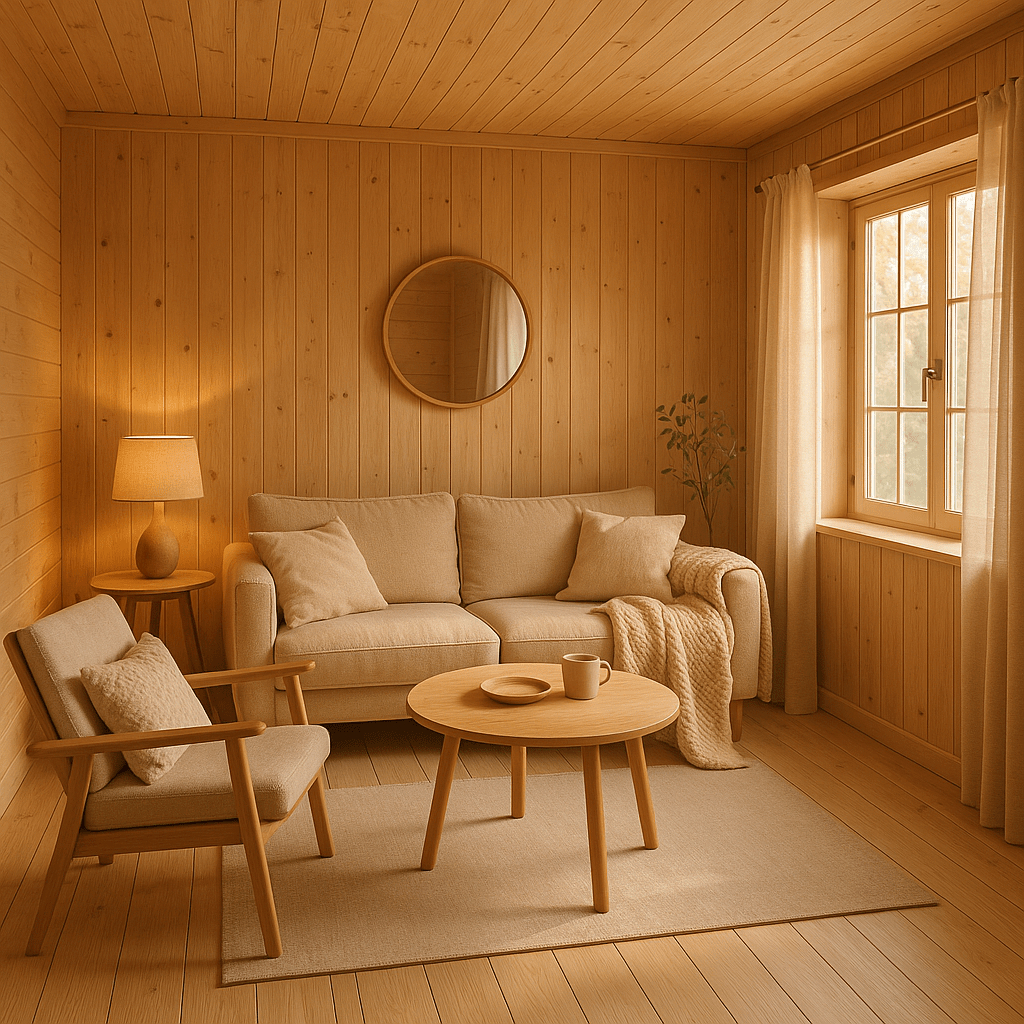
A wooden piece breathes authenticity. Whether it is a solid wood floor, a floating staircase, or a custom-made piece of furniture, this material tells a story shaped by nature. Each knot, each grain bears the signature of the tree from which it comes. The species vary from oak to pine, including ash or maple, offering a range of shades and densities.
Choice of species and sourcing
Favoring sustainably managed forests (FSC, PEFC labels) guarantees the renewal of the resource. Local species limit the carbon footprint related to transport. In urban environments, recycled wood, from old structures or pallets, brings an eco-friendly and design dimension, playing on the contrasts of patinas.
Finishes and maintenance
Oil or natural wax finishes protect without sealing the wood. They reveal the depth of the grains and evolve like a patinated coat over the years. A simple cloth soaked in a specific oil is often enough to revive the shine. For outdoor use, one will opt for a saturator or an ecological stain, capable of resisting weather without much maintenance.
Clay: a millenary return to the roots
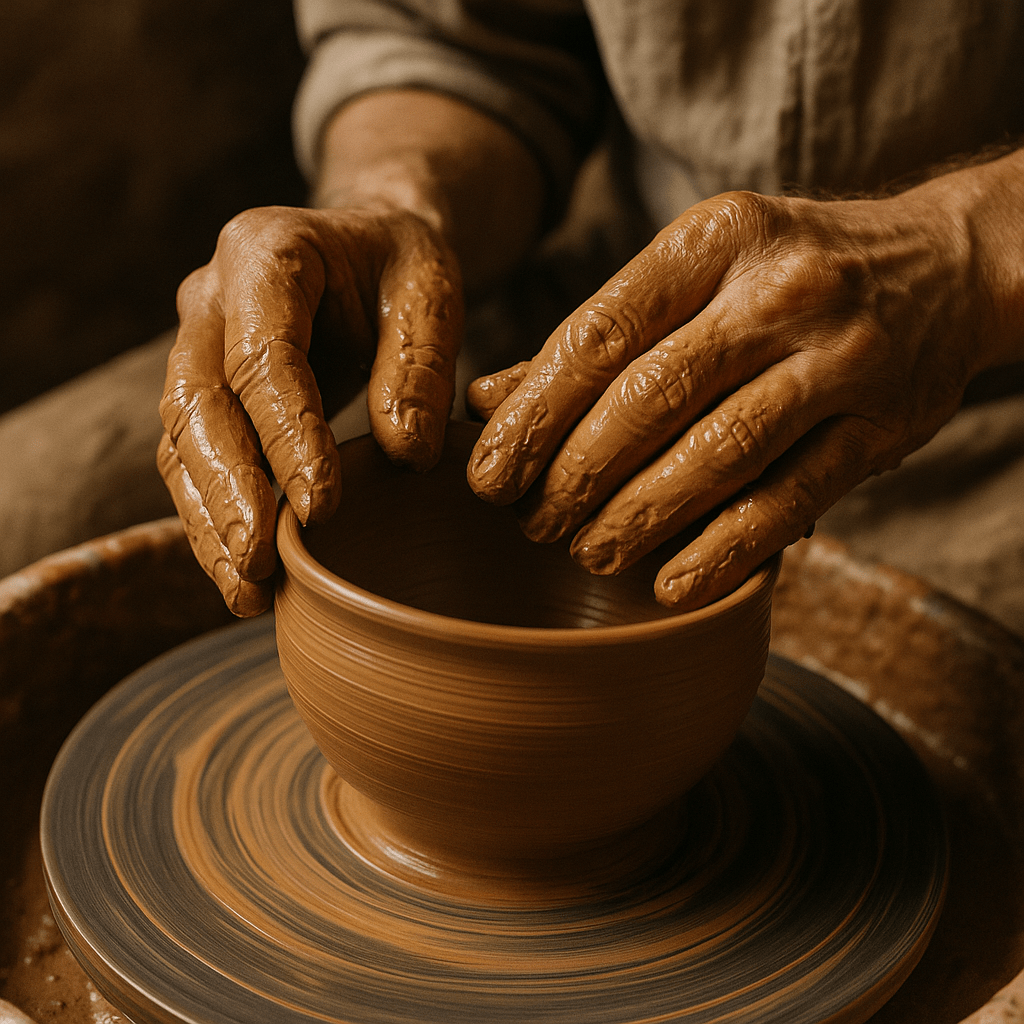
Shaping clay is reconnecting with humanity’s founding gestures. From utilitarian pottery to decorative coatings, this raw earth lends itself to a thousand applications. Its plasticity invites spontaneous creation, while its texture gives surfaces a lively relief, subtly imperfect.
Techniques and applications
Raw earth is worked by hand, on the wheel, or by coil building. After shaping, a drying phase follows before firing for pottery. Available in powder form, it is also used as a component for interior coatings, providing hygrometric regulation and thermal inertia. On a wall coated with clay, the air quality is immediately noticeable, purer and less loaded with VOCs.
Maintenance and longevity
Unfired clay is maintained like plaster: a dry cloth swipe to dust off, and occasional touch-ups in case of micro-cracks. To avoid swelling, it is protected from excess moisture. Natural glazes or washes with colored clay add a layer of resistance while preserving the material’s breathability.
Harmonious integration in the home
Combining these three materials requires a sense of balance. Linen softens the lines, wood structures the space, and clay brings a sensory touch. One will play on contrasts: an ochre clay plaster wall beside a warm wood floor, on which raw linen throws are placed.
- Textiles: curtains and cushions in natural linen for filtered light.
- Furniture: solid wood coffee tables paired with shell-shaped chairs in glazed clay.
- Coverings: clay plasters on low walls and wooden baseboards.
- Decor details: terracotta vases, baskets in braided linen fibers.
“By integrating linen, wood, and clay, one creates an interior ecosystem where each element dialogues with the other, without superfluity.”
Maintenance and durability
One of the major advantages of these materials lies in their longevity. Simple maintenance is often enough to preserve their original beauty. Linen becomes more supple after each wash, wood develops a delicate patina, and clay stabilizes. In case of damage, repair is preferred over replacement: an eco-friendly gesture that enhances both the object and the space.
Practical advice
For linen, opt for washing at 30 °C, without fabric softener. For wood, dust regularly and oil once or twice a year. For clay, avoid water splashes and locally touch up cracks with a bit of raw earth mixed with water.
FAQ
- What is the average lifespan of linen indoors?
- Well maintained, linen household textiles can last over 10 years, gaining softness and character with each wash.
- How to choose a wood species for outdoor use?
- Teak, ipe, or cedar are naturally resistant to water and insects, without invasive chemical treatment.
- Is clay suitable for the kitchen or bathroom?
- Yes, but a suitable washcoat or wax is applied to ensure increased resistance to humidity.