The origins and evolution of royal banquets
Before tasting their dishes, one must go back in time to understand the emergence of royal banquets. At the dawn of the Middle Ages, the very notion of a feast was intertwined with survival and prestige. Lords invited their peers around freshly hunted game and spiced wines, where opulence was not accessible to all. Crossing the Mediterranean, the Italian Renaissance introduced new flavors and a more elaborate staging. European courts, eager to compete, immediately adapted these innovations, creating a race for splendor that culminated under the reign of Louis XIV.
From medieval banquet to princely feasts
In the 11th century, the concept of French-style service did not yet exist. Communal dishes were shared, each serving themselves according to rank. The very word “banquet” then evoked an accumulation of tables, spice chests, and serving tables. Historian Jean-Claude Renard, in his Chronicles of Lordly Tables, notes that some gatherings could last several days, mixing equestrian tournaments and parades of cooks.
The Renaissance and the Italian staging
15th century Italy developed the first printed menu cards—a luxury reserved for the richest courts. The modern Romans, Custodi and Gonzague, innovated by combining table architecture and ice sculptures. Guests discovered not only new dishes—asparagus, black truffles, lemons imported from the Levant—but also edible fountains and sugar automatons. At the French Court, François I invited Florentine chefs, forever establishing the Franco-Italian rivalry in court cuisine.
Baroque and Royal Symbols
With the Baroque, the table is adorned with gilding, precious ceramics, and exuberant floral decorations. Each raw material becomes a symbol: poultry stuffed with candied fruits embodies abundance, seahorse jelly the exotic strangeness. Power strategies were played out even in the arrangement of dishes, a true coded language that only insiders could decipher.
Menus: a Gustatory and Visual Luxury
When we talk about royal banquets, it is first and foremost the list of dishes that draws attention. Beyond taste, it is a sensory spectacle that unfolds, blending rare textures, aromas, and colors. Let us dive into some emblematic examples of menus that have marked history.
Spectacular Starters
Starters could include “tournedos” of blue partridge topped with a queen’s jelly, or sculpted crusted pâtés. The savory pastry, inspired by Flemish tradition, reshaped meats—miniature pigs, swans in puff pastry—that, when opened, revealed an interior scented with saffron or truffle.
Ostentatious Main Courses
At the height of the meal, the first service sometimes contained twelve dishes. There were exotic meats—ostrich, wild boar, peacock—as well as majestic fish, presented whole and stuffed with aromatic herbs. Each dish was enhanced by decorations of carved vegetables and illuminated sauces, a practice that required the maître d’hôtel to master gums, colorants (natural pigments), and technique.
Desserts and Sweets: the Apex of Sweetness
The sweet part often constituted the apotheosis. The “pièces montées,” true edible cathedrals, combined nougatine, spun sugar, and marzipan. The spread of cane sugar – imported from the Caribbean – allowed royal pastry chefs to play with new textures: jellies, homemade jams, shiny glazes. It is said that at the court of Catherine de Medici, a dessert representing an entire ship made of sugar began to melt during a storm, causing general hilarity.
Secrets of Preparation and Logistics
Sumptuousness is not enough; it must above all be producible on a large scale, with military synchronization. Royal kitchens sometimes rivaled each other in efficiency and creativity to meet these challenges.
Organization and Hierarchy of the Kitchens
At the top, the Grand Maître d’Hôtel supervised almost everything. Under his orders were the Majordomo, the Head Chef, the Pastry Chefs, the Roasters, each trade specializing in a specific part of the feast. The kitchens of the Louvre in the 17th century could count several hundred people, divided into workshops: flour, game, sugar, spices.
Forgotten Culinary Techniques
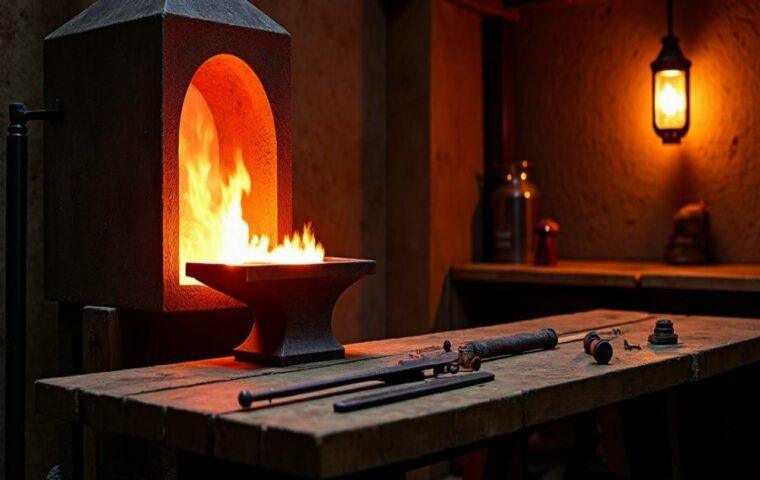
Several techniques have disappeared over time: curing with salt long pricked into the meat, cold smoking in wooden boxes, or the use of lead to gild certain pastries. Treatises, such as the De re coquinaria reconstructed by the Louvre School, mention strange utensils—hydraulic rotating spits, ice directs—that testify to avant-garde culinary engineering.
Rare Ingredients and Supplies
Royal palaces demanded seasonality and variety. The princely kitchen ordered cocoa beans from Colombia, rare peppers and fresh ginger from the Indies. Specific trading posts were responsible for purchasing vanilla, nutmeg, and Kampot pepper. In some cases, entire caravels were rented to ensure the freshness of these precious products.
Symbols and Etiquette Around the Table
Every detail at court had a meaning, a diplomatic function, or a coded message. Let us decipher the symbolic and protocol dimension of the banquet.
Seating and Rank of Guests
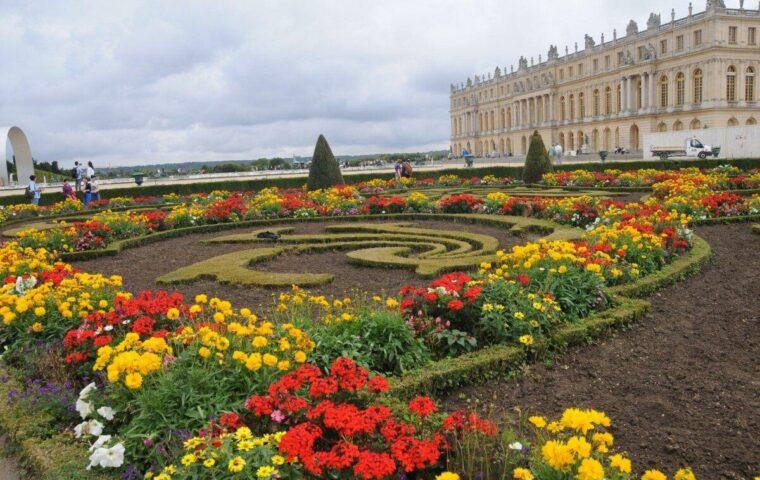
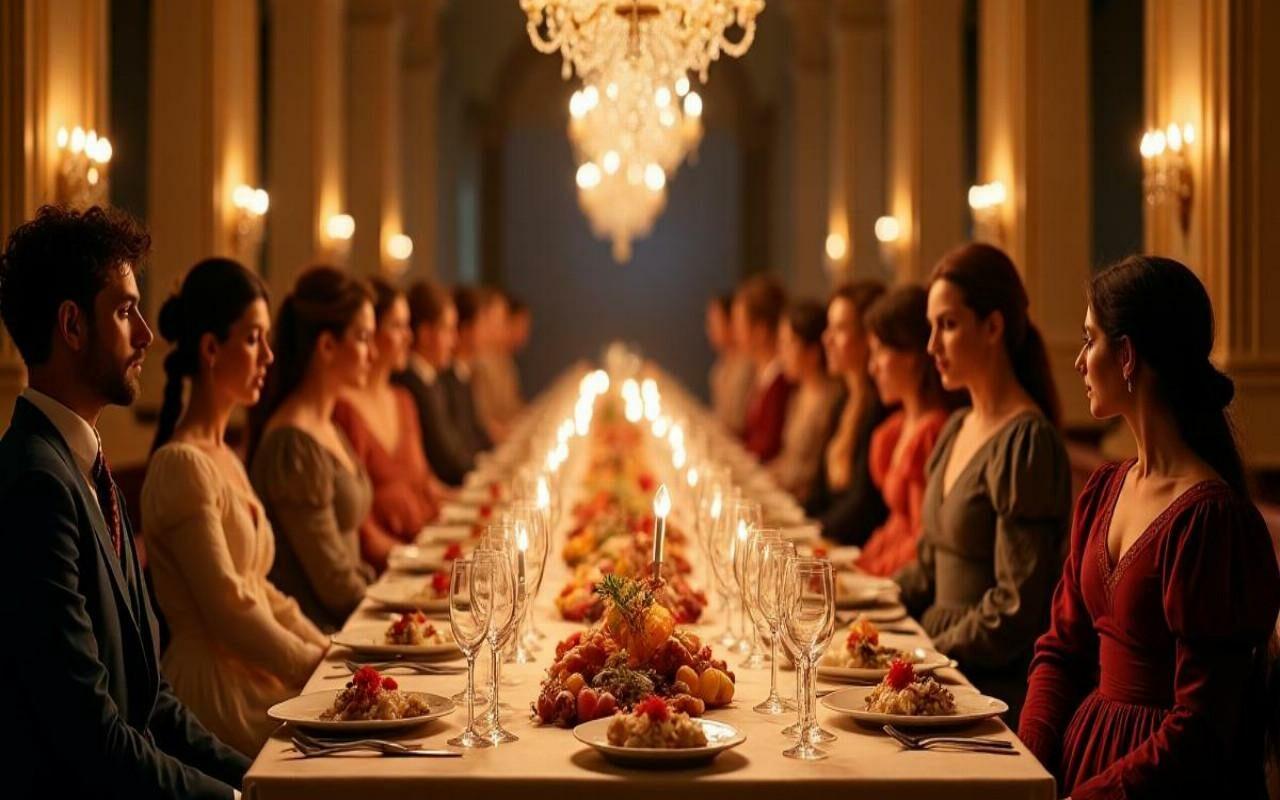
The « ducal seat » was opposite the king, right next to the queen. The further away one was, the lower the rank. This arrangement formed a semicircle of power, extensively documented in the Archives of Versailles Protocol. Unlike our typical dinners, guests did not leave their seats until the sovereign had ended the banquet.
Tableware and Decorative Arts
The hand-painted porcelain sets, signed Sèvres or Meissen, competed with the vermeil ewers. Each plate bore a coat of arms, each champagne flute an engraved monogram. Water was served in blown crystal carafes, sometimes tinted with cobalt oxide for a royal blue.
Entertainment and Staging
Between courses, magicians, jugglers, and musicians took turns. The ballets at the court of Louis XIV, preludes to the opera, were performed on mobile platforms. Temporary tapestries were also unrolled, creating a constantly changing decor—an immersive experience where each dish was part of a visual narrative.
FAQ
Which spices were most prized at royal banquets?
Saffron, cinnamon, and nutmeg were among the culinary treasures. Their rarity and high cost enhanced the impression of luxury. Black pepper, although more common, remained a mark of prestige when used fresh.
How did royal kitchens ensure the freshness of dishes?
Natural icehouses were used, storing ice in deep wells or damp cellars. Seafood arrived via express relays, and salting or smoking techniques were employed to extend preservation.
Are there original recipes from this era accessible today?
Yes: several manuscripts have been transcribed and adapted. For example, the Grand Livre des Festins from the 17th century offers recipes for queen’s jellies and poultry pâté, revisited by contemporary chefs.
Why did these banquets last so long?
Beyond gustatory pleasure, they were a political tool: to seal alliances, impress dignitaries, or celebrate a victory. The duration testified to the abundance and power of the sovereign.
{
“@context”: “https://schema.org”,
“@type”: “WebPage”,
“about”: {
“@type”: “Thing”,
“name”: “Sumptuous Royal Banquets”
},
“keywords”: [“royal banquets”, “royal menu”, “royal kitchens”, “culinary logistics”, “symbolism”]
}
{
“@context”: “https://schema.org”,
“@type”: “Article”,
“headline”: “Journey to the Heart of Lavish Royal Banquets: Menu and Secrets Revealed”,
“description”: “Explore the fascinating history of royal banquets, from sumptuous dishes to forgotten techniques, to understand how symbolism, logistics, and gastronomy intertwined around the table of power.”,
“keywords”: [“royal banquets”, “royal menu”, “historical gastronomy”, “culinary logistics”, “symbolism”],
“mainEntity”: {
“@type”: “FAQPage”,
“mainEntity”: [
{
“@type”: “Question”,
“name”: “Which spices were most prized at royal banquets?”,
“acceptedAnswer”: {
“@type”: “Answer”,
“text”: “Saffron, cinnamon, and nutmeg were among the culinary treasures. Their rarity and high cost reinforced the impression of luxury. Black pepper, although more common, remained a marker of prestige when used fresh.”
}
},
{
“@type”: “Question”,
“name”: “How did royal kitchens ensure the freshness of dishes?”,
“acceptedAnswer”: {
“@type”: “Answer”,
“text”: “Natural icehouses were used, storing ice in deep wells or humid cellars. Seafood arrived via express relays, and salting or smoking techniques were employed to extend preservation.”
}
},
{
“@type”: “Question”,
“name”: “Are there original recipes from this era accessible today?”,
“acceptedAnswer”: {
“@type”: “Answer”,
“text”: “Yes: several manuscripts have been transcribed and adapted. For example, the Grand Book of Feasts from the 17th century offers recipes for queen’s jellies and poultry pâté, revisited by contemporary chefs.”
}
},
{
“@type”: “Question”,
“name”: “Why did these banquets last so long?”,
“acceptedAnswer”: {
“@type”: “Answer”,
“text”: “Beyond gustatory pleasure, they were a political tool: to seal alliances, impress dignitaries, or celebrate a victory. The duration testified to the abundance and power of the sovereign.”
}
}
]
}
}